Conversations sometimes open with a short check that feels casual but expects a reply. In everyday messaging, wtw is used to ask what’s the word, a way to see what is happening or if plans are forming. It appears in a text message, DM, group chat, Snapchat, Instagram, and TikTok, often before details come up.
In this article, we explain WTW meaning first, then how people use it to start talk about plans or availability. We also show how replies change by setting, followed by short examples that help you respond smoothly and keep the chat moving.
What Does WTW Mean
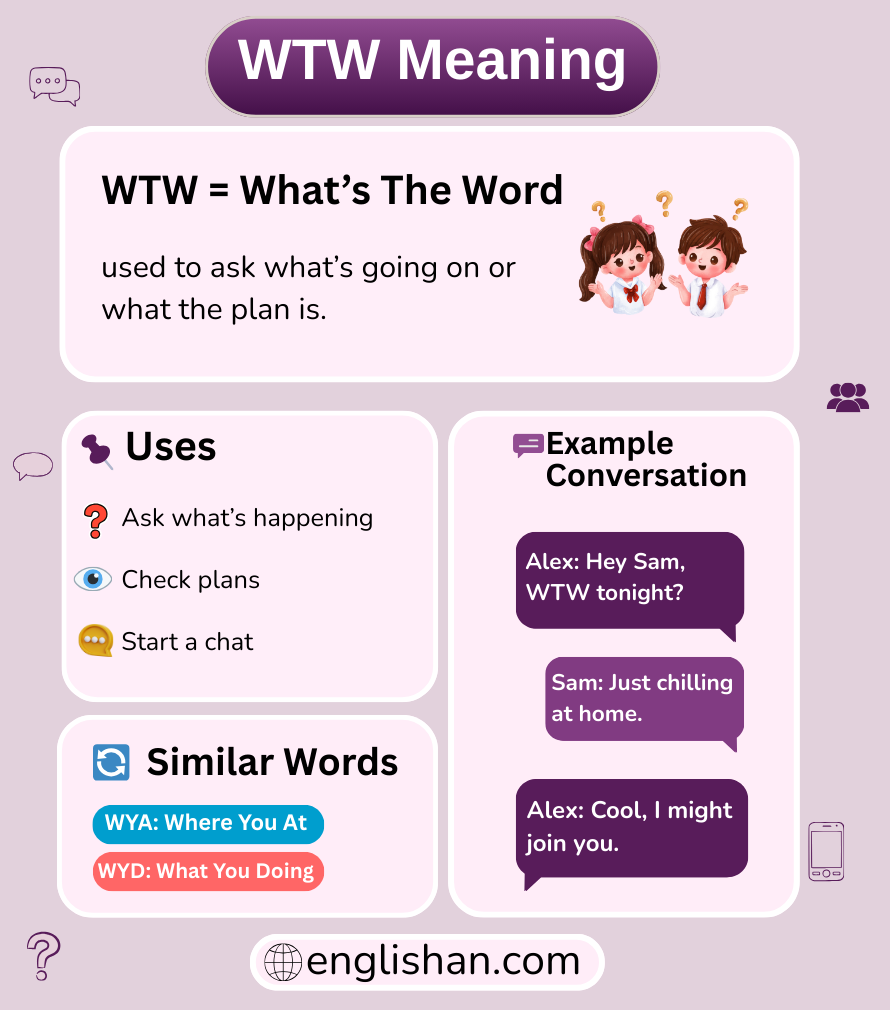
The acronym WTW serves as a casual inquiry to ask what is happening or what plans are being made. It acts as a conversation starter to gauge the social landscape or see if friends are free. Less commonly, it functions as an expression of mild shock similar to saying “what on earth.”
What Does WTW Stand For
This abbreviation usually stands for What’s The Word. This phrase is a slang idiom asking for news, updates, or the current plan for the night. In specific reaction contexts, it stands for What The What, which is a polite substitute for harsher exclamations of confusion.
WTW As What’s The Word
When used with this definition, the term is a social tool for initiating meetups. It implies the sender is looking for something to do and wants to know if the recipient has any leads. It is synonymous with asking “what is the move” or “what are we doing tonight.”
WTW As What The What
In this context, the acronym expresses disbelief or confusion without using profanity. It is a “minced oath,” meaning it replaces a swear word with a harmless repetition of the word “what.” Users type it when they see something bizarre but want to keep the language clean.
How To Tell Which WTW Meaning Someone Means
You can determine the meaning by analyzing the timing and content of the message. If a friend sends it on a Friday evening out of the blue, they are likely asking for plans (What’s The Word). If they send it immediately after you share a strange photo or shocking news, they are expressing confusion (What The What).
How WTW Is Used With Examples
People primarily use this text to propose hanging out or to check the status of a situation. It is effective because it is open-ended, allowing the other person to suggest a plan or simply say they are busy.
- Planning: “It is Friday night, WTW?”
- Checking In: “I haven’t heard from you all day, WTW?”
- Shock: “He wore a clown suit to the meeting? WTW.”
How To Reply To WTW
If someone asks for the word, you should reply with your current plans or a suggestion for what to do. Common responses include “Nothing much,” “Just chilling,” or a specific location like “Heading to the movies.” If they are using it to express shock, you can validate them by agreeing that the situation is crazy.
WTW Origin
The phrase “what’s the word” has been part of African American Vernacular English and general slang for decades as a greeting. The acronym emerged with text messaging in the late 2000s as a shorthand for this spoken phrase. The “what the what” variant gained popularity through television shows and cartoons as a safe alternative to cursing.
When Not To Use WTW
You should avoid using this slang in formal inquiries or professional scheduling. Asking a boss “WTW” regarding a meeting agenda is too informal and may seem disrespectful. It is best reserved for peers and social circles where relaxed language is the norm.
Common WTW Confusions
A frequent mistake is confusing this acronym with WTF (What The F***) due to the similar spelling. While “What The What” is a polite version of WTF, mixing them up in your head can alter the perceived tone of the message. Additionally, some users might confuse it with BTW (By The Way), which serves a completely different grammatical function.
Other Related Slang Words
These acronyms also help start conversations or express indifference.
- WTM: What’s The Move. Used to ask for plans.
- WYD: What You Doing. Used to check activity.
- WTV: Whatever. Used to express indifference.
- WUD: What You Doing. A variation of WYD.
WTW Key Takeaways
We define this acronym as a versatile social opener that stands for “What’s The Word” when asking for plans or updates. It serves as a casual way to find out what friends are doing or to suggest hanging out. Alternatively, it can stand for “What The What” to express mild shock without swearing. Remember to use WTW primarily to coordinate social activities with friends and check context to ensure you understand the intent.
WTW FAQs
Yes, it functions like “What’s up” to start a conversation.
No, in texting it almost always means What’s The Word.
You usually say the full phrase “What’s the word” or the letters W-T-W.
Yes, it is very common on Snapchat for initiating chats with friends.
It can be if used to initiate a date, but it is usually just friendly.
The term is generally friendly and casual, especially when used to ask for plans. It shows an interest in the other person’s life and a desire to connect. The “what the what” version is also polite because it specifically avoids using offensive language to express shock.
You May Also Like