You open a link during a break, and a warning pops up before anything loads. It hints that what follows might be awkward if someone nearby catches a glimpse.
Online, people use NSFW to flag material that may not be okay in public or professional settings. It stands for not safe for work and can point to adult themes, strong language, or images better viewed in private. Sometimes it is serious, sometimes just a heads up.
Here, we will explain NSFW meaning and how it is used across posts, links, and messages, with tone and timing that shape its impact. We will also cover examples, short exchanges, and related labels so you know what to expect before clicking.
NSFW Meaning
This internet slang acts as a digital warning label for content that is not suitable for public viewing. It tells you that the image, video, or link contains something graphic, offensive, or embarrassing. The main goal is to protect you from opening inappropriate material in a professional or shared space.
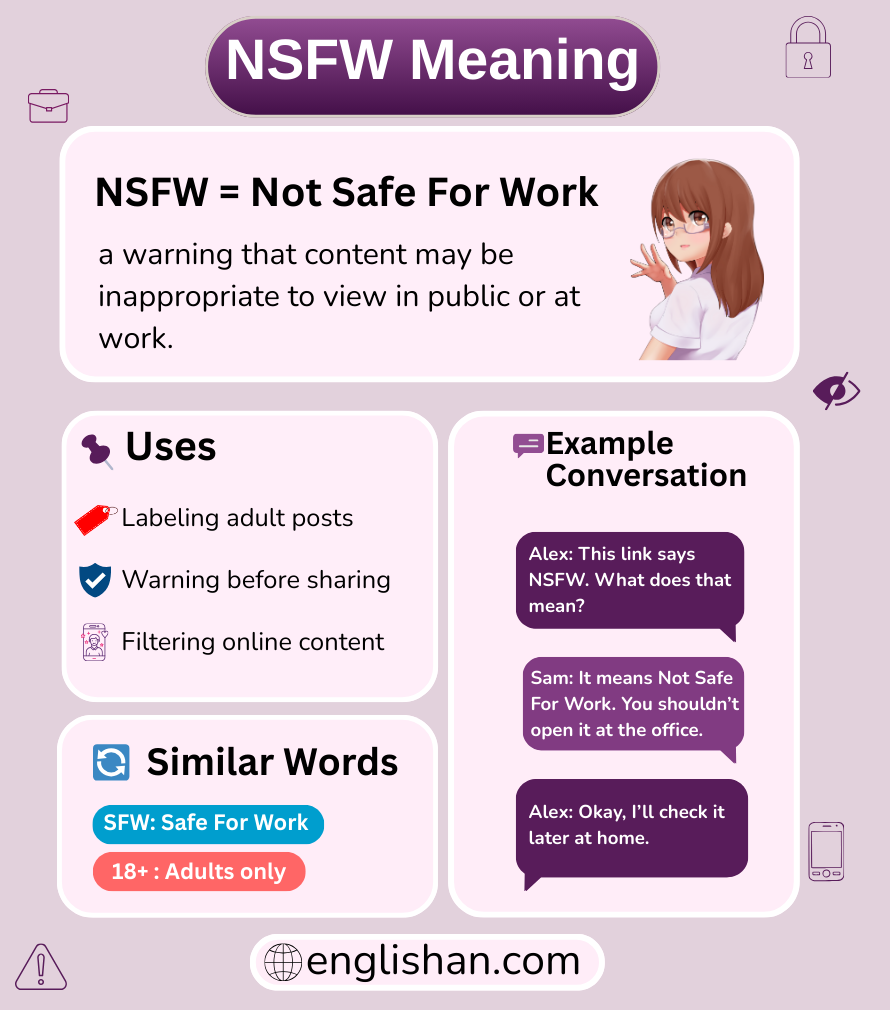
What Does NSFW Stand For
The acronym represents the phrase Not Safe For Work. It serves as a direct alert that the content violates standard workplace policies or social manners. By using this tag, the sender gives you a chance to wait until you are alone to view the material.
How Is NSFW Used
People use this tag to prevent awkward situations before they happen. You will often see it placed right before a link or at the start of a message to signal caution is needed. It allows the viewer to make a safe choice about when and where to look at the screen.
In Text And Chat
In casual messages, friends use this abbreviation to warn each other about funny but crude jokes or videos. It signals that you should not open the attachment if your parents or boss are nearby. This simple tag acts as a friendly heads-up to keep you out of trouble.
In Email Subject Lines
When used in email, this tag is usually a courtesy to warn the recipient about the content inside. It is rare in business emails but might appear in personal forwards containing edgy humor. Placing it in the subject line ensures the reader knows what to expect before clicking.
In Post Titles And Links
On sites like Reddit or Twitter, this label appears next to headlines to filter content for users. It helps people browse their feeds safely without stumbling upon violence or nudity. This system allows communities to share diverse content while respecting user safety.
NSFW Example Conversations
These dialogues show how friends use the warning to protect each other from awkward moments.
Sam: Hey, I just sent you a link to that crazy prank video. Alex: Thanks, I will watch it in a second. Sam: Wait, do not open it yet because it is definitely NSFW. Alex: Good call, I am at the library so I will wait until I get home.
Jordan: Did you see the meme posted in the group chat? Casey: No, I saw the NSFW tag and scrolled right past it. Jordan: That was smart, the language in it was pretty intense. Casey: I prefer to avoid that stuff while I am sitting at my desk.
Jamie: Can you check this design file for the new project? Taylor: Sure, is everything in the folder clean? Jamie: Yes, everything is totally SFW and safe for the client. Taylor: Perfect, I will pull it up on the big screen now.
NSFW Origin
The term started appearing in online forums during the late 1990s as the internet entered more workplaces. Users needed a quick way to flag posts that were funny but dangerous to view in an office. It quickly became the universal standard for content warnings across the web.
Common Confusions
A frequent mistake is thinking this tag only applies to adult content or nudity. In reality, it covers anything unprofessional, including strong swearing, gross humor, or political rants. Understanding this broad meaning helps you avoid opening risky content in polite company.
NSFW Vs SFW
These two acronyms are exact opposites in the world of content safety. NSFW means the material is risky and inappropriate for public eyes. In contrast, SFW (Safe For Work) means the content is harmless, clean, and safe to view anywhere.
NSFW Vs NSFL
While NSFW warns about embarrassment or policy violations, NSFL (Not Safe For Life) warns about mental distress. NSFL flags extreme gore or disturbing violence that could traumatize the viewer. You should treat the NSFL tag with extreme caution compared to the standard warning.
Is NSFW A Bad Word
The acronym itself is not a bad word, but it stands for a phrase that implies inappropriate content. You can say “NSFW” aloud without getting in trouble, but you should not show the content it protects. It acts as a safety shield, not an insult.
Other Related Slang Words
Internet users have developed a family of acronyms to grade content safety.
- SFW: Stands for Safe For Work, meaning the content is clean.
- NSFL: Stands for Not Safe For Life, warning of highly disturbing imagery.
- PNSFW: Means Probably Not Safe For Work, used when the sender is unsure.
Key Takeaways
We use the slang term NSFW to warn others that a link or image is not suitable for public viewing. It stands for Not Safe For Work and covers nudity, violence, and strong language. This tag helps people avoid embarrassment or trouble by letting them choose when to view risky material. By respecting this label, we maintain digital safety and politeness online.
FAQs
Content typically counts if it includes nudity, graphic violence, strong profanity, or offensive jokes. Basically, anything you would not want your boss to see.
Yes, viewing this type of material on a work or school computer can violate policies. It often leads to disciplinary action or firing
Mostly yes, but it can also apply to content that is just gross or rude. It serves as a general maturity filter for all ages.
Yes, most social media apps have settings to hide or blur these posts automatically. This keeps your feed safe and clean.
You May Also Like