The letters wtf often appear after an unexpected event, like a sudden change of plans or a shocking update. In everyday use, wtf stands for what the f, a blunt expression of surprise, disbelief, or anger. People use it in a text message, group chat, DM, Snapchat, Instagram, TikTok, or a comment when emotions run high.
In this article, we explain WTF meaning first, then how people use it across casual chats, school talk, and work email. We also cover tone differences, followed by short examples that show when it feels joking and when it sounds offensive.
What Does WTF Mean
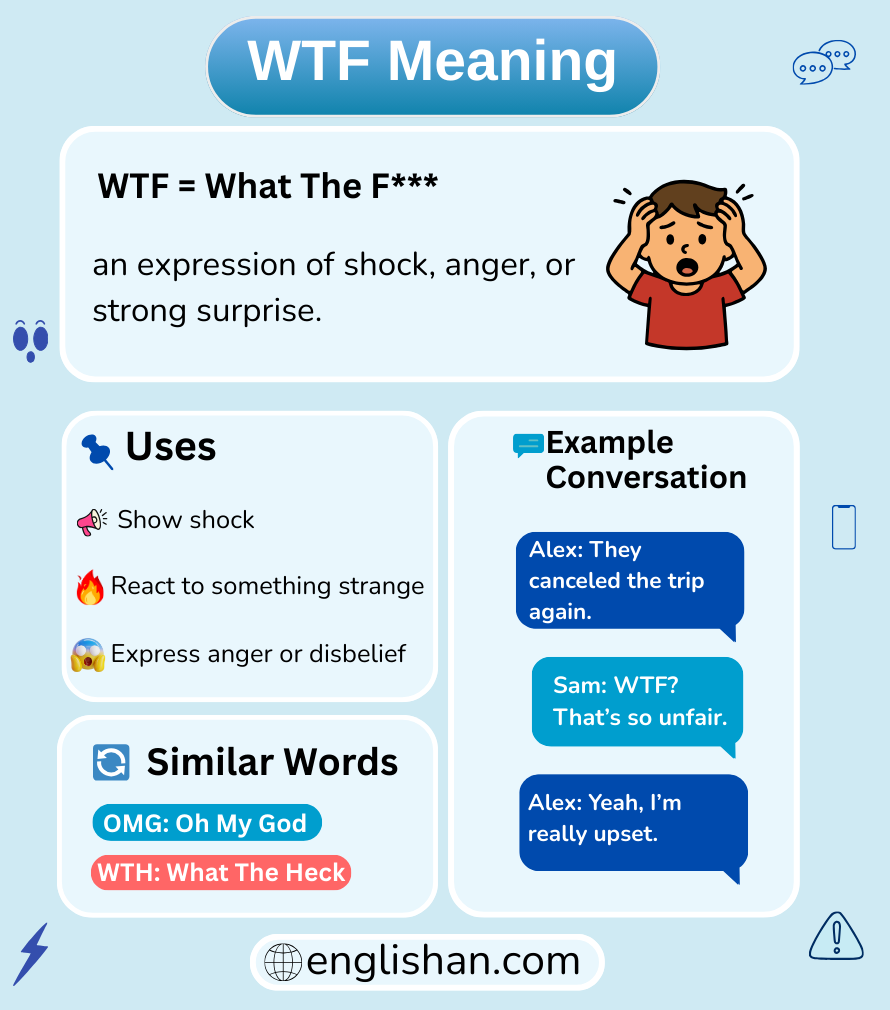
The acronym WTF represents a strong exclamation used to signal extreme confusion or disbelief. It serves as an immediate reaction when a situation makes no sense or when someone behaves irrationally. Writers use it to express frustration without necessarily expecting an answer to a question.
What Does WTF Stand For
This abbreviation stands directly for What The F* (Fuck). The final letter represents a strong profanity, giving the phrase a vulgar and intense tone. It functions grammatically as an interjection or an intensifier within a longer sentence.
How WTF Is Used With Examples
People type this slang in text messages and comment sections to react to bizarre events or shocking news. It acts as a digital shout to emphasize that the user is completely baffled by what they are seeing. You will often find it used as a standalone question or at the beginning of a sentence to set an angry tone.
- Reaction: “I just saw a car drive on the sidewalk, WTF?”
- Confusion: “WTF is happening with the internet connection today?”
- Disbelief: “He actually quit his job over a stapler? WTF.”
When Not To Use WTF
You must avoid using this term in professional emails or classroom discussions. Using it with teachers, bosses, or older family members often leads to negative consequences due to its vulgar nature. It is best to skip this slang whenever you need to maintain a respectful and serious image.
Softer Alternatives To WTF
If you need to express shock without being vulgar, use these polite options.
- WTH: What The Heck (or Hell). A common substitute that is less offensive.
- What on Earth: A standard phrase expressing mild surprise.
- Seriously: Used to question a situation without cursing.
- Excuse me: Used to signal confusion politely.
WTF Origin
This specific abbreviation appeared in early Usenet groups and internet forums during the mid-1980s. It gained massive popularity in the 1990s as a quick way to express the common spoken phrase “what the f***” in chatrooms. It has since become one of the most recognized slang terms globally.
Common WTF Confusions
A frequent mistake involves swapping the letters to write FTW (For The Win). While WTF expresses anger or shock, FTW expresses victory and excitement. Mixing these up can make it look like you are celebrating a bad situation instead of questioning it.
Other Related Slang Words
These acronyms also convey strong emotions or shock in text messages.
- OMG: Oh My God. Used for general shock or surprise.
- GTFO: Get The F*** Out. Used to express disbelief or dismissal.
- FML: F*** My Life. Used when something goes wrong.
- STFU: Shut The F*** Up. An aggressive demand for silence.
WTF Key Takeaways
We define this acronym as a widely recognized vulgar slang term that expresses extreme shock or anger. It stands for a profane phrase and serves as an immediate, intense reaction to confusing situations. While it is standard in casual digital spaces, users must avoid it in professional settings to prevent offense. Remember to use WTF strictly with close peers who accept strong language.
WTF FAQs
Yes, because the F stands for a strong profanity, it is treated as swearing in most contexts.
No, it is unprofessional. Using it can violate workplace conduct rules regarding offensive language.
Most people say the letters W-T-F. Others say the full phrase or a softer version like “what the eff.”
They have the same meaning, but WTH is much milder and generally acceptable in casual public spaces.
In rare sports contexts, it might mean World Taekwondo Federation, but this is very uncommon in daily chat.
Because the acronym implies a harsh curse word, it is considered rude in polite company. While friends often use it casually with each other, it can sound aggressive or disrespectful if directed at a stranger. Most people consider it inappropriate for children or formal settings.
You May Also Like