Active voice means the subject does the action, while passive voice means the subject gets the action. For example, “The dog chased the ball” is active, but “The ball was chased by the dog” is passive. Both ways are correct and used in writing.
In this post, you will learn how active and passive voice examples help make English grammar clearer and easier to use.
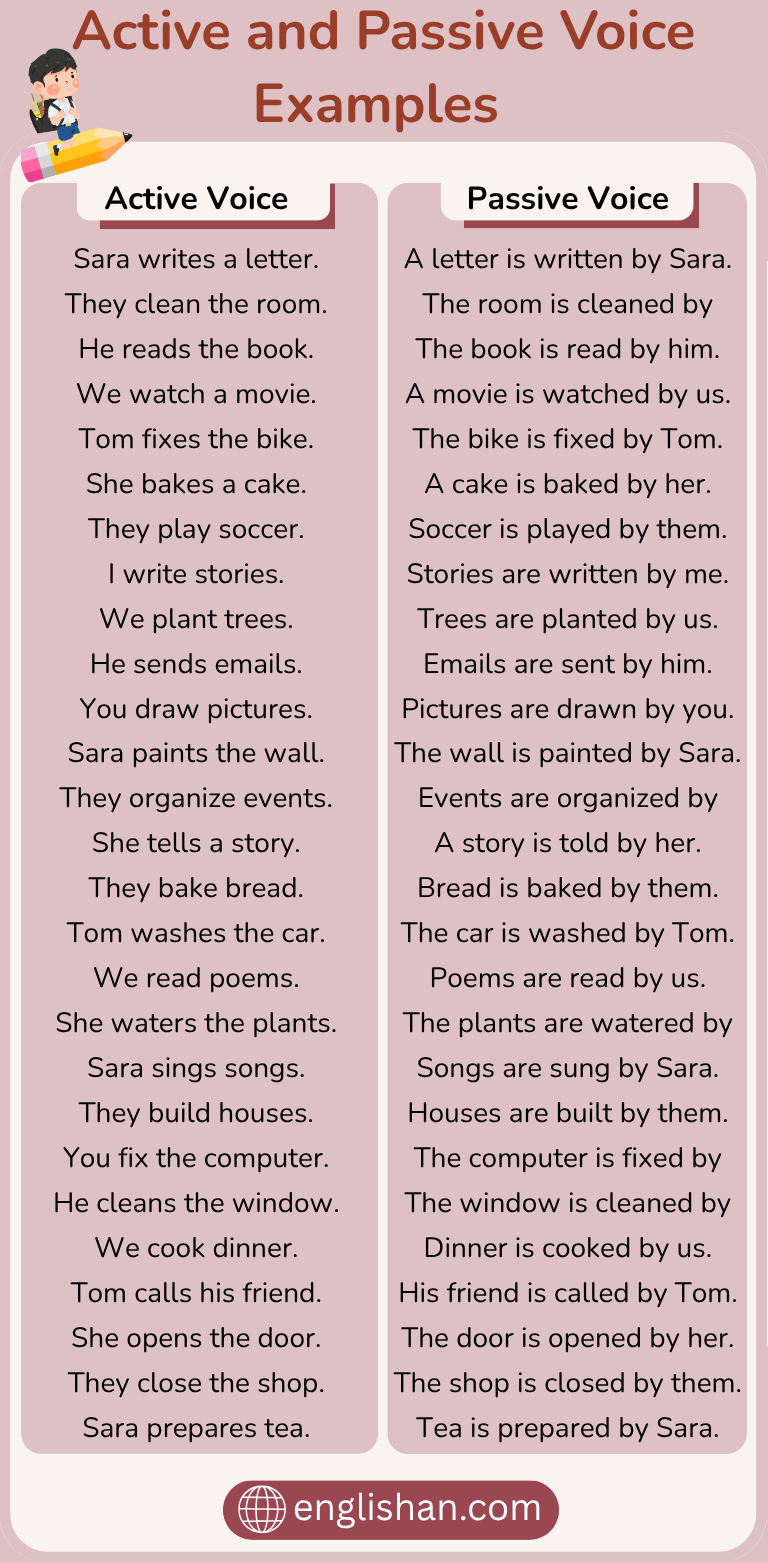
Definition Of Active And Passive Voice
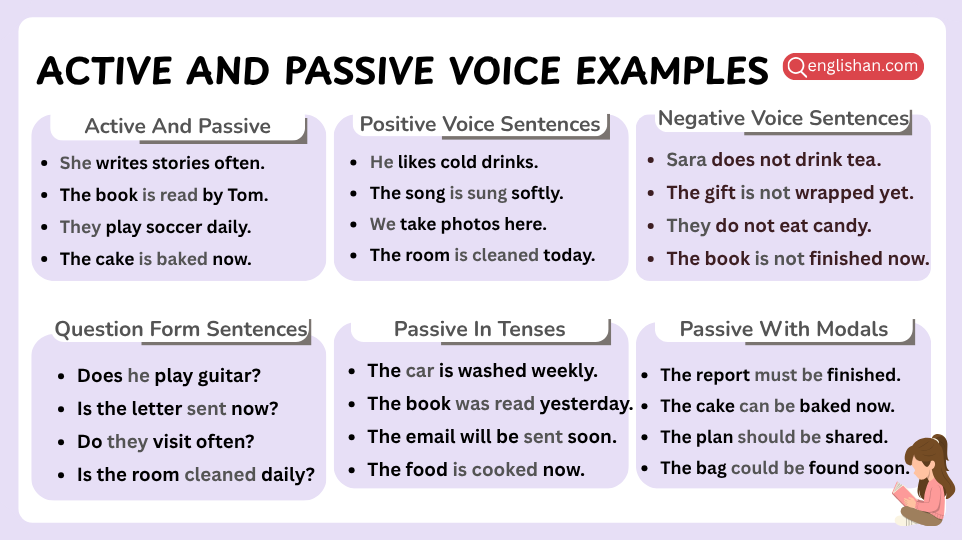
Active voice is when the subject performs the action in a sentence, while passive voice is when the subject receives the action. For example, “The cat chased the mouse” is active, but “The mouse was chased by the cat” is passive. Both forms are correct in English grammar and are used to change the focus of the sentence.
Active And Passive Voice Example Sentences
Below is a list of sentences showing how subjects and verbs build clear patterns in English.
- Sara makes tea.
- The kids play soccer.
- We enjoy movies on weekends.
- The cat catches mice.
- He repairs bikes.
- They clean the room.
- The dog chases the ball.
- I cook dinner daily.
- The teacher explains lessons.
- Birds sing in the morning.
- The book is read by Sara.
- Flowers bloom in spring.
- They organize events.
- We visit the park.
- The baby laughs loudly.
- Music is played at parties.
Positive Sentences In Active And Passive Voice
Below is a list showing positive patterns in sentence structure for clear English practice.
- He writes stories.
- The chef cooks delicious meals.
- They plant trees in the garden.
- Sara paints colorful pictures.
- We watch sunsets by the lake.
- The mechanic fixes the car.
- I read books every night.
- She waters the plants.
- The letter is sent by John.
- The team wins the game.
- They decorate the hall.
- Dogs love playing outside.
- You share good ideas.
- The gardener trims the bushes.
- The song is sung beautifully.
Negative Sentences Using Active And Passive Voice
Below is a list showing negative structures in English for sentence practice.
- He does not like spicy food.
- The cat does not chase the birds.
- They do not watch TV late.
- She does not drink coffee.
- I do not forget my keys.
- We do not miss the bus.
- The children do not eat candy often.
- Sara does not play video games.
- The book is not written in Spanish.
- The team does not lose easily.
- The dog does not bark at night.
- You do not ignore your friends.
- The flowers do not bloom in winter.
- He does not leave early.
- The cake is not baked today.
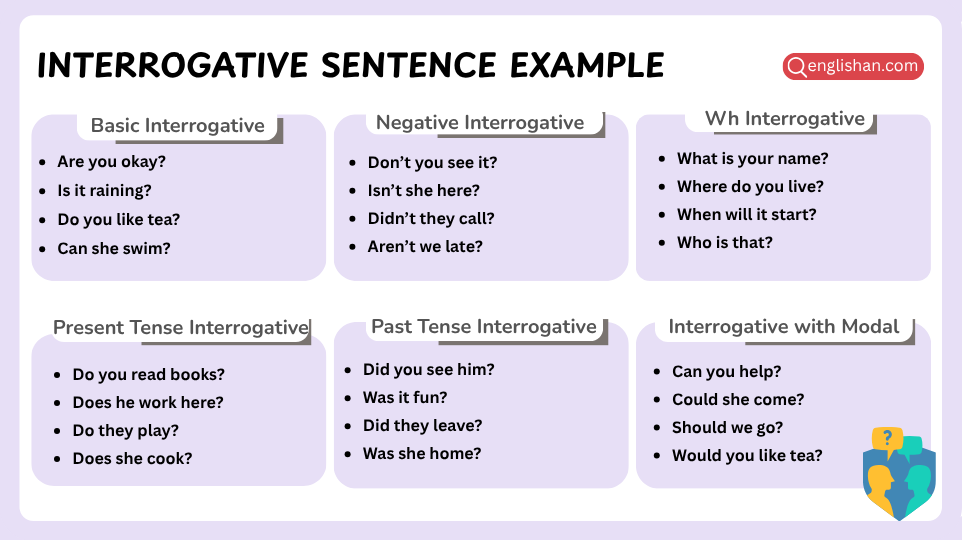
Interrogative Sentences In Active And Passive Voice
Below is a list of questions to practice patterns using active and passive voice.
- Does she like music?
- Do they visit often?
- Does he play soccer?
- Do you read books?
- Does Sara cook well?
- Is the book read by Sara?
- Are the meals cooked by the chef?
- Do we need help?
- Does the cat sleep here?
- Are the flowers watered daily?
- Do the kids enjoy the park?
- Does he call you often?
- Are the keys found easily?
- Do birds sing at dawn?
- Is the song sung by her?
Examples Of Changing Sentences From Active To Passive Voice
Below is a list showing how active sentences change into passive voice for clear structure practice.
- She writes a letter → A letter is written by her.
- They clean the room → The room is cleaned by them.
- He reads the book → The book is read by him.
- Sara paints a picture → A picture is painted by Sara.
- We watch a movie → A movie is watched by us.
- The chef cooks dinner → Dinner is cooked by the chef.
- You share the news → The news is shared by you.
- The team plays a match → A match is played by the team.
- I write a story → A story is written by me.
- They plant trees → Trees are planted by them.
- She sends the letter → The letter is sent by her.
- We bake a cake → A cake is baked by us.
- He opens the window → The window is opened by him.
- Sara tells a story → A story is told by Sara.
- They organize the event → The event is organized by them.
Sentences Using Passive Voice In Different Tenses
Below is a list showing clear examples of passive voice in present, past, and future tenses.
- The car is washed every week. (Present)
- The gift was opened yesterday. (Past)
- The project will be completed tomorrow. (Future)
- The letters are sent daily. (Present)
- The book was read last night. (Past)
- The cake will be made soon. (Future)
- The room is cleaned each morning. (Present)
- The test was finished quickly. (Past)
- The news will be shared later. (Future)
- The food is served hot. (Present)
- The story was told by the teacher. (Past)
- The invitation will be sent soon. (Future)
Passive Voice Sentences With Modal Verbs
Below is a list using modal verbs in passive voice for clear English patterns.
- The work can be done today.
- The project must be completed on time.
- The letter should be mailed soon.
- The message could be sent now.
- The car must be checked before travel.
- The food can be cooked later.
- The room should be cleaned regularly.
- The event will be planned by the team.
- The report might be reviewed tomorrow.
- The idea can be shared easily.
- The task must be finished quickly.
- The form should be filled carefully.
- The clothes can be washed now.
- The email must be sent today.
- The lesson could be learned fast.
FAQs About Active and Passive Voice
A sentence is in passive voice if the object comes first and the verb uses a form of “be” with the past participle, like “The book is read by Sara.”
Most sentences with a direct object can change to passive voice, but some intransitive verbs (like “sleep” or “arrive”) cannot be used in passive voice.
You May Also Like