
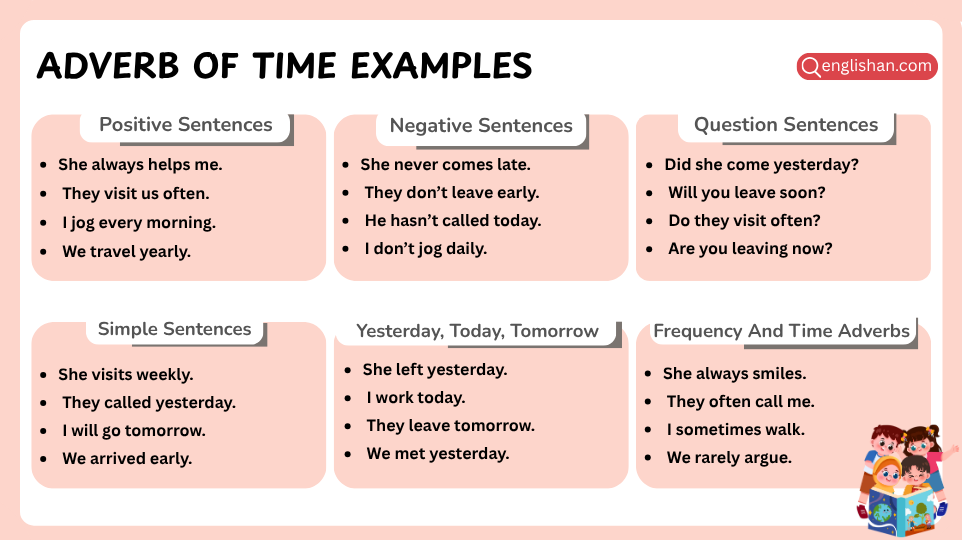
We can show when something happens using words called adverbs of time. Words like “yesterday,” “now,” or “soon” help tell the timing. For example, “He came early” shows when the action happened.
Learning sentences with adverbs of time helps you understand when actions happen and make sentences better.
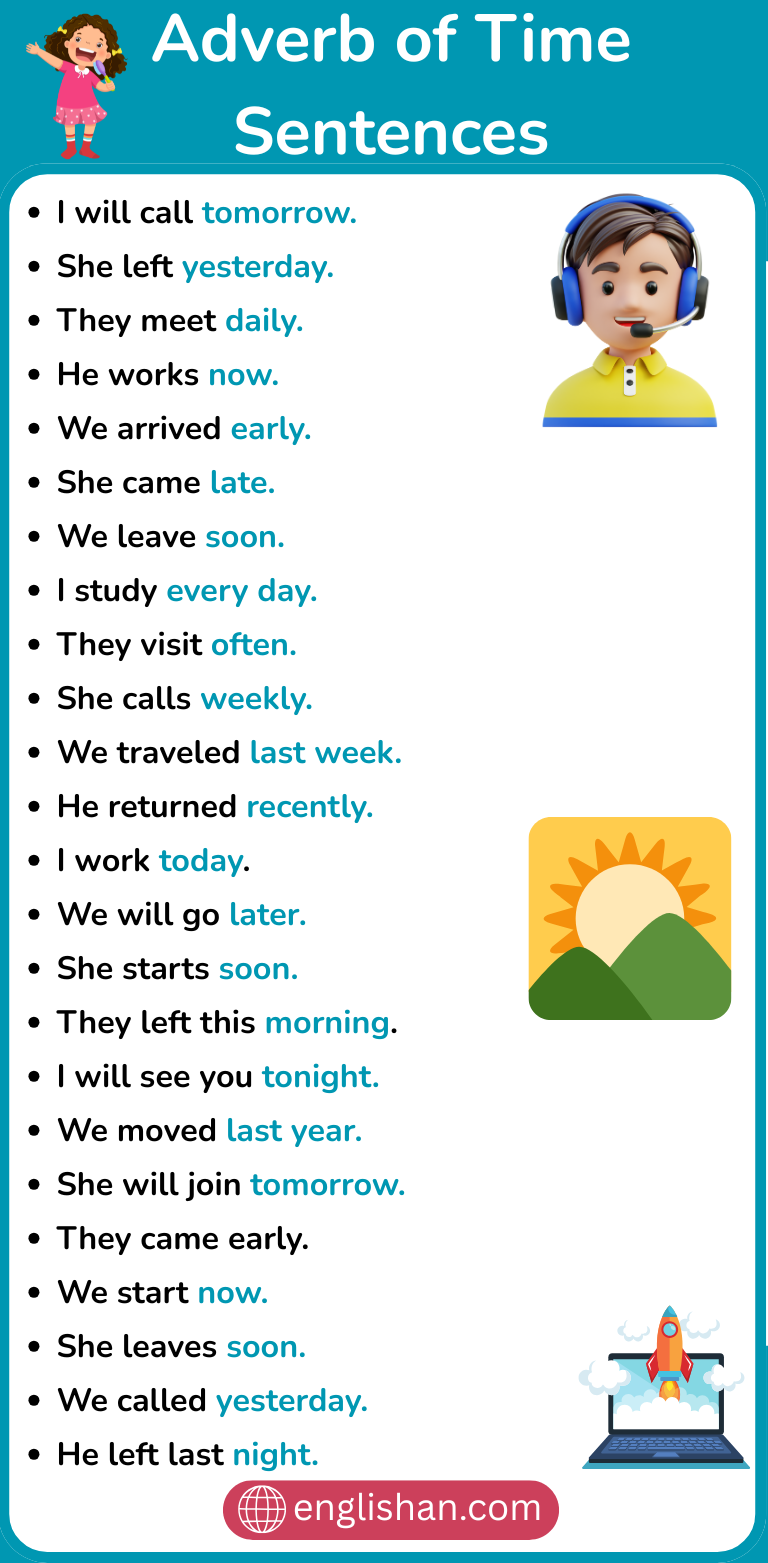
What is an Adverb of Time?
An adverb of time is a word that tells when an action happens. Examples include “yesterday,” “now,” and “soon.” For instance, “He will arrive soon” shows the action’s timing.
Adverb Of Time Examples In Sentences
Below is a list using adverbs of time to help you see their position and use within English sentences.
- I will call you tomorrow.
- She arrived yesterday.
- We study every day.
- They met me last week.
- I will see you soon.
- He goes jogging in the morning.
- We cleaned the house today.
- I finished my work earlier.
- She will visit next month.
- We are leaving now.
- They moved here recently.
- I saw him two days ago.
- She will join us later.
- We often go hiking on Sundays.
- He returned home late.
Positive Sentences Using Adverbs Of Time
Below is a list with positive sentences using adverbs of time for natural sentence understanding.
- She always helps her friends.
- They usually eat dinner at 7.
- I often read books at night.
- He frequently visits his grandma.
- We sometimes play chess after lunch.
- She already finished her homework.
- He recently moved to the city.
- I will see you tomorrow.
- They arrived yesterday.
- She goes jogging every morning.
- I met him last Friday.
- They will join us soon.
- We go shopping on Saturdays.
- I completed the project earlier.
- She came back yesterday.
Negative Sentences Using Adverbs Of Time
Below is a list of negative sentences using adverbs of time to help you understand how they appear in negative structures.
- She never eats junk food.
- They don’t always agree.
- He hasn’t yet finished the report.
- We don’t usually go out on Mondays.
- I didn’t see him yesterday.
- They haven’t come yet.
- I don’t often watch TV.
- She never forgets birthdays.
- We didn’t arrive early.
- He won’t come tomorrow.
- They didn’t return last week.
- She hasn’t called today.
- I don’t visit them often.
- We haven’t gone out recently.
- He won’t leave soon.
Question Sentences Using Adverbs Of Time
Below is a list of question sentences using adverbs of time to see how they form in everyday English.
- Did you call him yesterday?
- When will you visit us again?
- Have they arrived yet?
- Will you come tomorrow?
- Do you always eat breakfast?
- When did you leave yesterday?
- Does she usually walk to school?
- Did they come early?
- Are you leaving now?
- Do you often go out on weekends?
- Did he return home late?
- Will she join us soon?
- Have you finished your work today?
- Do they call you every day?
- Are you going to the store now?
Short Sentences With Adverbs Of Time
Below is a list with short sentences using adverbs of time, making it easier to grasp their placement.
- I’ll call later.
- She left early.
- They came yesterday.
- We meet daily.
- He arrived late.
- I work today.
- She will come soon.
- They left last week.
- I’m leaving now.
- She called this morning.
- We eat every day.
- He jogs in the evening.
- I saw him recently.
- They will return tomorrow.
- She visits often.
Simple Sentences With Adverbs Of Time
Below is a list using simple sentences to show clear patterns with adverbs of time.
- She studies every night.
- They will come tomorrow.
- I met him yesterday.
- We work daily.
- He arrived late.
- I saw her last week.
- They will leave soon.
- She goes to bed early.
- I eat breakfast every morning.
- We travel once a year.
- She came home yesterday.
- They visit us often.
- He called me this morning.
- We play soccer every Sunday.
- I work out in the evening.
Sentences With Yesterday, Today, And Tomorrow
Below is a list using yesterday, today, and tomorrow to illustrate practical sentence usage.
- She visited me yesterday.
- We will meet tomorrow.
- I am working today.
- They arrived yesterday.
- We have a test tomorrow.
- She is cooking today.
- He came back yesterday.
- We will travel tomorrow.
- I have class today.
- She left yesterday.
- We will call them tomorrow.
- He is busy today.
- They moved here yesterday.
- I will finish it tomorrow.
- She feels tired today.
Sentences With Frequency And Time Adverbs
Below is a list using frequency and time adverbs like always, often, and sometimes in natural sentences.
- She always wakes up early.
- They often play soccer.
- He sometimes eats out.
- I never skip breakfast.
- We usually study together.
- She rarely gets angry.
- They frequently visit us.
- I occasionally watch movies.
- We regularly exercise.
- She sometimes reads at night.
- He often arrives late.
- I always bring lunch.
- They usually leave on time.
- We never miss meetings.
- She rarely goes out.
Adverbs Of Time In Present Tense Sentences
Below is a list with adverbs of time in present tense sentences to show positioning and structure.
- She goes jogging every morning.
- They work today.
- I study daily.
- We meet every week.
- He arrives early.
- She cooks in the evening.
- I call my mom every day.
- They visit us often.
- We walk to school every day.
- He works now.
- She sleeps early.
- I eat breakfast every morning.
- They play outside daily.
- We exercise every evening.
- She reads books often.
Adverbs Of Time In Past Tense Sentences
Below is a list with adverbs of time in past tense sentences for clear sentence building.
- She arrived yesterday.
- They left last week.
- I finished it yesterday.
- We met two days ago.
- He came home early.
- She called me last night.
- They visited us yesterday.
- I saw him recently.
- We traveled last summer.
- She returned yesterday.
- He left late.
- We cleaned the house yesterday.
- I met her last Friday.
- They moved here last year.
- She left the party early.
Adverbs Of Time In Future Tense Sentences
Below is a list with adverbs of time in future tense sentences to visualize sentence forms.
- I will call you tomorrow.
- She will arrive soon.
- They will leave next week.
- We will meet tomorrow.
- He will come home early.
- She will finish it later.
- We will travel next month.
- I will see you soon.
- They will visit us next summer.
- We will move next year.
- She will call me tomorrow.
- He will return later.
- We will leave soon.
- I will join you later.
- They will call back tomorrow.
Sentences With Early, Late, Soon, And Now
Below is a list using early, late, soon, and now to strengthen your sentence pattern understanding.
- She arrived early.
- He came home late.
- We will leave soon.
- I need it now.
- They called me late last night.
- She finished work early.
- We will start soon.
- He needs the book now.
- I woke up early today.
- They came late to the party.
- She will call soon.
- We are leaving now.
- He returned home late.
- I will see you soon.
- She wants it now.
Sentences Using Adverbs Of Time For Scheduling
Below is a list using adverbs of time for scheduling to see their natural use in planning contexts.
- The meeting is scheduled for tomorrow.
- We will travel next week.
- She will join us later.
- The event starts soon.
- We leave at 8 AM.
- I will call you at noon.
- They will arrive this evening.
- She will send the email later today.
- We will meet on Friday.
- The project is due next month.
- He will come back soon.
- We will start at 10 sharp.
- She will visit us next weekend.
- I will see you at 5 PM.
- They will call tomorrow morning.
You May Also Like