A gown may look like a single beautiful piece of clothing, but it is actually made up of many carefully designed parts that work together. Each section of the gown has its own purpose, helping with fit, comfort, shape, and overall style. From the neckline and bodice to the flowing skirt and train, every detail plays a role in creating the final elegant look. In this article, we’ll explore the complete anatomy of a gown and understand how each one contributes to its design and beauty.
List of Gown Parts With Names
- Shoulder
- Sleeves
- Darts
- Waistline
- Neckline (Sweetheart)
- Bust Area
- Bodice
- Cuffs
- Panels
- Skirt
- Hemline
- Closure
- Bustle
- Train
Parts of a Gown Diagram With Names
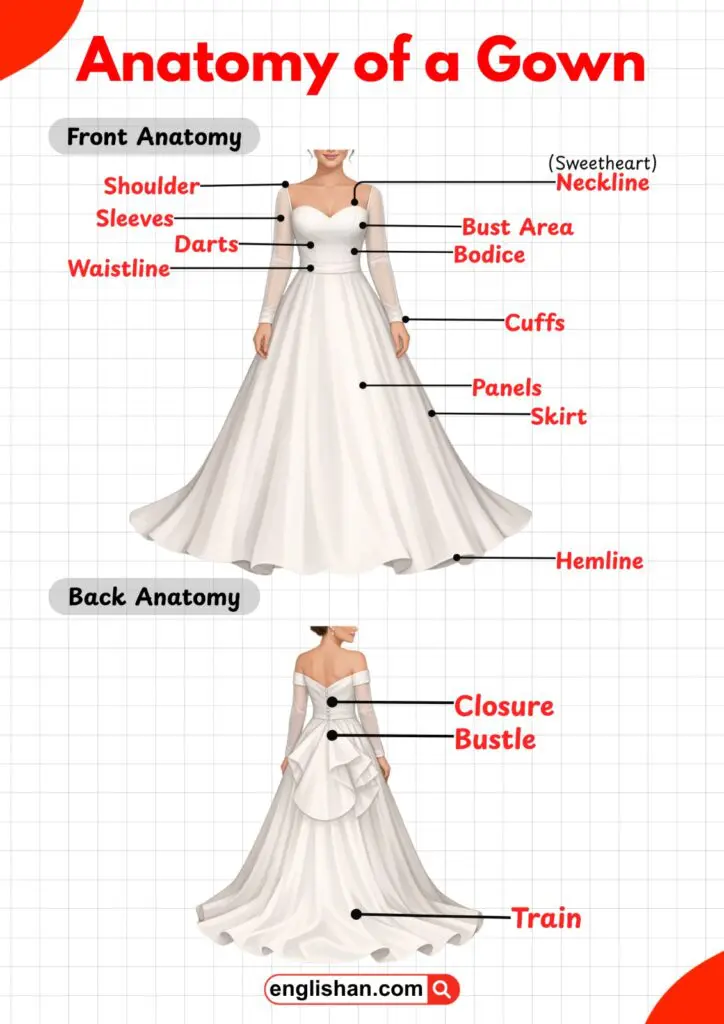
A gown is made up of several important parts that work together to create its shape, style, and elegance. The bodice forms the upper part of the gown and shapes the torso, while the skirt flows down to give it volume and movement. Sleeves and shoulders allow comfort and style, and the neckline defines the gown’s overall look. Details like the waistline, pleats, and panels enhance the fit and design, while embellishments such as lace, buttons, or ribbons add charm. The hemline finishes the gown neatly, and additional features like a bustle or train create sophistication and drama. Every part plays a key role in making the gown stylish, comfortable, and visually stunning.
Upper Body (Bodice Area)
This section shapes the upper part of the gown and helps create structure, support, and overall fit around the torso.
Shoulder
The shoulder area is where the gown rests on the body and connects the neckline to the sleeves. It provides support and helps the dress sit properly without slipping. A well-fitted shoulder ensures comfort and balanced posture.
Neckline (Sweetheart)
The neckline frames the upper chest and neck. A sweetheart neckline forms a soft heart shape across the bust, giving the gown a romantic and elegant appearance while highlighting the collarbone and shoulders.
Bust Area
The bust area covers and supports the chest. It is carefully shaped to provide comfort and proper fitting, often using structured stitching or padding to enhance the gown’s silhouette.
Bodice
The bodice is the main upper section of the gown, extending from the shoulders down to the waistline. It holds the dress firmly in place and defines the wearer’s shape, often being the most structured part of the gown.
Darts
Darts are small, folded stitches sewn into the fabric to shape the gown around the body. They help the dress contour smoothly to natural curves, preventing loose or bulky fabric.
Waistline
The waistline marks the point where the bodice meets the skirt. It defines body proportions and creates a flattering transition from the fitted upper section to the flowing lower part.
Sleeve Components
These parts cover the arms and add both style and functionality to the gown.
Sleeves
Sleeves cover part or all of the arms depending on the design. They can add elegance, modesty, or warmth while also balancing the overall look of the gown.
Cuffs
Cuffs are the finished edges at the ends of sleeves near the wrists. They provide a neat ending to the sleeves and may be fitted, decorated, or slightly tightened for style.
Skirt Section
This section forms the lower flowing portion of the gown and creates movement and volume.
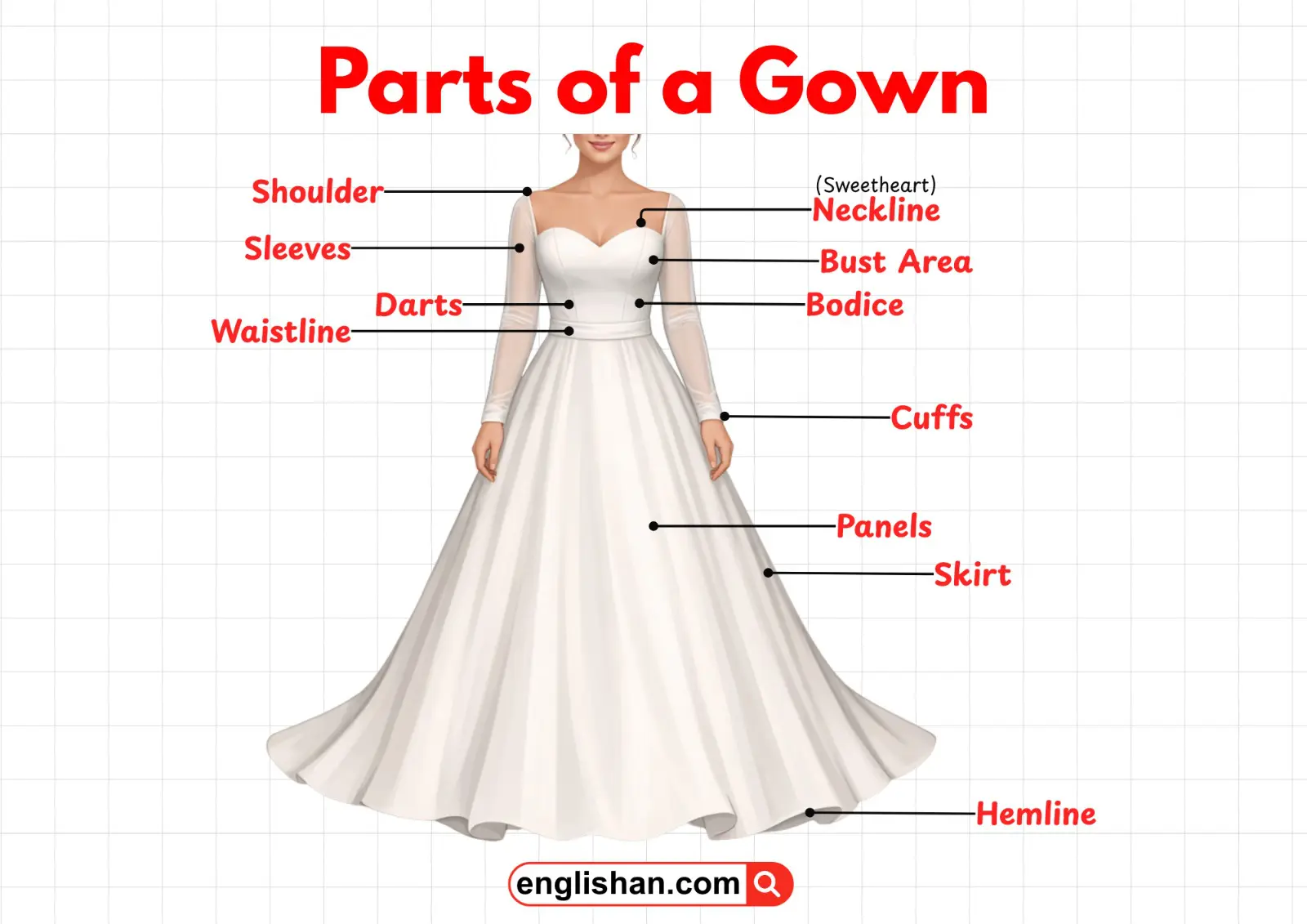
Panels
Panels are individual pieces of fabric sewn together to form the skirt. They help create shape, fullness, and smooth draping while allowing the gown to move gracefully.
Skirt
The skirt is the large lower portion of the gown that extends from the waist downward. It gives the dress its volume and flow, contributing greatly to the gown’s elegance and style.
Hemline
The hemline is the bottom edge of the skirt. It finishes the gown neatly and determines the overall length, whether floor-length, ankle-length, or extended.
Back Design Elements
These features add function and decorative detail to the back of the gown.
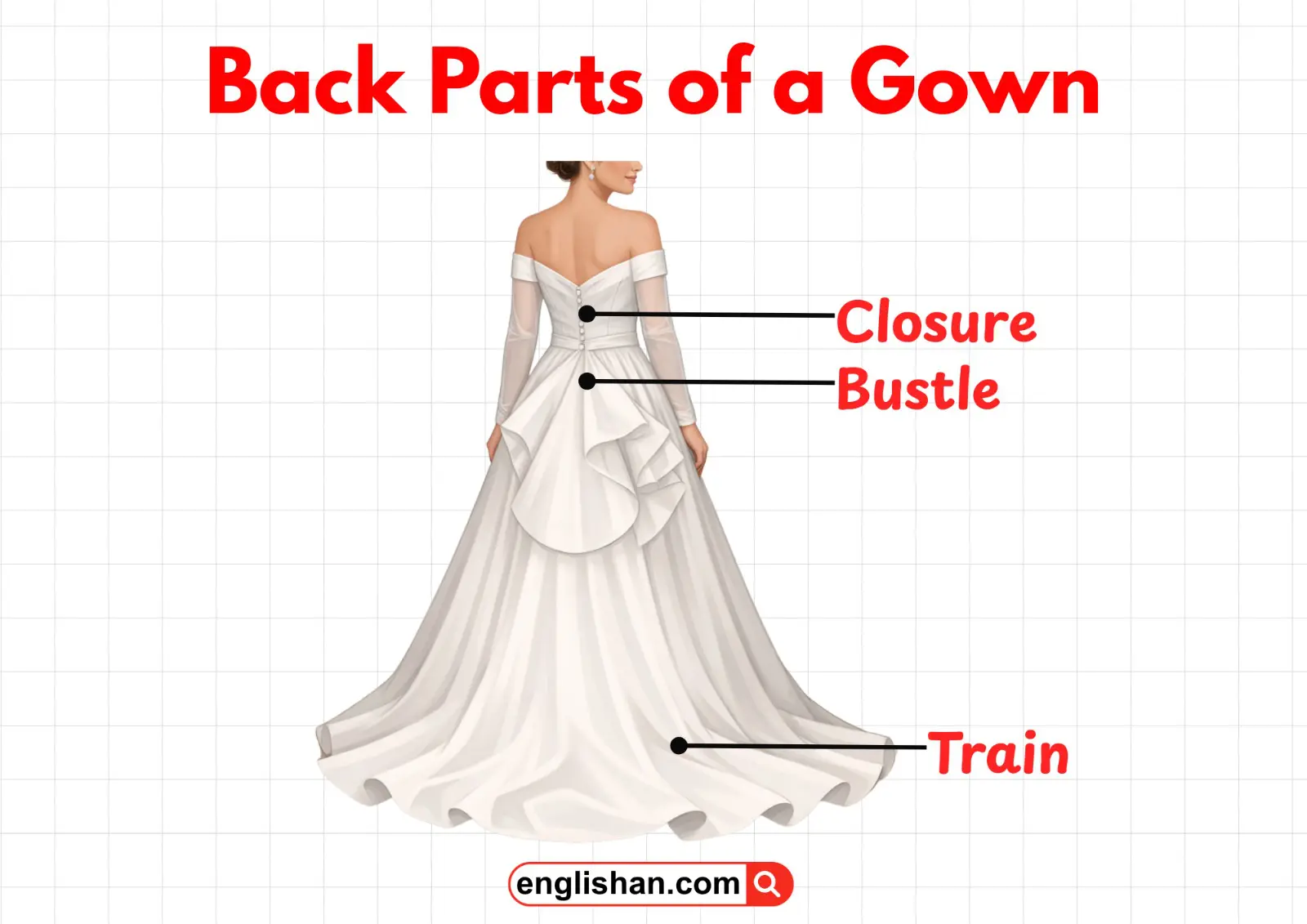
Closure
The closure is the fastening system at the back, such as a zipper, buttons, or laces. It allows the gown to be worn securely while maintaining a clean and fitted appearance.
Bustle
A bustle is a gathered or lifted section of fabric at the back of the gown. It adds decorative volume and can also help manage long fabric, especially in formal dresses.
Train
The train is the extended fabric that flows behind the gown on the floor. It creates a dramatic and luxurious look, commonly seen in bridal and formal gowns.
Key Takeaway
A gown is carefully designed using multiple parts that work together to create structure, comfort, and beauty. The bodice shapes the upper body, sleeves enhance style and coverage, the skirt adds movement and elegance, and the back elements provide both function and dramatic detail. Understanding the anatomy of a gown helps us appreciate how a gown achieves its graceful and balanced appearance.
You May Also Like