
Bale of hay or bail of hay? The correct phrase is bale of hay. A bale is a tightly packed bundle of hay, straw, or similar material made for easier storage and transport. Bail means something else, so bail of hay is not the standard spelling.
The confusion happens because bale and bail sound the same when spoken. That is why many people mix them up in writing. By the end of the article, you will know the difference and remember which spelling belongs with hay.
Bale of Hay or Bail of Hay: Quick Answer
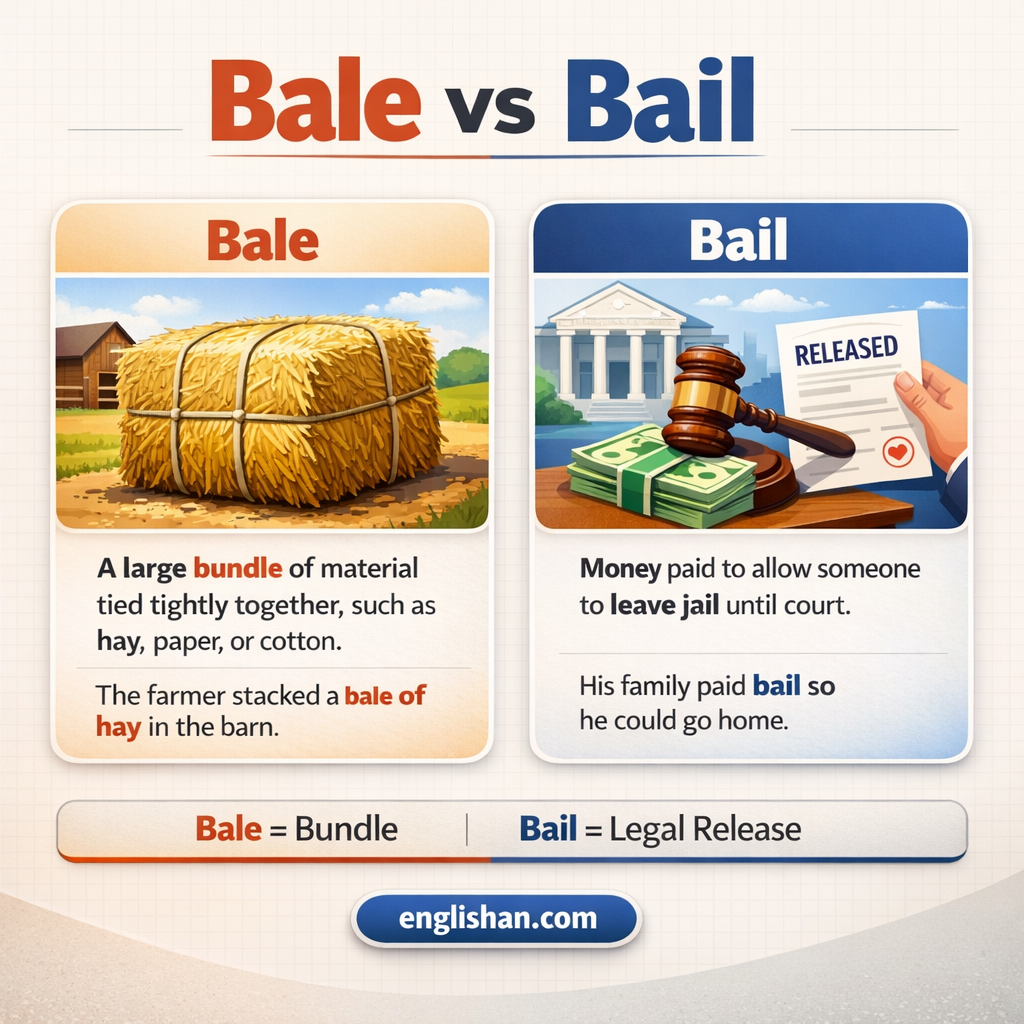
The correct phrase is bale of hay.
| Phrase | Correct? | Meaning |
|---|---|---|
| bale of hay | yes | a tightly bound bundle of hay |
| bail of hay | no | not correct in this meaning |
If the phrase refers to a bundle of hay, the spelling is always bale.
What Does Bale of Hay Mean?
A bale of hay is a compressed bundle of dried grass used for animal feed. After hay is cut and dried, it is packed into bales so it can be handled more efficiently.
Baling makes hay easier to:
- store
- move
- stack
- transport
Hay is commonly stored in two main bale shapes:
- square bales, which are smaller and easier to lift by hand
- round bales, which are larger and usually moved with machinery
In both cases, the word bale refers to a bound bundle of material.
Examples of Bale of Hay
- The farmer loaded a bale of hay onto the trailer.
- Several bales of hay were stacked beside the barn.
- The horses were fed from a fresh bale of hay.
What Does Bail Mean?
The word bail has several meanings in English, but none of them relate to hay bundles.
One common meaning refers to money paid to secure temporary release from jail while someone waits for trial.
Another meaning refers to removing water from a boat or container.
It also appears in the phrase bail out, which can mean to leave a difficult situation or help support someone financially.
Examples of Bail
- The judge set bail at five thousand dollars.
- They had to bail water from the leaking boat.
- The company asked the government to bail out the industry.
These meanings are completely separate from farming, hay, and bundling materials.
Bale vs Bail: Key Difference
The difference is straightforward:
- bale = a bundle of material
- bail = legal release money, removing water, or leaving a difficult situation
That is why bale of hay is correct and bail of hay is not.
A quick contrast makes it easier to see:
| Word | Meaning | Example |
|---|---|---|
| bale | a bound bundle of material | a bale of hay |
| bail | money for release from jail, or remove water | released on bail |
If the word refers to a bundle, use bale. If it refers to court, water, or escaping a situation, use bail.
How to Remember Bale vs Bail
A quick memory trick can help:
- bale = bundle
- bail = jail or bail water
If you are writing about farming, hay, straw, or bundled material, the right spelling is bale.
If you are writing about court, jail, or scooping water from a boat, the word is bail.
Bale and Bail in Sentences
Here are a few examples that show the difference clearly.
Sentences With “Bale”
- The tractor lifted a bale of hay into the shed.
- Fresh bales were delivered to the stable that morning.
Sentences With “Bail”
- The suspect was released on bail after the hearing.
- The crew had to bail water from the boat during the storm.
Placed side by side, the two spellings are much easier to separate.
Summary
The correct phrase is bale of hay, not bail of hay. A bale is a tightly bound bundle of material, including hay, straw, or cotton. The word bail has different meanings related to court, removing water, or leaving a difficult situation, so it does not belong in this phrase. Once you connect bale with bundles and bail with jail or water, the spelling becomes much easier to remember.
FAQs
The correct phrase is bale of hay. Bail of hay is incorrect when referring to bundles of dried grass.
A bale of hay is a tightly packed bundle of dried grass that farmers store and use as feed for animals such as horses and cattle.
The word bail has different meanings. It refers to money paid for temporary release from jail, the act of removing water from a boat, or leaving a situation. None of these meanings relate to bundles of hay.
Bale refers to a tightly bound bundle of material such as hay, straw, or cotton. Bail usually refers to legal release from custody, removing water from a boat, or leaving a situation early.
Yes. Bale can be used as a verb meaning to gather and tie materials like hay or straw into compact bundles for storage or transport.
You May Also Like