Crawl animals move close to the ground with their legs or by sliding their bodies. They don’t fly or walk tall. Some crawl slowly like snails and worms, while others like lizards and crabs move faster. These animals live in places like gardens, rivers, deserts, and forests. Their crawling helps them stay low, hide, and look for food without being noticed.
Learning crawl animals names helps you talk better about how animals move in nature or in science class.
List of Crawl Animals Names
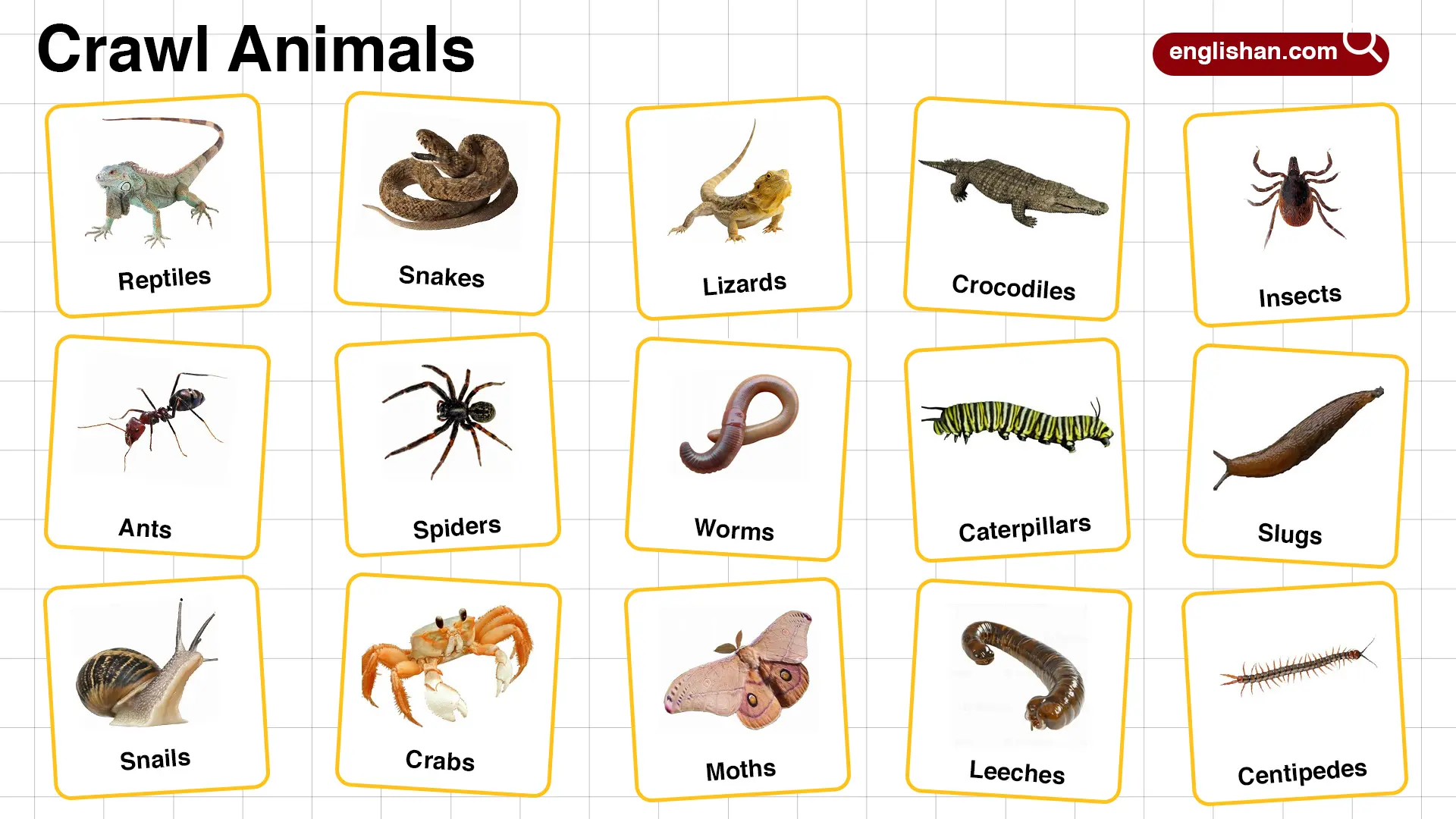
Below is a list of crawl animals names that will be used in this blog post. Each of these names will be explained below:
- Reptiles
- Snakes
- Lizards
- Crocodiles
- Insects
- Ants
- Spiders
- Worms
- Caterpillars
- Slugs
- Snails
- Crabs
- Moths
- Butterflies (as caterpillars)
- Leeches
- Centipedes
- Millipedes
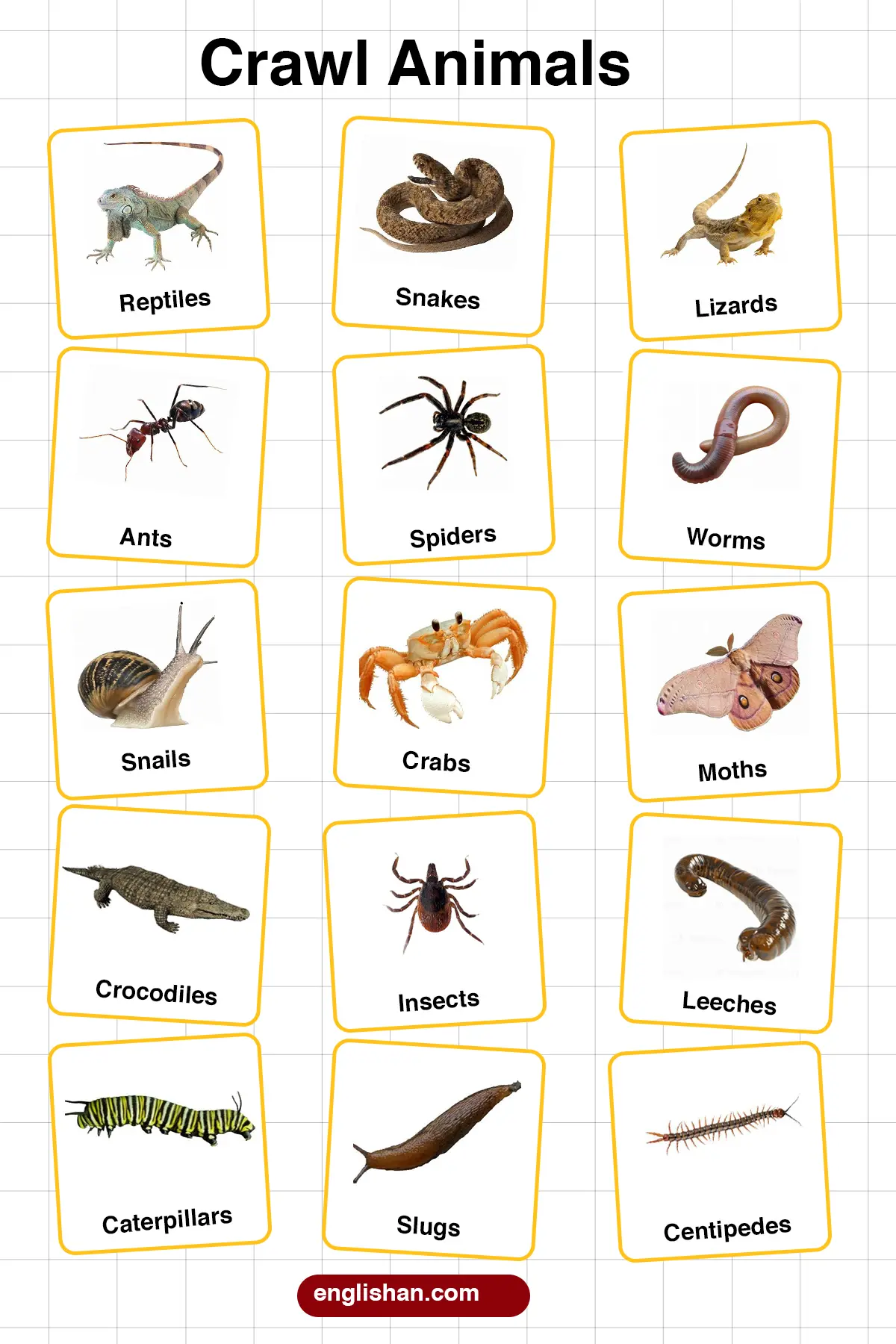
Master all animals names in English and build strong vocabulary with this complete post.
Reptiles That Crawl
Reptiles are cold-blooded animals that often move by crawling on their bellies or with short limbs. Many reptiles are land-based and are known for their scaly skin.
Snakes
Snakes are long, legless reptiles that slither across the ground.
- Python: It uses strong body muscles to squeeze prey and crawl slowly in silent places.
- Cobra: Known for its hood, it crawls fast and lifts its head when it feels danger.
- Rattlesnake: It makes a rattling sound with its tail and crawls in dry places like deserts.
Lizards That Move by Crawling
Lizards crawl using short legs and scaly feet, often staying close to the ground.
- Gecko: This lizard has sticky feet and can crawl on walls and ceilings without falling.
- Monitor lizard: A strong and large lizard that crawls with power and chases small animals.
- Chameleon: Moves very slowly and can change color while crawling on trees and bushes.
Crocodiles
Crocodiles are large reptiles that crawl using strong limbs and belly support.
- Saltwater crocodile: It crawls using strong legs and slides its belly on sand and mud.
- Nile crocodile: Crawls in water and on land and can move very quickly when needed.
- American crocodile: Seen crawling on riverbanks where it basks in the sun or waits for prey.
Names of Crawling Insect
Insects and small bugs crawl using jointed legs. Many have wings, but they often crawl at rest or in early stages.
Ants, Spiders, and Other Common Crawling Insects
These insects crawl across surfaces in search of food or to build shelters.
- Black ant: Crawls in straight lines, often in groups, and collects food like sugar or crumbs.
- Fire ant: It crawls quickly and gives a painful bite when someone touches its path or nest.
- House spider: This spider crawls using eight legs and builds sticky webs in corners.
- Jumping spider: It crawls a little, then jumps forward to catch insects and escape threats.
Insects Crawl Instead of Fly
Some insects crawl during certain stages or when wings are not used.
- Cockroach: Mostly crawls fast across floors and runs away when you try to catch it.
- Earwig: It crawls under stones and leaves and has little pinchers at the back.
- Beetle: Many beetles crawl more than they fly, especially on the ground or inside wood.
Caterpillars: Early Stage Crawling Insects
Caterpillars are larvae of butterflies and moths. They crawl using soft legs.
- Silkworm: Crawls slowly and produces fine silk threads used in clothes.
- Monarch caterpillar: It has black and yellow stripes and eats leaves while crawling slowly.
- Hornworm: A thick green caterpillar that crawls on tomato plants and eats many leaves.
Crawling Moths
Moths begin life crawling as larvae, then later grow wings.
- Atlas moth caterpillar: Crawls and grows big before changing into a huge moth.
- Luna moth caterpillar: Crawls on tree branches and eats leaves until it becomes a moth.
- Ghost moth caterpillar: Lives under the soil, crawls at night, and later turns into a flying adult.
Soft-Bodied Crawl Animals
These animals have no bones and move by sliding or contracting their muscles.
Worms Crawl Without Legs
Worms use muscles and tiny bristles to move through soil and moist areas.
- Earthworm: It moves using body waves and tiny bristles to dig and breathe in soil.
- Red wiggler: It crawls in compost bins and helps turn waste into rich plant food.
- Flatworm: Crawls in water or damp places and looks like a soft flat ribbon.
Snails and Slugs
Snails and slugs glide on a slime trail using a flat foot.
- Garden snail: Crawls very slowly and carries a round shell for protection.
- Apple snail: Lives in ponds and crawls on water plants with a soft foot.
- Banana slug: A long, yellow slug that crawls on forest ground after rain.
Leeches: Aquatic and Terrestrial Crawlers
Leeches crawl with suction ends and are mostly found near water.
- Medicinal leech: Crawls using suckers and is used by doctors to remove bad blood.
- Freshwater leech: Crawls in lakes and attaches to fish or frogs for food.
- Tiger leech: Found in forests, it crawls on leaves and waits to bite warm animals.
Arthropods and Many-Legged Crawlers
These animals have segmented bodies and many jointed legs to crawl.
Millipedes and Centipedes
These creatures crawl using dozens of tiny legs on each side.
- Giant millipede: Crawls slowly and curls into a circle when it feels scared.
- House centipede: Has many legs and crawls quickly across walls to catch bugs.
- Stone centipede: Hides under rocks and crawls in dark, cool places.
Crabs Crawl Animals
Crabs crawl sideways using their legs and claws.
- Fiddler crab: Crawls sideways using legs and waves one large claw in the air.
- Hermit crab: Crawls with a shell on its back and hides inside when scared.
- Blue crab: Found near water, it crawls and also swims with flat legs.
Crawling Animals Are Found
Crawling animals live in diverse places depending on their body type and habitat needs.
Crawl Creatures Found in Gardens and Yards
These are common crawl animals seen in household gardens.
- Snails: Often crawl on leaves or wet garden walls, especially after rain.
- Caterpillars: Eat green leaves and crawl on flower beds and garden fences.
- Ants: Crawl on the ground or inside houses looking for food bits.
Crawl Animals That Survive in Wet and Muddy Areas
Some crawl animals need constant moisture to move and breathe.
- Earthworms: Need moist soil to crawl and breathe properly.
- Crabs: Crawl on wet sand, shores, and in between rocks near water.
- Snails: Live in wet places where their bodies do not dry out easily.
FAQs About Crawl Animals
Crawl animals are creatures that move close to the ground using their bodies, legs, or muscles without flying or walking upright like snakes, lizards, worms, or slugs.
Yes, insects like ants, caterpillars, and spiders crawl on surfaces and are classified as crawl animals.
Creeping is a slow, stealthy type of crawling often seen in snails or earthworms, but all creeping is crawling.
You May Also Like
- List of Shy Animals
- Omnivorous Animals List
- Desert-Dwelling Animals Names
- Pet Animals with Pictures
- Leaves Names in English
- Animals That Are No Longer Alive