Dental instruments are tools used by dentists to clean, examine, treat, and repair teeth. Each tool has a specific purpose, from checking cavities to removing plaque or filling teeth.
This post lists common dental instruments names with pictures. You’ll learn what each tool is called and how it’s used in dental care grouped to support clear vocabulary learning
List of Dental Instruments Names
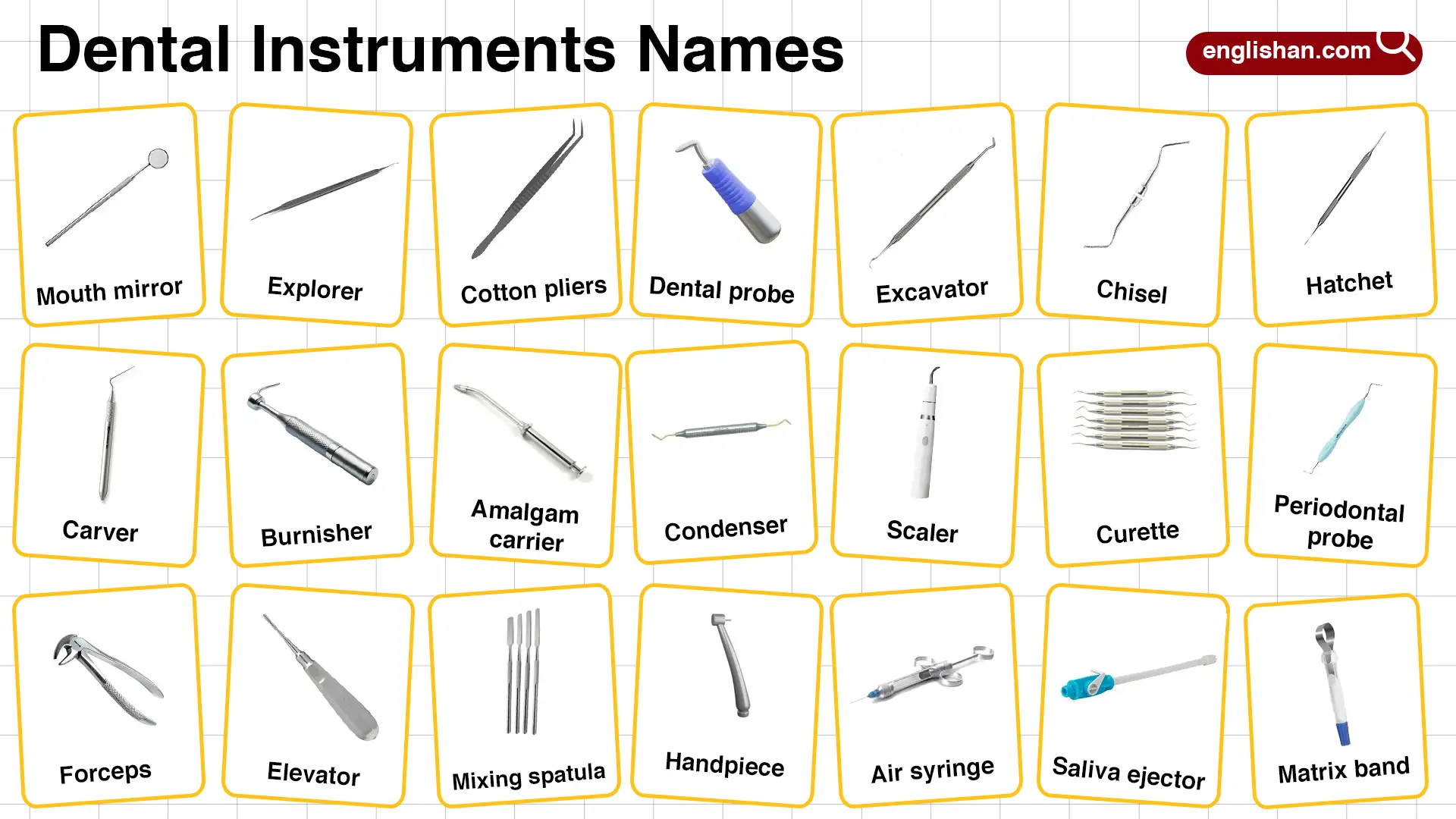
This list includes the names of common dental instruments used by dentists. Each tool has a unique purpose for examining, cleaning, or treating teeth. Learning these names helps students and patients understand what happens during dental procedures.
- Mouth mirror
- Explorer
- Cotton pliers
- Dental probe
- Excavator
- Spoon excavator
- Chisel
- Hatchet
- Gingival margin trimmer
- Carver
- Burnisher
- Amalgam carrier
- Condenser
- Scaler
- Curette
- Periodontal probe
- Forceps
- Elevator
- Dental drill
- Handpiece
- Air syringe
- Saliva ejector
- Matrix band
- Retainer
- Articulating paper holder
- Rubber dam
- Rubber dam clamp
- Clamp forceps
- Impression tray
- Mixing spatula
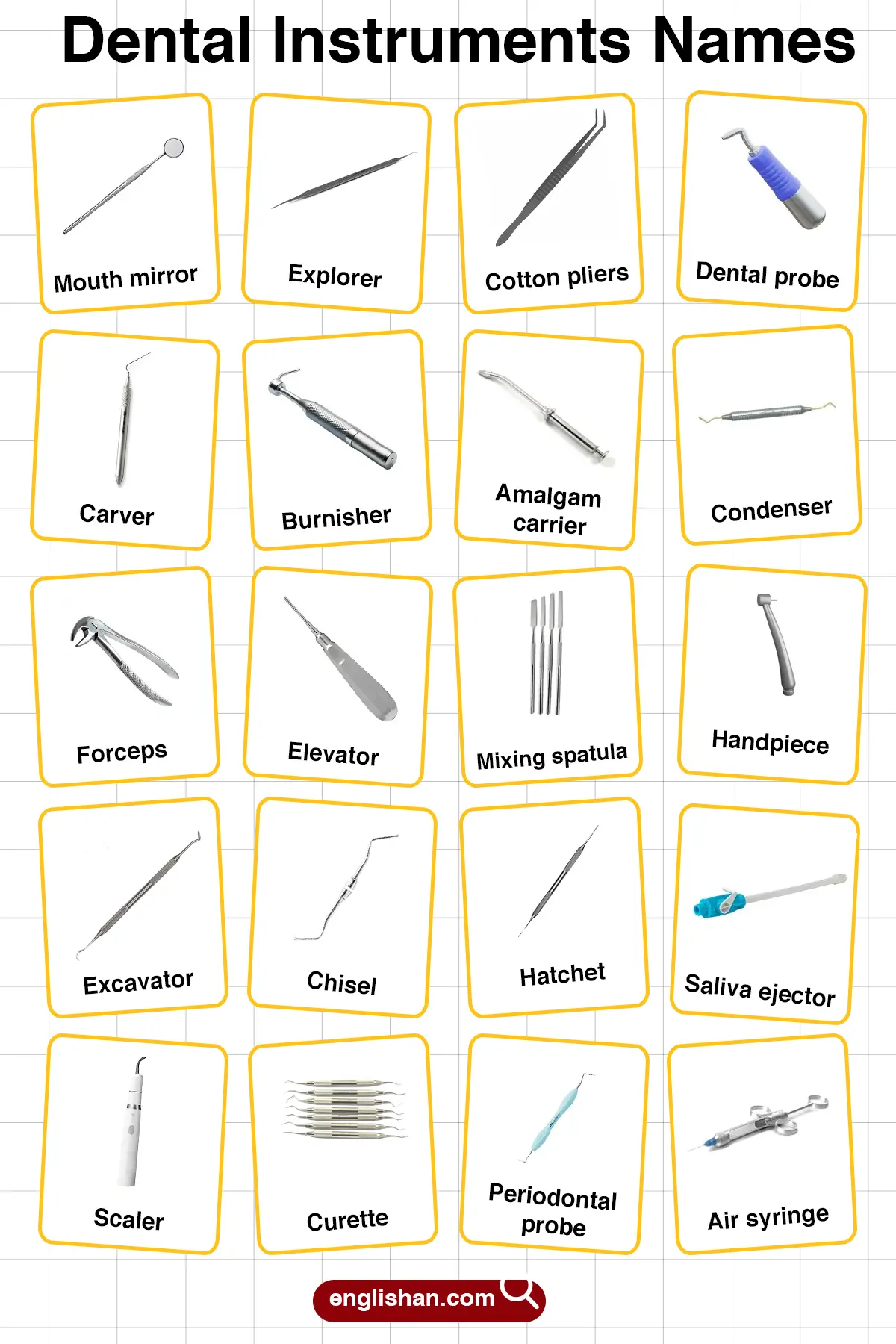
Types of Dental Instruments Names
Dental instruments are tools dentists use to check, clean, treat, or remove teeth. Each instrument has a specific role in keeping the mouth healthy. Knowing their names helps patients understand dental visits and feel more comfortable during treatment.
Basic Examination Tools
These tools help dentists look inside the mouth to check for problems. Below is a list of basic instruments used during a dental checkup.
- Mouth Mirror: Used to see inside the mouth and reflect light on hard-to-see areas.
- Explorer: Helps detect tooth decay, especially in pits and fissures.
- Cotton Pliers: Used to place or remove cotton rolls or small items inside the mouth.
- Dental Probe: Measures pocket depth around teeth to check gum health.
Names of Cleaning Instruments
Cleaning tools are used to remove plaque, tartar, and stains. Below is a list of tools used during dental cleaning procedures.
- Scaler: Removes tartar and hard deposits from tooth surfaces.
- Curette: Cleans below the gumline and smooths the tooth root.
- Periodontal Probe: Measures gum pockets and detects inflammation.
Surgical Instruments
These tools are used during extractions and surgeries. Below is a list of tools commonly used for surgical dental procedures.
- Forceps: Used to grasp and remove teeth during extractions.
- Elevator: Helps loosen teeth from their sockets before removal.
- Dental Drill: Removes bone or cuts teeth during surgery.
- Handpiece: Powers drills and burrs for cutting and shaping.
- Clamp Forceps: Used to place and remove clamps.
Root Canal Instruments
Root canal tools clean and fill the inside of the tooth. Below is a list of tools used in endodontic treatment.
- Rubber Dam: Keeps the area dry and isolated during root canal treatment.
- Rubber Dam Clamp: Holds the rubber dam in place.
- Clamp Forceps: Used to handle and place the rubber dam clamp.
- Excavator: Removes decayed material from cavities.
- Spoon Excavator: Has a rounded end for scooping soft decay.
Restorative Instruments
These tools are used to restore teeth using materials like fillings. Below is a list of tools used to repair damaged teeth.
- Amalgam Carrier: Transfers filling material into the prepared cavity.
- Condenser: Packs filling material tightly into the cavity.
- Burnisher: Smooths and polishes the surface of a filling.
- Carver: Shapes and trims filling material after placement.
- Chisel: Removes enamel during cavity preparation.
- Hatchet: Cleans and shapes cavity walls.
- Gingival Margin Trimmer: Shapes the edges of the cavity near the gumline.
- Matrix Band: Forms a temporary wall around the tooth during fillings.
- Retainer: Holds the matrix band in place.
- Articulating Paper Holder: Checks bite after restoration is done.
Orthodontic Instruments
These instruments are used to adjust and manage braces. Below is a list of tools used in orthodontic treatment.
- Air Syringe: Dries the area during bonding of braces.
- Impression Tray: Holds impression material to create a mold of the teeth.
- Mixing Spatula: Mixes materials for impressions and cements.
Pediatric Instruments
These are smaller versions of regular tools made for children. Below is a list of commonly used pediatric dental tools.
- Child Mouth Mirror: Smaller mirror for examining children’s teeth.
- Pediatric Excavator: Used for removing decay in baby teeth.
- Saliva Ejector: Keeps the child’s mouth dry during procedures.
Most Common Instruments in Clinics
This section includes general tools you will find in almost every dental setting. Below is a list of the most used instruments.
- Mouth Mirror
- Explorer
- Cotton Pliers
- Scaler
- Forceps
- Elevator
- Amalgam Carrier
- Burnisher
- Rubber Dam
- Dental Drill
- Handpiece
- Air Syringe
- Saliva Ejector
- Impression Tray
Conclusion
To sum up, knowing dental instruments names helps you understand what each tool does in dentistry. This complete list gives a clear picture of common tools used for exams, cleanings, and treatments making it easier to learn and remember them.
FAQs About Dental Instruments Names
A basic checkup usually includes a mouth mirror, explorer, cotton pliers, and a dental probe for examining teeth and gums.
A dental explorer is used to detect cavities, surface texture, and plaque by gently probing teeth and gumlines.
Tooth extractions involve forceps, elevators, and sometimes a dental drill or handpiece for complex removals.
You May Also Like