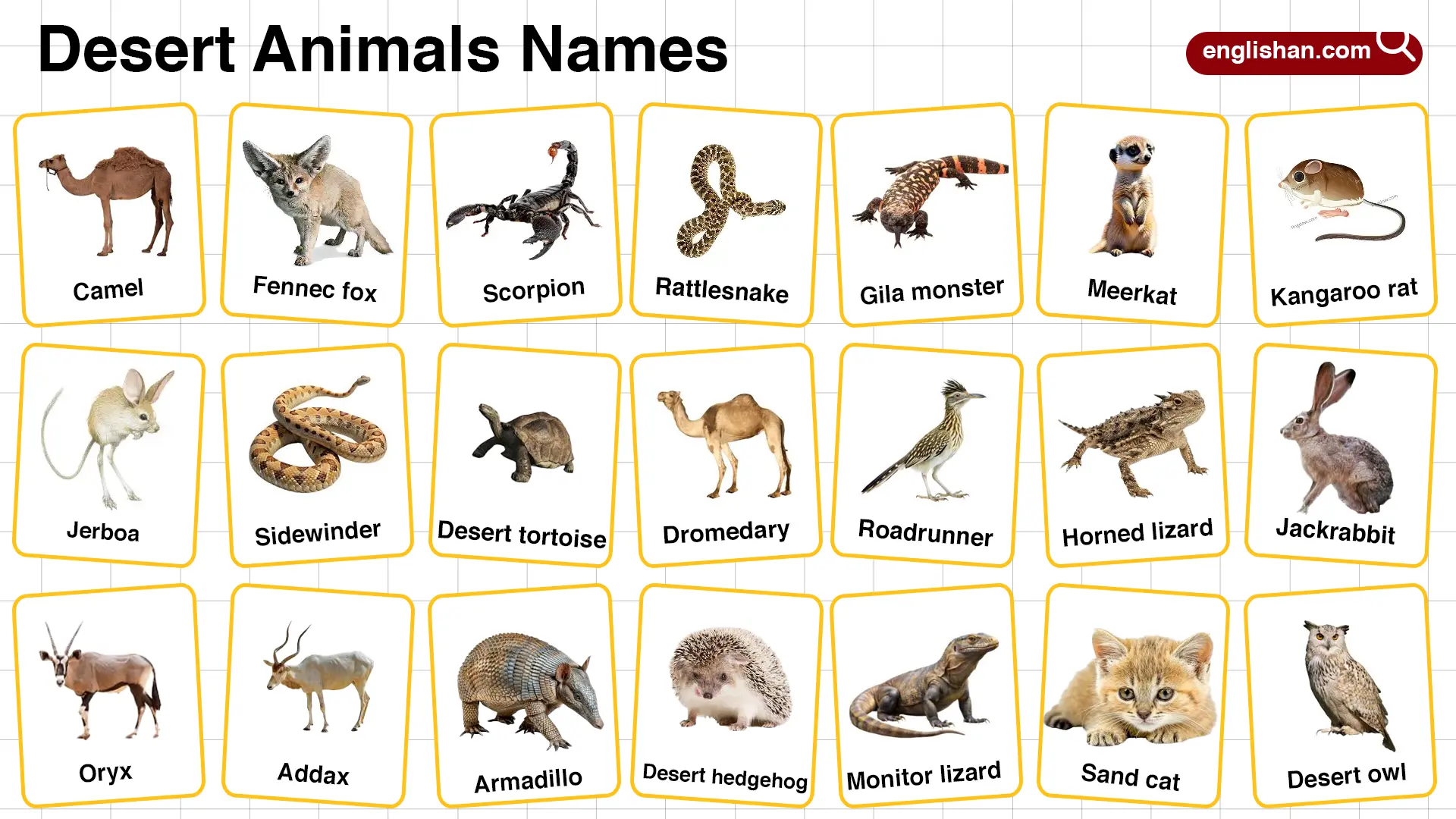
Many animals live in deserts like the Sahara or Mojave and adapt to heat, dryness, and little water. These desert animals, such as lizards, camels, foxes, and insects, each have fascinating desert animal names that reflect their ability to survive harsh climates.
This post lists their names with pictures. You’ll discover common species found in hot, dry places and grouped for better vocabulary learning.
Master all animals names in English and build strong vocabulary with this complete post.
List of Desert Animals Names
Learning desert animals names improves recognition and spelling. Below is a helpful list for learners of all levels.
- Fennec fox
- Scorpion
- Rattlesnake
- Gila monster
- Meerkat
- Kangaroo rat
- Jerboa
- Sidewinder
- Desert tortoise
- Dromedary
- Roadrunner
- Horned lizard
- Jackrabbit
- Oryx
- Addax
- Armadillo
- Desert hedgehog
- Monitor lizard
- Sand cat
- Desert owl
- Tarantula
- Desert hare
- Bactrian camel
- Lappet-faced vulture
- Desert locust
- Beisa oryx
- Saharan silver ant
- Fringe-toed lizard
- Arabian oryx
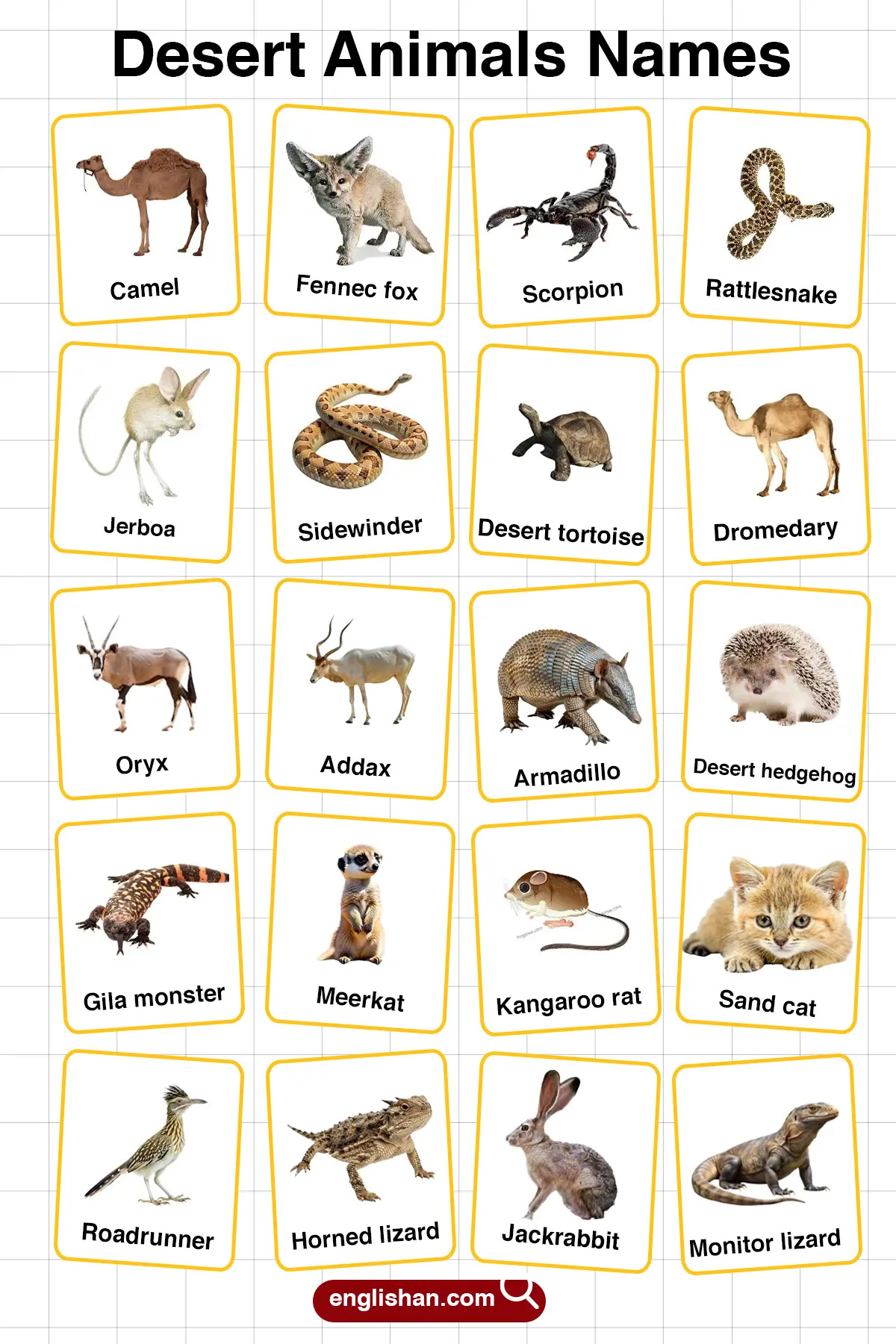
These animals thrive where water is rare, unlike fish or turtles. You can compare with Aquatic Animals Names in English.
Types of Desert Animals Names
Desert animals come in many shapes and sizes. These creatures are adapted to live in hot, dry places with little water. Some stay underground during the day, while others move quickly or store fat and water in their bodies. Below is a list of common desert animals and what makes each one special.
Small Desert Creatures Names
These are tiny animals like rodents, spiders, and reptiles that survive desert heat by hiding, moving at night, or using special body parts for protection.
- Fennec Fox: A tiny desert fox with large ears for heat control and night hunting.
- Jerboa: A hopping rodent with long legs and a strong tail for balance in sandy terrain.
- Kangaroo Rat: Stores seeds in its cheeks and barely drinks water to survive desert heat.
- Desert Hedgehog: Spiny mammal that curls into a ball to hide from predators and sunlight.
- Scorpion: A small arthropod with venomous stinger and pincers, active mostly at night.
- Tarantula: Large hairy spider that hides in burrows and ambushes prey after dark.
- Desert Hare: Swift runner with long ears that help it cool down under harsh sun.
- Horned Lizard: Tiny reptile with a flat body and spiky appearance to scare off predators.
- Sand Cat: Compact feline with thick fur and furry feet for silent walking in hot sand.
- Saharan Silver Ant: Fastest ant on land, runs quickly on scorching sand to avoid heat.
Desert Mammals names
Desert mammals include camels, hedgehogs, and meerkats. They adapt to heat with body changes, smart habits, and ways to store water or stay cool.
- Camel: Stores fat in its hump and can survive for days without food or water in the desert.
- Bactrian Camel: Has two humps and thick fur to survive both freezing nights and hot desert days.
- Dromedary: One-humped camel found in Arabian deserts, known for speed and endurance in sandy climates.
- Desert Hedgehog: Hides during the day and rolls into a ball at night to stay safe from danger.
- Sand Cat: Hunts at night and stays hidden during the heat, surviving on water from its prey.
- Armadillo: Wears a bony shell and digs to escape heat, helping it survive desert dryness.
- Meerkat: Uses teamwork to survive; they take turns watching while others eat or rest.
Desert Reptiles Names
These reptiles survive by using their surroundings to manage heat and avoid losing water.
- Desert Tortoise: Stores water in its body and digs deep burrows to escape the sun and stay cool.
- Horned Lizard: Blends into rocks and shoots blood from its eyes to scare away attackers when threatened.
- Fringe-toed Lizard: Has special toes for running on sand and escapes heat by digging shallow holes.
- Monitor Lizard: A large and strong reptile that hunts rodents, birds, and insects in rocky desert areas.
- Sidewinder: Uses sideway movement to glide over hot sand without burning its body or getting stuck.
- Rattlesnake: Rattles its tail as a warning and strikes quickly if it feels threatened or cornered.
- Gila Monster: Moves slowly and stores fat in its tail, using venom to protect itself from larger animals.
Desert Insects and Arthropods
Insects and arthropods in the desert are small but very well adapted to dry and hot places.
- Scorpion: Hides under rocks by day, hunts at night, and uses its stinger to catch and protect.
- Tarantula: Large spider that comes out at night, eats insects and small animals, and digs deep holes.
- Desert Locust: Eats dry plants and sometimes swarms in large groups that move across sandy regions.
- Saharan Silver Ant: Walks on hot sand during the hottest time of day when predators hide from the heat.
Animals That Survive Without Water
These animals use smart tricks or body systems to stay alive even with almost no water around them.
- Camel: Drinks a lot when it can and stores it in its body to use slowly over days.
- Kangaroo Rat: Never drinks water. It makes water inside its body from the food it eats.
- Jerboa: Gets water from seeds and rests in cool burrows to keep from getting too hot.
- Sidewinder: Eats other animals to get water and moves in the evening to avoid losing moisture.
- Desert Hedgehog: Stays underground during the day and eats insects at night to keep hydrated.
Dangerous and Rare Desert Species
Some desert animals can be dangerous, while others are rare and need careful protection from extinction.
- Rattlesnake: Gives a loud rattle to warn others before it bites. Its venom can be very painful.
- Gila Monster: A rare lizard that bites with venom. It’s slow, but strong and not easy to escape from.
- Scorpion: Some types can hurt people. It hides well and uses its tail sting to defend or attack.
- Tarantula: Although scary in size, it’s mostly harmless. Its bite is painful but usually not deadly.
- Sand Cat: Very rare desert cat that avoids people and lives deep in dry sandy deserts.
- Lappet-faced Vulture: One of the largest vultures. It helps clean up dead animals, but it’s at risk of disappearing.
Master all animals names in English and build strong vocabulary with this complete post.
Conclusion
Knowing desert animals names helps you learn how animals live in hot and dry places. These names teach you more words and help you understand how animals survive with little water. Animals like the camel, scorpion, and fennec fox all live in deserts in different ways. By learning their names, you also improve your English and science vocabulary.
FAQs About Desert Animals
The camel is one of the most famous desert animals, thanks to its hump that stores energy and water. Other well-known species include the fennec fox, scorpion, rattlesnake, desert tortoise, meerkat, and sidewinder snake.
Many desert species are nocturnal to avoid daytime heat and conserve water. Being active at night helps them stay cooler and reduces dehydration.
Yes. Some are at serious risk like the addax antelope (critically endangered), Arabian oryx (reintroduced after wild extinction), and desert tortoise (facing habitat loss)
This ant is the fastest land insect, moving during the hottest midday hours using a reflective exoskeleton to avoid predators and heat.
You May Also Like
- Crawl Animals Name
- Hop Animals Names
- Shy Animals Names
- Wild Animals Name
- Pet Animals Names in English
- Snake Names in English
- Animals with Antlers
- Names of Animals That Have Shells