


When writing about the cow, it’s important to understand how this gentle farm animal helps people with food, farming, and daily life. This essay on the cow explains its appearance, diet, uses, and role in agriculture and culture. It’s written in 500 words to help students with homework or exams. You can download this cow essay as a free PDF or image to study or print.
10 Lines Cow Essay for Class 2 to Class 5
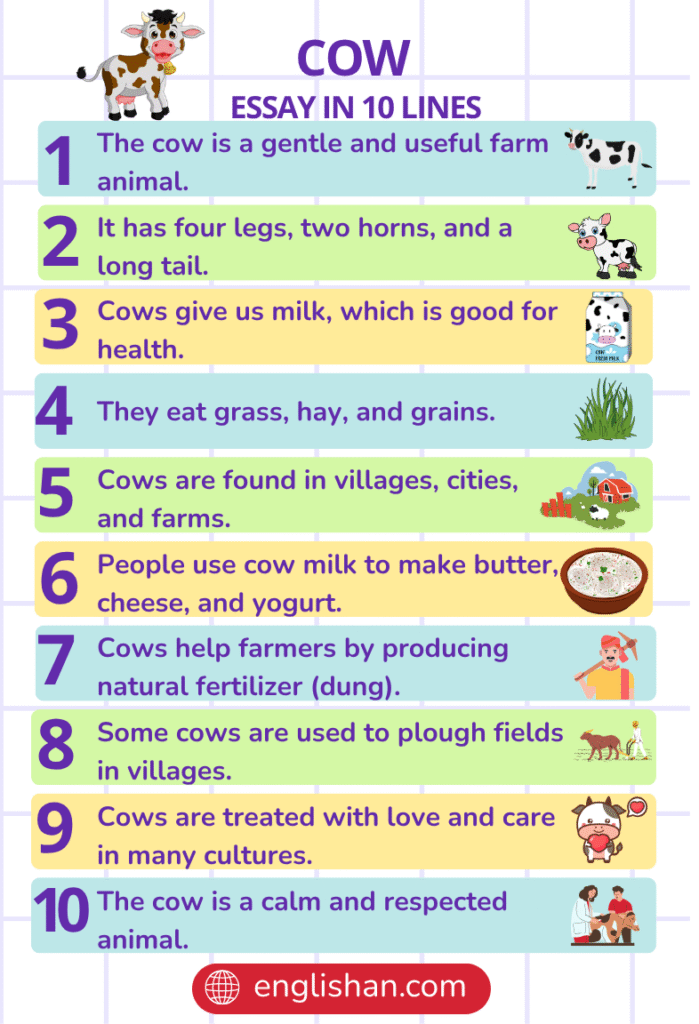
- The cow is a gentle and useful farm animal.
- It has four legs, two horns, and a long tail.
- Cows give us milk, which is good for health.
- They eat grass, hay, and grains.
- Cows are found in villages, cities, and farms.
- People use cow milk to make butter, cheese, and yogurt.
- Cows help farmers by producing natural fertilizer (dung).
- Some cows are used to plough fields in villages.
- Cows are treated with love and care in many cultures.
- The cow is a calm and respected animal.
250 Words Essay on Cow for Middle School
The cow is one of the most common and important domestic animals. It is known for its gentle nature and usefulness. Cows are usually found on farms and in villages, where people raise them mainly for milk. A cow has four legs, two horns, large ears, and a long tail. Its body is covered with short hair and it comes in many colors, like white, black, brown, or spotted.
Cows eat grass, dry hay, and grain-based feed. They are herbivores, meaning they do not eat meat. The milk given by cows is very healthy and full of nutrients. It is used to make dairy products such as cheese, butter, ghee, curd, and cream. Many families depend on cow milk as part of their daily food.
In villages, cows are also helpful in farming. Their dung is used as a natural fertilizer for crops and as fuel when dried. In some regions, cows are used for pulling carts or ploughing small fields.
Cows are calm and friendly animals. In many cultures, especially in India, the cow is respected and even worshipped. People care for them and often decorate them during festivals.
Overall, the cow plays a valuable role in human life. It supports farming, provides nutritious food, and helps in many household needs. Students should learn about cows to understand their importance in agriculture and daily life.
500 Words Cow Essay for Upper Primary and Lower Secondary
The Cow: A Gentle and Valuable Animal
Cows are calm, domesticated animals known for their usefulness and peaceful nature. They have been an essential part of human life for centuries, offering nourishment, labor, and companionship. Found across the world, cows belong to the species Bos taurus and are especially significant in agricultural societies.
Physical Features and Behavior
Cows are large, four-legged animals with a strong body, short tail, and curved horns. Their eyes are gentle, and they have long ears that help detect nearby sounds. Being herbivores, cows graze on grass and chew cud to digest their food fully. Their behavior is friendly and calm, making them easy to handle.
Nutritional and Economic Importance
Cows are primary producers of milk, a key source of nutrition. Dairy products such as butter, cheese, and yogurt are derived from milk, enriching human diets. Cows also contribute economically through leather production and the use of manure as organic fertilizer. In rural areas, they assist in plowing and transporting goods.
Cows in Daily Rural Life
In villages, cows are central to daily routines. Families depend on them for milk, and cow dung is used to produce biogas for cooking. Cows are often cared for with great attention, and they form a bond with the household. Their presence is tied to food, farming, and sustainable living.
Varieties and Breeds
There are many breeds of cows across the world, each with specific traits. For example, Jersey and Holstein cows are famous for high milk production, while indigenous breeds like Gir and Sahiwal are better adapted to hot climates. Understanding these breeds helps farmers make better decisions for dairy farming.
The Cow in Mythology and Culture
In many cultures, especially in South Asia, the cow is regarded as a sacred animal. It symbolizes peace, fertility, and kindness. Religious texts often describe the cow as a provider of life. As a result, many people avoid eating beef, and cows are given special status and protection.
Cow Shelters and Animal Welfare
To protect abandoned or sick cows, shelters known as “gaushalas” have been established. These shelters provide food, care, and treatment. Animal rights groups work to promote ethical farming and prevent cruelty. Education on animal welfare encourages responsible ownership and respect for animals.
Environmental Contributions
Cows contribute to the environment by helping recycle plant waste and producing organic manure. In some areas, cow dung is used to make eco-friendly fuel or building material. Their natural role in the ecosystem supports sustainable agriculture and reduces dependency on chemical fertilizers.
Challenges and Modern Solutions
Despite their importance, cows face threats from neglect, poor shelter, and overuse in farming. Modern solutions like better veterinary care, improved breeding, and clean shelter management help maintain their health. Farmers are also trained in animal-friendly methods to raise healthy, productive cows.
Cow’s Role in Global Agriculture
Cows are essential to global agriculture, supporting both small and large-scale farming operations. Their ability to produce milk, meat, and manure helps to sustain agricultural economies worldwide. Additionally, cows contribute to the agricultural workforce by performing tasks like plowing and hauling.
Cows as Indicators of Health and Environment
Cows play a unique role in monitoring environmental health. Their diet and physical condition reflect the quality of the pasture and the broader ecosystem. By observing cows’ behavior and health, farmers can identify early signs of environmental problems like soil degradation or poor feed quality.
Future of Cow Farming and Sustainability
With increasing concerns about environmental sustainability, the future of cow farming is focused on reducing carbon footprints and improving farming methods. Innovations in feed technology and waste management aim to make cow farming more sustainable, balancing economic needs with environmental protection.
Conclusion of Cow Essay
The cow is a symbol of calmness and utility, offering both nourishment and support to human life. Its role in agriculture, culture, and the economy makes it a treasured animal. Proper care and respect for cows reflect a society’s values and connection to nature.

Difficult Words Used in 500 Cow Essay
| Word | Meaning |
|---|---|
| Domesticated | Tamed and kept by humans for work or companionship |
| Herbivores | Animals that eat only plants |
| Companionship | A feeling of friendship and closeness |
| Manure | Animal waste used as fertilizer |
| Sacred | Regarded with deep respect or religious importance |
| Indigenous | Native to a particular region |
| Biogas | A gas made from decomposing natural waste, used as fuel |
| Fertility | The ability to produce offspring or crops |
| Veterinary | Related to the medical care of animals |
| Ethical | Morally right and fair |
Cow Essay PDF
You May Also Like