When writing about Eid-ul-Fitr, it’s important to understand why this festival is celebrated and how it brings joy to Muslims around the world. This essay on Eid-ul-Fitr explains its meaning, traditions, religious importance, and how families celebrate it with food, prayers, and kindness. It is written in 500 words to help students with homework or exams. You can download this Eid-ul-Fitr essay as a free PDF or image to study or print.
10 Lines Eid-ul-fitr Essay for Class 2 to Class 5
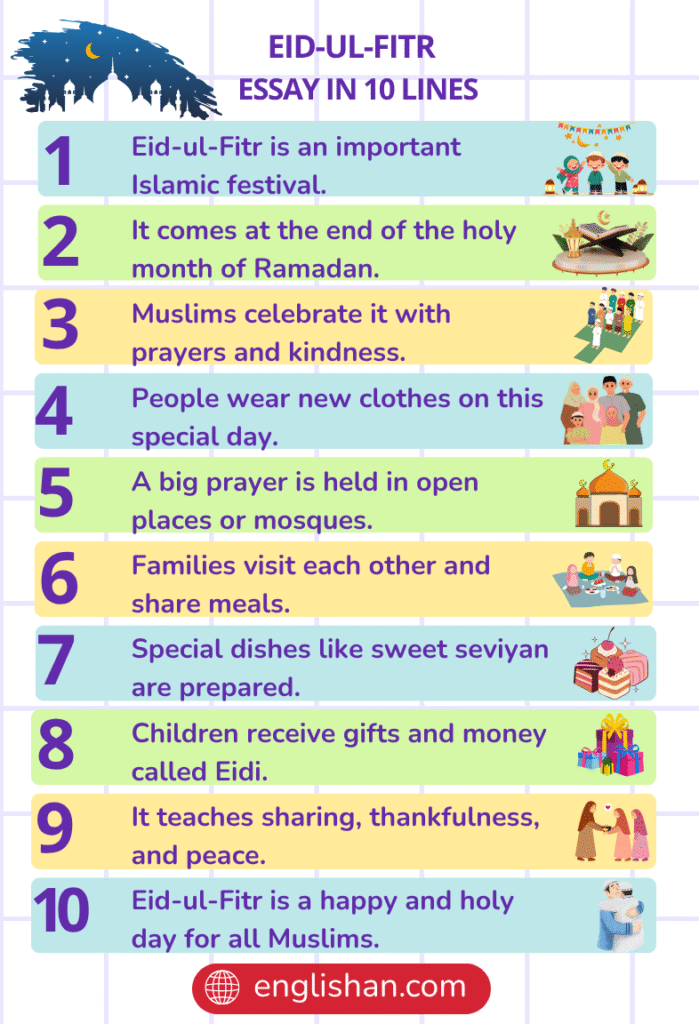
- Eid-ul-Fitr is an important Islamic festival.
- It comes at the end of the holy month of Ramadan.
- Muslims celebrate it with prayers and kindness.
- People wear new clothes on this special day.
- A big prayer is held in open places or mosques.
- Families visit each other and share meals.
- Special dishes like sweet seviyan are prepared.
- Children receive gifts and money called Eidi.
- It teaches sharing, thankfulness, and peace.
- Eid-ul-Fitr is a happy and holy day for all Muslims.
250 Words Essay on Eid-ul-fitr for Middle School
Eid-ul-Fitr is a joyful Islamic festival that comes after the month of Ramadan. Ramadan is a holy time when Muslims fast from morning to evening. Eid-ul-Fitr marks the end of this fasting period and is a reward for the patience and prayers shown during Ramadan.
On Eid day, Muslims start their morning with a special prayer known as the Eid prayer. People dress in neat and new clothes to look their best. Before going to prayer, they give a special charity called Zakat al-Fitr to help those in need. This makes sure that even poor people can enjoy Eid.
Then, families visit each other, share greetings, and enjoy meals together. Traditional sweets like seviyan and other delicious dishes are made. Children are very happy on Eid because they receive Eidi, which is money or gifts from elders. Homes are decorated, and people express love and respect to one another.
Eid-ul-Fitr teaches important lessons. It reminds Muslims to be kind, helpful, and thankful to Allah. It also helps people feel united and close, no matter their background or status. Because of its focus on prayer, giving, and joy, it is one of the most loved festivals in the Muslim world.
In the end, Eid-ul-Fitr is not just a celebration, but a day that brings people together with joy, kindness, and peace. It helps us remember those in need and to be grateful for all we have.
500 Words Eid-ul-fitr Essay for Upper Primary and Lower Secondary
Religious Significance of Eid-ul-Fitr
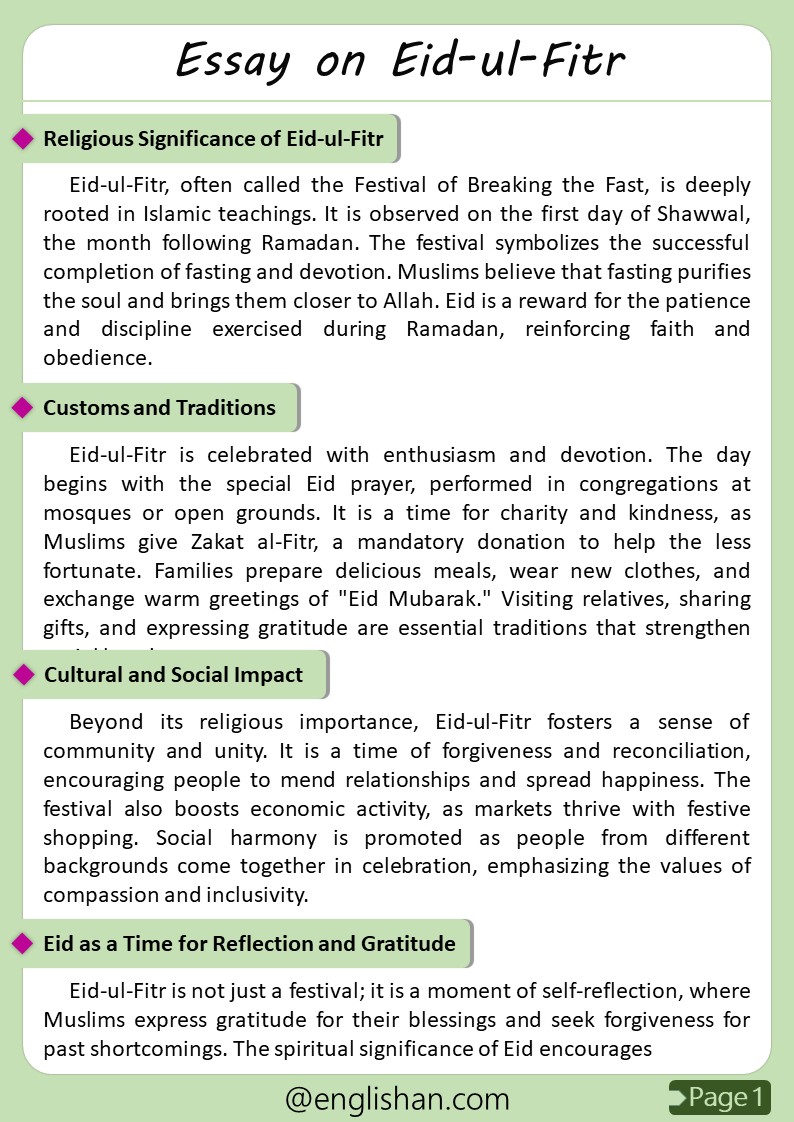
Eid-ul-Fitr, often called the Festival of Breaking the Fast, is deeply rooted in Islamic teachings. It is observed on the first day of Shawwal, the month following Ramadan. The festival symbolizes the successful completion of fasting and devotion. Muslims believe that fasting purifies the soul and brings them closer to Allah. Eid is a reward for the patience and discipline exercised during Ramadan, reinforcing faith and obedience.
Customs and Traditions
Eid-ul-Fitr is celebrated with enthusiasm and devotion. The day begins with the special Eid prayer, performed in congregations at mosques or open grounds. It is a time for charity and kindness, as Muslims give Zakat al-Fitr, a mandatory donation to help the less fortunate. Families prepare delicious meals, wear new clothes, and exchange warm greetings of “Eid Mubarak.” Visiting relatives, sharing gifts, and expressing gratitude are essential traditions that strengthen social bonds.
Cultural and Social Impact
Beyond its religious importance, Eid-ul-Fitr fosters a sense of community and unity. It is a time of forgiveness and reconciliation, encouraging people to mend relationships and spread happiness. The festival also boosts economic activity, as markets thrive with festive shopping. Social harmony is promoted as people from different backgrounds come together in celebration, emphasizing the values of compassion and inclusivity.
Eid as a Time for Reflection and Gratitude
Eid-ul-Fitr is not just a festival; it is a moment of self-reflection, where Muslims express gratitude for their blessings and seek forgiveness for past shortcomings. The spiritual significance of Eid encourages individuals to cultivate kindness, patience, and humility.
Preparations for Eid-ul-Fitr
Before Eid, families clean their homes, decorate their surroundings, and purchase new clothes. Markets are filled with shoppers buying festive essentials, and special sweets and dishes are prepared in anticipation of the celebration. Beyond material preparations, many also focus on spiritual readiness by engaging in additional prayers and acts of kindness.
Eid-ul-Fitr Around the World
Though the essence of Eid remains the same, different cultures have unique ways of celebrating. In some countries, grand feasts are prepared, while others host public gatherings, parades, and fireworks to mark the occasion. Despite these cultural variations, the core values of gratitude, generosity, and unity remain universal.
Role of Charity in Eid-ul-Fitr
Giving to those in need is an essential part of Eid celebrations. Apart from Zakat al-Fitr, many people donate food, clothing, and money to the underprivileged, reinforcing the spirit of generosity and kindness. This act of charity helps strengthen social bonds and uplifts communities, ensuring that everyone can partake in the festivities.
Traditional Foods of Eid-ul-Fitr
Each region has its own special Eid dishes, such as Sheer Khurma in South Asia, Ma’amoul in the Middle East, and Ketupat in Indonesia. These delicacies add joy to the celebrations and bring families together. Sharing food symbolizes hospitality and love, making it a cherished tradition of the festival.
Importance of Eid Greetings and Gatherings
Eid is a time for reconnecting with loved ones. People visit friends and family, exchange gifts, and share meals. The warm greetings of “Eid Mubarak” reflect joy, goodwill, and unity among communities. Personal visits and heartfelt wishes strengthen relationships and foster a sense of belonging.
Conclusion
Eid-ul-Fitr is a festival that highlights spiritual fulfillment, generosity, and unity. It reminds Muslims of their duty to be kind, grateful, and compassionate. The joy of Eid extends beyond individuals, fostering a culture of empathy and social harmony. As a festival of renewal and gratitude, Eid-ul-Fitr continues to be a cherished occasion for millions worldwide.
Difficult Words Used in 500 Eid-ul-Fitr Essay
| Word | Meaning |
|---|---|
| Devotion | Deep religious commitment |
| Congregations | Large gatherings for worship |
| Zakat al-Fitr | Mandatory charity given before Eid prayer |
| Reconciliation | Restoring friendly relations |
| Inclusivity | The practice of including all people |
| Spiritual | Relating to religious belief and faith |
| Empathy | The ability to understand and share others’ feelings |
| Gratitude | The quality of being thankful |
Eid-ul-Fitr Essay PDF
You May Also Like