When writing about national integration, it’s important to understand how people from different cultures, religions, and languages live together peacefully. This essay on national integration explains its meaning, the need for unity, how it supports a strong country, and simple ways to promote harmony. It’s written in 500 words to help students with homework or exams. You can download this national integration essay as a free PDF or image to study or print.
10 Lines National Integration Essay for Class 2 to Class 5
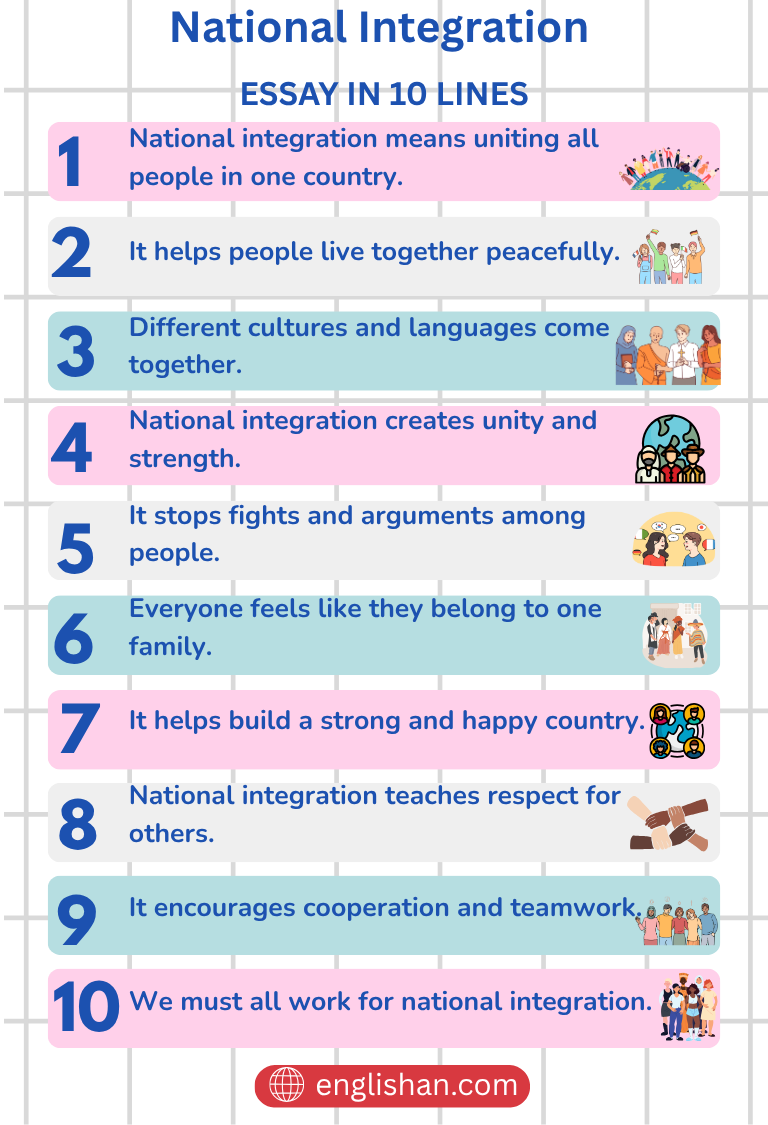
- National integration means unity among people of a country.
- It brings people of different religions, languages, and regions together.
- It helps create peace and harmony in society.
- India is a diverse country with many cultures and traditions.
- National integration teaches us to respect all communities.
- It makes our country strong and united.
- Festivals, sports, and national events promote integration.
- Our leaders always encouraged national unity.
- We should live together like one big family.
- National integration is very important for our country’s progress.
250 Words Essay on National Integration for Middle School
National integration means bringing together people of different backgrounds to live in peace and unity. It is a way of building a strong and united nation. In a country like India, where people speak different languages, follow different religions, and come from different cultures, national integration plays a very important role.
National integration teaches us to treat everyone equally. It helps people work together for the development of the country. When citizens respect each other and stand together during hard times, the country becomes stronger. It creates a sense of brotherhood and reduces social problems like discrimination and violence.
Leaders like Mahatma Gandhi, Jawaharlal Nehru, and Dr. B.R. Ambedkar worked hard to unite the country. They believed that all Indians are equal and should live together peacefully. Schools, social programs, and national festivals help in spreading the message of national integration. Celebrating Independence Day, Republic Day, and Gandhi Jayanti brings people together and reminds us of our shared history and future.
We must understand that being different in language, dress, or customs does not divide us. Instead, it makes our country rich and beautiful. If we stay united and support each other, we can make our country a better place.
In conclusion, national integration is key to peace, progress, and unity. Every citizen should respect others and promote love and understanding. Only then can we build a strong, united, and successful nation.
500 Words National Integration Essay for Upper Primary and Lower Secondary
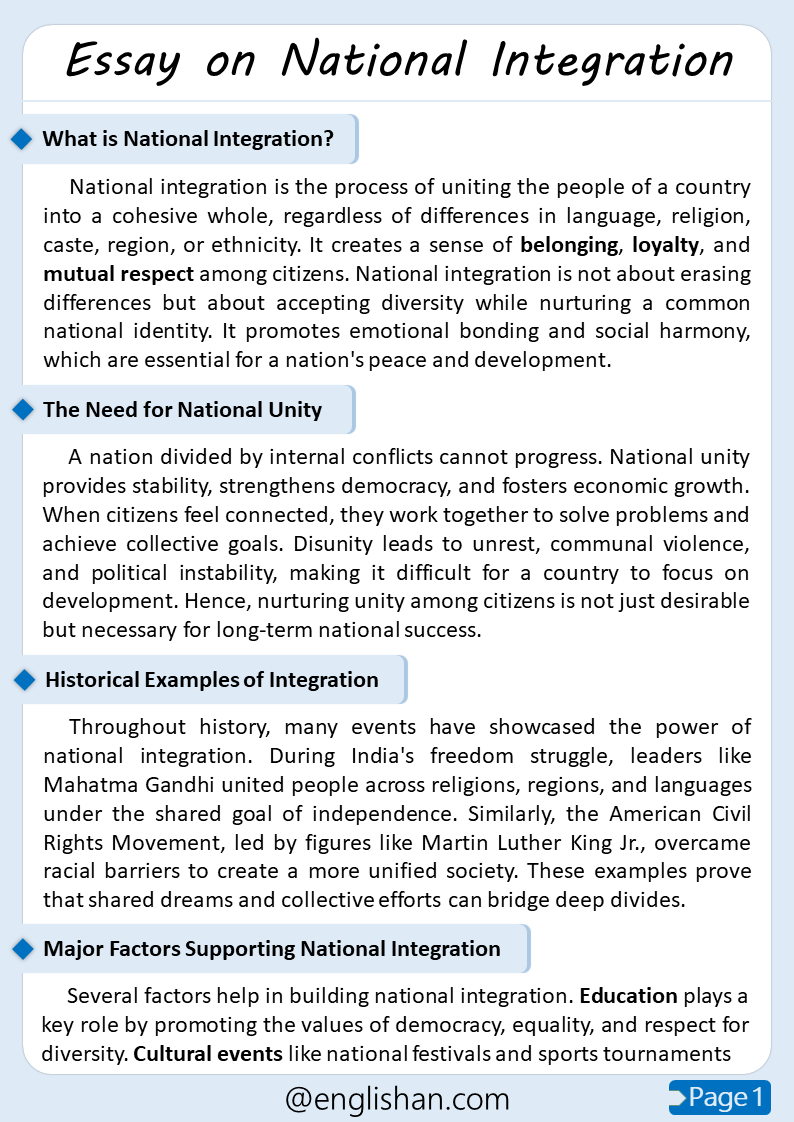
What is National Integration?
National integration is the process of uniting the people of a country into a cohesive whole, regardless of differences in language, religion, caste, region, or ethnicity. It creates a sense of belonging, loyalty, and mutual respect among citizens. National integration is not about erasing differences but about accepting diversity while nurturing a common national identity. It promotes emotional bonding and social harmony, which are essential for a nation’s peace and development.
The Need for National Unity
A nation divided by internal conflicts cannot progress. National unity provides stability, strengthens democracy, and fosters economic growth. When citizens feel connected, they work together to solve problems and achieve collective goals. Disunity leads to unrest, communal violence, and political instability, making it difficult for a country to focus on development. Hence, nurturing unity among citizens is not just desirable but necessary for long-term national success.
Historical Examples of Integration
Throughout history, many events have showcased the power of national integration. During India’s freedom struggle, leaders like Mahatma Gandhi united people across religions, regions, and languages under the shared goal of independence. Similarly, the American Civil Rights Movement, led by figures like Martin Luther King Jr., overcame racial barriers to create a more unified society. These examples prove that shared dreams and collective efforts can bridge deep divides.
Major Factors Supporting National Integration
Several factors help in building national integration. Education plays a key role by promoting the values of democracy, equality, and respect for diversity. Cultural events like national festivals and sports tournaments foster emotional unity among different communities. Moreover, inclusive policies by governments that provide equal opportunities to all citizens build trust and reduce feelings of marginalization. Economic development that benefits all sections also strengthens national bonds.
Role of Constitution in Uniting Citizens
The constitution of a country is a powerful instrument for integration. It guarantees fundamental rights such as equality, freedom of speech, and protection against discrimination. A well-implemented constitution ensures that all citizens, regardless of background, are treated fairly. When people trust that justice and equality prevail, they feel a stronger emotional connection to their nation, reinforcing unity.
Threats to National Integration
Despite efforts, national integration often faces serious threats. Regionalism encourages people to prioritize local identity over national interests. Linguistic conflicts create misunderstandings between different groups. Religious extremism spreads hatred and division. Economic inequality widens social gaps. Furthermore, misinformation spread through social media fuels distrust and hostility. These challenges must be addressed carefully to protect national harmony.
Contribution of Leaders to Integration
Visionary leaders have historically played critical roles in promoting national integration. Mahatma Gandhi preached non-violence and communal harmony. Nelson Mandela fought to unite South Africa after decades of racial discrimination. Leaders inspire citizens to embrace unity by setting examples through their actions, speeches, and inclusive policies. Their ability to rise above personal and sectional interests strengthens national spirit.
Importance of Media in Promoting Unity
Media acts as a bridge among different sections of society. By showcasing positive stories about unity and celebrating cultural diversity, media can reduce misunderstandings. Responsible journalism educates people about the importance of national integration and encourages peaceful coexistence. However, the media must avoid sensationalism and focus on promoting truthful and balanced reporting.
Youth as Champions of National Unity
Young people have tremendous energy and influence. They are less burdened by historical prejudices and more open to new ideas. Through active participation in community service, intercultural dialogues, and social initiatives, youth can build stronger national bonds. Educational institutions should encourage students to appreciate diversity and work toward inclusive goals, making youth the guardians of national integration.
Ways to Strengthen National Integration
To further promote national unity, several steps can be taken. Inclusive education must be emphasized at all levels. Governments should implement equitable economic policies that reduce disparities. Celebrating national days with participation from all communities strengthens emotional bonds.
Conclusion
National integration is the heartbeat of a peaceful, progressive nation. Embracing cultural diversity while reinforcing a shared identity ensures lasting unity. It requires conscious efforts from citizens, leaders, and institutions alike. By promoting equality, respecting differences, and working toward common goals, we can build a strong, stable, and prosperous country for generations to come.
Difficult Words Used in 500 National Integration Essay
| Word | Meaning |
|---|---|
| Integration | The process of combining diverse groups into a unified whole. |
| Alienation | Feeling of being isolated or estranged. |
| Visionary | A person with original ideas about the future. |
| Extremism | Holding extreme political or religious views. |
| Disparities | Significant differences in levels of living or opportunity. |
| Misinformation | False or inaccurate information. |
| Regionalism | Strong loyalty to one’s region rather than the entire country. |
| Civic Duties | Responsibilities a citizen has toward society and governance. |
| Prejudices | Preconceived opinions not based on reason or experience. |
| Equitable | Fair and impartial treatment for everyone. |
National Integration Essay PDF
You May Also Like