Population is the number of people living in a place. This essay on population explains what population means, how it grows, and its effects on resources and the environment. Written in 500 words, it helps middle school students with homework and exams. You can download this population essay as a free PDF or image to study or print.
10 Lines Population Essay for Class 2 to Class 5
- Population means the number of people living in a place.
- The world’s population keeps growing every day.
- Too many people can cause problems like pollution and less space.
- Some countries have a large population, while others have fewer people.
- Population growth affects natural resources like water and food.
- Cities become crowded when the population increases a lot.
- Proper planning is needed to manage population growth.
- Education can help control population by spreading awareness.
- Healthy families and communities are important for a balanced population.
- We should use resources wisely to support the growing population.

250 Words Essay on Population for Middle School
Population refers to the total number of people living in a particular area, such as a city, country, or the whole world. The population of the world is increasing rapidly. More people mean more demand for food, water, houses, and other resources.
In some countries, the population is very high, leading to crowded cities and traffic problems. This can cause pollution and make it hard for people to find clean water and fresh air. Overpopulation can put pressure on schools, hospitals, and jobs. When there are too many people and not enough resources, it creates challenges for the government and society.
Population growth also affects nature. More people need more land for farming and housing, which can harm forests and wildlife. To manage this, governments plan and create policies to control the growth rate. Education plays a key role in teaching people about family planning and the importance of smaller families.
Balanced population growth is important for a healthy and happy life. If we take care of our resources and educate people, we can ensure that everyone has what they need. Managing population is a shared responsibility that helps make the world a better place for future generations.
500 Words Population Essay for Upper Primary and Lower Secondary
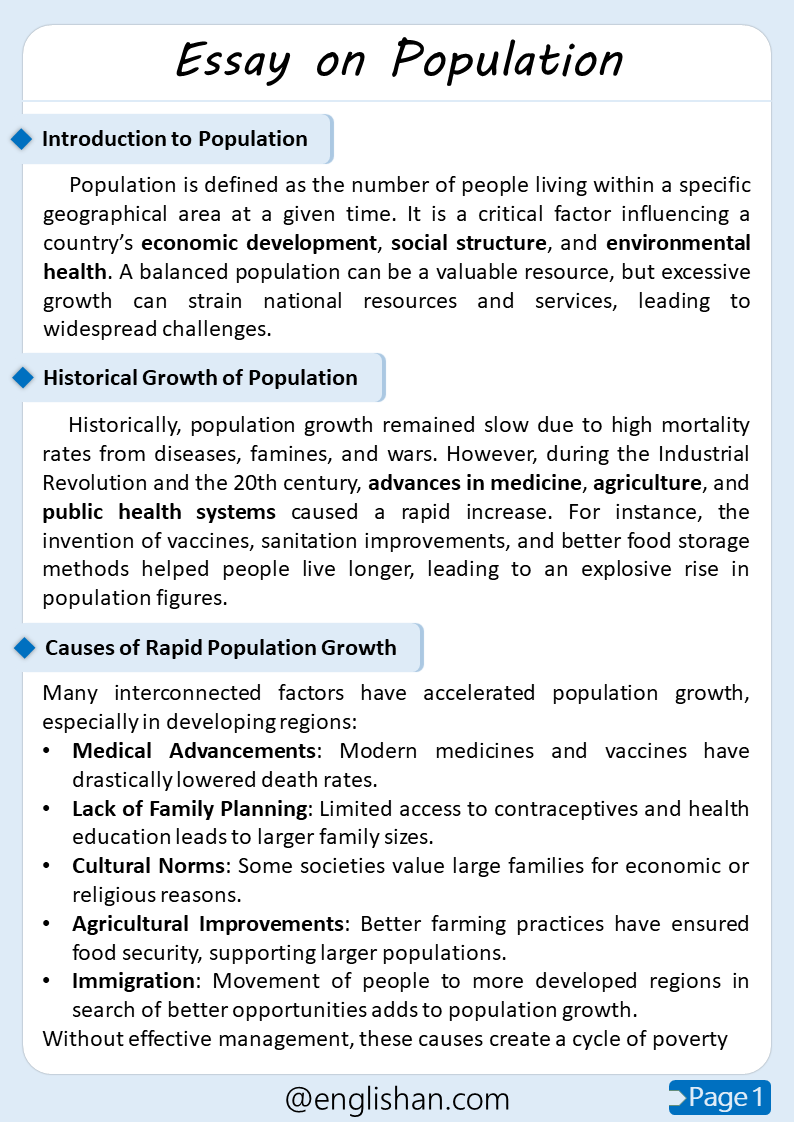
Introduction to Population
Population is defined as the number of people living within a specific geographical area at a given time. It is a critical factor influencing a country’s economic development, social structure, and environmental health. A balanced population can be a valuable resource, but excessive growth can strain national resources and services, leading to widespread challenges.
Historical Growth of Population
Historically, population growth remained slow due to high mortality rates from diseases, famines, and wars. However, during the Industrial Revolution and the 20th century, advances in medicine, agriculture, and public health systems caused a rapid increase. For instance, the invention of vaccines, sanitation improvements, and better food storage methods helped people live longer, leading to an explosive rise in population figures.
Causes of Rapid Population Growth
Many interconnected factors have accelerated population growth, especially in developing regions:
- Medical Advancements: Modern medicines and vaccines have drastically lowered death rates.
- Lack of Family Planning: Limited access to contraceptives and health education leads to larger family sizes.
- Cultural Norms: Some societies value large families for economic or religious reasons.
- Agricultural Improvements: Better farming practices have ensured food security, supporting larger populations.
- Immigration: Movement of people to more developed regions in search of better opportunities adds to population growth.
Without effective management, these causes create a cycle of poverty and overpopulation.
Effects of Overpopulation
Overpopulation creates many social, economic, and environmental problems:
- Food and Water Scarcity: Demand often outstrips supply, leading to hunger and malnutrition.
- Depletion of Natural Resources: Overuse of land, forests, and minerals leads to environmental crises.
- Unemployment and Poverty: Job markets cannot absorb the increasing workforce, resulting in widespread unemployment.
- Increased Pollution: More people mean more waste, contributing to air, water, and soil pollution.
- Stress on Healthcare and Education: Overcrowded schools and hospitals lower the quality of essential services.
If not controlled, these issues can worsen inequality and cause serious social unrest.
Impact on Natural Resources
The earth has limited resources. Overpopulation leads to excessive use of forests, freshwater, and fossil fuels. For example, widespread deforestation for housing and agriculture affects biodiversity and increases carbon emissions, accelerating climate change. Overfishing, groundwater depletion, and soil erosion are direct outcomes of an expanding population.
Social and Economic Consequences
Population growth without corresponding economic growth results in:
- Widening gap between rich and poor
- Overburdened social welfare systems
- Rise in crime rates due to lack of employment opportunities
- Pressure on housing leading to slums and unsafe living conditions
In many developing countries, these issues make it difficult to achieve sustainable progress and prosperity.
Importance of Education and Awareness
Education is the foundation of population control:
- Educated women are more likely to make informed reproductive choices.
- Public awareness campaigns help people understand the benefits of smaller families.
- Access to reproductive health services encourages responsible parenthood.
- Increased literacy rates help break the cycle of poverty and large families.
Thus, investment in education can have a powerful, long-term impact on managing population growth.
Community and Individual Responsibility
Every individual has a role to play:
- Families can adopt responsible reproductive practices.
- Communities can promote awareness and encourage education.
- Local leaders can support sustainable living initiatives.
By working together, societies can manage population growth while improving quality of life.
Conclusion
Population growth must be carefully managed to ensure a sustainable and prosperous future. Solutions like education, healthcare improvements, and policy reforms are crucial. By balancing growth with resource management and individual responsibility, we can create societies where both people and the planet thrive.
Difficult Words Used in 500 Population Essay
| Word | Meaning |
|---|---|
| Sustainability | The ability to maintain or support something over time |
| Mortality | The state of being subject to death |
| Sanitation | Conditions relating to public health, especially clean water and sewage |
| Depletion | The reduction or exhaustion of a resource |
| Biodiversity | The variety of different types of life in a particular area |
| Immigration | The action of coming to live permanently in a foreign country |
| Fossil Fuels | Natural fuels such as coal or gas formed from the remains of organisms |
| Awareness | Knowledge or perception of a situation or fact |
Population Essay PDF
You May Also Like