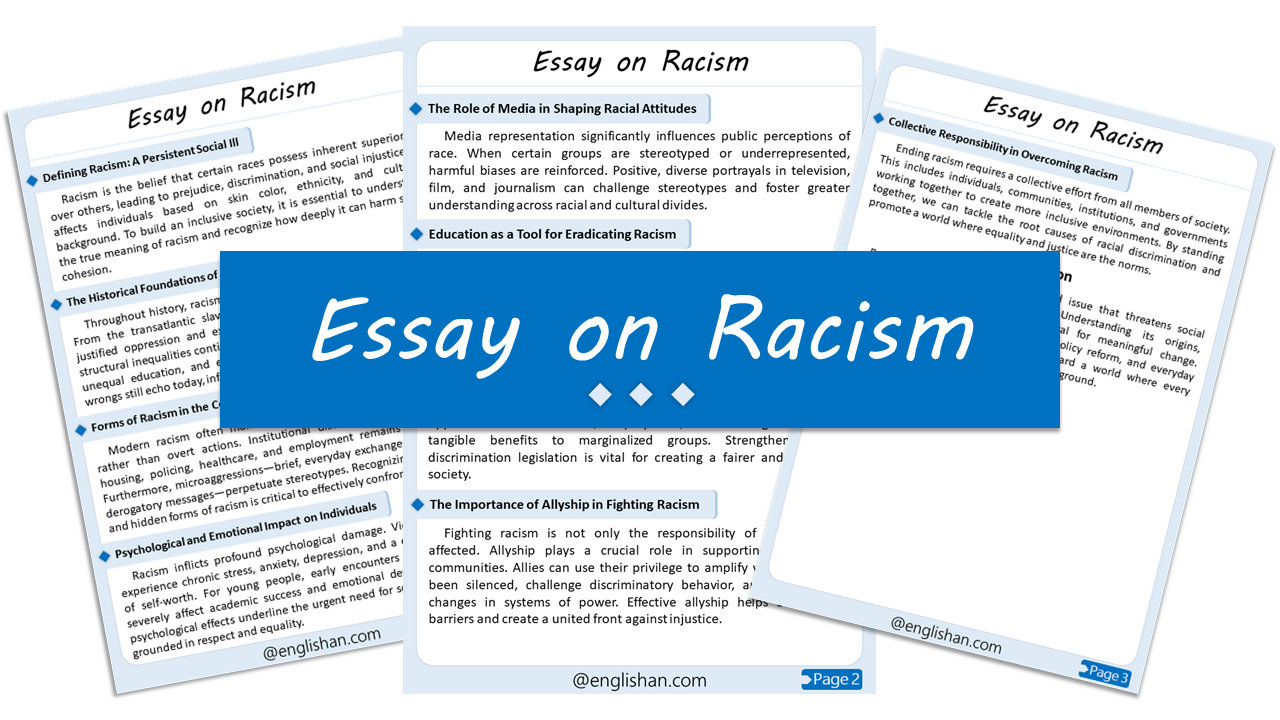
Racism affects many people by treating them unfairly because of their skin color or background. This essay on racism explains what it means, its effects, and how kindness and respect can stop it. Written in 500 words, it helps middle school students with homework or exams. You can download this racism essay as a free PDF or image to study or print.
10 Lines Racism Essay for Class 2 to Class 5
- Racism means treating people unfairly because of their skin color or background.
- It hurts people’s feelings and makes them sad.
- Everyone should be treated equally and kindly.
- People are all different but deserve respect.
- Racism is wrong and should be stopped.
- We should be friends with everyone no matter how they look.
- Learning about others helps us understand and accept them.
- Speaking out against racism is very important.
- Schools teach us to respect all people.
- Together, we can make the world a fair and happy place.

250 Words Essay on Racism for Middle School
Racism is when people are treated unfairly or judged because of their skin color, race, or ethnicity. It is a serious problem that causes pain and divides people. Racism can happen anywhere at school, work, or in the community and it affects many lives.
Every person is unique and special, but racism tries to make some people feel less important. This is wrong because all humans deserve respect and kindness no matter what they look like or where they come from. Racism can cause hurt feelings, fear, and sadness for those who face it.
It is important to understand that differences among people are normal and should be celebrated. Learning about different cultures and traditions helps us appreciate others better. When we respect each other, we can build friendships and live peacefully.
Schools and families play a big role in teaching children to be fair and kind. We should always stand up against unfair treatment and speak out if we see racism happening. Everyone can help stop racism by being a good friend and treating all people equally.
In conclusion, racism is harmful, but by learning, understanding, and showing respect, we can make the world a better place for everyone. Together, we can create a future where everyone feels safe, loved, and valued.
500 Words Racism Essay for Upper Primary and Lower Secondary
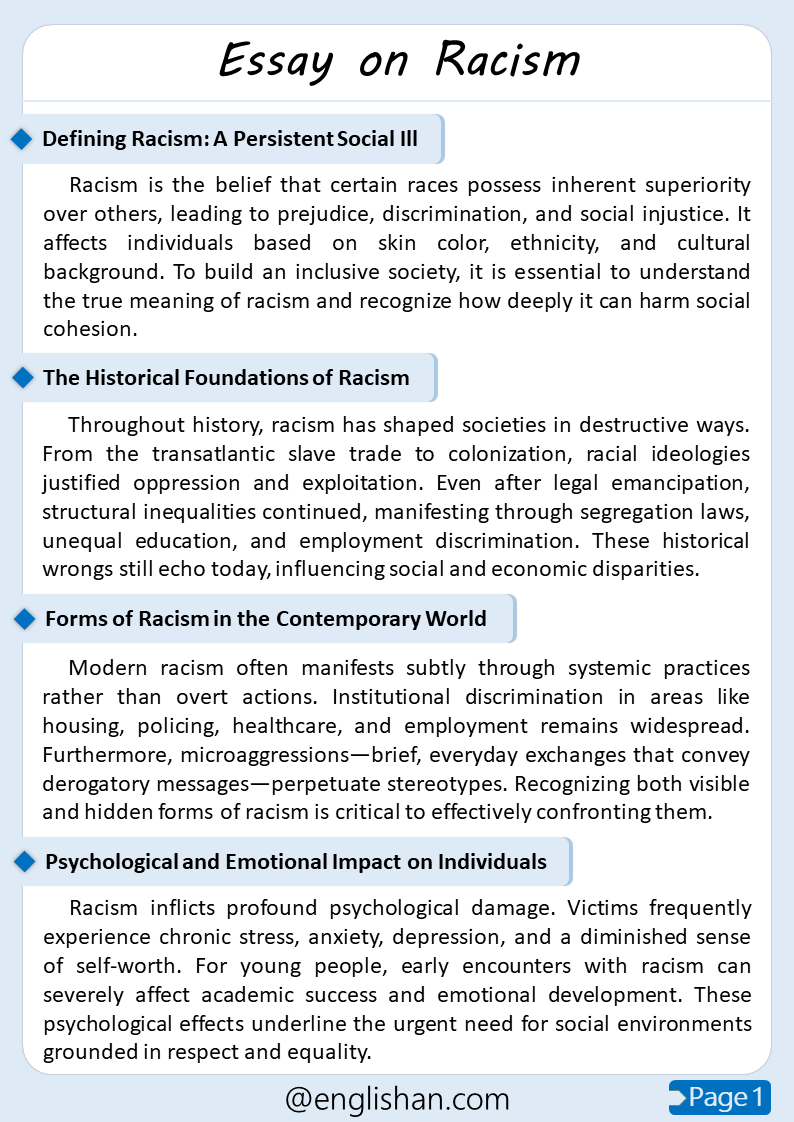
Defining Racism: A Persistent Social Ill
Racism is the belief that certain races possess inherent superiority over others, leading to prejudice, discrimination, and social injustice. It affects individuals based on skin color, ethnicity, and cultural background. To build an inclusive society, it is essential to understand the true meaning of racism and recognize how deeply it can harm social cohesion.
The Historical Foundations of Racism
Throughout history, racism has shaped societies in destructive ways. From the transatlantic slave trade to colonization, racial ideologies justified oppression and exploitation. Even after legal emancipation, structural inequalities continued, manifesting through segregation laws, unequal education, and employment discrimination. These historical wrongs still echo today, influencing social and economic disparities.
Forms of Racism in the Contemporary World
Modern racism often manifests subtly through systemic practices rather than overt actions. Institutional discrimination in areas like housing, policing, healthcare, and employment remains widespread. Furthermore, microaggressions—brief, everyday exchanges that convey derogatory messages—perpetuate stereotypes. Recognizing both visible and hidden forms of racism is critical to effectively confronting them.
Psychological and Emotional Impact on Individuals
Racism inflicts profound psychological damage. Victims frequently experience chronic stress, anxiety, depression, and a diminished sense of self-worth. For young people, early encounters with racism can severely affect academic success and emotional development. These psychological effects underline the urgent need for social environments grounded in respect and equality.
The Role of Media in Shaping Racial Attitudes
Media representation significantly influences public perceptions of race. When certain groups are stereotyped or underrepresented, harmful biases are reinforced. Positive, diverse portrayals in television, film, and journalism can challenge stereotypes and foster greater understanding across racial and cultural divides.
Education as a Tool for Eradicating Racism
Education holds the power to dismantle racist attitudes. Schools that incorporate multicultural curricula, promote open discussions about racial issues, and encourage critical thinking help students develop empathy and respect for diversity. By educating young minds, societies lay the groundwork for a more just future.
Addressing Racism Through Legislation and Policy
To combat systemic racism, governments must enact policies that address racial inequality at the societal level. Laws that promote equal opportunities in education, employment, and housing can provide tangible benefits to marginalized groups. Strengthening anti-discrimination legislation is vital for creating a fairer and more just society.
The Importance of Allyship in Fighting Racism
Fighting racism is not only the responsibility of those directly affected. Allyship plays a crucial role in supporting marginalized communities. Allies can use their privilege to amplify voices that have been silenced, challenge discriminatory behavior, and advocate for changes in systems of power. Effective allyship helps break down barriers and create a united front against injustice.
Collective Responsibility in Overcoming Racism
Ending racism requires a collective effort from all members of society. This includes individuals, communities, institutions, and governments working together to create more inclusive environments. By standing together, we can tackle the root causes of racial discrimination and promote a world where equality and justice are the norms.
Conclusion
Racism remains a deeply entrenched issue that threatens social harmony and individual well-being. Understanding its origins, manifestations, and consequences is vital for meaningful change. Through education, media responsibility, policy reform, and everyday acts of empathy, humanity can work toward a world where every individual is valued, regardless of race or background.
Difficult Words Used in 500 Racism Essay
| Word | Meaning |
|---|---|
| Discrimination | Unjust treatment based on differences like race, gender, or religion. |
| Segregation | The enforced separation of different racial groups. |
| Microaggressions | Small, often unintentional actions or comments that perpetuate stereotypes. |
| Structural | Relating to the framework or system within a society that supports inequality. |
| Advocacy | Public support for or recommendation of a cause or policy. |
| Emancipation | The process of being freed from legal, social, or political restrictions. |
| Cohesion | The act of forming a united whole. |
| Marginalized | Treated as insignificant or pushed to the edges of society. |
| Allyship | The practice of supporting marginalized groups in their struggles. |
Racism Essay PDF
You May Also Like