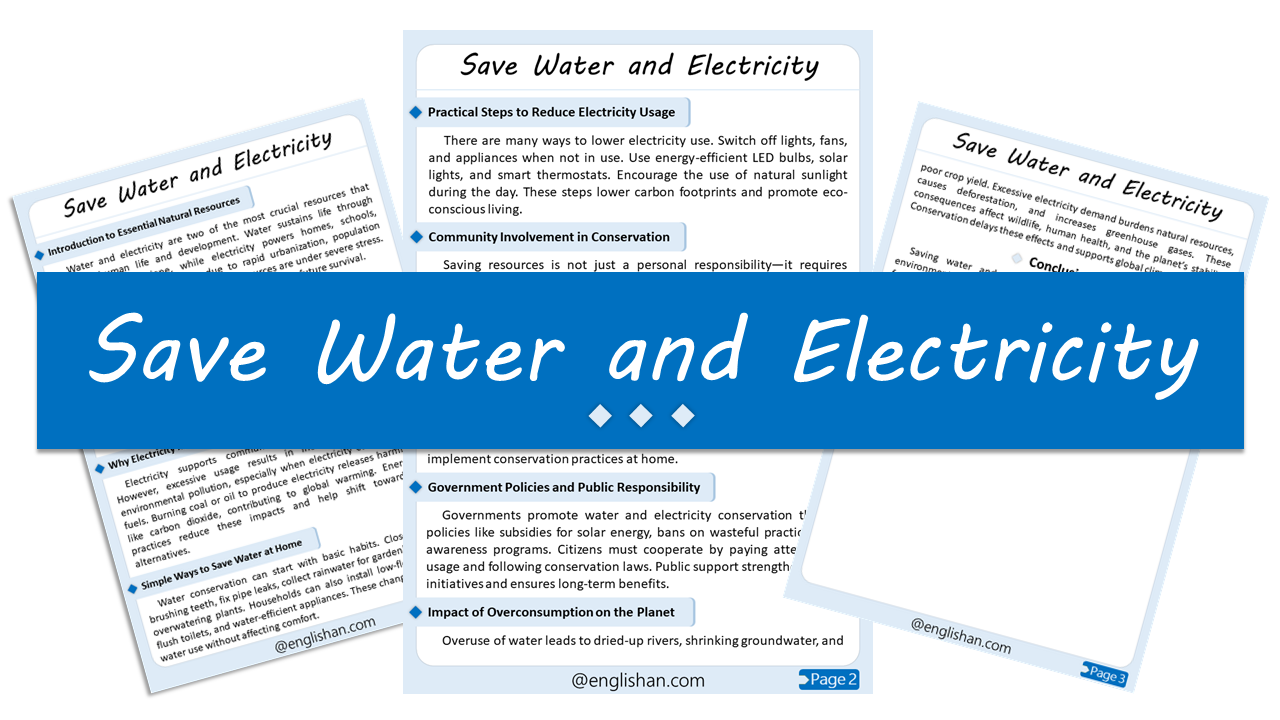
Saving water and electricity means using these resources carefully to help the Earth and reduce waste. This essay on saving water and electricity explains why they are important, how we waste them, the effects of overuse, and smart ways to save them every day. It is written in 500 words to support students in schoolwork, projects, or exams. You can download this save water and electricity essay as a free PDF or image to read, print, or share.
10 Lines Save Water and Electricity Essay for Class 2 to Class 5
- Water and electricity are important resources in our daily life.
- We should always turn off taps after use to save water.
- Switching off lights and fans when not in use saves electricity.
- Leaking taps and pipes should be repaired quickly.
- Using energy-saving bulbs helps reduce electricity use.
- We must not waste clean water while brushing or bathing.
- Solar energy is a good way to save electricity.
- Rainwater harvesting helps store rainwater for future use.
- Saving water and electricity helps protect the environment.
- Every child should learn to use water and electricity wisely.
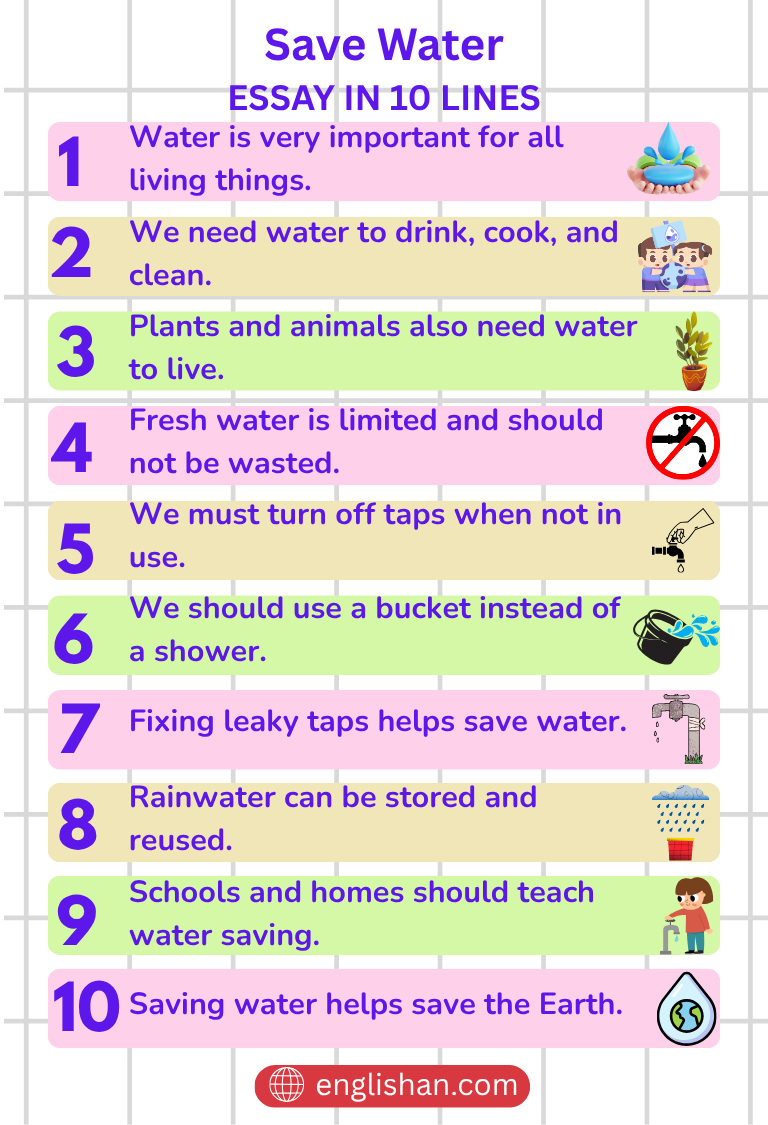
250 Words Essay on Save Water and Electricity for Middle School
Water and electricity are two of the most valuable resources we use every day. They are essential for our daily tasks like cooking, cleaning, lighting, and running machines. However, many people waste water and electricity without realizing how important it is to conserve them.
Water is needed for drinking, bathing, farming, and many other purposes. We must save water by turning off taps when not in use, fixing leaks, and using buckets instead of showers. Rainwater harvesting is another great way to store and reuse water. We should also avoid wasting clean water while washing clothes or vehicles.
Electricity powers our homes, schools, and offices. To save electricity, we must switch off lights, fans, and appliances when not in use. Replacing old bulbs with LED lights and using energy-efficient devices can reduce power usage. We can also use natural sunlight during the day and install solar panels to generate power from the sun.
Saving water and electricity is not only good for our family and money but also for the planet. Using less of these resources helps reduce pollution, saves animals’ habitats, and slows down climate change.
Every student must understand the importance of saving water and electricity. Small actions at home and school can make a big difference. If each one of us is careful, we can protect these precious resources for future generations.
500 Words Save Water and Electricity Essay for Upper Primary and Lower Secondary
Introduction to Essential Natural Resources
Water and electricity are two of the most crucial resources that support human life and development. Water sustains life through hydration and hygiene, while electricity powers homes, schools, hospitals, and industries. Yet, due to rapid urbanization, population growth, and poor usage habits, these resources are under severe stress. Saving them is not just a choice—it is a necessity for future survival.
The Value of Clean Water in Daily Life
Freshwater is used for drinking, cooking, agriculture, sanitation, and industrial processes. Many regions now face water shortages due to pollution, overuse, and climate change. In rural and underdeveloped areas, clean water is a luxury. Conserving water ensures safe access for everyone and supports food security. A single drop wasted repeatedly becomes a flood of loss over time.
Why Electricity Must Be Used Wisely
Electricity supports communication, education, and business. However, excessive usage results in increased energy bills and environmental pollution, especially when electricity comes from fossil fuels. Burning coal or oil to produce electricity releases harmful gases like carbon dioxide, contributing to global warming. Energy-saving practices reduce these impacts and help shift toward cleaner alternatives.
Simple Ways to Save Water at Home
Water conservation can start with basic habits. Close taps while brushing teeth, fix pipe leaks, collect rainwater for gardening, and avoid overwatering plants. Households can also install low-flow taps, dual-flush toilets, and water-efficient appliances. These changes reduce daily water use without affecting comfort.
Practical Steps to Reduce Electricity Usage
There are many ways to lower electricity use. Switch off lights, fans, and appliances when not in use. Use energy-efficient LED bulbs, solar lights, and smart thermostats. Encourage the use of natural sunlight during the day. These steps lower carbon footprints and promote eco-conscious living.
Community Involvement in Conservation
Saving resources is not just a personal responsibility—it requires collective action. Housing societies, schools, and local organizations can run awareness drives, rainwater harvesting projects, or streetlight automation systems. Group efforts build strong conservation habits and inspire positive change at the neighborhood level.
Educational Initiatives for Sustainable Living
Schools can teach the importance of sustainability through activities such as water audits, energy-saving contests, poster-making, and eco-club participation. Educating young minds creates responsible citizens who respect nature. Practical learning also encourages children to implement conservation practices at home.
Government Policies and Public Responsibility
Governments promote water and electricity conservation through policies like subsidies for solar energy, bans on wasteful practices, and awareness programs. Citizens must cooperate by paying attention to usage and following conservation laws. Public support strengthens these initiatives and ensures long-term benefits.
Impact of Overconsumption on the Planet
Overuse of water leads to dried-up rivers, shrinking groundwater, and poor crop yield. Excessive electricity demand burdens natural resources, causes deforestation, and increases greenhouse gases. These consequences affect wildlife, human health, and the planet’s stability. Conservation delays these effects and supports global climate goals.
Conclusion
Saving water and electricity is essential for human survival, environmental health, and economic balance. Everyone has a role—from children in schools to adults at home and policymakers in government. Thoughtful usage today ensures a healthier and safer world for future generations. Even small actions can create big results when done consistently.

Difficult Words Used in 500 Save Water and Electricity Essay
| Word | Meaning |
|---|---|
| Conservation | Careful use to prevent loss or waste of resources |
| Scarcity | Insufficient supply of something |
| Sustainable | Capable of continuing without harming future needs |
| Emissions | Gases released into the air from vehicles or factories |
| Renewable | A resource that can be naturally replaced over time |
| Overconsumption | Using more than necessary or more than what can be sustained |
| Hygiene | Cleanliness that promotes good health |
| Urbanization | The process of cities growing as more people live there |
| Awareness | Knowledge or understanding of a situation |
| Carbon Footprint | The total greenhouse gases produced by human activities |
Save Water and Electricity Essay PDF
You May Also Like