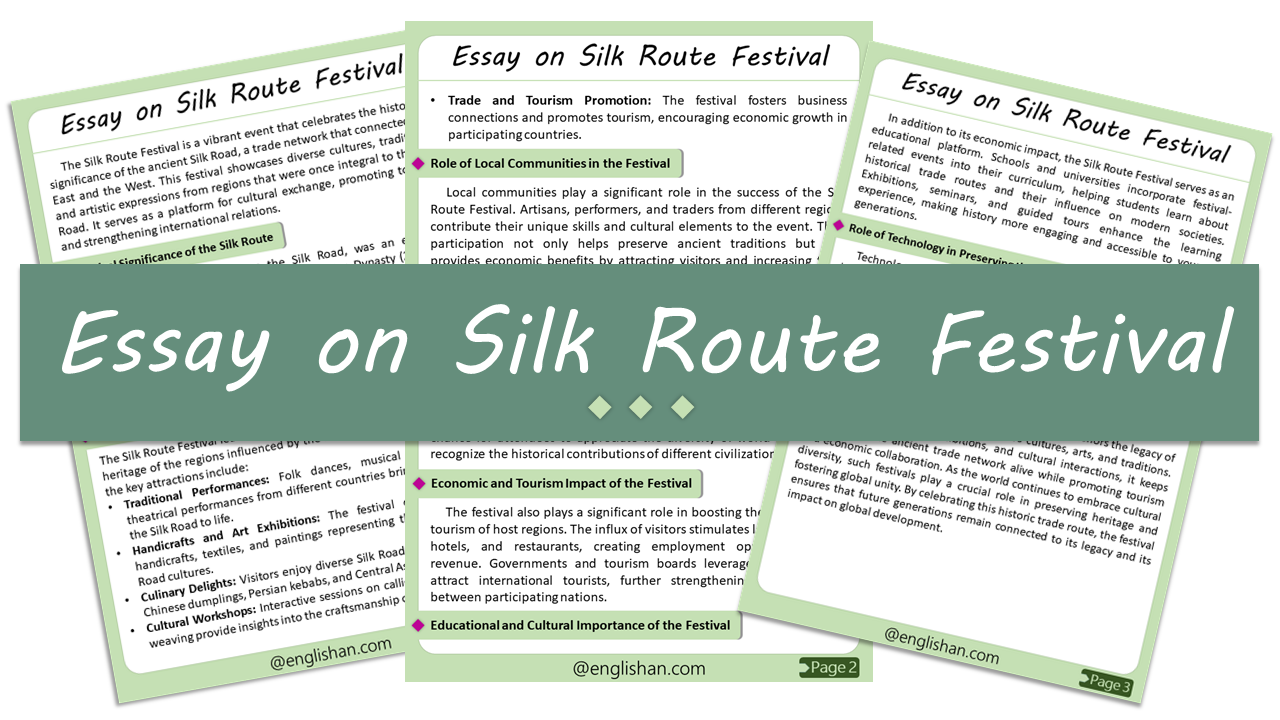
When writing about the Silk Route Festival, it’s important to understand its cultural and historical significance as a celebration of the ancient trade route. This essay on the Silk Route Festival explains its origins, key events, cultural activities, and the impact it has on tourism and local communities. It’s written in 250 words to help middle school students with homework or exams. You can download this Silk Route Festival essay as a free PDF or image to study or print.
10 Lines Silk route festival Essay for Class 2 to Class 5
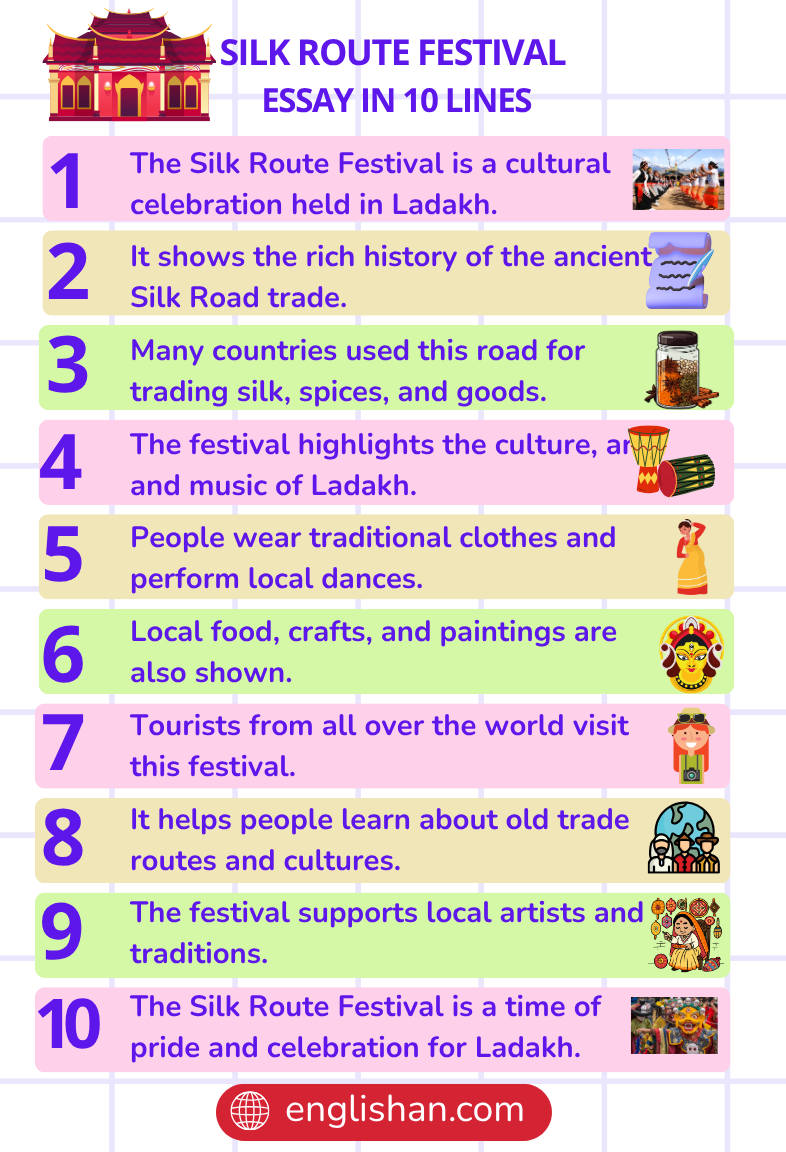
- The Silk Route Festival is a cultural celebration held in Ladakh.
- It shows the rich history of the ancient Silk Road trade.
- Many countries used this road for trading silk, spices, and goods.
- The festival highlights the culture, art, and music of Ladakh.
- People wear traditional clothes and perform local dances.
- Local food, crafts, and paintings are also shown.
- Tourists from all over the world visit this festival.
- It helps people learn about old trade routes and cultures.
- The festival supports local artists and traditions.
- The Silk Route Festival is a time of pride and celebration for Ladakh.
250 Words Essay on Silk route festival for Middle School
The Silk Route Festival is a famous event celebrated in the Ladakh region of India. This festival honors the history of the ancient Silk Road, which was once a major trade route connecting Asia with Europe. Traders used this route to carry goods like silk, spices, wool, and handicrafts across different countries.
The Silk Route Festival celebrates the culture, heritage, and traditions of Ladakh and its connection to the Silk Road. It is usually held in places like Leh or Nubra Valley. During this festival, the region becomes lively with music, dance, and colorful decorations.
People from nearby villages wear their traditional clothes and perform folk dances. Musicians play local instruments, and artists display beautiful handmade crafts. Visitors can also taste traditional Ladakhi dishes and buy local products such as shawls, jewelry, and carpets.
Tourists from different parts of the country and the world visit Ladakh to attend this festival. It helps promote tourism and supports the local economy. The festival also teaches young people about the importance of cultural exchange and the role of the Silk Road in history.
The Silk Route Festival is not only about fun and celebration; it is a way to remember the strong cultural ties between different regions and countries. It brings people together and helps protect traditional arts and customs.
500 Words Silk route festival Essay for Upper Primary and Lower Secondary
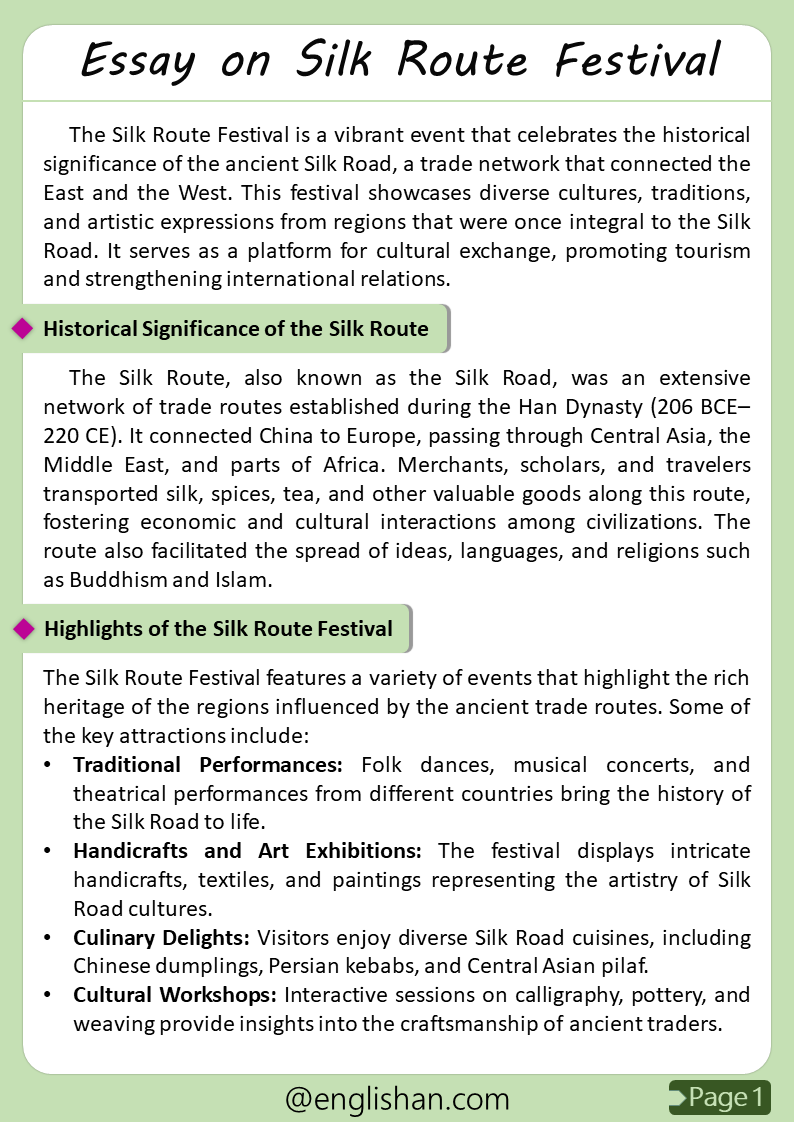
Historical Significance of the Silk Route
The Silk Route, also known as the Silk Road, was an extensive network of trade routes established during the Han Dynasty (206 BCE–220 CE). It connected China to Europe, passing through Central Asia, the Middle East, and parts of Africa. Merchants, scholars, and travelers transported silk, spices, tea, and other valuable goods along this route, fostering economic and cultural interactions among civilizations. The route also facilitated the spread of ideas, languages, and religions such as Buddhism and Islam.
Highlights of the Silk Route Festival
The Silk Route Festival features a variety of events that highlight the rich heritage of the regions influenced by the ancient trade routes. Some of the key attractions include:
- Traditional Performances: Folk dances, musical concerts, and theatrical performances from different countries bring the history of the Silk Road to life.
- Handicrafts and Art Exhibitions: The festival displays intricate handicrafts, textiles, and paintings representing the artistry of Silk Road cultures.
- Culinary Delights: Visitors enjoy diverse Silk Road cuisines, including Chinese dumplings, Persian kebabs, and Central Asian pilaf.
- Cultural Workshops: Interactive sessions on calligraphy, pottery, and weaving provide insights into the craftsmanship of ancient traders.
- Trade and Tourism Promotion: The festival fosters business connections and promotes tourism, encouraging economic growth in participating countries.
Role of Local Communities in the Festival
Local communities play a significant role in the success of the Silk Route Festival. Artisans, performers, and traders from different regions contribute their unique skills and cultural elements to the event. Their participation not only helps preserve ancient traditions but also provides economic benefits by attracting visitors and increasing trade opportunities. For example, skilled weavers from Uzbekistan showcase their traditional silk textiles, drawing global attention to their craftsmanship.
Impact on Global Cultural Exchange
The Silk Route Festival serves as a bridge between past and present, fostering mutual understanding among nations. By bringing together people from various backgrounds, the festival strengthens global cultural exchange, encourages dialogue, and promotes peace. It offers a chance for attendees to appreciate the diversity of world cultures and recognize the historical contributions of different civilizations.
Economic and Tourism Impact of the Festival
The festival also plays a significant role in boosting the economy and tourism of host regions. The influx of visitors stimulates local businesses, hotels, and restaurants, creating employment opportunities and revenue. Governments and tourism boards leverage the festival to attract international tourists, further strengthening economic ties between participating nations.
Educational and Cultural Importance of the Festival
In addition to its economic impact, the Silk Route Festival serves as an educational platform. Schools and universities incorporate festival-related events into their curriculum, helping students learn about historical trade routes and their influence on modern societies. Exhibitions, seminars, and guided tours enhance the learning experience, making history more engaging and accessible to younger generations.
Role of Technology in Preserving the Silk Route Heritage
Technology plays an essential role in documenting and preserving the legacy of the Silk Route. Digital archives, virtual exhibitions, and social media platforms allow people worldwide to engage with the festival. Online resources provide historical insights, while live-streamed performances and interactive workshops ensure global accessibility, helping to keep the Silk Road’s rich history alive for future generations.
Conclusion
The Silk Route Festival is a remarkable event that honors the legacy of the Silk Road by bringing together diverse cultures, arts, and traditions. Through performances, exhibitions, and cultural interactions, it keeps the spirit of the ancient trade network alive while promoting tourism and economic collaboration. As the world continues to embrace cultural diversity, such festivals play a crucial role in preserving heritage and fostering global unity. By celebrating this historic trade route, the festival ensures that future generations remain connected to its legacy and its impact on global development.
Difficult Words Used in 500 Silk Route Festival Essay
| Word | Meaning |
|---|---|
| Heritage | Traditions, history, and culture passed down through generations |
| Civilization | An advanced stage of human society with developed arts and governance |
| Artisan | A skilled craftsperson who creates handmade products |
| Calligraphy | Decorative handwriting or handwritten lettering |
| Globalization | The process of increased interaction and integration worldwide |
| Legacy | Something handed down from the past, such as cultural traditions |
| Economic Collaboration | Cooperation between countries to improve trade and financial relations |
Silk Route Festival Essay PDF
You May Also Like