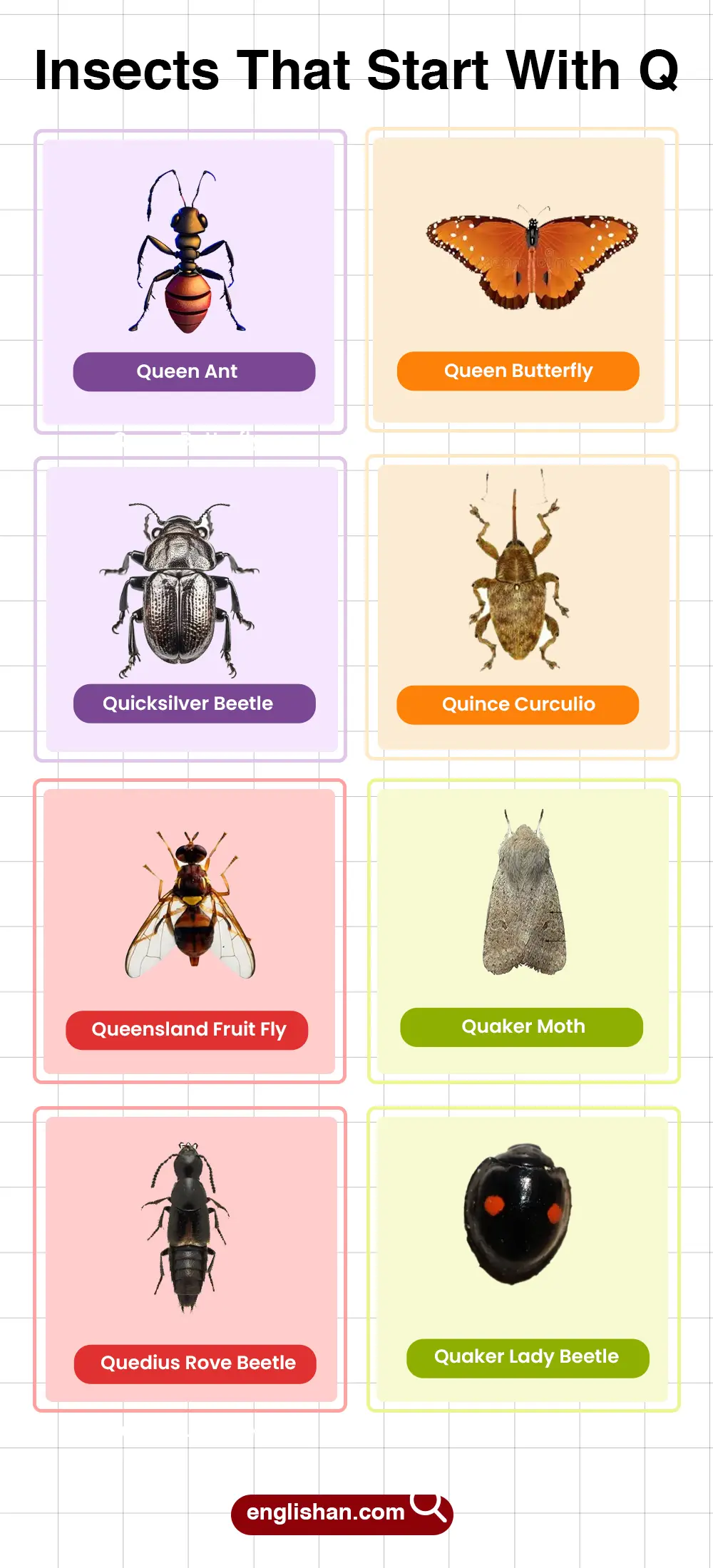
Some insects starting with Q are Queensland Fruit Fly, Quaker Moth, and Queen Butterfly. These names connect to animals in English.
Learning insects that start with q improves vocabulary and helps students use more words in writing and speaking.
List of All Insects That Start with Q with Pictures
- Queen Alexandra’s Birdwing
- Queensland Fruit Fly
- Quaker Moth
- Quaking Grasshopper
- Quill Spider
- Quagga Beetle
- Quenched Leafhopper
- Quetzal Moth
- Quickstep Wasp
- Quarterback Beetle
- Queensland Stick Insect
- Quarantine Aphid
- Queen Butterfly
- Quokka Beetle
- Quivering Moth
- Quacking Moth Caterpillar
- Queensland Jewel Beetle
- Quiver Aphid
- Quinine Beetle
- Quahog Beetle
Advertisement
Most Common Insects Beginning with Q
- Quaker Moth
- Queensland Fruit Fly
- Quaking Grasshopper
- Quill Spider
- Quickstep Wasp
- Quenched Leafhopper
- Quagga Beetle
- Quetzal Moth
- Queensland Stick Insect
- Quarterback Beetle
Rare and Unique Insects That Begin with Q
- Queensland Fruit Fly: Tropical fly species, considered unique due to its localized fruit-host preferences.
- Quaker Moth: A small moth found mainly in temperate forests, known for its subtle wing patterns.
- Quetzal Moth: Vibrant moth native to rainforests, recognized for colorful wings resembling the quetzal bird.
- Quill Spider: Spider with quill-like bristles, inhabiting South American forests, unique in appearance and behavior.
- Quarterback Beetle: Beetle living in wooded areas, named for its distinct curved body resembling a football player’s stance.
- Queensland Stick Insect: Long, thin insect camouflaged among leaves and branches in Australian forests.
- Queen Alexandra’s Birdwing: Largest butterfly in the world, found in tropical rainforest canopies.
- Quickstep Wasp: Rare wasp species often found in gardens and farms, noted for its rapid movements.
- Quenched Leafhopper: Leafhopper with bright markings, feeding on crops and rarely seen outside specific regions.
- Quaking Grasshopper: Grasshopper species known for trembling or quaking motions while moving in grasslands.
Colorful Insects That Start with Q
- Queen Alexandra’s Birdwing
- Quetzal Moth
- Quagga Beetle
- Quickstep Wasp
- Queensland Stick Insect
- Quarterback Beetle
- Queensland Jewel Beetle
- Quenched Leafhopper
- Quokka Beetle
- Quiver Moth
Garden and Farm Insects That Start with Q
- Queensland Fruit Fly
- Quenched Leafhopper
- Quarantine Aphid
- Quarterback Beetle
- Quickstep Wasp
- Quokka Beetle
- Quill Spider
- Quaking Grasshopper
- Queensland Stick Insect
- Queen Thrips
Dangerous or Harmful Insects That Begin with Q
- Queensland Fruit Fly: Infests fruits and can damage crops, causing economic losses.
- Quenched Leafhopper: Feeds on plants and transmits harmful pathogens.
- Quaker Moth: Caterpillars can feed on leaves and damage certain trees.
- Quill Spider: Though mostly harmless, can bite if disturbed, causing mild irritation.
- Quickstep Wasp: Can sting if provoked, causing discomfort to humans and animals.
- Quaking Grasshopper: Known to feed heavily on grasses, affecting pastures.
- Quarterback Beetle: Can harm small plants by feeding on leaves or stems.
- Queensland Stick Insect: Occasionally eats garden plants, minor agricultural impact.
- Quetzal Moth Larvae: Some species’ larvae feed on crops or forest foliage.
- Queen Alexandra’s Birdwing Larvae: Rarely affects plants but can nibble on specific host leaves in small numbers.
Pollinator and Beneficial Insects That Start with Q
- Quetzal Moth: Pollinates certain rainforest flowers while feeding on nectar.
- Quickstep Wasp: Helps control pest insects in gardens by preying on them.
- Quaking Grasshopper: Assists in spreading plant seeds during movement.
- Queensland Stick Insect: Helps with plant pruning, indirectly supporting new growth.
- Queen Alexandra’s Birdwing: Pollinates large rainforest flowers while feeding on nectar.
- Quenched Leafhopper: Supports minor pollination despite sometimes being harmful to plants.
- Quaker Moth: Visits flowers for nectar and aids in cross-pollination.
- Quarterback Beetle: Can help decompose organic material in wooded areas.
- Queensland Fruit Fly: Though harmful, helps some wild plants reproduce through pollen transfer.
- Quill Spider: Predatory spider that maintains insect population balance, indirectly benefiting plants.
Endangered Insects That Begin with Q
- Queen Alexandra’s Birdwing
- Quetzal Moth
- Queensland Stick Insect
- Quokka Beetle
- Quill Spider
- Quenched Leafhopper
- Quarterback Beetle
- Queensland Jewel Beetle
- Quarantine Aphid
- Queen Butterfly
Lifecycle and Habitat of Insects That Start with Q
- Quaker Moth: Temperate forests
- Queensland Fruit Fly: Tropical fruits and farms
- Quaking Grasshopper: Grasslands
- Quill Spider: South American forests
- Quickstep Wasp: Gardens and farms
- Quenched Leafhopper: Crops and gardens
- Quetzal Moth: Rainforests
- Quarterback Beetle: Wooded areas
- Queensland Stick Insect: Bushes and trees
- Queen Alexandra’s Birdwing: Tropical rainforest canopy
FAQs About Insects Starting with Q
Which insects start with Q are most common?
Quaker Moth, Queensland Fruit Fly, and Quaking Grasshopper are widely recognized species.
Are there any harmful insects that start with Q?
Yes, Queensland Fruit Fly and Quenched Leafhopper are known to damage crops.
What pollinator insects begin with Q?
Queen Alexandra’s Birdwing, Quetzal Moth, and Quickstep Wasp are helpful pollinators.
Which Q insects are endangered?
Queen Alexandra’s Birdwing, Quetzal Moth, and Queensland Stick Insect are considered endangered.
How can I identify insects that start with Q?
Look for unique names, wing patterns, colors, and habitats, such as tropical forests or gardens.
Advertisement