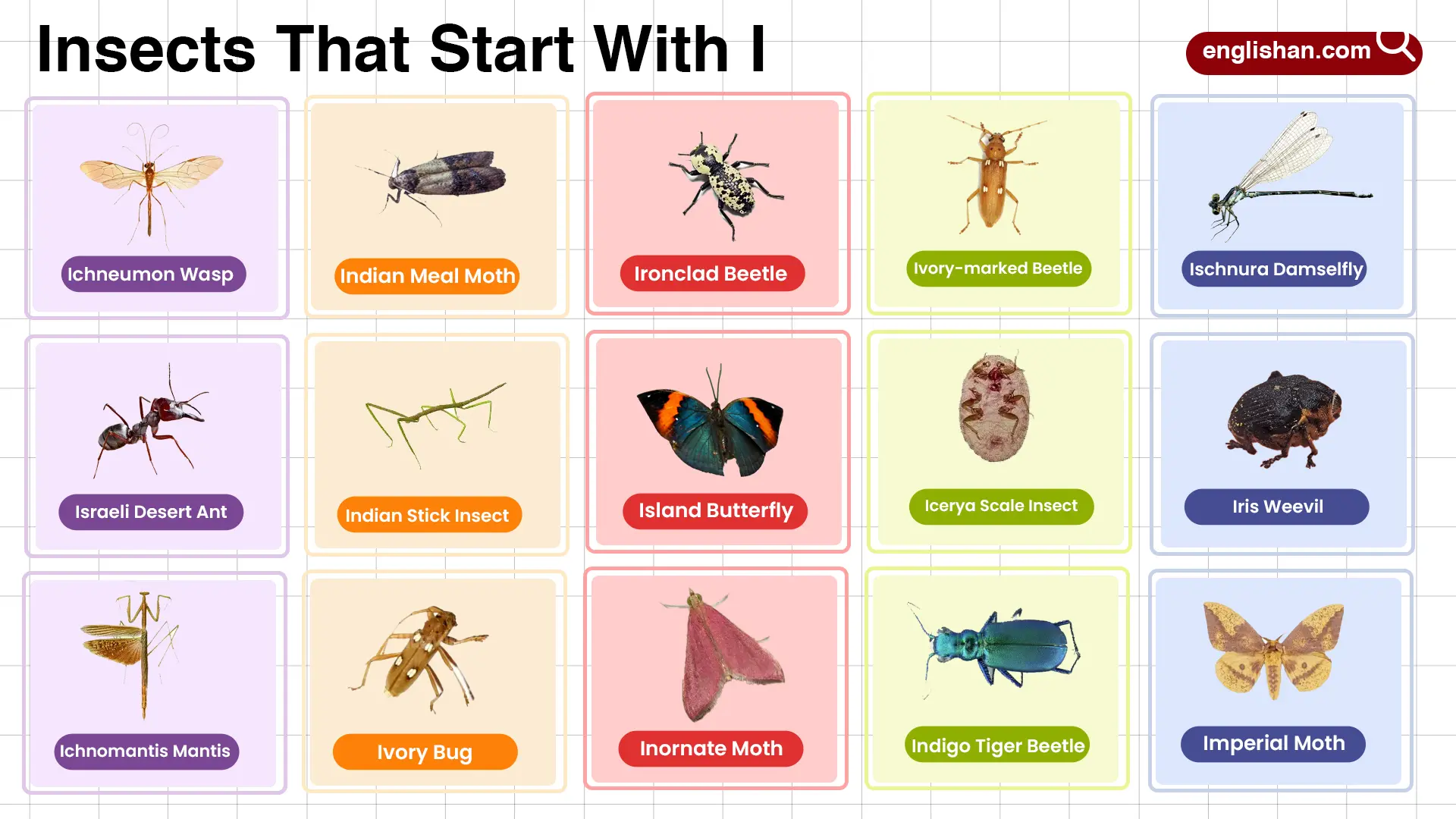
Some insects have names that start with I, like ichneumon wasps and ironclad beetles. Ichneumon wasps are thin and help control pests, while ironclad beetles have very strong shells. These insects that start with I are easy to notice because of their shapes and actions.
Knowing insects that start with I helps students learn new words and use them in writing and speaking confidently.
List of Insects That Start with I with Pictures
- Ichneumon
- Indianmeal Moth
- Indian Walking Stick
- Imperial Moth
- Iridescent Beetle
- Isopod
- Icerya
- Ice Crawlers
- Indian Leafwing
- Indian Stick Insect
- Icy
- Iridescent
- Invasive
- Invisible
- Industrious
- Irritating
- Intricate
- Interesting
- Intelligent
- Isolated
- Inquisitive
- Intimidating
- Innocuous
- Intriguing
- Imposing
- Imperfect
- Impressive
- Intense
- Infectious
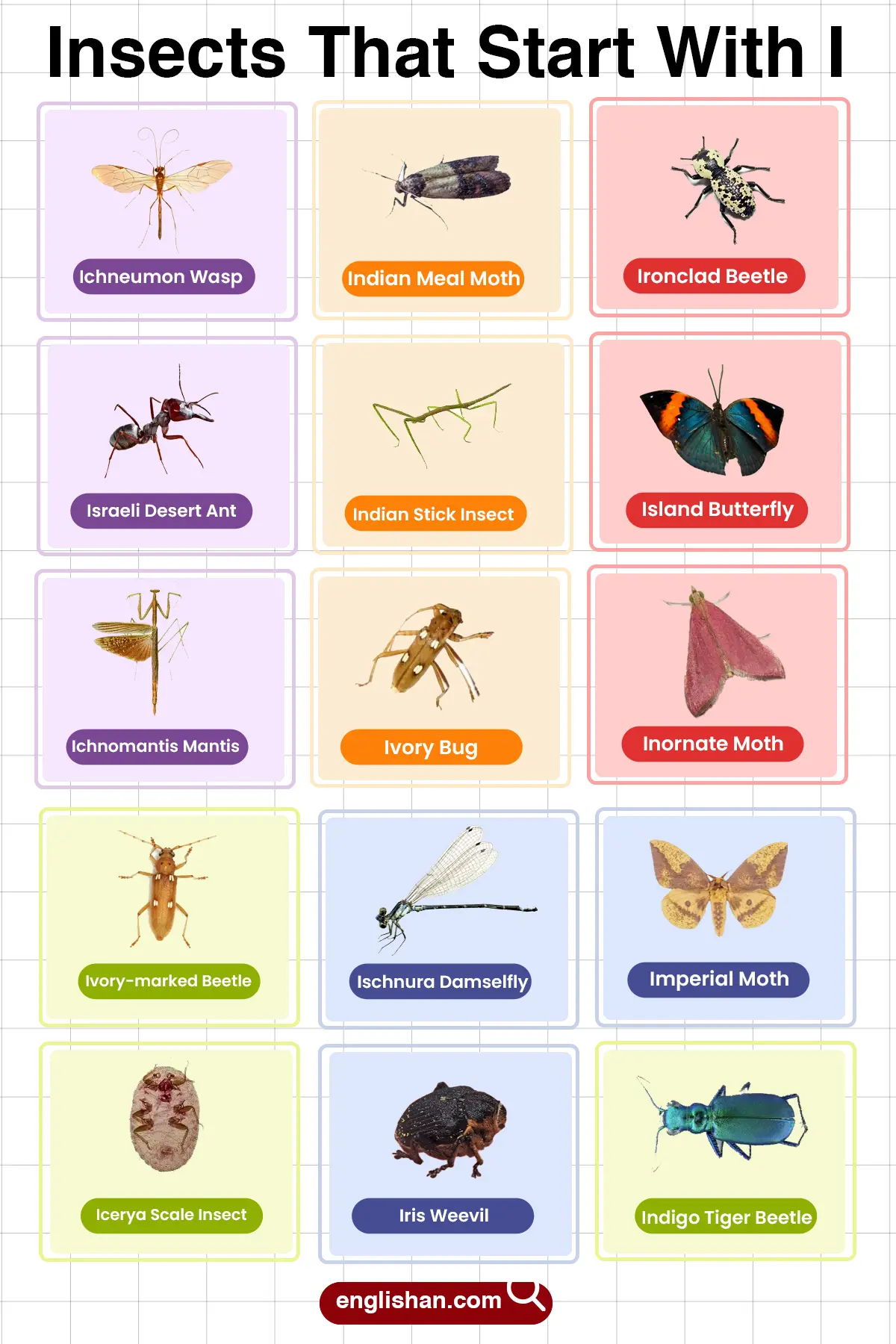
Common Insects That Start with I
- Ichneumon
- Indianmeal Moth
- Indian Walking Stick
- Imperial Moth
- Iridescent Beetle
- Isopod
- Icerya
- Ice Crawlers
- Indian Leafwing
- Indian Stick Insect
Descriptive Words for Insects That Begin with I
Icy: Suggesting a cold or frosty appearance, like some insects with pale or frosted wings.
Iridescent: Showing bright, changing colors when light hits, like beetles or butterflies.
Invasive: Spreading quickly and often affecting local environments, such as some introduced insect species.
Invisible: Very hard to see or detect, blending into surroundings for protection.
Industrious: Very active and hardworking, like ants or bees collecting food.
Irritating: Causing annoyance or discomfort, often because of bites or noises.
Intricate: Having complex patterns or shapes, seen in wings or body markings.
Interesting: Capturing attention due to unusual shapes, colors, or behaviors.
Intelligent: Displaying problem-solving or adaptive behaviors uncommon for insects.
Isolated: Living alone or apart from other insects, not in groups or colonies.
Insects by Category Starting with I
Coleoptera (Beetles)
- Iridescent Beetle
- Invasive Weevil
- Ivory Ladybird
Lepidoptera (Moths and Butterflies)
- Imperial Moth
- Indian Leafwing
- Indianmeal Moth
Orthoptera (Stick Insects and Related)
- Indian Walking Stick
- Ice Crawlers
- Indian Stick Insect
Adjectives to Describe Insects That Start with I
Inquisitive: Showing curiosity or investigative behavior, like exploring new surroundings.
Intimidating: Appearing threatening or large compared to other insects.
Innocuous: Harmless and not causing damage or irritation to humans.
Intriguing: Fascinating or drawing attention due to unique features.
Imposing: Large or impressive in size, commanding notice.
Invisible: Able to hide effectively, often blending perfectly with surroundings.
Imperfect: Having irregularities in shape, color, or structure compared to typical specimens.
Impressive: Standing out for beauty, size, or skillful behavior.
Intense: Showing strong activity or vibrant colors.
Infectious: Spreading rapidly, usually describing behavior, appearance, or population growth.
FAQs About Insects That Start with I
A1: There are many insects starting with I, including beetles, moths, and stick insects. Learners can recognize around 10–15 commonly known ones easily.
A2: The Indianmeal Moth is a popular insect that starts with I. It is often studied because of its unique behavior and appearance.
A3: No, some insects are specific to certain regions. For example, the Indian Leafwing and Indian Walking Stick are native to parts of Asia.
A4: Not at all. Many are harmless, like Iridescent Beetles or Isopods. Only a few may be considered pests.