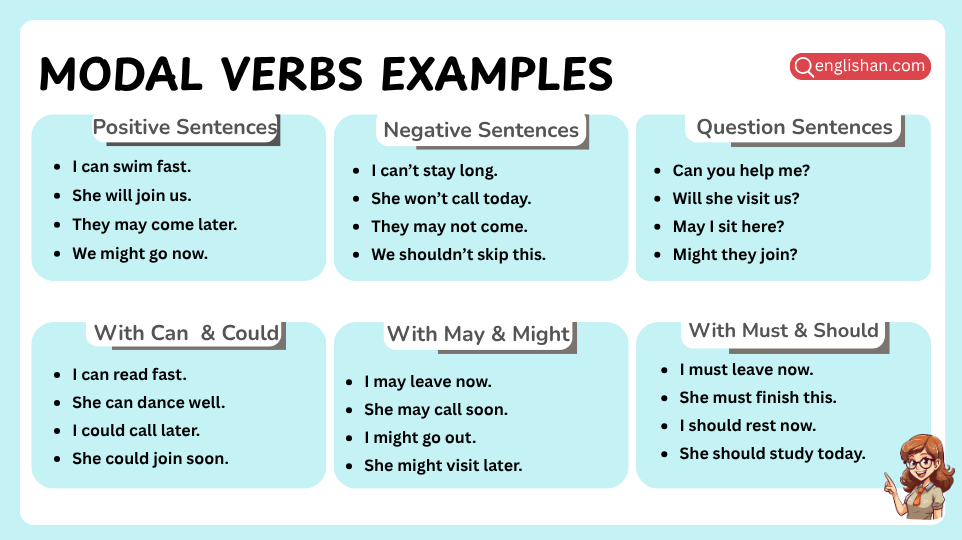
Helping verbs called modal verbs show ability, possibility, necessity, or permission. Modal verbs examples include “can,” “may,” “must,” and “will.” They change the main verb to tell what someone can, should, or might do.
Using modal verbs examples helps learners improve English and grammar by showing how to write correct and clear sentences.
What Are Modal Verbs?
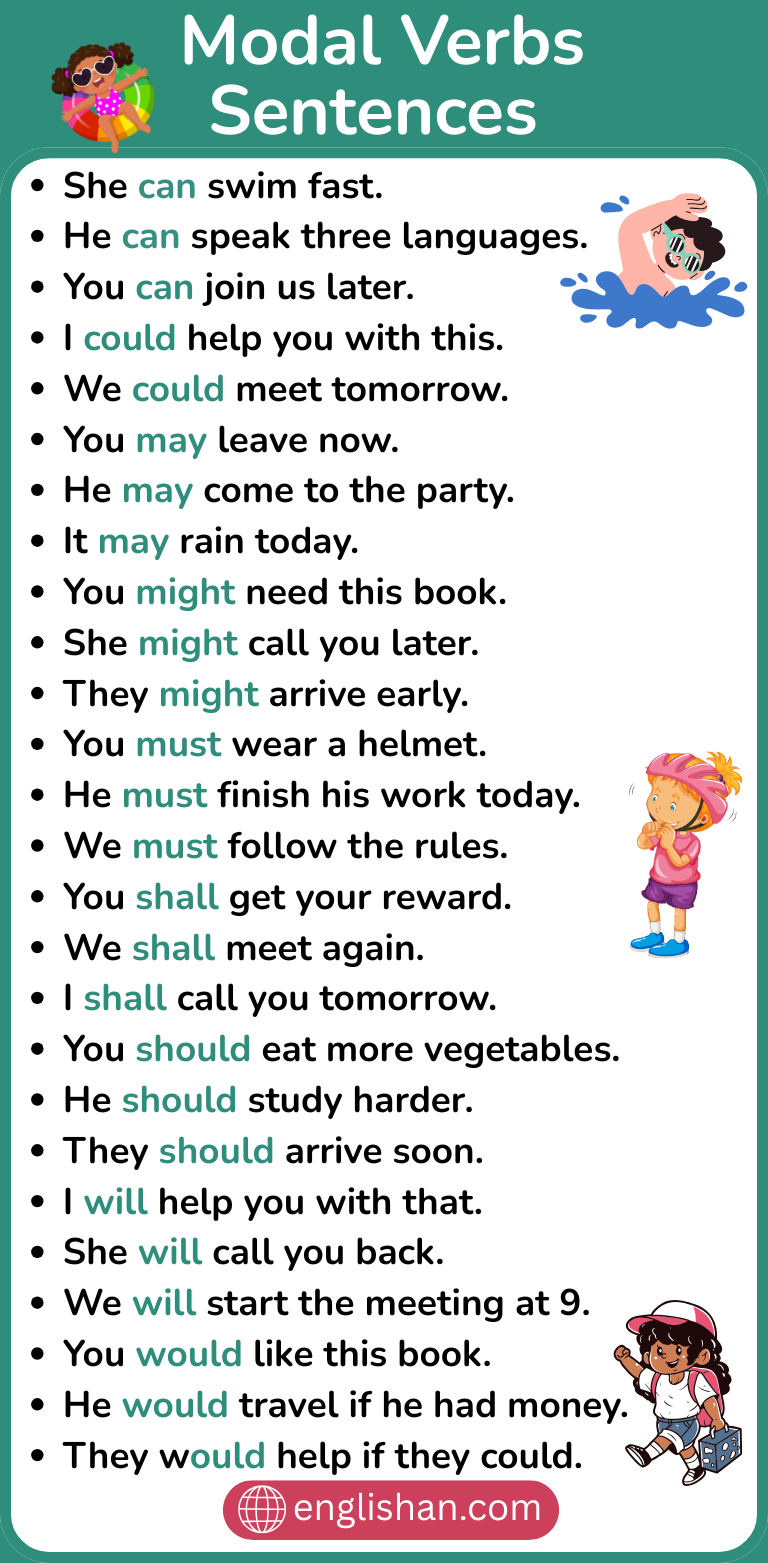
Modal verbs are auxiliary verbs that express ability, possibility, necessity, or permission. Examples include “can,” “could,” “may,” “might,” “must,” “shall,” “should,” “will,” and “would.” These verbs work with the main verb to add meaning, such as showing if something is certain, allowed, necessary, or only possible.
Modal Verbs Examples In Sentences
Below is a list using modal verbs to help you see sentence flow and grammar structure while learning clear English sentence patterns.
- I can swim in the deep pool.
- She can finish her project today.
- They can help us with directions.
- We could leave early if you want.
- He could join us after lunch.
- You may take a seat here.
- It may snow tonight.
- You might need an umbrella later.
- She might visit her grandparents soon.
- You must wear your ID at work.
- We must leave on time.
- You should drink more water daily.
- They should arrive by noon.
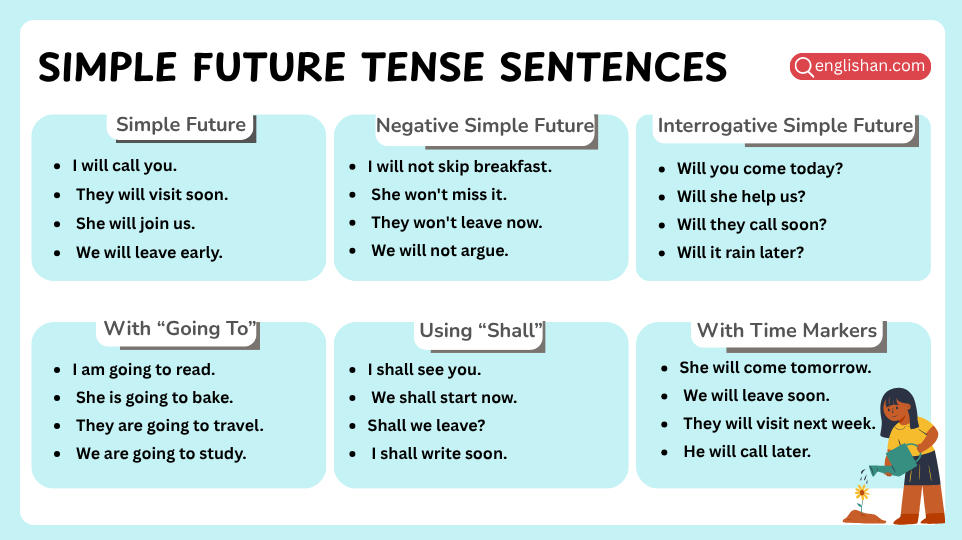
- I will call you tomorrow.
- She will join the meeting online.
Positive Modal Verbs Sentences
Below is a list with positive sentences using modal verbs to build your sentence formation skills.
- I can speak English well.
- She will help you with homework.
- They could come over for dinner.
- We may see a rainbow today.
- You might get a prize.
- He should pass the test easily.
- They must enjoy the trip.
- We shall meet at the park.
- She will bake a cake for us.
- You can visit the museum anytime.
- He can dance very well.
- We might watch a movie later.
- She may cook pasta tonight.
- I should finish my reading today.
- They will celebrate their win.
Negative Modal Verbs Sentences
Below is a list of negative sentences using modal verbs for building clear sentence awareness.
- I cannot swim in cold water.
- She cannot attend the event.
- They couldn’t find the book.
- We may not need to go out.
- You might not see him today.
- He must not forget his keys.
- She shouldn’t skip breakfast.
- They will not leave early.
- You can’t enter without a ticket.
- He might not call today.
- I shouldn’t stay up too late.
- They must not be late for school.
- We cannot allow noise here.
- She will not join us this evening.
- You may not use phones in class.
Question Sentences Using Modal Verbs
Below is a list using modal verbs in questions to support your practice in making questions naturally.
- Can you swim well?
- Will she join us later?
- Could they help us today?
- May I leave now?
- Might he visit tomorrow?
- Should we start now?
- Must they finish the work today?
- Shall we go for a walk?
- Can he play the guitar?
- Will you call me later?
- Could you open the window?
- May we sit here?
- Might it rain today?
- Should I bring my notebook?
- Must I complete it now?
Short Sentences With Modal Verbs
Below is a list using short sentences with modal verbs to make your practice easy and quick.
- I can run.
- She will go.
- We may wait.
- You might see.
- He must eat.
- They should rest.
- I shall try.
- She could sing.
- He can help.
- You will learn.
- We might win.
- She may cook.
- They could come.
- He should stay.
- You must try.
Sentences With Can
Below is a list using can in sentences to strengthen your verb understanding.
- I can read fast.
- She can draw well.
- They can play soccer.
- We can leave now.
- You can join the team.
- He can fix this.
- I can help you.
- She can sing beautifully.
- They can understand English.
- We can meet tomorrow.
- He can cook well.
- You can call me.
- She can dance well.
- I can drive a car.
- They can swim here.
Sentences With Could
Below is a list using could in sentences for sentence building.
- I could call you later.
- She could come by bus.
- They could visit soon.
- We could meet at noon.
- You could ask him.
- He could bring snacks.
- I could help tomorrow.
- She could write a story.
- They could finish early.
- We could start soon.
- You could try this dish.
- He could teach you.
- She could join us.
- I could visit my aunt.
- They could stay longer.
Sentences With May
Below is a list using may in sentences to practice modal verbs.
- I may call you today.
- She may visit soon.
- They may come home.
- We may go out.
- You may leave now.
- He may see us.
- She may cook dinner.
- They may join the game.
- We may start early.
- You may stay here.
- He may need help.
- I may see you later.
- She may bring her book.
- They may ask questions.
- We may watch a movie.
Sentences With Might
Below is a list using might in sentences for structured practice.
- I might go out today.
- She might call you.
- They might visit us.
- We might stay home.
- You might see him later.
- He might join us.
- She might bring snacks.
- They might start now.
- We might travel soon.
- You might need help.
- He might get a gift.
- I might read a book.
- She might sing today.
- They might stay longer.
- We might meet there.
Sentences With Must
Below is a list using must in sentences for modal verbs learning.
- I must go now.
- She must study today.
- They must leave soon.
- We must follow the rules.
- You must wear shoes.
- He must work hard.
- She must call her mom.
- They must bring their books.
- We must stay quiet.
- You must listen carefully.
- He must pay the fee.
- I must complete this.
- She must write the report.
- They must clean the room.
- We must try again.
Sentences With Should
Below is a list using should in sentences for your grammar practice.
- I should drink water.
- She should eat healthy.
- They should sleep early.
- We should leave now.
- You should study more.
- He should rest today.
- She should call her dad.
- They should arrive soon.
- We should meet tomorrow.
- You should visit the doctor.
- He should read this book.
- I should practice more.
- She should write notes.
- They should follow the plan.
- We should help others.
Sentences With Shall
Below is a list using shall in sentences to see modal verb forms.
- I shall return soon.
- We shall meet at noon.
- You shall see the results.
- He shall join us.
- She shall help you.
- They shall start the game.
- I shall call later.
- We shall try again.
- You shall receive your gift.
- He shall leave now.
- She shall answer your question.
- They shall pay the fee.
- I shall visit tomorrow.
- We shall support the plan.
- You shall complete this task.
Sentences With Will
Below is a list using will in sentences to practice structure.
- I will call you tonight.
- She will visit us soon.
- They will join the team.
- We will leave at 8.
- You will learn quickly.
- He will bring snacks.
- She will finish her work.
- They will travel tomorrow.
- We will meet at the park.
- You will see him soon.
- He will send the email.
- I will read the book.
- She will attend the event.
- They will clean the room.
- We will try again.
Simple Sentences Using Modal Verbs In Daily Life
Below is a list using simple modal verbs sentences to support your daily grammar practice.
- I can help you now.
- She may call soon.
- They will come today.
- We should eat lunch.
- You must wear your badge.
- He might visit later.
- She could join us.
- They shall meet here.
- We could stay longer.
- You may leave early.
- He will call tonight.
- I should sleep now.
- She must study today.
- They can dance well.
- We might go out later.
Modal Verbs Sentences For Beginners
Below is a list using modal verbs sentences designed for beginner English learners to practice confidently.
- I can draw a cat.
- She will read a book.
- They may play outside.
- We should be on time.
- You must wear a mask.
- He might eat ice cream.
- She could sing a song.
- They shall come soon.
- We will help you.
- You can see the stars.
- He may call later.
- I should drink water.
- She must finish homework.
- They can run fast.
- We might watch a movie.
You May Also Like