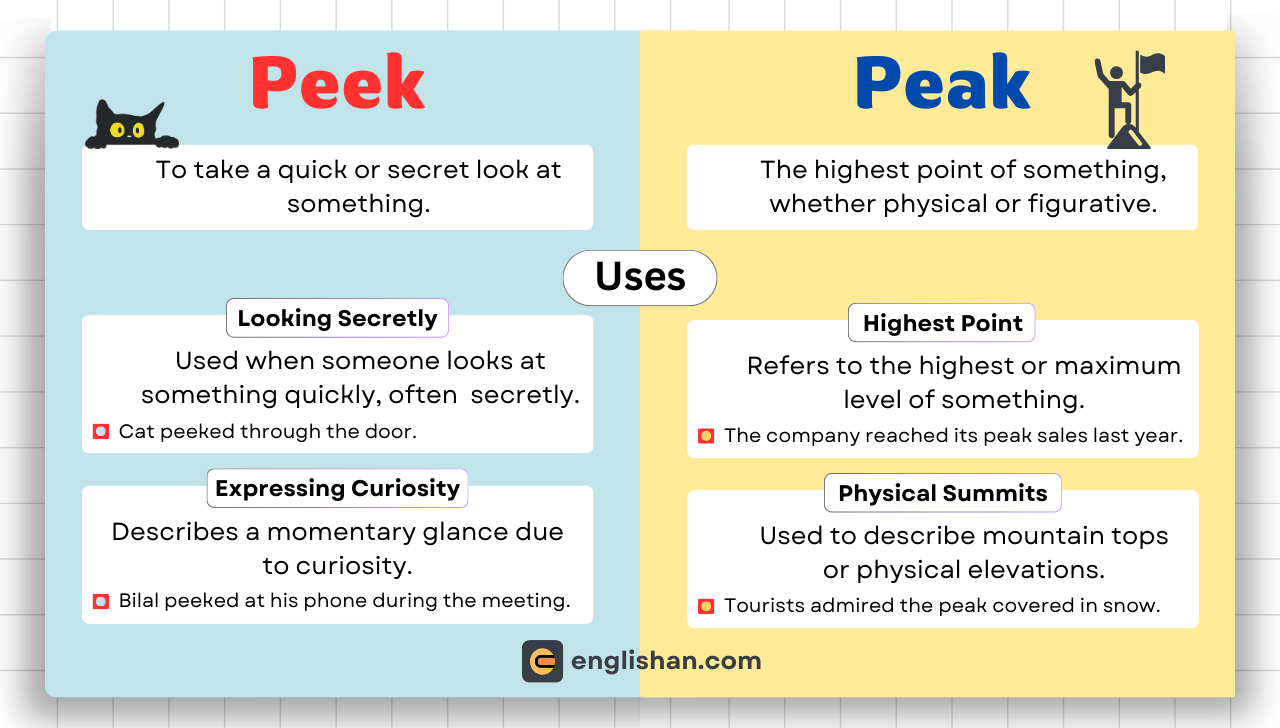
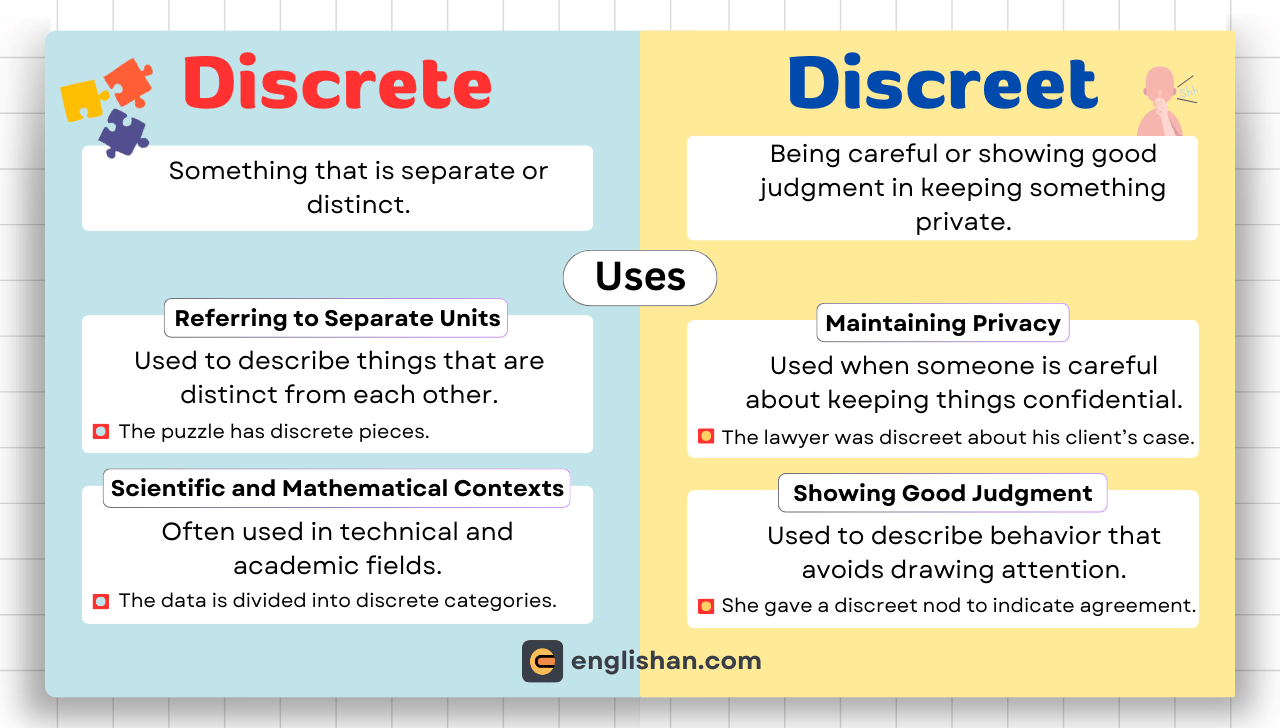
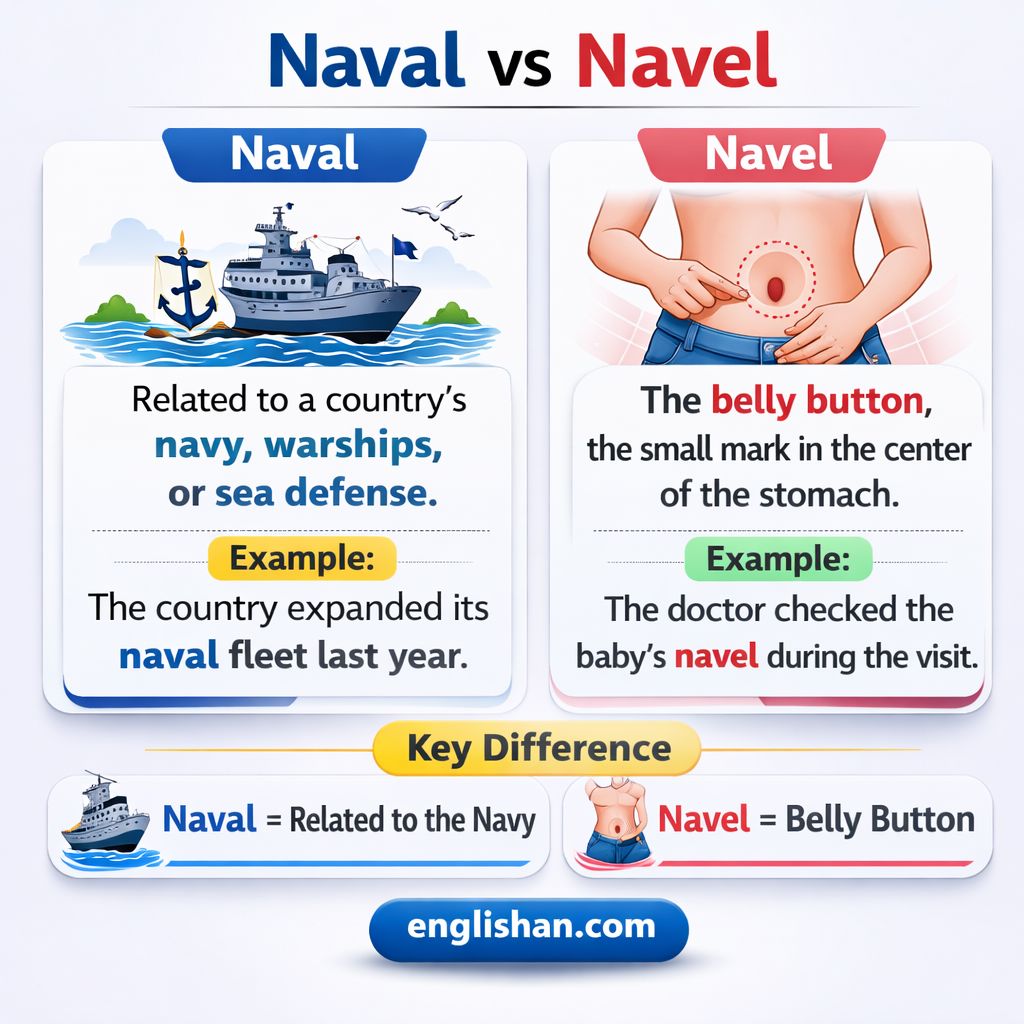
Naval and navel sound the same, but they refer to very different things. Naval relates to the navy, warships, and military activity at sea, while navel means the belly button and also appears in phrases such as navel orange.
That difference becomes much easier once you connect each word to its usual setting. In naval vs navel, one belongs in military and maritime writing, while the other belongs in anatomy, medicine, and everyday references to the body. This article explains what each word means, how each one is used, and how to choose the right spelling from context.
Naval vs Navel: Quick Answer
Here is the fastest way to separate them:
| Word | Meaning | Part of Speech | Common Context | Example |
|---|---|---|---|---|
| naval | related to the navy or warships | adjective | military, ships, sea power | naval base |
| navel | belly button | noun | anatomy, body, fruit names | navel orange |
Use naval for the navy, ships, officers, fleets, and sea warfare.
Use navel for the belly button or for names based on that shape, such as navel orange.
What Does Naval Mean?
Naval is an adjective. It describes something connected to a nation’s navy, its warships, or military operations at sea.
Because it is an adjective, naval usually appears before another noun.
Common phrases include:
- naval officer
- naval fleet
- naval battle
- naval base
- naval strategy
- naval history
- naval academy
Examples of Naval
- The country expanded its naval fleet.
- The officers met at the naval base before the exercise began.
- She is studying naval history at university.
- The museum has an exhibit on naval warfare.
What Does Navel Mean?
Navel is a noun. It refers to the small hollow or scar in the middle of the abdomen where the umbilical cord was attached before birth. In everyday English, most people call it the belly button.
The word also appears in a few extended uses, especially in names such as navel orange, which is named for the navel-like shape at one end of the fruit.
Common uses include:
- the baby’s navel
- a scar near the navel
- navel orange
- the navel of the world
Examples of Navel
- She had a small tattoo near her navel.
- The doctor examined the area around the baby’s navel.
- He bought a bag of sweet navel oranges at the market.
- The surgeon checked the skin around the navel.
Key Difference Between Naval and Navel
The difference comes down to meaning and function:
- naval describes something related to the navy
- navel names a body part
That also means they belong to different parts of speech:
- naval = adjective
- navel = noun
A fast meaning check usually solves the problem. If the sentence is about ships, sea power, officers, or military operations, the word is naval. If the sentence is about the body, the abdomen, or a fruit named from that shape, the word is navel.
Are Naval and Navel Pronounced the Same?
Yes. Naval and navel are pronounced the same in standard English:
- naval: /ˈneɪ.vəl/
- navel: /ˈneɪ.vəl/
Because they sound alike, they are homophones. The correct spelling depends on meaning, not pronunciation.
How to Remember Naval vs Navel
A quick memory link makes this pair easier to remember:
- naval connects to navy
- navel means belly button
You can also think of it this way:
- naval belongs in military and sea-related writing
- navel belongs in body and anatomy-related writing
If the sentence could take the word navy, you probably need naval. If it refers to the body, you need navel.
Common Mistakes With Naval and Navel
Using Naval for the Belly Button
Incorrect:
He had a scar near his naval.
Correct:
He had a scar near his navel.
Using Navel for Navy-Related Meaning
Incorrect:
They toured the navel academy.
Correct:
They toured the naval academy.
Mixing Up Fixed Phrases
Incorrect:
- naval orange
- navel fleet
Correct:
- navel orange
- naval fleet
These are useful checks because both phrases are common and easy to remember.
Naval and Navel in Sentences
Sentences With Naval
- The country invested heavily in its naval defenses.
- She read a book about naval battles in the Pacific.
- The sailors trained at a major naval base.
Sentences With Navel
- The child laughed when her father poked her navel.
- The doctor checked the baby’s navel for signs of infection.
- This navel orange is especially sweet and juicy.
Summary
Naval and navel sound the same, but they mean very different things. Naval is an adjective that relates to the navy, warships, and military matters at sea. Navel is a noun that refers to the belly button and also appears in phrases such as navel orange. Once you connect naval with navy and navel with the body, the spelling choice becomes much easier.
FAQs
Naval relates to the navy, warships, or military matters at sea. Navel means the belly button, the small mark in the center of the stomach.
The correct phrase is naval base because it refers to a place used by the navy and military ships.
The correct phrase is navel orange because this kind of orange is named after the small navel-like mark on the fruit.
Yes, naval and navel are pronounced the same. That is why they are often mixed up in spelling.
Naval is an adjective because it describes something connected with the navy, such as naval ship, naval officer, or naval base.
Navel is a noun because it names a body part, the belly button.
You May Also Like