Some negative words that start with f describe bad choices or actions, like foolish, fickle, or frustrating. These words show feelings, actions, or attitudes that are not helpful or kind.
Learning these negative words that start with f helps students speak and write better in English. They can describe situations and people more clearly and use stronger words.
List of Negative Words That Start With F
- Fickle
- Foolish
- Frustrated
- Frightened
- Feeble
- Flawed
- Frantic
- Fuming
- Furious
- Ferocious
- Fierce
- Faulty
- Facetious
- Feral
- Fractious
- Fulminant
- Fulsome
- Froward
- Funereal
- Fetid
- Frowsy
- Flippant
- Fiendish
- Finicky
- Frugal
- Fretful
- Flaky
- Flustered
- Frazzled
- Forgetful
- Fidgety
- Frivolous
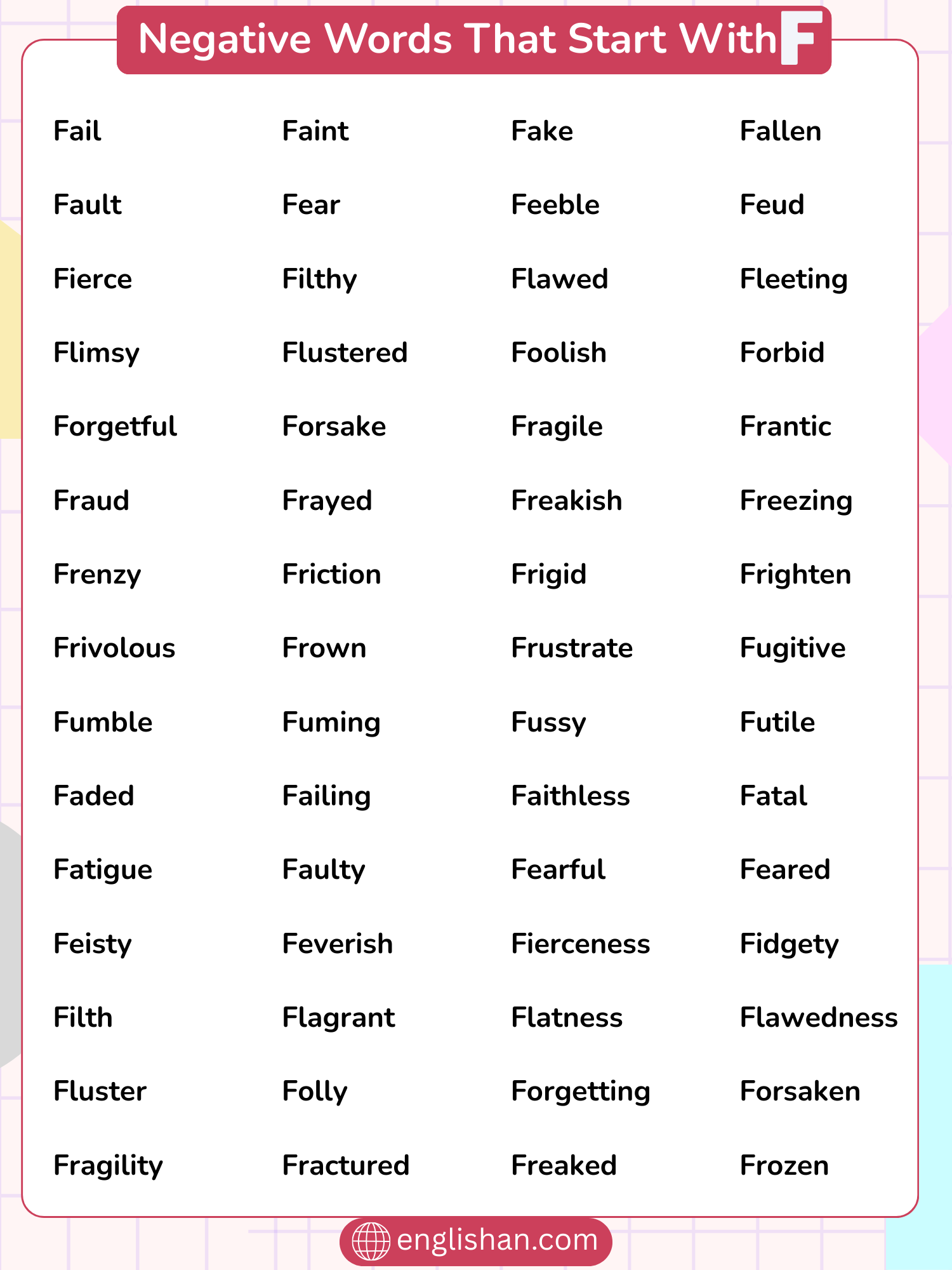
Common Negative Words That Start With F
- Fickle
- Foolish
- Feeble
- Flawed
- Frantic
- Frustrated
- Furious
- Fuming
- Fierce
- Faulty
Rare Negative Words That Start With F
Facetious: Treating serious issues with inappropriate humor.
- He made a facetious remark during the serious meeting.
Feral: Wild or untamed, often aggressive.
- The feral cat hissed at everyone passing by.
Fractious: Easily irritated or difficult to control.
- The fractious child refused to follow the rules.
Fulminant: Sudden, intense, and severe.
- The fulminant storm destroyed several houses.
Fulsome: Excessive to the point of being offensive.
- He gave a fulsome apology that felt insincere.
Froward: Stubbornly disobedient or contrary.
- The froward student refused to complete any assignments.
Funereal: Having a mournful, gloomy character.
- The room had a funereal atmosphere after the bad news.
Fetid: Having a strong, unpleasant smell.
- The fetid garbage made everyone leave the kitchen quickly.
Frowsy: Untidy or dirty in appearance.
- The frowsy room was covered in dust and clutter.
Flippant: Lacking proper seriousness or respect.
- She gave a flippant answer that annoyed her teacher.
Negative Words That Start With F to Describe Someone
- Fickle
- Foolish
- Fiendish
- Finicky
- Frugal
- Fretful
- Ferocious
- Flaky
- Froward
- Fuming
Negative Words That Start With F for Daily Use
- Frustrated
- Fuming
- Furious
- Feeble
- Flustered
- Frazzled
- Flawed
- Forgetful
- Faulty
- Fretful
Personality Traits Starting With F That Are Negative
- Fickle
- Foolish
- Fiendish
- Frivolous
- Fractious
- Fretful
- Flaky
- Froward
- Flippant
- Ferocious
Behavior Words That Start With F That Are Negative
- Fuming
- Frustrated
- Flustered
- Forgetful
- Faulty
- Flawed
- Fretful
- Ferocious
- Flaky
- Fidgety
FAQs About Negative Words That Start With F
Common negative words that start with F include Fickle, Foolish, Feeble, Flawed, and Furious.
You can describe someone negatively with words starting with F like Fickle, Fiendish, Frivolous, Fractious, and Flaky.
Yes, rare negative words that begin with F include Facetious, Feral, Fulminant, Froward, and Fulsome.
Negative F words like Frustrated, Fuming, Forgetful, Flawed, and Faulty can be used in daily conversation.