
A bridle is an essential piece of horse riding equipment that helps riders communicate with their horse safely and effectively. It may look simple at first, but a bridle is made up of several important parts, each with its own purpose. In this article, we’ll break down all the main parts of a bridle, explain what they do, and show you how they work together. Whether you’re a beginner rider or just curious about horse tack, this guide will make it easy to understand.
List of Bridle Parts With Names
- Crownpiece (Headpiece)
- Browband
- Cheekpieces
- Snaffle Strap
- Throat Lash
- Noseband (Cavesson)
- Snaffle Reins
- Curb Reins
- Snaffle Bit
- Curb Bit
- Curb Chain
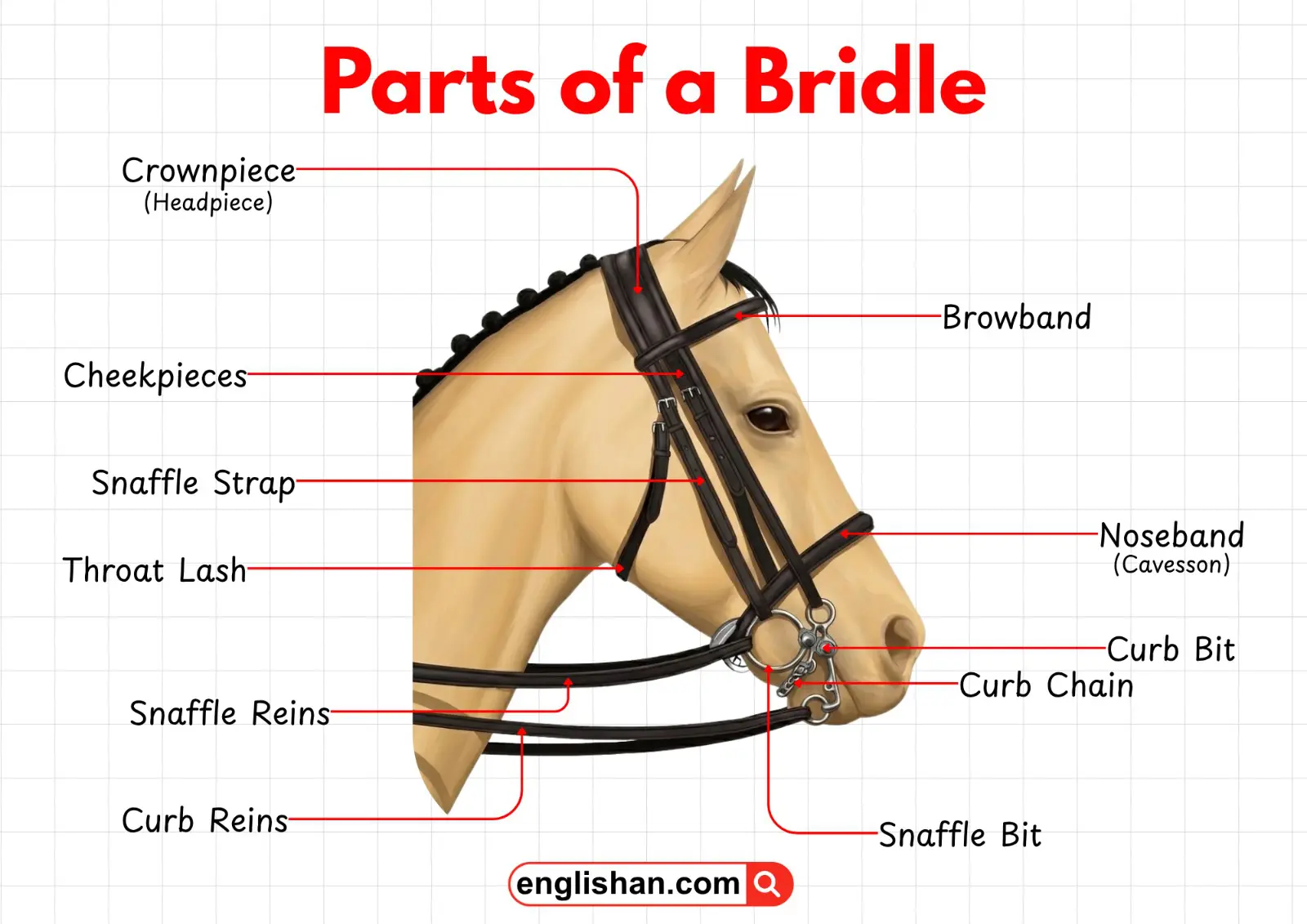
Parts of a Bridle Diagram With Names
A bridle is made up of several parts that work together to help the rider control and communicate with the horse. The headpiece and crown form the main structure that sits securely on the horse’s head, while the browband and cheekpieces keep the bridle properly positioned. The bit and reins allow the rider to give signals, and the throatlash or chinstrap ensures the bridle stays in place. Additional parts like the noseband, cavesson, and buckles add safety, comfort, and adjustability. Each component plays an important role in making the bridle functional, comfortable for the horse, and easy for the rider to use.
Headstall Components (Main Structure)
These parts form the main framework of the bridle. They sit over the horse’s head and provide the foundation that supports all other components. Without these, the bridle cannot stay properly positioned or function effectively.
Crownpiece (Headpiece)
The crownpiece is the main strap that goes over the top of the horse’s head, just behind the ears. It acts as the primary support for the entire bridle, holding all other parts in place. Usually made of padded leather for comfort, it distributes pressure evenly to prevent irritation. A well-fitted crownpiece is essential because it ensures stability and keeps the bridle from slipping.
Browband
The browband runs horizontally across the horse’s forehead, connecting the two sides of the crownpiece. Its main function is to keep the bridle from sliding backward. It also helps maintain proper alignment of the headstall. In addition to its functional role, the browband is often decorative, sometimes featuring stitching, beads, or crystals.
Cheekpieces
Cheekpieces are the vertical straps that run down the sides of the horse’s face from the crownpiece to the bit. They are adjustable, allowing riders to position the bit correctly in the horse’s mouth. Proper adjustment is crucial because it directly affects the horse’s comfort and responsiveness.
Straps & Fastening Parts
These components are responsible for securing the bridle and ensuring it stays properly fitted during movement. They also add stability and prevent unnecessary shifting.
Throat Lash
The throat lash passes under the horse’s throat and connects to both sides of the bridle. Its purpose is to keep the bridle from slipping off over the horse’s head, especially when the horse lowers or shakes its head. It should be snug but not tight, allowing enough space for comfort and natural movement.
Snaffle Strap
The snaffle strap is used to attach and stabilize the snaffle bit within the bridle setup. It works alongside the cheekpieces to hold the bit securely in place. This strap ensures the bit maintains proper positioning for effective communication between the rider and the horse.
Control & Rein System
These parts are directly used by the rider to guide, control, and communicate with the horse. They play a vital role in directing movement and signaling commands.
Snaffle Reins
Snaffle reins are connected to the snaffle bit and are used for direct control. They allow the rider to give clear and simple signals, making them ideal for beginners or everyday riding. The reins provide a direct line of communication from the rider’s hands to the horse’s mouth.
Curb Reins
Curb reins are attached to the curb bit and are typically used in more advanced riding. They provide more refined control and apply leverage rather than direct pressure. Riders use curb reins carefully to give subtle cues, often in combination with snaffle reins.
Bit & Mouthpiece Components
These parts sit inside or around the horse’s mouth and are responsible for transmitting the rider’s signals. They are crucial for communication but must be used with care to ensure the horse’s comfort.
Snaffle Bit
The snaffle bit is a simple, direct-action bit that rests in the horse’s mouth. It works by applying even pressure to the corners of the mouth and tongue. Because it does not use leverage, it is considered gentle and is commonly used for training and general riding.
Curb Bit
The curb bit is more complex and works using leverage. It applies pressure not only to the mouth but also to the poll (top of the head) and chin. This allows for more precise control, but it requires experienced handling to avoid discomfort or harm to the horse.
Curb Chain
The curb chain is attached to the curb bit and runs under the horse’s chin. It tightens slightly when the reins are pulled, creating leverage and enhancing the effect of the curb bit. Proper adjustment is important to ensure it is effective without being too harsh.
Nose Component
This part provides additional control and helps stabilize the bridle by fitting around the horse’s nose. It can also influence how the horse carries its head and responds to commands.
Noseband (Cavesson)
The noseband encircles the horse’s nose and helps keep the horse’s mouth closed while maintaining the position of the bit. It also adds stability to the bridle. The cavesson is the most common type of noseband and is adjustable for comfort. When fitted correctly, it enhances control without restricting the horse’s natural movement.
Key Takeaway
As we learned, a bridle is made up of different parts that work together to ensure both control and comfort for the horse. The headstall components form the main structure, while straps like the throat lash keep everything secure. Reins allow the rider to communicate clearly, and bits play a key role in guiding the horse’s movements. Meanwhile, the noseband adds extra stability and control. When all these parts are properly fitted and used correctly, the bridle becomes an effective tool for safe, smooth, and responsive riding.
You May Also Like