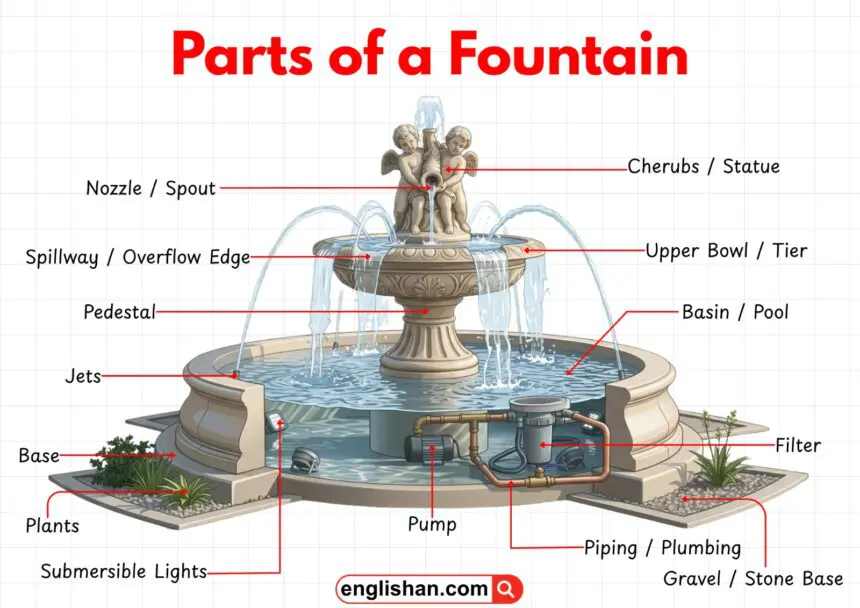
Fountains are not just beautiful to look at—they are made up of several important parts that work together to create flowing water and stunning designs. From the basin that holds the water to the pump that keeps it moving, each component has a specific role. In this article, we’ll explore the parts of a fountain in a simple way, along with a labeled diagram to make everything easy to understand.
List of Fountain Parts With Names
- Nozzle / Spout
- Cherubs / Statue
- Upper Bowl / Tier
- Spillway / Overflow Edge
- Pedestal
- Jets
- Basin / Pool
- Pump
- Piping / Plumbing
- Filter
- Base
- Plants
- Submersible Lights
- Gravel / Stone Base
Parts of a Fountain Diagram With Names
A fountain is a decorative water feature made up of several key components that work together to create flowing water and visual appeal. The basin holds the water, while the pedestal supports the upper tiers or bowls. Nozzles and jets control the direction and style of the water flow, creating beautiful patterns. The pump circulates water from the reservoir to the top, keeping the fountain running continuously. Filters and plumbing ensure clean water and smooth operation, while overflow drains prevent spillage. Decorative elements like statues or sculptures add style and character. Every part, from the structural base to the smallest nozzle, plays an important role in making the fountain both functional and visually stunning.
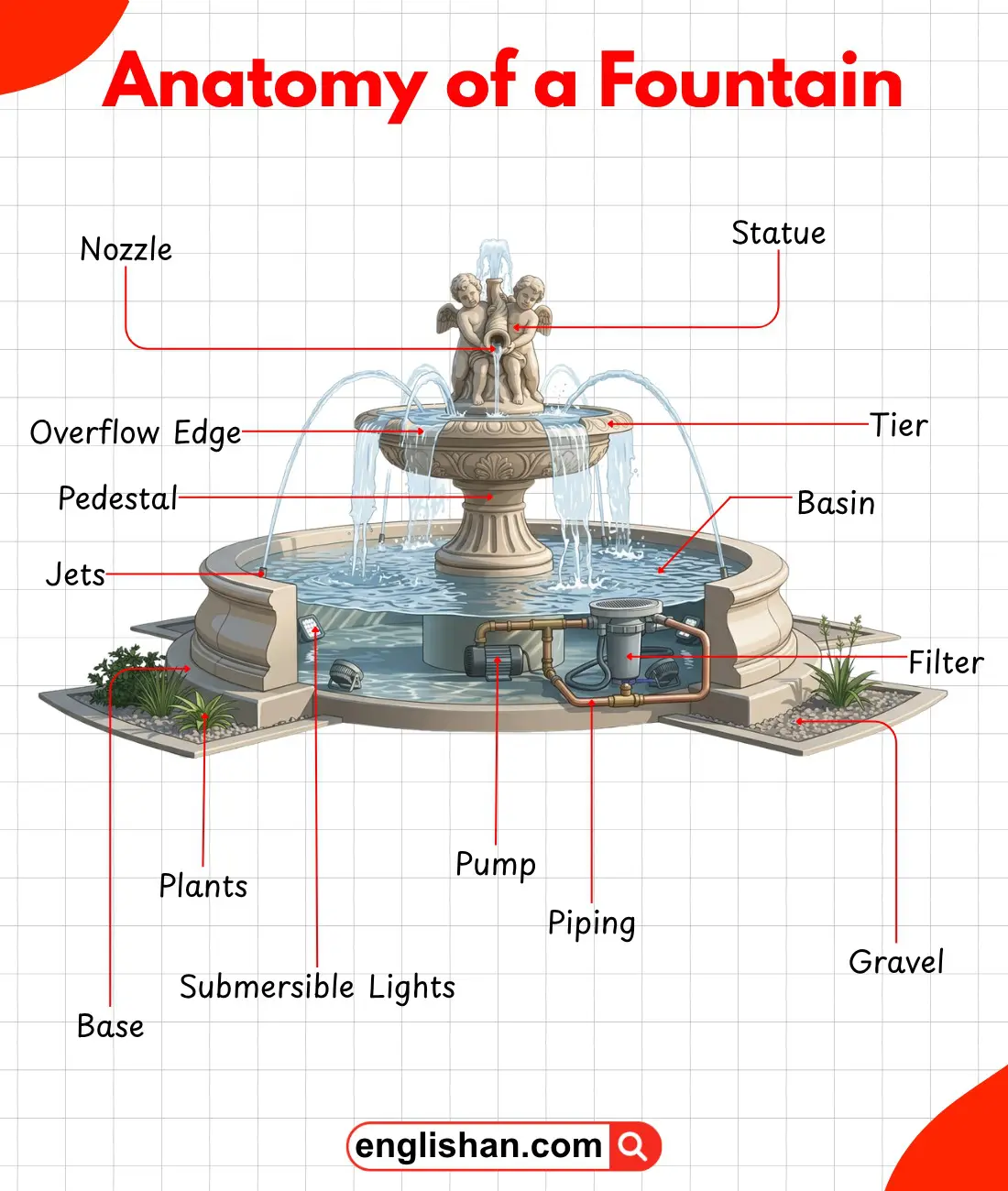
Structural Parts
These are the core components that give the fountain its shape, stability, and overall structure. They form the skeleton of the fountain and support all other elements.
Base
The base is the lowest part of the fountain that sits directly on the ground. It provides stability and support for the entire structure, ensuring the fountain remains upright and secure. A strong base is essential for durability, especially for large fountains.
Pedestal
The pedestal is the vertical column that holds up the upper tiers or bowls of the fountain. It acts as a central support and often has decorative designs that enhance the aesthetic appeal of the fountain.
Upper Bowl / Tier
The upper bowl or tier is the raised container where water collects before spilling over to lower levels. In multi-tier fountains, these bowls create cascading water effects, adding movement and sound to the fountain’s beauty.
Basin / Pool
The basin or pool is the large lower container that collects all the water from the upper tiers. It serves as the main reservoir of the fountain and can also be decorative, often featuring ornate edges or patterns.
Water Flow & Movement Parts
These parts control how water travels through the fountain, creating movement, sounds, and visual effects that make the fountain lively and dynamic.
Nozzle / Spout
The nozzle or spout is where water is expelled from the fountain. It directs the flow into specific shapes, streams, or patterns, creating the visual water effects that make a fountain lively and engaging.
Jets
Jets are small outlets usually located around the basin that spray water upward or outward. They can create dynamic effects like arcs, fans, or fountains of water, enhancing the fountain’s visual impact.
Spillway / Overflow Edge
The spillway or overflow edge is the part of the upper bowl where water spills over naturally into the lower tiers or basin. It helps control the flow and prevents water from overflowing uncontrollably.
Mechanical & Functional Parts
These are the working components that keep the fountain running smoothly. They ensure water circulates properly and the fountain operates efficiently.
Pump
The pump is the mechanical heart of the fountain. It moves water from the basin or reservoir to the nozzles and jets, creating circulation and ensuring continuous water flow.
Piping / Plumbing
Piping or plumbing connects the pump to the nozzles, jets, and other parts. It guides the water through the system efficiently, allowing it to flow in the desired patterns and heights.
Filter
The filter cleans the water by removing dirt, debris, and impurities. This keeps the fountain water clear, prevents blockages, and prolongs the life of the pump and plumbing.
Decorative & Aesthetic Parts
These parts enhance the visual appeal of the fountain. They add charm, style, and personality, making the fountain a centerpiece in any space.
Cherubs / Statue
Cherubs, statues, or sculptural figures serve as artistic focal points. They add elegance, charm, and thematic beauty, often positioned at the top to enhance the visual appeal.
Plants
Plants are placed around the fountain to add natural beauty and integrate into garden or landscape settings. They provide color, texture, and a lively atmosphere.
Gravel / Stone Base
Gravel or stone at the base of the fountain enhances drainage, prevents water from splashing outside it, and gives a polished, finished look to the surrounding area.
Submersible Lights
Submersible lights are placed underwater within the basin or pool. They illuminate it at night, highlighting the water flow and creating a visually stunning effect.
Key Takeaway
As we learned, a fountain works best when all its parts come together: the structural parts give it shape and stability, the water flow parts create movement and sound, the mechanical parts keep it running smoothly, and the decorative parts make it beautiful and inviting.
You May Also Like