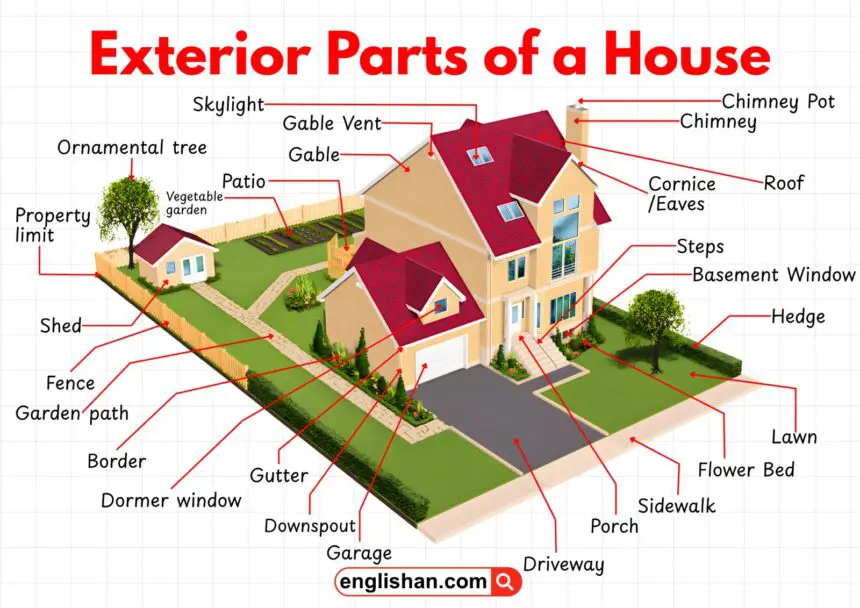
When you look at a house from the outside, there are many important parts that work together to protect it and make it look attractive. From the roof at the top to the foundation at the bottom, each element has its own purpose. Everything you see on the exterior plays a role in both function and design. In this article, we’ll explore the exterior parts of a house with a simple and easy-to-understand diagram.
List of Exterior Parts of a House With Names
- Skylight
- Gable Vent
- Gable
- Patio
- Vegetable Garden
- Ornamental Tree
- Property Limit
- Shed
- Fence
- Garden Path
- Border
- Dormer Window
- Gutter
- Downspout
- Garage
- Driveway
- Porch
- Sidewalk
- Flower Bed
- Lawn
- Hedge
- Basement Window
- Steps
- Cornice / Eaves
- Roof
- Chimney
- Chimney Pot
Parts of a House Exterior Diagram With Names
A house exterior is made up of several important parts that work together to protect, support, and beautify the home. The roof shields the house from rain, sun, and other weather conditions, while the walls provide structure and security. Windows and doors allow light, air, and access while adding to the design of the home. The foundation supports the entire structure, keeping it stable and safe. Other features like gutters, eaves, and siding help with water drainage and durability. Every part, from the roof to the foundation, plays a key role in keeping the house functional, safe, and visually appealing.
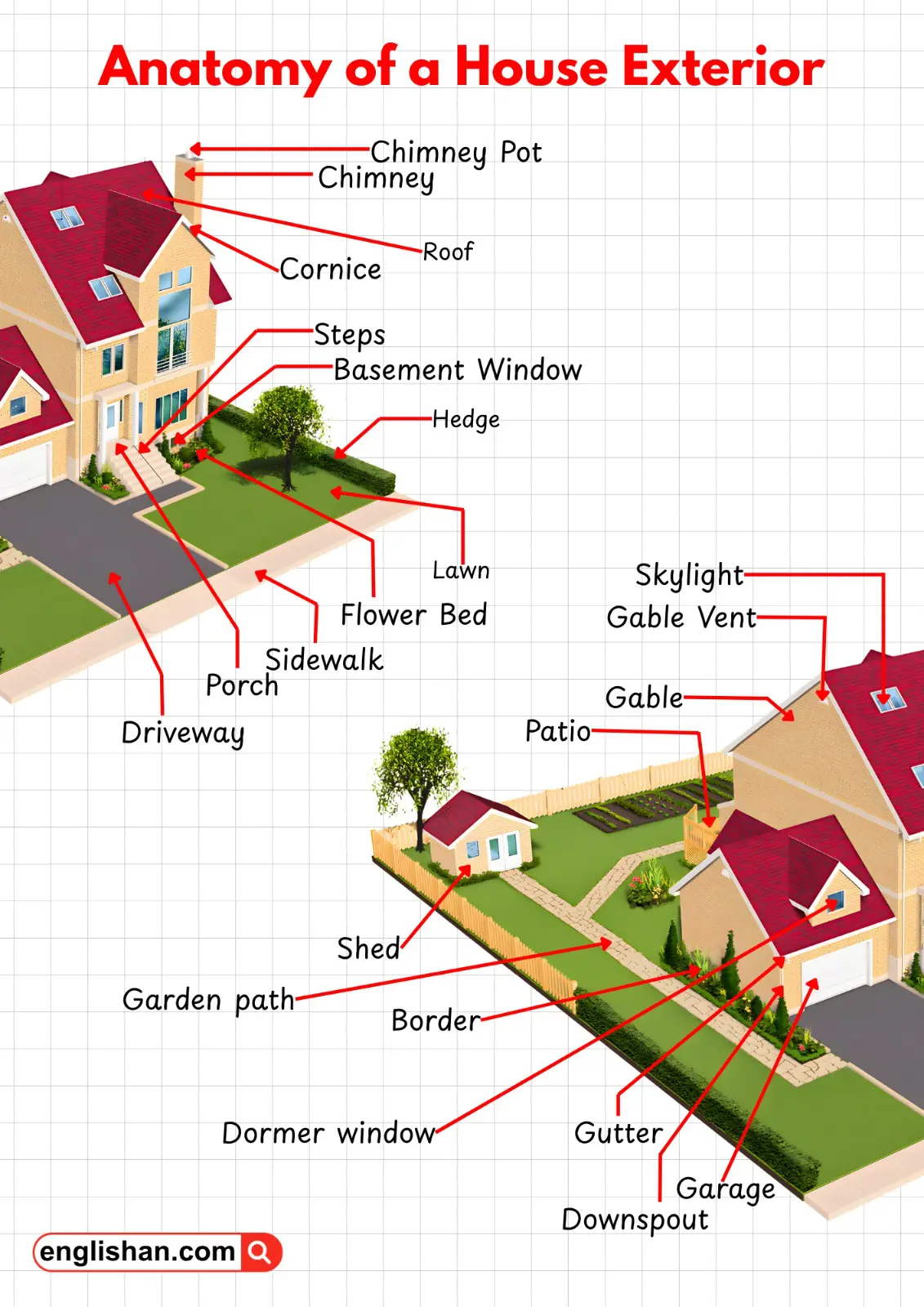
Structural Parts (Main Building Elements)
These are the main parts that give the house its shape, strength, and basic structure.
Roof
The roof is the topmost covering of the house and acts as the first layer of protection against weather. It shields the entire structure from rain, sunlight, wind, and dust. A well-built roof also helps in insulation, keeping the house cool in summer and warm in winter.
Chimney Pot
The chimney pot is a small extension placed at the very top of the chimney. It improves the upward flow of smoke and prevents rainwater, birds, and debris from entering the chimney.
Chimney
The chimney is a vertical passage that allows smoke and gases to escape safely from inside the house. It is commonly connected to fireplaces or kitchens and helps maintain clean air indoors.
Gable
The gable is the triangular section of a wall that sits between two sloping sides of the roof. It supports the roof structure and also adds to the architectural style of the house.
Dormer Window
A dormer window is a window that projects outward from a sloped roof. It creates additional headspace in upper rooms and allows more sunlight and fresh air to enter.
Basement Window
This window is located at the lower level of the house, usually near the foundation. It provides ventilation and natural light to basement areas, which would otherwise feel dark and closed.
Porch
The porch is a covered space at the entrance of the house. It serves as a transition area between the outside and inside, offering a place to sit, relax, or welcome guests.
### Steps
Steps are a series of raised platforms that help people move up or down safely. They are usually placed at the entrance to connect ground level with the house floor.
Garage
The garage is an enclosed or semi-enclosed space used for parking vehicles. It also often serves as a storage area for tools, equipment, or household items.
Roof & Drainage System
These parts are designed to protect the house from water damage and maintain proper airflow.
Skylight
A skylight is a glass window installed directly into the roof. It allows natural sunlight to enter from above, making rooms brighter and reducing the need for artificial lighting.
Gable Vent
The gable vent is placed near the top of the gable. It allows hot air to escape from the attic and lets fresh air in, helping regulate temperature and prevent moisture buildup.
Cornice / Eaves
The cornice or eaves are the edges of the roof that extend beyond the walls. They help direct rainwater away from the walls and provide shade, protecting the structure from damage.
Gutter
A gutter is a narrow channel fixed along the edge of the roof. It collects rainwater as it flows off the roof and directs it toward the downspout.
Downspout
The downspout is a vertical pipe connected to the gutter. It carries rainwater from the roof down to the ground and away from the house’s foundation to prevent flooding or damage.
Outdoor Living & Access Areas
These are the parts used for entry, movement, and outdoor activities around the house.
Patio
A patio is a flat, paved outdoor area usually located behind or beside the house. It is used for relaxing, dining, or spending time with family and friends.
Driveway
The driveway is a wide path that connects the road to the garage. It provides space for vehicles to move and park safely within the property.
Sidewalk
A sidewalk is a paved walkway along the front or side of the house. It ensures safe and easy movement for pedestrians.
Garden Path
The garden path is a smaller walkway within the garden. It allows you to move through plants and landscaped areas without disturbing them.
Garden & Landscaping Elements
These parts enhance the beauty, greenery, and overall appearance of the house.
Ornamental Tree
An ornamental tree is planted mainly for decorative purposes. It adds beauty, shade, and a natural feel to the surroundings.
Hedge
A hedge is a row of closely planted shrubs that are trimmed into shape. It serves as a natural fence and adds privacy and elegance.
Lawn
The lawn is a stretch of land covered with grass. It creates an open, green space that looks pleasant and can be used for relaxation or activities.
Flower Bed
A flower bed is an area specifically prepared for growing flowers. It adds color, fragrance, and visual appeal to the house exterior.
Vegetable Garden
This is a section of land used to grow vegetables for home use. It is both practical and rewarding, providing fresh produce.
Border
Borders are the edges that separate different sections of the garden. They keep the layout neat and help organize plants and pathways.
Boundary & Property Features
These elements define the limits of the house and provide security and utility.
Fence
A fence is a barrier that surrounds the property. It provides security, privacy, and clearly marks the boundary of the house.
Property Limit
The property limit indicates the exact boundary line of the land owned. It separates one property from another and avoids disputes.
Shed
A shed is a small outdoor structure used for storage. It is commonly used to keep gardening tools, equipment, or seasonal items.
Key Takeaway
As we learned, the exterior parts of a house are carefully arranged from top to bottom, and each part has its own important role. The upper parts like the roof, chimney, and vents protect the house from weather and control airflow. The middle parts such as windows, porch, and garage provide comfort, access, and daily use. The lower parts like the patio, driveway, and garden areas support movement and outdoor living, while boundary features like fences and sheds ensure safety and organization.
You May Also Like