

A gate is not just a simple barrier. It is made up of several important parts that work together to keep it strong, functional, and looking good. From the posts and rails that give it structure to the hinges, handles, and locks that make it easy to use, every component has a role to play. In this article, we will take a close look at all the main parts of a gate, explain what they do, and show how they fit together so you can understand your gate better or even plan your own design.
List of Gate Parts With Names
- Finials / Spears
- Pickets / Balusters
- Cap
- Post
- Top Rail
- Middle Rail
- Bottom Rail
- Hinges
- Gate Frame
- Solid Panel
- Handle
- Latch / Lock Mechanism
- Base
Parts of a Gate Diagram With Names
Gates are more than just entrances or barriers. They are carefully designed structures made up of different parts that provide strength, functionality, and style. The posts and frame give the gate its shape and support, while the rails and panels hold everything together and add stability. Hinges allow the gate to swing open and closed, and handles and locks make it easy to use and secure. Decorative elements like finials and caps not only enhance the appearance but also add finishing touches. Every part, from the solid panels to the pickets and latch mechanism, works together to make the gate strong, functional, and visually appealing.
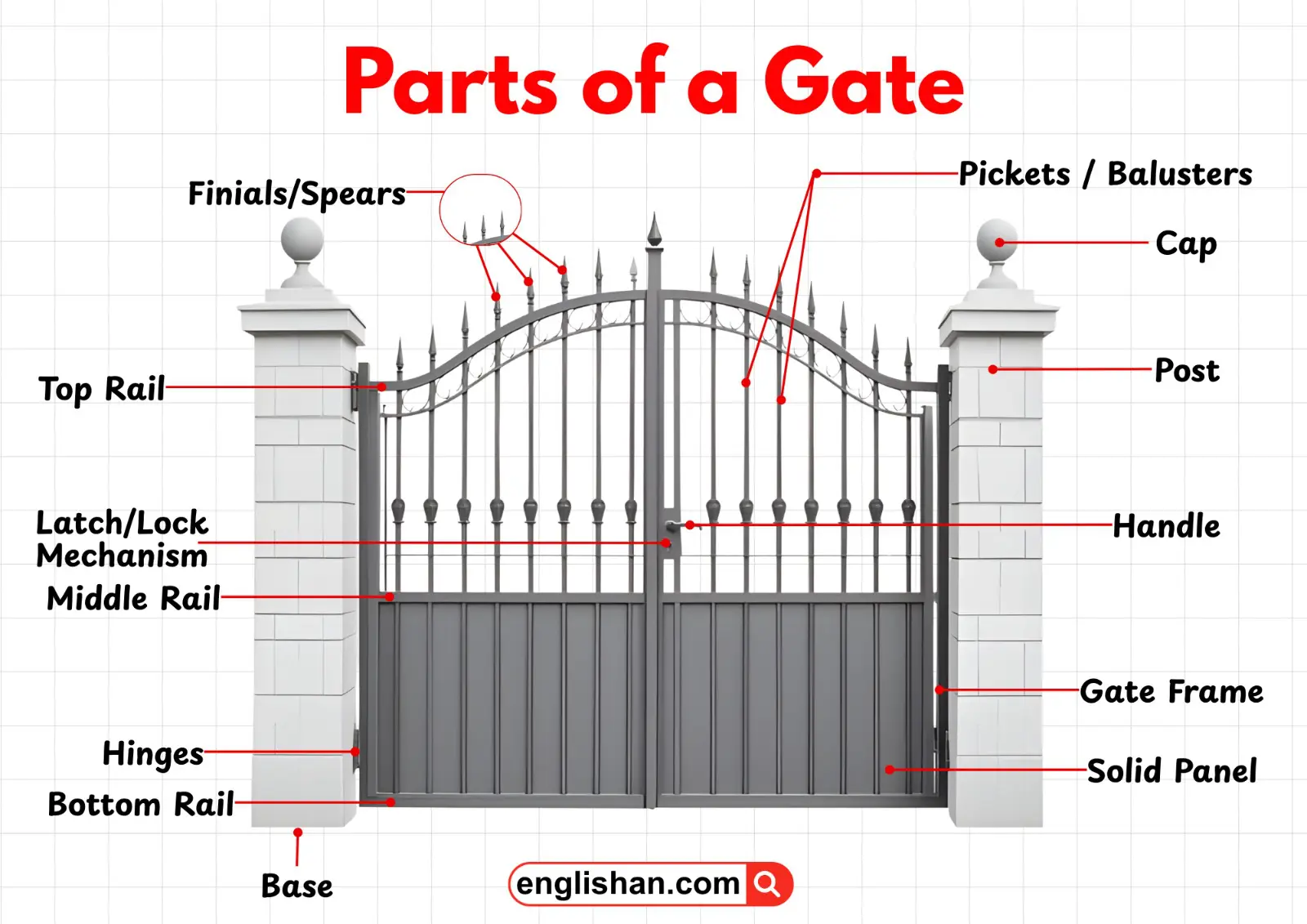
Decorative Components
Finials / Spears
Finials or spears are decorative tips mounted on top of pickets. They enhance the gate’s appearance and can discourage climbing. Shapes vary from pointed to ornamental designs.
Cap
The cap sits atop the posts, protecting them from weather damage while adding a finished, polished look. Caps can be simple or decorative, depending on style.
Structural Components
Post
Posts are the main vertical supports of the gate. They hold the gate in place, bear its weight, and ensure stability. Typically set into the ground, they can be made of wood, metal, or other strong materials.
Gate Frame
The gate frame forms the skeleton of the gate. It provides structure and support for all other components, maintaining the gate’s shape and preventing sagging.
Base
The base is the lower horizontal part of the structure. It ensures alignment with the ground, contributes to balance, and supports the overall weight of the gate.
Panel & Rail Components
Pickets / Balusters
Vertical boards forming the body of the gate. They can be spaced for visibility or closely set for privacy, providing both security and aesthetic appeal.
Top Rail
A horizontal beam along the top edge. It connects pickets or panels and reinforces the overall structure.
Middle Rail
Horizontal support in the center. It prevents bowing of pickets or panels and adds stability, especially for larger gates.
Bottom Rail
Horizontal beam along the bottom edge. Supports the lower part of pickets or panels and keeps the gate straight and durable.
Solid Panel
A continuous panel used instead of pickets for privacy and security. Offers a sleek look and acts as a strong barrier.
Functional Hardware
Hinges
Pivot points that allow the gate to swing open or closed. They handle the weight and ensure smooth motion. Heavy-duty hinges are used for larger gates.
Handle
The part used to open or close the gate. Comes in various styles like lever, pull, or knob, designed for ergonomic use and aesthetic fit.
Latch / Lock Mechanism
Secures it in a closed position. Latches can be simple or include locks with keys or combinations for added security. Ensures safety and controlled entry.
Key Takeaway
A gate is made up of decorative, structural, panel/rail, and functional components that work together to ensure both beauty and functionality. Decorative parts like finials and caps enhance appearance, structural parts like posts, frames, and bases provide strength and stability, panel and rail components like pickets, rails, and solid panels form the main body and support, and functional hardware like hinges, handles, and latches allow smooth operation and security. Understanding each part helps in designing, building, or maintaining a durable and attractive gate.
You May Also Like