Gloves might look simple, but they’re actually made up of several important parts that work together to provide comfort, fit, and protection. Whether you’re using them for warmth, work, sports, or fashion, understanding the different parts of a glove can help you choose the right one and use it more effectively. In this article, we’ll break down each part of a glove in a clear and easy way, so you can quickly learn what each section does and why it matters.
List of Glove Parts With Names
- Fourchettes
- Quirks
- Palm
- Seam
- Lining
- Vent
- Rolled Cuff
- Glove Fingers
- Draws
- Thumb
- Trank / Handpiece
- Gauge Stitching
Parts of a Glove Diagram With Names
A glove is made up of several parts that work together to provide comfort, protection, and a proper fit for your hand. The main body, or palm and back, forms the structure that holds all other components in place, while the fingers and thumb allow for flexibility and dexterity. Features like the cuff, rolled edges, and vents ensure a snug fit and ease of movement. Stitching and seams not only keep the glove intact but also add durability and style. Linings and padding provide extra comfort and protection, especially during prolonged use or tough activities. Each part of a glove plays an important role in making it functional, comfortable, and easy to wear for everyday tasks or specialized work.
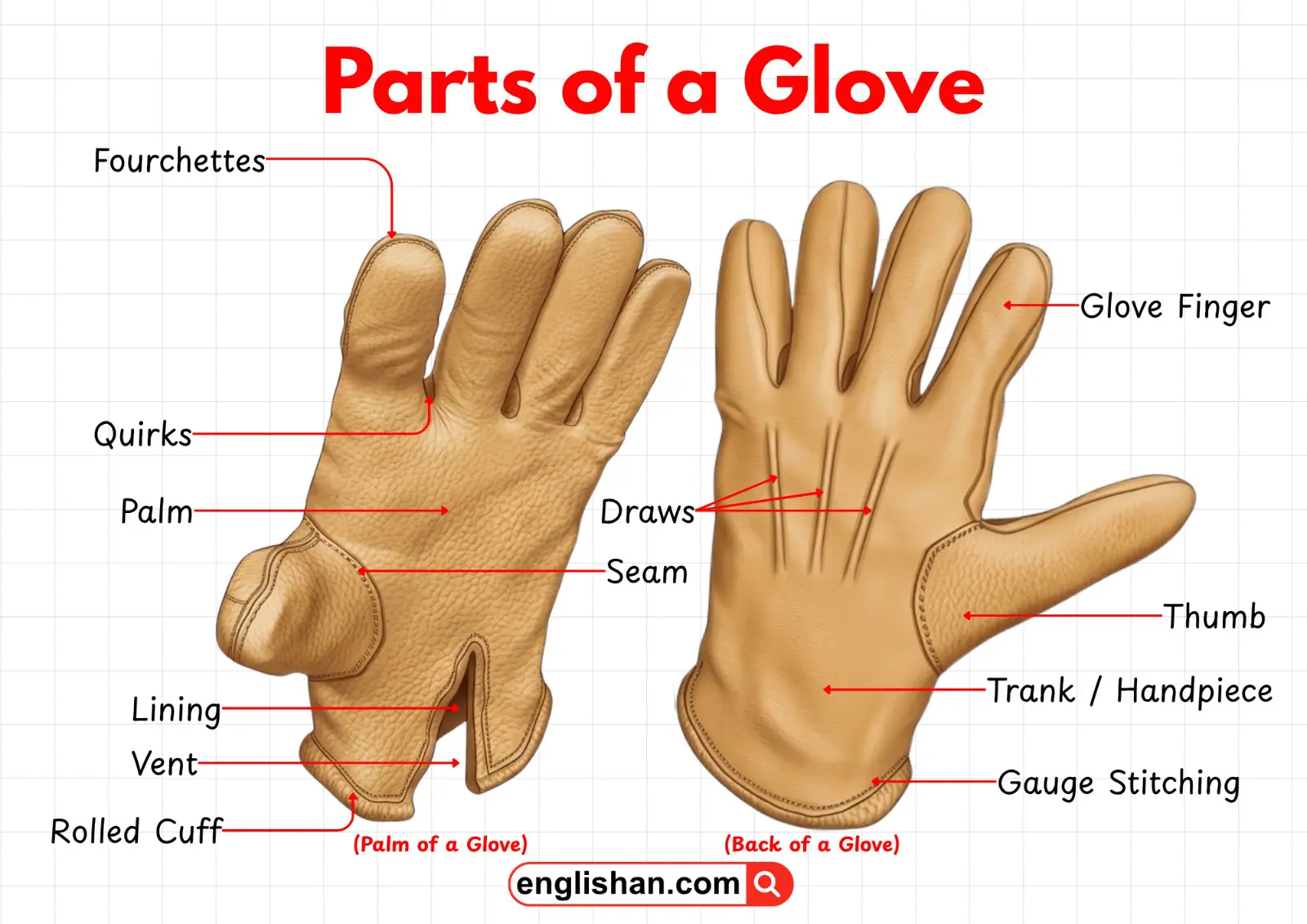
Palm Side Parts
The palm side of a glove is all about grip, comfort, and flexibility. These parts are designed to help your hand move naturally while holding or touching objects. They also play a key role in durability since this side faces the most contact.
Palm
The palm is the main inner surface of the glove that covers the front of your hand. It is usually made from softer, more flexible material to provide a good grip and comfortable feel. This part is designed to handle friction and frequent use, making it one of the most important areas for both comfort and performance.
Quirks
Quirks are small diamond-shaped pieces of material placed at the base of the fingers, where the fingers meet the palm. They may look minor, but they play a big role in improving flexibility and reducing stress on the seams. Quirks help the glove fit more naturally and prevent tightness when you bend your fingers.
Fourchettes
Fourchettes are the narrow strips of material that run along the sides of the fingers. They connect the front (palm) and back parts of the glove fingers. These strips help shape the fingers properly and allow smooth movement, ensuring the glove feels snug without being restrictive.
Seam
Seams are the stitched lines that hold different parts of the glove together. On the palm side, seams are carefully placed to maintain strength while avoiding discomfort. Good-quality seams ensure the glove lasts longer and keeps its shape even after regular use.
Lining
The lining is the inner layer of the glove that touches your skin. It adds comfort, warmth, and sometimes moisture absorption, depending on the material used. A soft lining can make a big difference, especially for gloves worn in cold weather or for long periods.
Back Side Parts
The back side of the glove focuses more on fit, style, and structure. These parts help the glove maintain its shape while also allowing enough flexibility for hand movement.
Glove Fingers
Glove fingers are the individual sections that cover each finger. They are shaped to match the natural form of your hand, allowing free and comfortable movement. Properly designed glove fingers ensure better dexterity and control.
Draws
Draws are the stitched lines or ridges on the back of the glove. They are not just decorative—they help the glove fit more closely to the shape of your hand. Draws add a slightly tailored look while improving flexibility and reducing excess material.
Thumb
The thumb section is specially designed to allow a wide range of motion. Since the thumb moves differently from the other fingers, this part is shaped separately for better grip and comfort. A well-constructed thumb area improves overall hand function while wearing the glove.
Trank / Handpiece
The trank, also known as the handpiece, is the main body of the glove that forms the back of the hand. It connects all the other parts together and provides structure. This section is usually made from durable material to maintain the glove’s shape and appearance.
Gauge Stitching
Gauge stitching refers to the fine, even stitches visible on the glove, especially around the edges and wrist. It enhances durability and gives the glove a neat, finished look. High-quality gauge stitching often indicates better craftsmanship.
Wrist & Opening Parts
These parts are located at the opening of the glove and are responsible for how easily you can wear or remove it. They also help secure the glove around your wrist.
Vent
The vent is a small slit or opening near the wrist area. It allows your hand to slide in and out more easily and adds flexibility when wearing it. Vents are especially useful in tighter-fitting gloves.
Rolled Cuff
The rolled cuff is the finished edge at the wrist opening. It is usually folded and stitched to create a smooth, rounded edge. This not only improves comfort by preventing rough edges but also adds strength and a clean, polished look.
Key Takeaways
As we learned, a glove is made up of several small yet important parts, each designed to improve comfort, fit, flexibility, and durability. The palm side mainly helps with grip and smooth hand movement, while the back side gives the glove its shape, structure, and a better fit. The wrist and opening parts make it easy to wear and remove the glove while keeping it secure. Even the smallest details, like quirks, fourchettes, and stitching, play a big role in overall comfort and long-lasting use. Understanding these parts makes it easier to choose the right glove and use it more effectively.
You May Also Like