When a knife chips, slips, or feels unsafe, describing the issue without the right names becomes difficult. Clear naming helps you explain a problem at a repair counter, choose the correct replacement, and label school work with confidence, all without guessing or pointing.
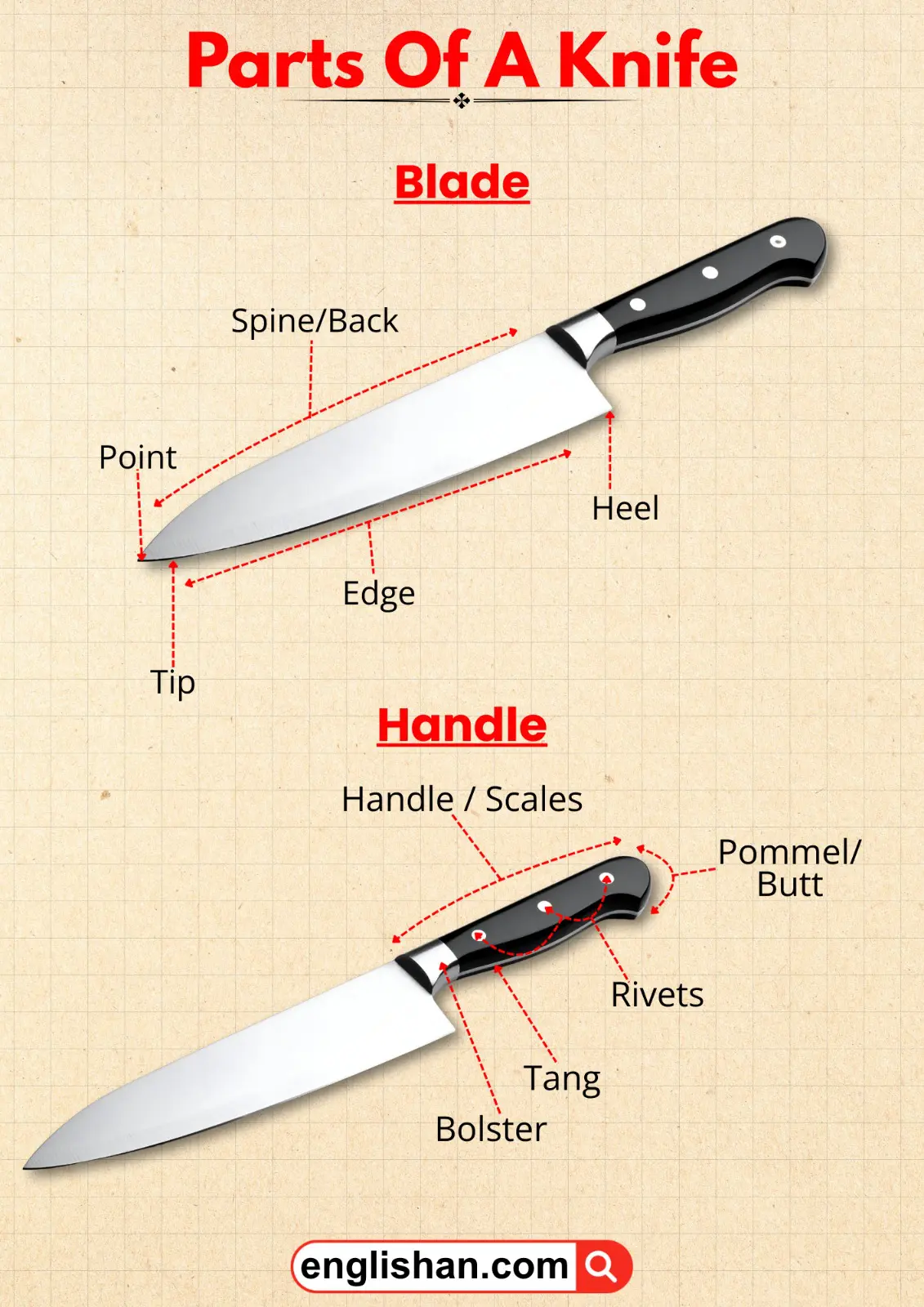
Here we explain the parts of a knife, starting with the blade and edge and moving through the spine, tip, heel, bolster, tang, handle, scales, and rivets. We use a standard kitchen knife as the reference, while noting that names can vary by type. A labeled diagram follows so you can match each name to its exact spot quickly.
Knife Parts Names
Knife Blade Parts
Tip
This is the narrow end used for small and careful cuts. It gives control when accuracy matters more than force. Thin shape makes it easy to guide.
Point
The sharp end where cutting lines meet. It allows piercing and precise contact. Shape decides how easily it enters material.
Edge
This side does the cutting work. Sharpness and angle control how smoothly it slices. Dull edges reduce performance fast.
Spine
The thicker back side that adds strength. It keeps the blade from bending during use. Thickness here affects balance and feel.
Heel
The wider part of the edge used for firm cuts. It handles tougher material better than the tip. Pressure feels more stable in this section.
Parts Of The Handle
Tang
It carries force from the blade into the handle, so the knife stays firm under pressure. When it is a full tang, the build is stronger and the grip feels more stable.
Bolster
This piece adds weight and stiffness, and that often makes cutting strokes feel steadier. It can also act as a finger guard, which improves control when the hand is close to the blade.
Scales
Paired with the tang, these handle panels create the grip you hold and shape the feel in the hand. Material choice changes traction and moisture resistance, so the hold can stay steady in different conditions.
Rivets
They lock the scales to the tang using solid pin pressure rather than glue alone. A tight set prevents shifting, and that keeps the handle aligned as a single unit.
Pommel
Built to tune balance, it adds mass at the handle end and changes how the knife moves in motion. Extra weight here can improve control, and it may also reduce wrist strain during repeated use.
Butt
Under impact or hard contact, this end takes knocks that would otherwise stress the grip edges. Its finish also affects comfort and long-term wear, especially when the handle is pressed against the palm.
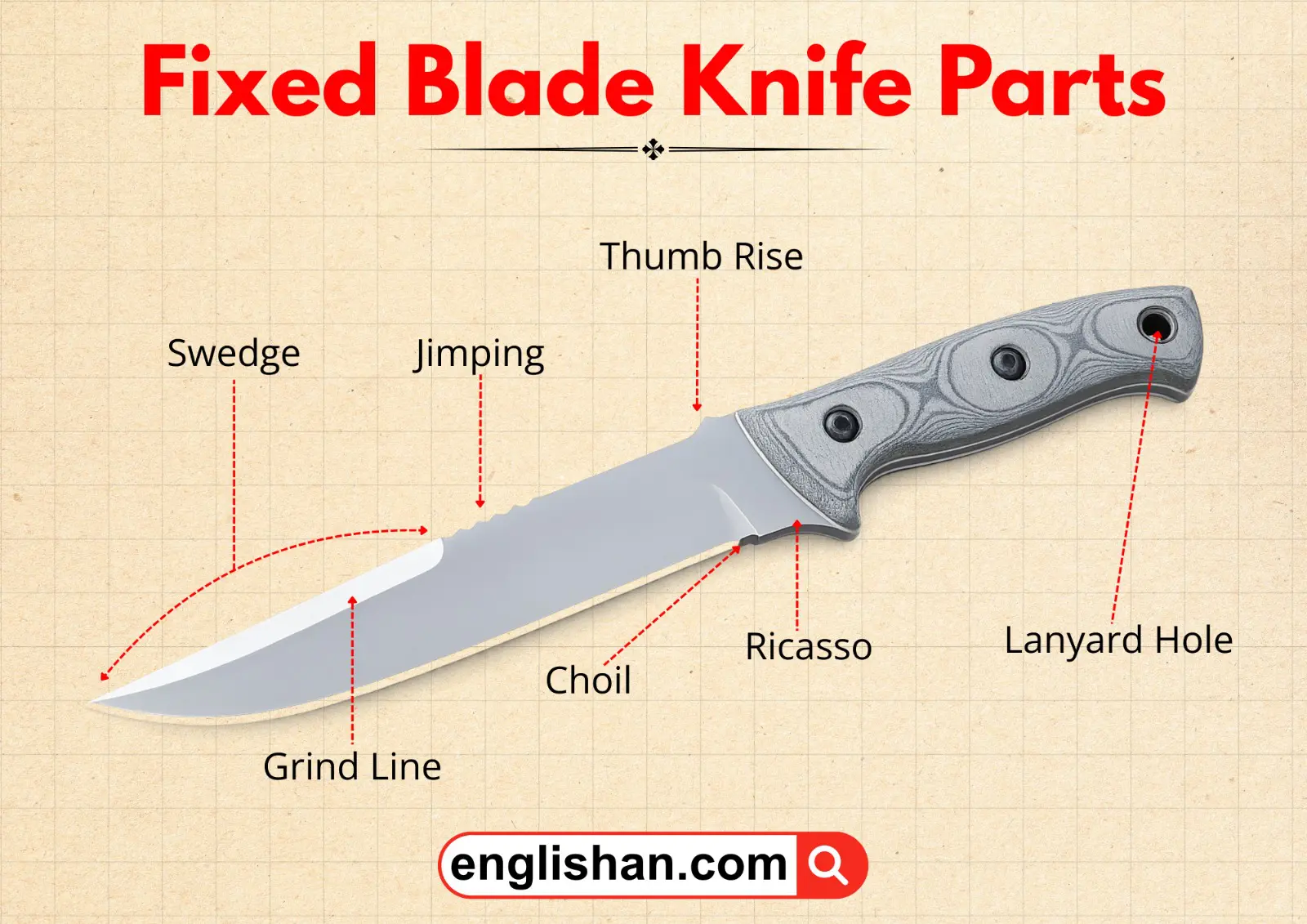
Fixed Blade Knife Parts
Guard
It blocks the hand from sliding forward during forceful cuts and adds confidence to the grip. This barrier improves hand safety while keeping control steady when pressure increases.
Choil
Often used as a finger rest, it allows a closer, more controlled hold on the knife. That space can improve precision and comfort during detailed cutting tasks.
Ricasso
This unsharpened section strengthens the blade near the handle and creates a clean transition into the cutting edge. Its presence adds structural support and helps maintain balance.
Jimping
Small textured notches provide extra traction for the thumb or fingers. The added texture increases grip control, especially when the hand is wet or under strain.
Swedge
A tapered edge grind along the spine reduces weight while keeping strength. That shaping can improve penetration and change how the blade moves through material.
Thumb Rise
Raised shaping gives the thumb a stable resting point during use. This feature improves control and reduces slip when applying steady pressure.
Grind Line
The visible boundary where the blade grind begins defines the cutting geometry. Its angle affects cutting efficiency and how smoothly the edge passes through material.
Lanyard Hole
Designed to accept a cord or strap, it allows secure attachment to the hand or gear. This opening supports retention and reduces the risk of dropping the knife.
Key Takeaways
All knife parts function as one connected system rather than separate pieces, and each detail affects balance and control. The parts of knife shape how cutting force transfers through the tool during use, which defines cutting versus thrusting behavior. Changes in thickness or grind angle directly affect control and cutting response. Many knives follow steel and finish standards that reflect craft tradition. We treat accurate part naming as technical precision in description and speech, where each term signals intent rather than decoration.
You May Also Like
- Parts Of A Pistol
- Parts of a Sword
- Weapons Vocabulary Words
- Types of Weapons
- Dissection Box Tools Names