A light bulb may look simple from the outside, but inside it has several important parts working together. Each part plays a specific role in producing light safely and efficiently.
In this article, we’ll first look at the complete list of parts of a bulb, then understand its internal and external structures, base types, and common bulb types like CFL and LED.
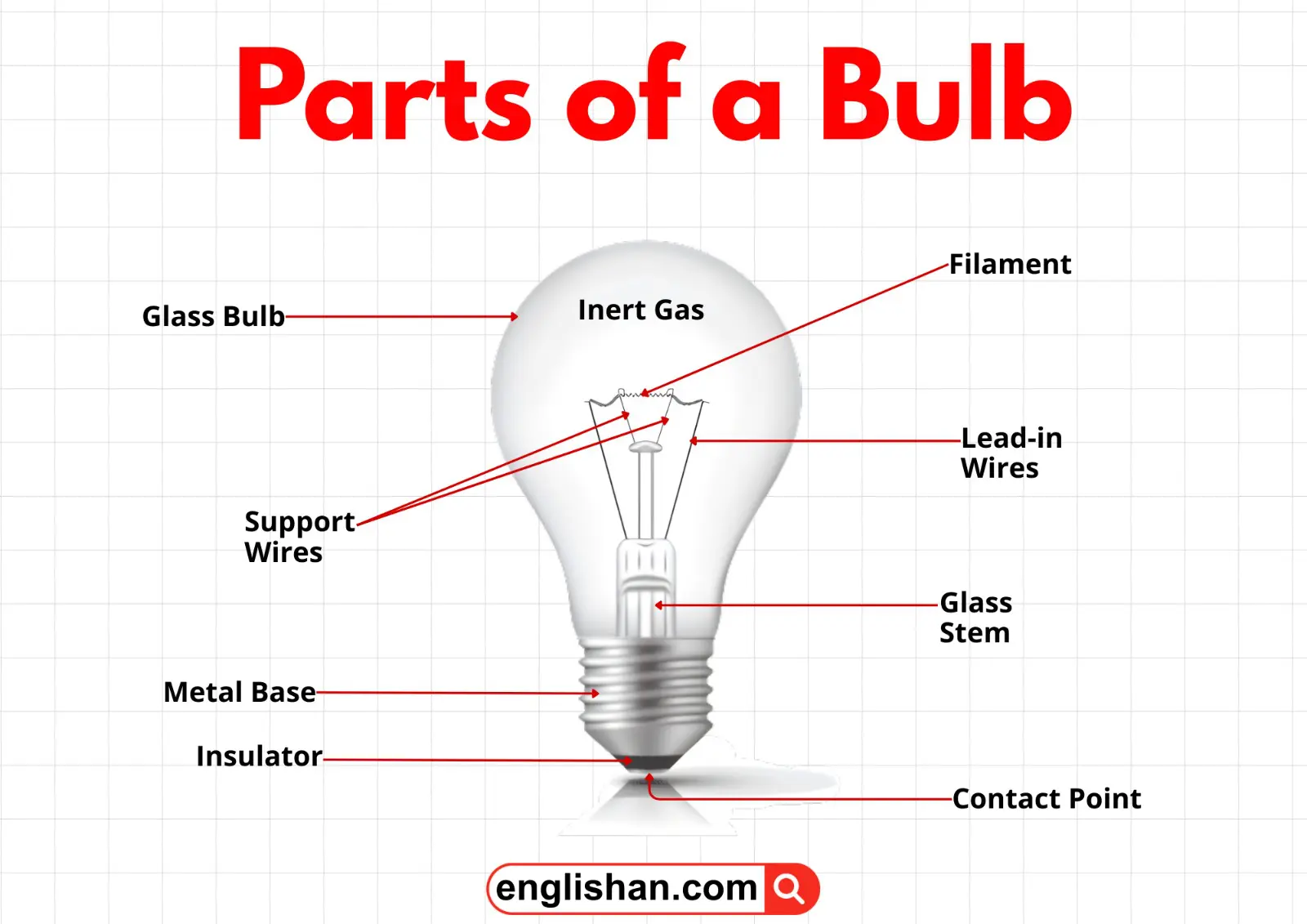
List of Parts of a Bulb
- Glass bulb (outer shell)
- Filament
- Support wires
- Lead-in wires
- Inert gas (inside the bulb)
- Glass stem or mount
- Metal base
- Insulator
- Electrical contact point
Now let’s understand them in detail.
Bulb Parts Diagram With Names
A light bulb is a simple electrical device made of internal and external components that work together to produce light. Its main parts include the glass bulb, filament or lighting element, support wires, and metal base. When electricity enters through the base, it flows to the filament, which heats up and emits light. The glass enclosure protects the internal parts and maintains a safe environment for operation. Knowing the parts by name makes it easier to understand how a bulb converts electrical energy into light.
Internal Support Structure
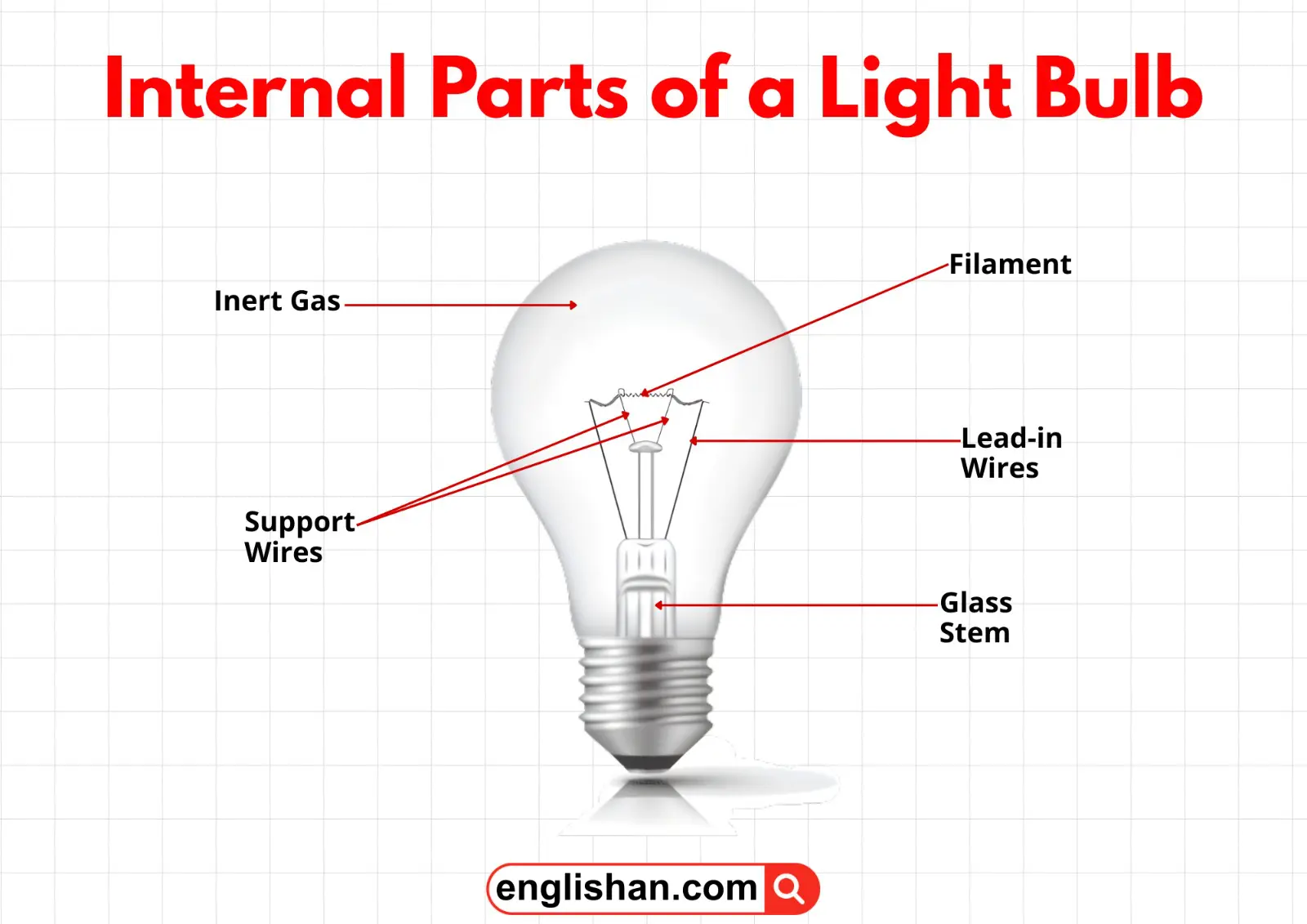
The internal structure of a bulb is responsible for producing light and keeping the delicate parts stable.
Filament
The filament is a very thin wire, usually made of tungsten. When electricity passes through it, the filament becomes extremely hot and glows. This glowing effect produces light.
In traditional incandescent bulbs, this is the main light-producing part.
Support Wires
These tiny wires hold the filament in place. Since the filament is very delicate, the support wires prevent it from shaking or breaking.
Lead-in Wires
Lead-in wires connect the filament to the base of the bulb. They carry electricity from the external circuit to the filament.
Glass Stem (Mount)
This is the internal glass structure that holds the support wires and keeps everything aligned properly inside the bulb.
Inert Gas
Most bulbs are filled with an inert gas like argon. This gas protects the filament and prevents it from burning too quickly.
All these parts together form the internal working system of the bulb.
External Support Structure
The external structure protects the internal components and allows the bulb to connect to electricity safely.
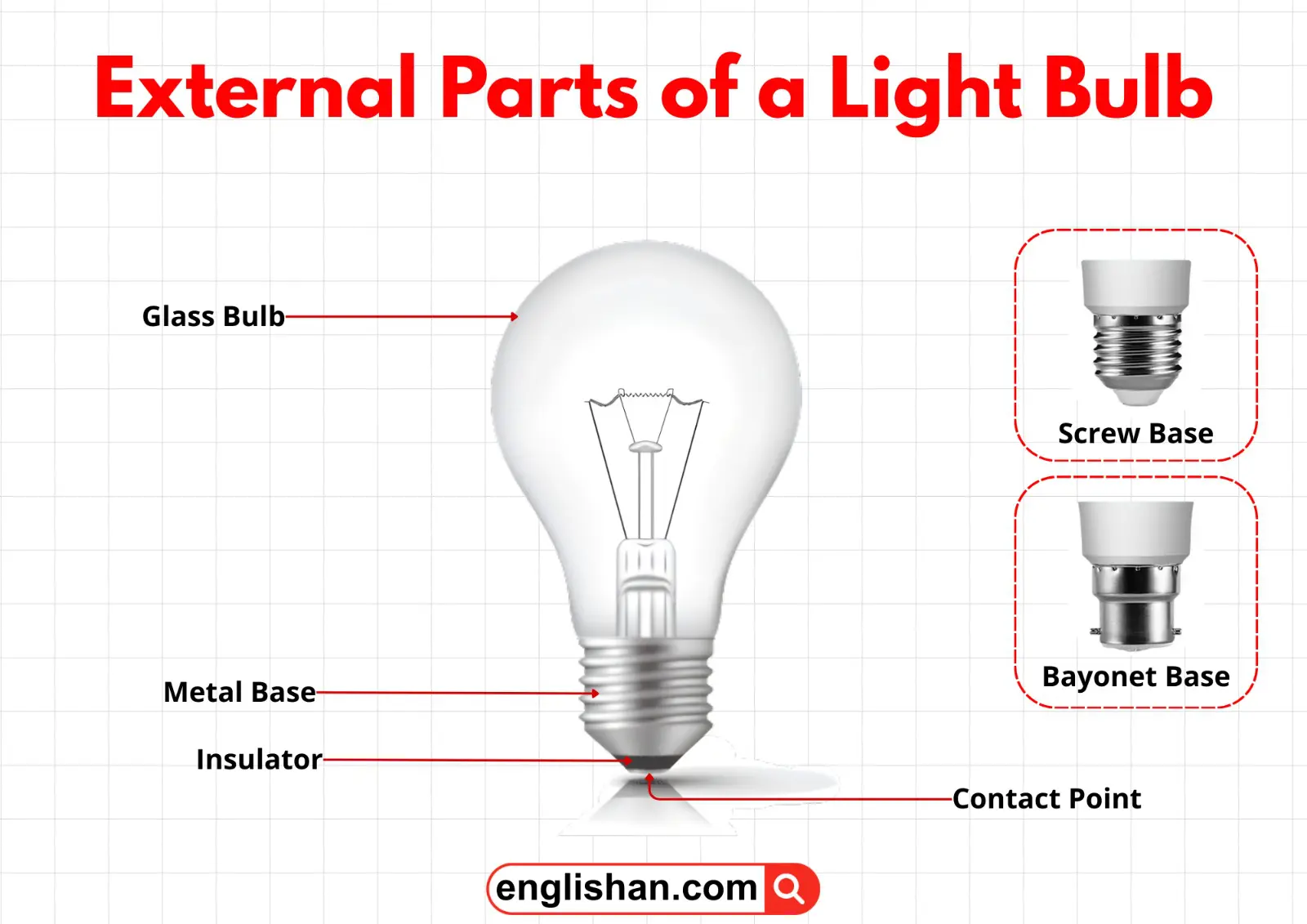
Glass Bulb (Outer Shell)
The glass bulb covers the internal parts. It protects the filament and other components from dust and air.
In some bulbs, the glass is clear. In others, it may be frosted to reduce glare.
Metal Base
The metal base connects the bulb to the socket. It allows electricity to enter the bulb.
Insulator
The insulator separates electrical contacts and prevents short circuits.
Contact Point
At the bottom of the base, there is a small metal contact point. This is where electricity enters the bulb from the socket.
Light Bulb Base Types
Light bulbs come with different base types depending on the fixture.
Here are some common base types:
- Edison Screw Base (E26, E27, E14)
These are the most common screw-type bases used in homes. - Bayonet Base (B22)
This type twists and locks into place. - Pin Base
Used mostly in CFL and LED bulbs for specific fittings.
Always check your fixture before buying a bulb to ensure compatibility.
Types of Light Bulb
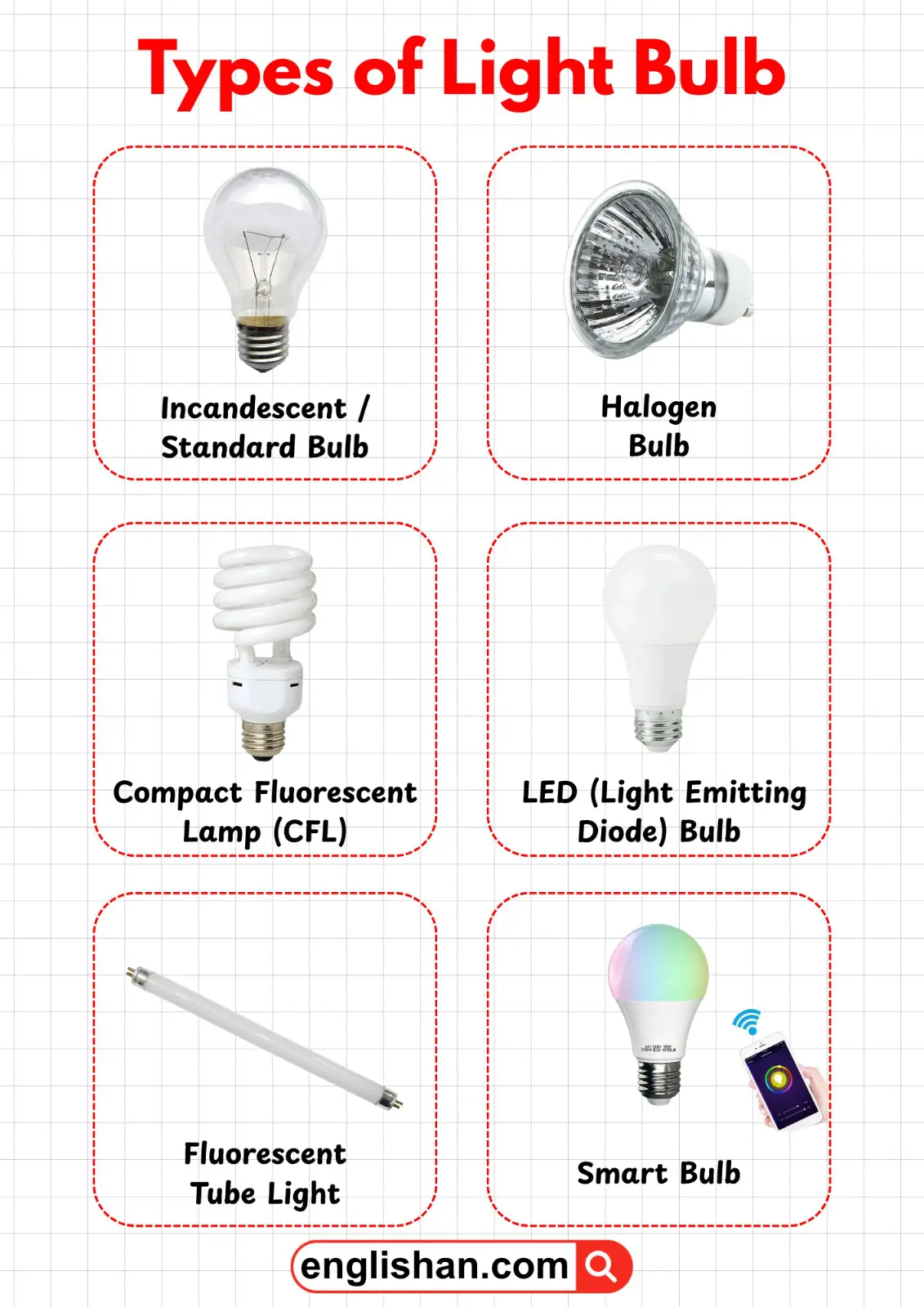
Light bulbs come in different types, and each type works in a unique way to produce light efficiently for different purposes. Below are the main types of light bulbs explained in detail.
Incandescent / Standard Bulb
Incandescent stands for a traditional filament light bulb.
An incandescent bulb works by passing electricity through a thin tungsten filament. The filament heats up and glows, producing light. Most of the energy is released as heat rather than visible light.
Features of Incandescent Bulbs:
- Simple and inexpensive design
- Produce warm yellow light
- Instant full brightness
- Use more electricity
- Short lifespan compared to modern bulbs
Incandescent bulbs were widely used before energy-efficient lighting became popular.
Fluorescent Tube Light
A fluorescent tube light is a long glass tube filled with gas.
It works by passing electricity through mercury vapor inside the tube. This creates ultraviolet light, which reacts with a phosphor coating to produce visible light.
Features of Fluorescent Tube Lights:
- Bright and even light distribution
- Energy efficient
- Long lifespan
- May flicker sometimes
- Contain a small amount of mercury
Fluorescent tube lights are widely used in schools, offices, and hospitals.
Halogen Bulb
A halogen bulb is an advanced type of incandescent bulb.
It works in a similar way to a standard filament bulb but contains halogen gas inside the glass capsule. The gas helps the filament last longer and produce brighter light.
Features of Halogen Bulbs:
- Brighter and whiter light than standard bulbs
- More efficient than traditional incandescent bulbs
- Compact size
- Produce high heat
- Moderate lifespan
Halogen bulbs are commonly used in spotlights and car headlights.
CFL Bulb
CFL stands for Compact Fluorescent Lamp.
A CFL bulb works differently from a traditional filament bulb. Instead of using a glowing filament, it uses electricity to excite mercury vapor inside the tube. This produces ultraviolet light, which then reacts with a phosphor coating to produce visible light.
Features of CFL Bulbs:
- Use less electricity than incandescent bulbs
- Produce less heat
- Last longer
- Slight warm-up time before reaching full brightness
CFL bulbs were popular before LED technology became common.
LED Bulb
LED stands for Light Emitting Diode.
An LED bulb produces light when electricity passes through a semiconductor material. It does not use a filament or gas.
Features of LED Bulbs:
- Very energy efficient
- Extremely long lifespan
- Instant full brightness
- Low heat production
- Environmentally friendly
Today, LED bulbs are widely used because they save energy and reduce electricity bills.
Smart Bulb
A smart bulb is an advanced LED bulb with built-in wireless technology.
It works like a regular LED bulb but can be controlled using a smartphone app, remote, or voice assistant through Wi-Fi or Bluetooth.
Features of Smart Bulbs:
- Remote control through mobile apps
- Adjustable brightness and color
- Scheduling and automation options
- Energy efficient
- Higher cost than regular LED bulbs
Smart bulbs are popular in modern smart homes.
Bulb Key Takeaways
A light bulb may look simple from the outside, but inside it has several small parts working together to produce light. The internal parts, such as the filament, support wires, and inert gas, help create and maintain the glow when electricity passes through. The external structure, including the glass bulb and metal base, protects these delicate components and connects the bulb safely to the power source. Different bulbs also come with different base types, so they can fit properly into various fixtures. When it comes to efficiency, CFL bulbs use less electricity than traditional incandescent bulbs, but LED bulbs are the most energy-efficient and long-lasting option available today.
You May Also Like