When you need to point to a specific area on a pistol, knowing the correct name helps you identify it without guessing. This is useful in safety discussions, classroom learning, and equipment handling, where naming the right part avoids confusion.
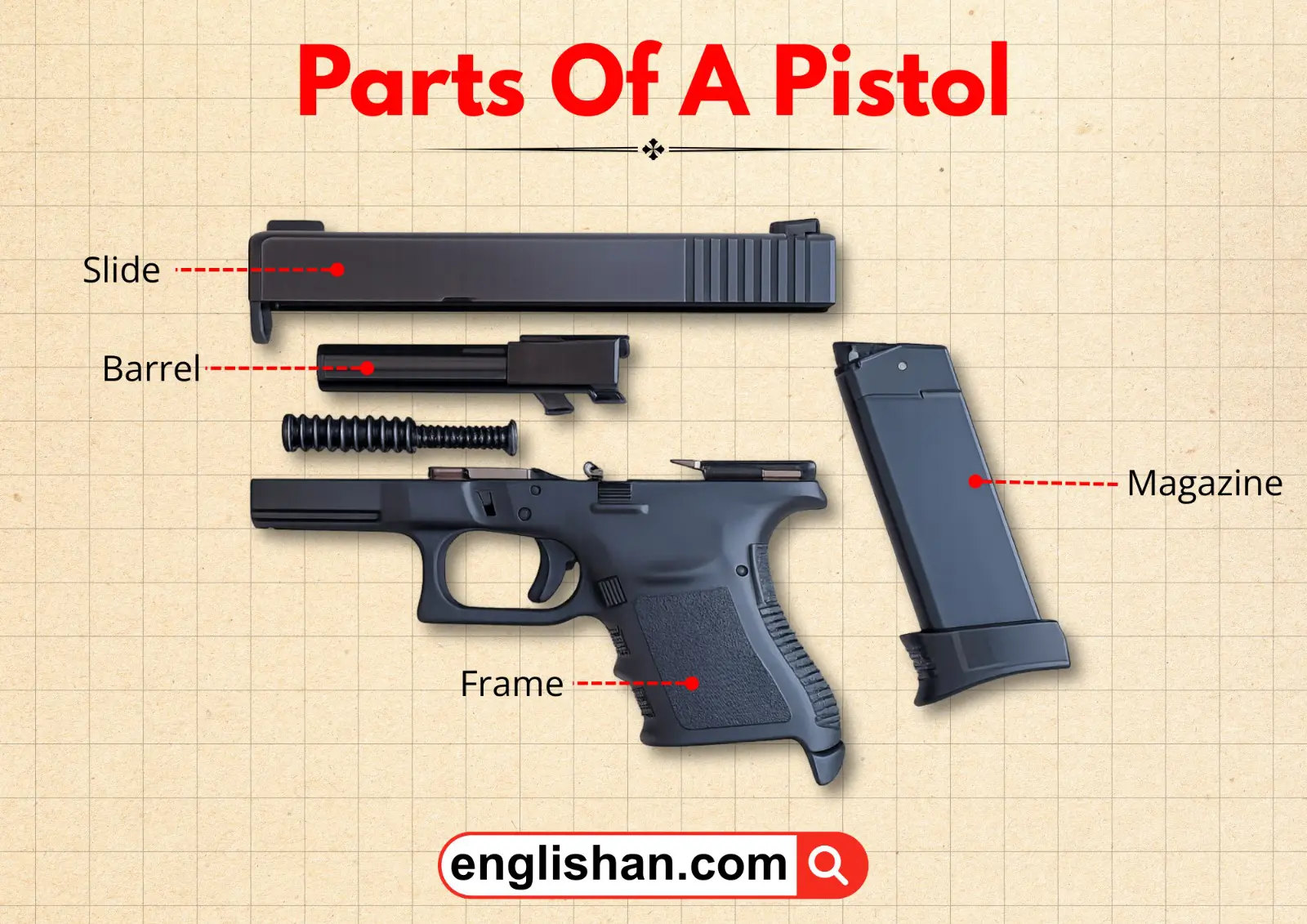
Here we present the parts of a pistol for identification, including the frame, slide, barrel, trigger, grip, magazine, sights, safety, and hammer. A common semi-automatic pistol is used as the reference. The labeled diagram that follows allows you to match each name to its position on the pistol.
Parts Of A Pistol Diagram With Names
Basic Parts Of A Pistol
Frame
It forms the core structure that holds and aligns the working parts of the pistol. This base manages grip stability and absorbs stress during firing, so the system stays rigid and predictable.
Slide
During firing, this moving section cycles back and forth to manage loading and ejection. That motion controls chambering and extraction, which keeps each shot sequence consistent.
Barrel
This tube directs the bullet and shapes its path as pressure builds behind it. Internal rifling influences accuracy and stabilizes the projectile as it exits.
Action
The firing mechanism controls how the trigger releases the shot. Its design affects trigger feel and determines whether the pistol operates in single-action, double-action, or combined modes.
Magazine
It stores ammunition and feeds each round into the action in order. Spring tension and shape govern reliable feeding during repeated cycles.
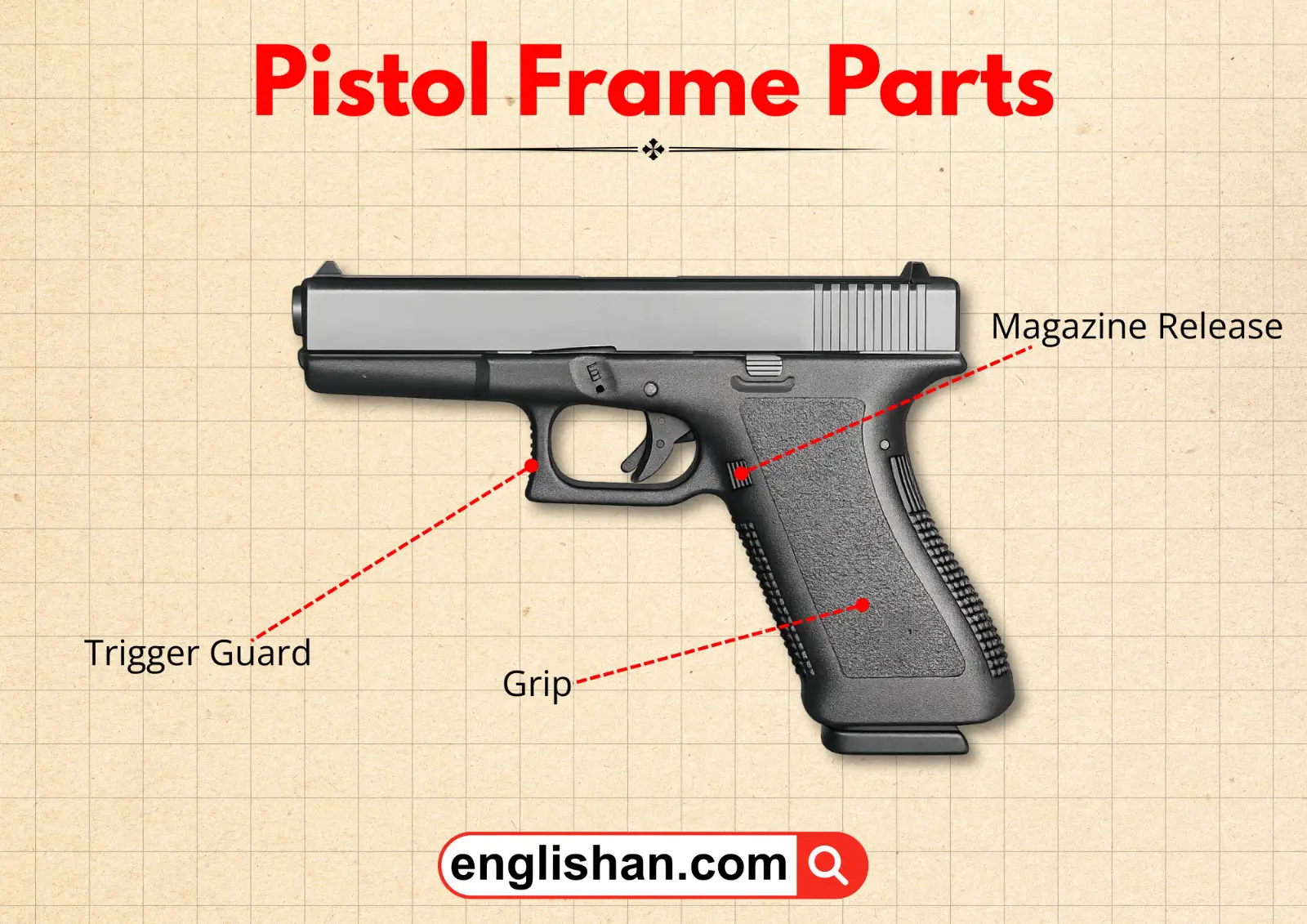
Pistol Frame Parts
Grip
It forms the holding surface and sets how the pistol feels in the hand during firing. Shape and texture influence control and recoil handling across repeated shots.
Trigger Guard
This rigid loop surrounds the trigger to reduce unintended contact. Its size and contour affect finger access while still maintaining safety during handling.
Magazine Release
It controls when the magazine disengages from the frame. Proper tension ensures secure retention while still allowing quick, deliberate removal when pressed.
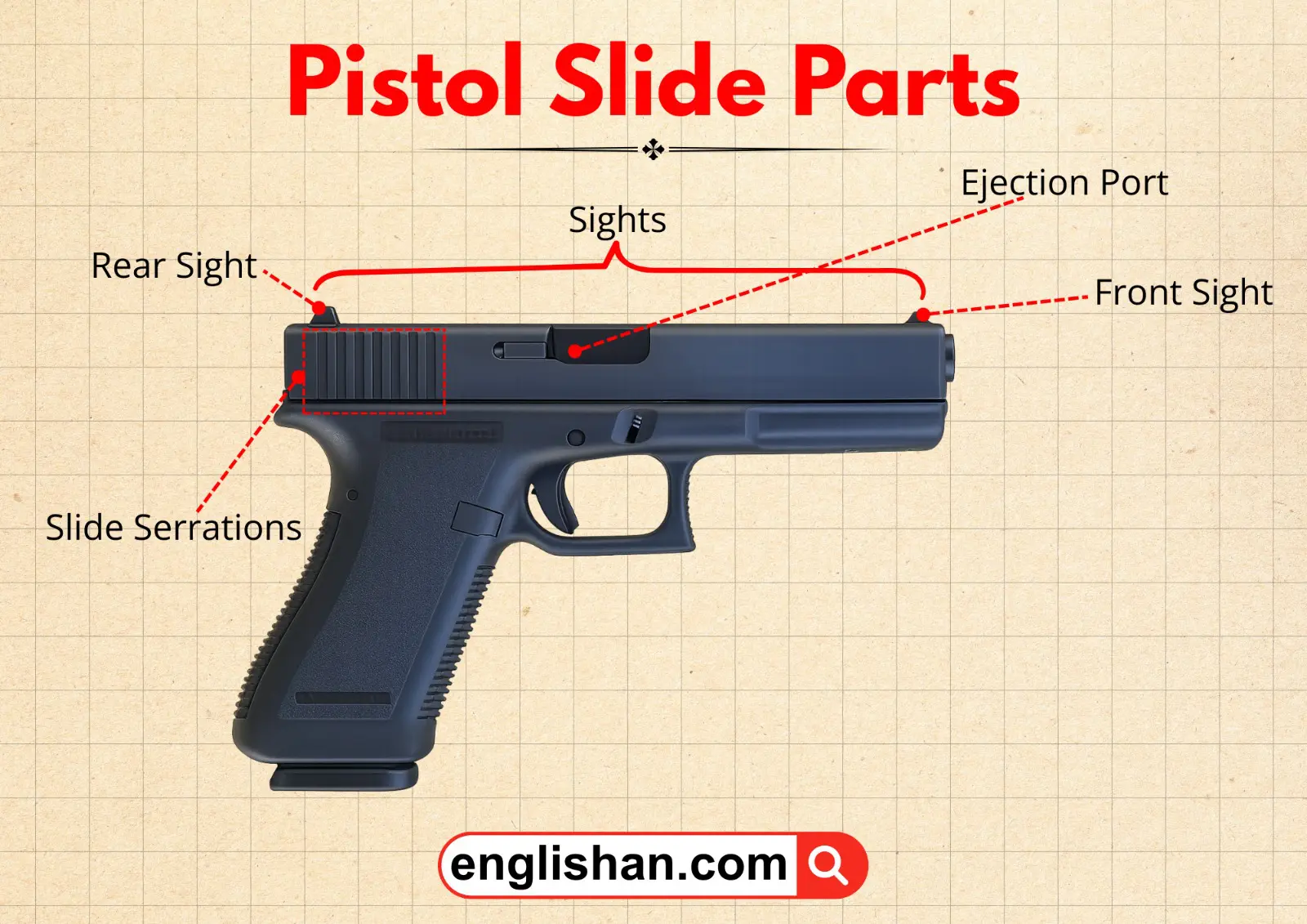
Pistol Slide Parts
Sights
They provide the visual reference used to align shots before firing. Consistent alignment improves aiming accuracy and shot placement under steady pressure.
Ejection Port
This opening allows spent casings to exit during the firing cycle. Proper sizing supports reliable ejection and keeps the slide moving smoothly through each action.
Slide Serrations
Textured cuts increase friction for the hand during slide movement. The added texture improves grip traction, especially when force is applied quickly or repeatedly.
Pistol Barrel Parts
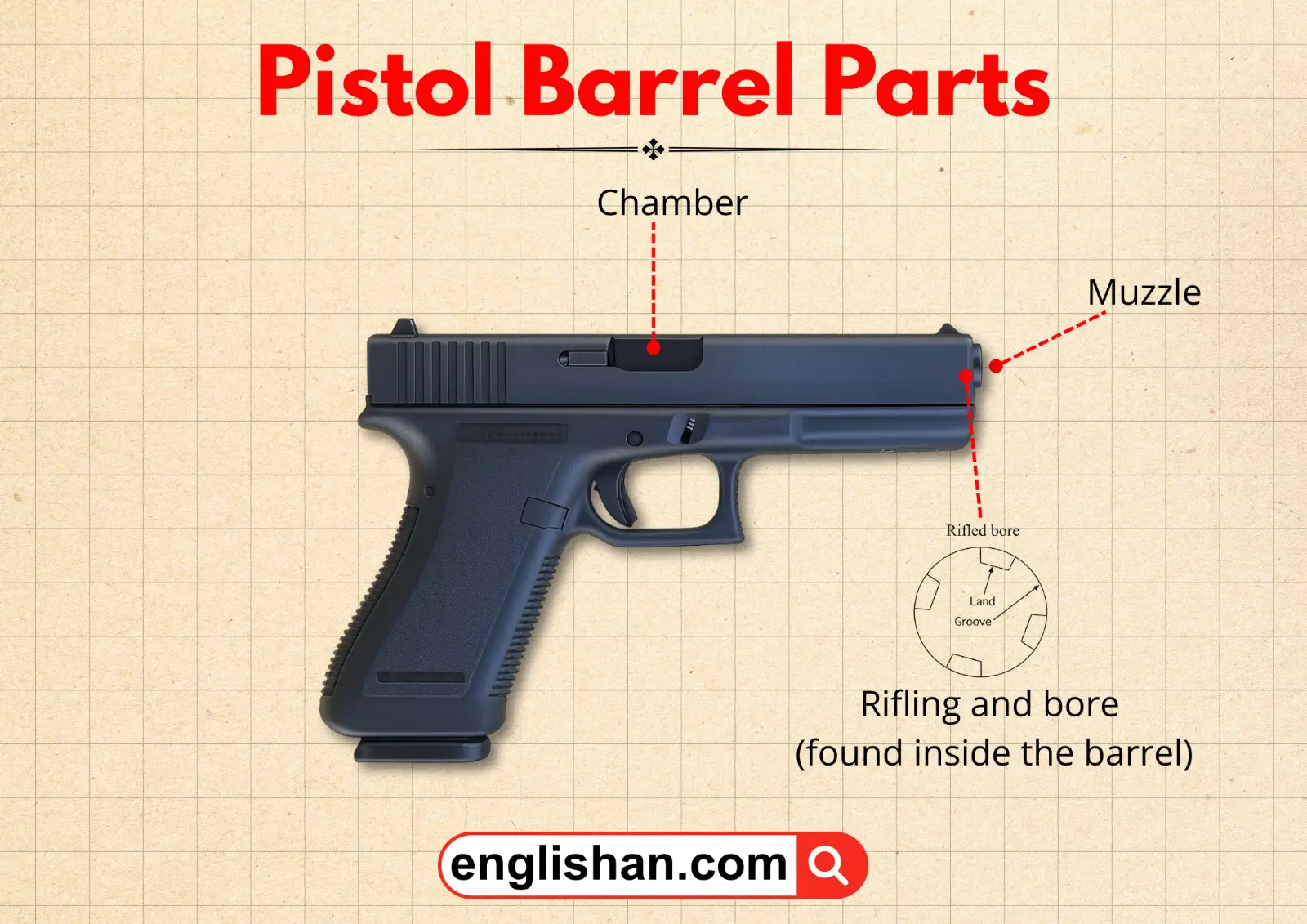
Chamber
It holds the cartridge in place just before firing and seals pressure at the moment of discharge. Proper fit ensures safe containment and consistent ignition with each cycle.
Muzzle
This is the exit point where the bullet leaves the barrel at full speed. Its shape influences gas release and can affect accuracy and recoil behavior.
Rifling
Spiral grooves inside the barrel spin the bullet as it travels forward. That rotation improves projectile stability and keeps the flight path consistent.
Pistol Action Parts
Striker Fire Parts
This system uses a spring driven striker to ignite the cartridge when the trigger is pulled. Fewer moving pieces create a consistent trigger pull and simplify the firing cycle.
Hammer Fire Parts
Here, a hammer strikes the firing pin to start ignition. The design allows action variation, such as single action or double action, which changes trigger feel and control.
Recoil Spring And Guide Rod
They manage slide movement by absorbing and returning energy after each shot. Proper tension maintains cycling balance and keeps the action running smoothly from shot to shot.
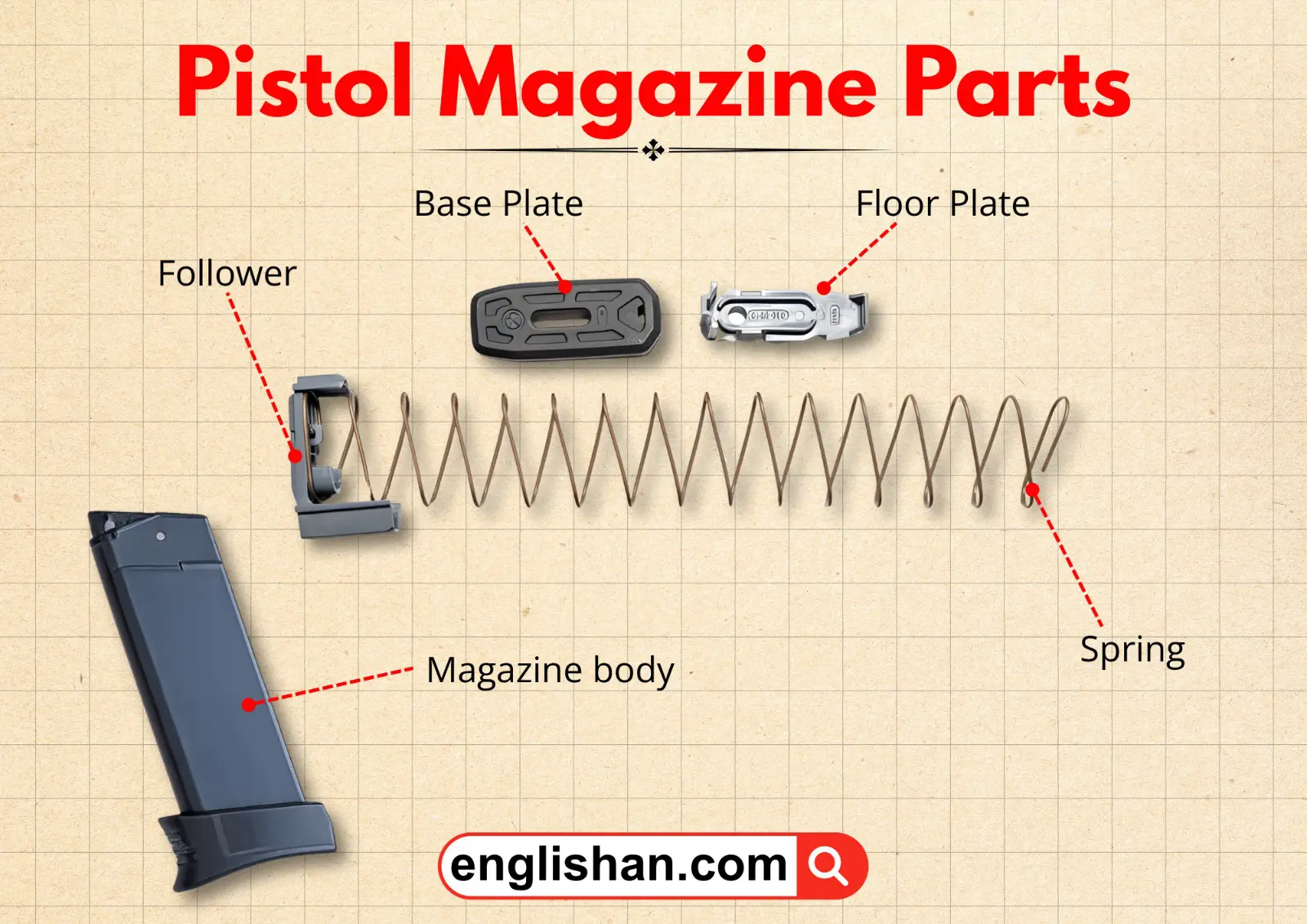
Pistol Magazine Parts
Follower
It sits on top of the spring and keeps each round angled correctly during feeding. Its shape controls feed angle, which supports smooth handoff into the action.
Spring
This component supplies upward force so ammunition advances in sequence. Consistent tension maintains reliable feeding across repeated cycles without lag.
Floor Plate
It closes the magazine body and holds internal parts under compression. A secure fit adds structural stability and protects the assembly during handling and recoil.
Key Takeaways
All pistol components operate as one coordinated system rather than isolated pieces, and each part influences how force and motion are managed. The parts of pistol define how firing, cycling, and feeding work together to maintain balance and control. Slide mass and spring tension create a clear cause and effect, where weight affects recoil behavior and cycling speed. Modern pistols often follow steel or alloy standards shaped by manufacturing practice. We treat accurate part naming as technical precision, where correct terms reflect exact meaning in written and spoken use.
You May Also Like
- Parts Of A Knife
- Parts of a Sword
- Weapons Vocabulary Words
- Types of Weapons
- Dissection Box Tools Names