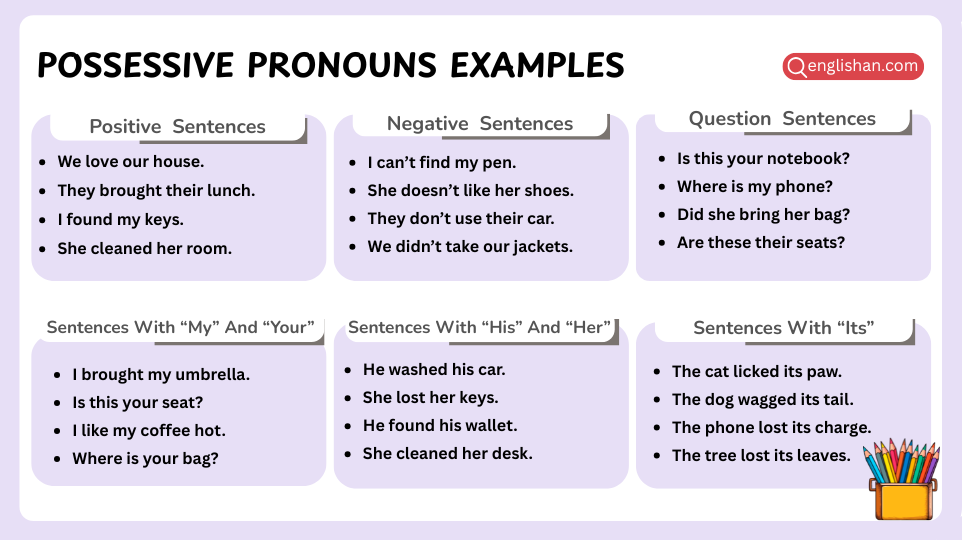
You can show ownership or relationships using possessive pronouns like mine, yours, his, hers, ours, and theirs. For example, “This book is mine” replaces “This is my book,” making sentences short and clear.
Studying possessive pronouns examples helps learners write and speak correctly. It improves their English grammar and teaches the right way to show ownership in sentences.
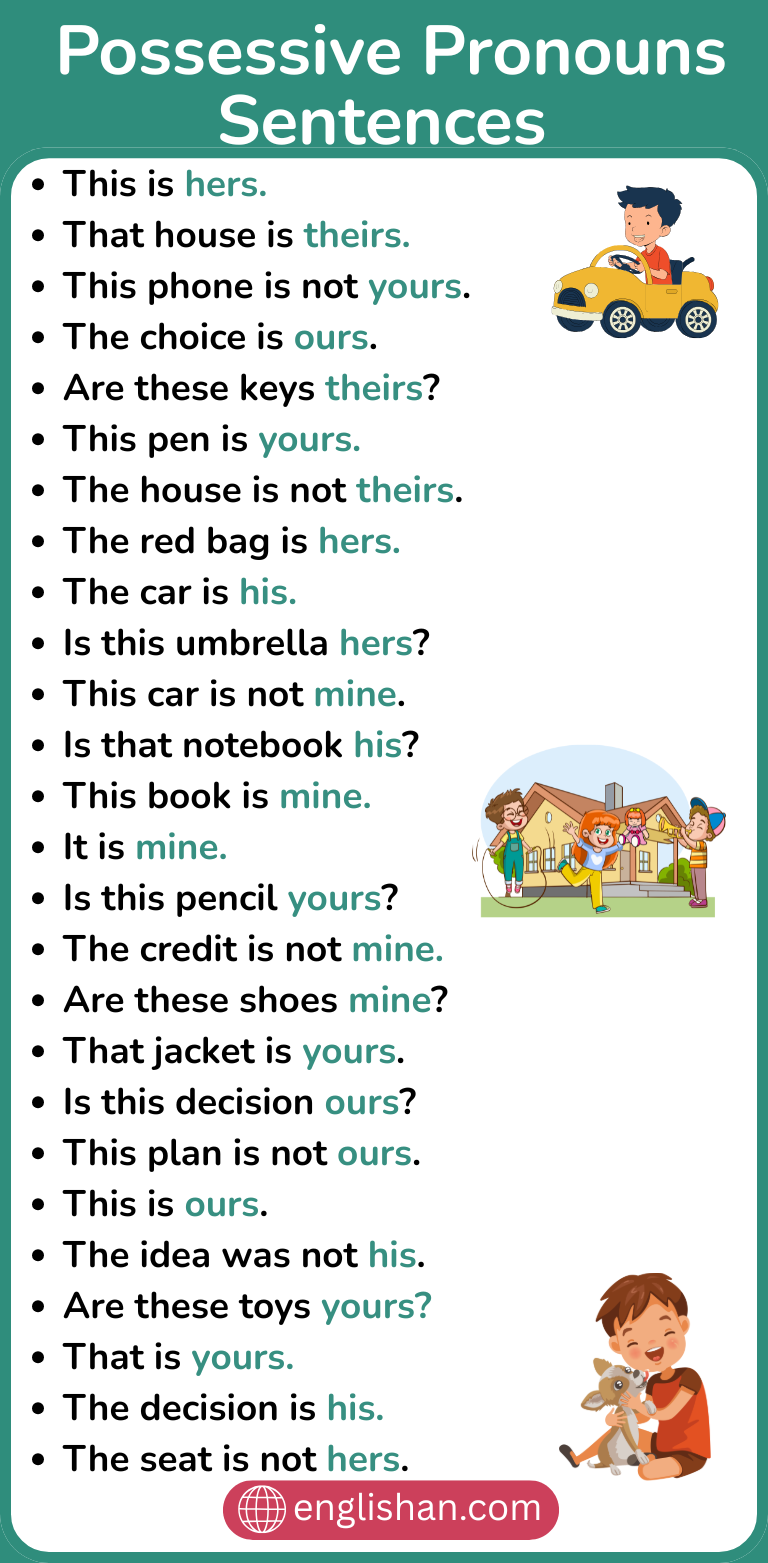
What Are Possessive Pronouns?
Possessive pronouns are words that show who owns something. They replace nouns to mark belonging, such as mine, yours, his, hers, ours, and theirs. For example, “This book is mine” replaces “This is my book.”
Possessive Pronouns Examples In Sentences
Below is a list showing how possessive pronouns work in English sentences to show ownership naturally.
- My bag is on the chair.
- She forgot her book at home.
- I can’t find my keys anywhere.
- They love their new puppy.
- We left our jackets in the car.
- His phone is ringing again.
- Is this your umbrella?
- The cat licked its paw quietly.
- Sara cleaned her room quickly.
- I like my morning tea.
- We packed our lunch before leaving.
- They fixed their broken fence.
- He washed his dirty shoes.
- Is your bike outside?
- The dog wagged its tail happily.
Positive Sentences Using Possessive Pronouns
Below is a list of positive sentence forms showing possessive pronouns used naturally.
- I love my new shoes.
- She finished her homework early.
- They enjoy their family dinners.
- He likes his clean desk.
- We appreciate our quiet mornings.
- I found my favorite pen today.
- You should see your smile.
- The team celebrated their win together.
- She brought her lunch from home.
- We kept our promise.
- The child hugged his mom tightly.
- They cleaned their house on Sunday.
- I took my camera to the park.
- She painted her nails red.
- We fixed our car last week.
Negative Sentences With Possessive Pronouns
Below is a list of negative sentences using possessive pronouns naturally.
- I can’t find my wallet anywhere.
- She didn’t bring her notes today.
- They don’t like their noisy neighbors.
- We haven’t seen our cousins in months.
- He didn’t wash his car last week.
- You didn’t wear your jacket.
- The team didn’t follow their plan.
- I don’t like my handwriting sometimes.
- She doesn’t check her messages often.
- We don’t use our old laptop anymore.
- He hasn’t called his friend back.
- They haven’t cleaned their garage yet.
- I didn’t bring my lunch.
- She doesn’t wear her glasses often.
- We didn’t take our camera with us.
Question Sentences Using Possessive Pronouns
Below is a list of questions that use possessive pronouns to show ownership in a natural way.
- Is this your pen?
- Where is my phone?
- Did she forget her bag?
- Are these their shoes?
- Can we take our books home?
- Is that his bike outside?
- Where is your house?
- Did they find their keys?
- Is it her birthday today?
- Can you hold my jacket?
- Did you lose your wallet?
- Is this their car?
- Has he seen his doctor yet?
- Are we using our notes for the test?
- Is this its toy?
Simple Sentences Using Possessive Pronouns
Below is a list of simple, clear sentences using possessive pronouns for easy practice.
- This is my book.
- That is her dog.
- It is his idea.
- This is your seat.
- They love their garden.
- We finished our project.
- The cat found its toy.
- I like my coffee hot.
- She needs her coat.
- We washed our car.
- Is this your bag?
- He likes his shoes.
- They opened their shop.
- I lost my ring.
- She found her keys.
Sentences With Singular Possessive Pronouns
Below is a list using singular possessive pronouns like my, your, his, her, and its in clear sentences.
- I forgot my umbrella.
- Is this your notebook?
- He loves his cat.
- She cleaned her room.
- The dog wagged its tail.
- I washed my hands.
- Did you bring your ID?
- He fixed his bike.
- She packed her lunch.
- The bird flapped its wings.
- I finished my chores.
- Is that your car?
- He wrote in his journal.
- She played with her puppy.
- The cat licked its fur.
Sentences With Plural Possessive Pronouns
Below is a list using plural possessive pronouns like our and their in practical sentences.
- We love our new home.
- They washed their car.
- We cleaned our classroom.
- They opened their presents.
- We brought our lunch.
- They forgot their books.
- We parked our bikes.
- They painted their fence.
- We kept our promise.
- They lost their keys.
- We finished our homework.
- They visited their grandma.
- We fed our dog.
- They fixed their roof.
- We enjoyed our trip.
Sentences Using “My” And “Your”
Below is a list of sentences specifically using my and your as possessive pronouns.
- I lost my wallet.
- Is that your pen?
- I found my keys.
- Where is your jacket?
- I like my coffee black.
- Did you take your bag?
- I finished my project.
- Is this your seat?
- I cleaned my room.
- Can I borrow your charger?
- I packed my lunch.
- Is this your book?
- I washed my hands.
- Did you bring your ID?
- I love my new shoes.
Sentences Using “His” And “Her”
Below is a list of sentences using his and her as possessive pronouns.
- He forgot his notebook.
- She cleaned her desk.
- He likes his new shoes.
- She packed her lunch.
- He washed his car.
- She found her keys.
- He wrote in his journal.
- She loves her dog.
- He fixed his bike.
- She painted her nails.
- He grabbed his jacket.
- She lost her phone.
- He wore his favorite hat.
- She carried her bag.
- He checked his messages.
Sentences Using “Its”
Below is a list using its as a possessive pronoun in natural sentences.
- The cat licked its paw.
- The dog wagged its tail.
- The bird spread its wings.
- The tree lost its leaves.
- The phone lost its charge.
- The lion roared loudly in its cage.
- The plant grew in its pot.
- The team changed its strategy.
- The company updated its policy.
- The car lost its shine.
- The baby held its toy.
- The machine made its noise.
- The computer finished its update.
- The puppy found its bone.
- The clock stopped its ticking.
Sentences Using “Our” And “Their”
Below is a list of sentences using our and their as possessive pronouns.
- We love our family.
- They cleaned their house.
- We finished our homework.
- They opened their gifts.
- We washed our car.
- They lost their keys.
- We packed our lunch.
- They visited their grandma.
- We brought our jackets.
- They fixed their bike.
- We checked our bags.
- They found their dog.
- We enjoyed our meal.
- They played with their puppy.
- We started our project.
You May Also Like