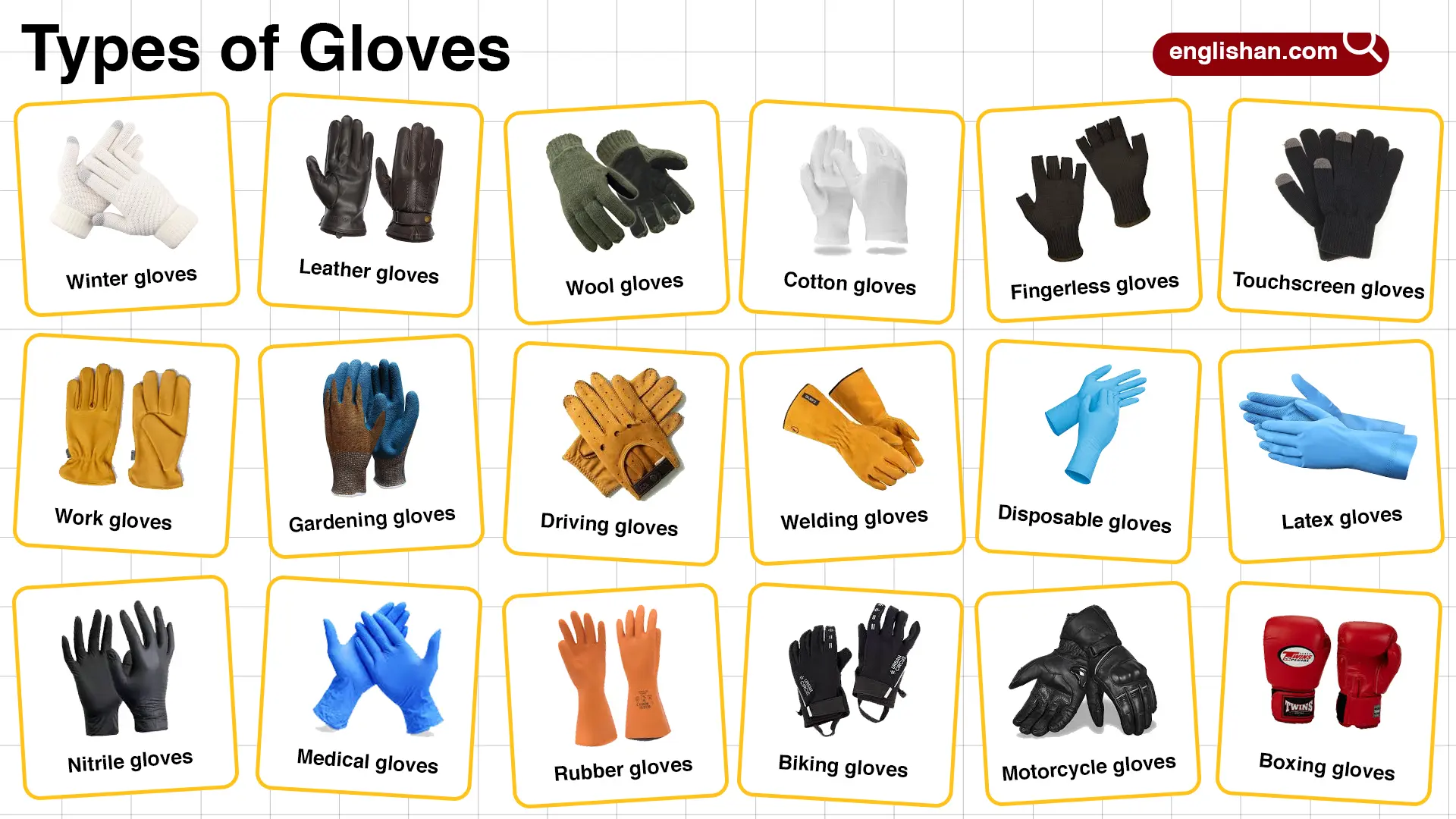
Learning the types of gloves helps learners use the right English words for handwear used in safety, fashion, and daily tasks. Each glove type has its own material, purpose, and fit. From latex gloves in medical settings to wool gloves for cold weather, knowing their names improves both understanding and vocabulary. This topic builds strong picture-word memory and supports sentence use when talking about jobs, clothes, or protection in real life.
Different Types of Gloves
Gloves by Material
Materials help us understand what gloves are made from and why they are used. Below is a list of gloves grouped by common materials they are made of.
- Leather: Used for strength and grip. Often found in work gloves, riding gloves, and fashion gloves.
- Cotton: Lightweight and soft. Common in light work gloves, beauty gloves, and liner gloves.
- Wool: Keeps hands warm. Used in winter gloves and knitted gloves for cold areas.
- Latex: Flexible and tight-fitting. Found in medical gloves, lab gloves, and food-handling gloves.
- Rubber: Waterproof and protective. Used in cleaning gloves, dishwashing gloves, and chemical-resistant gloves.
- Nitrile: Stronger than latex and non-allergic. Often used in examination gloves and lab work.
- PVC (Polyvinyl Chloride): Durable and cheap. Common in industrial gloves and waterproof gloves.
Gloves by Use
These glove types are named based on their purpose. Below is a list showing where and how they are used.
- Medical: Used by doctors and nurses. These include surgical gloves and examination gloves to keep hands safe and clean.
- Cleaning: Worn while washing or handling chemicals. Includes dish gloves, scrubbing gloves, and utility gloves.
- Cooking: Protects hands from heat and sharp tools. Oven mitts and heat-resistant gloves are common.
- Gardening: Keeps hands safe from dirt, insects, and thorns. Includes leather garden gloves and fabric-lined garden gloves.
- Industrial Safety: Used in factories and building sites. Includes cut-resistant gloves, thermal gloves, and coated work gloves.
- Reusable: Made to last longer. Includes gloves for cleaning, gardening, and working with tools.
- Disposable: Meant for one-time use. Includes medical gloves, food gloves, and hygiene gloves.
Sports and Performance Gloves
These gloves are made for better grip, safety, or comfort during sports. Below is a list of common types used in games or workouts.
- Boxing: Padded gloves used in matches and training to protect hands.
- Gym: Helps with grip during weightlifting or workouts. Also prevents blisters.
- Cycling: Protects palms and gives grip. Some are padded for long rides.
- Goalkeeper: Helps catch and block the ball in soccer. They have sticky palms and finger padding.
- Skiing: Keeps hands warm and dry. Designed for snow sports and cold conditions.
Gloves for Cold or Outdoor Use
These gloves are made for weather protection and outdoor tasks. Below is a list of types used in such settings.
- Winter Gloves: Thick and warm. Used in cold areas and during snow seasons.
- Waterproof Gloves: Made to keep water out. Used in rain, snow, or wet tasks.
- Gardening Gloves: Protects hands while digging or planting. Comes in many shapes and sizes.
- Hiking Gloves: Keeps hands warm and safe on mountain or trail walks.
Dress and Driving Gloves
These gloves are worn for style or control. Below is a list of common types.
- Formal Gloves: Used during events or with certain outfits. Often made from satin or leather.
- Driving Gloves: Gives better grip and control. Used while driving cars, especially in winter or sport driving.
Gloves for Kids
These are gloves made for children’s use. Below is a list of common kinds.
- School Gloves: Worn during winter walks to and from school.
- Play Gloves: Used in outdoor play, especially in cold or muddy places.

Interesting Facts About Gloves
Gloves have been used for centuries in different cultures and for various purposes. Here are some fun facts:
- The earliest gloves date back to the ancient Egyptians, used for protection and fashion.
- Medieval knights wore metal-plated gloves called gauntlets for combat.
- The first rubber gloves were invented in 1894 for medical use.
- Some touchscreen gloves use silver-coated fibers to conduct electricity.
- MMA gloves are lighter than boxing gloves, allowing better hand mobility.
FAQs About Gloves
The warmest gloves are thermal and wool gloves with insulation to trap heat and protect hands from extreme cold.
For sensitive skin, nitrile gloves are the best choice since they are latex-free and hypoallergenic.
Latex gloves are flexible and comfortable, but some people are allergic to latex. Nitrile gloves are more durable and chemical-resistant, making them ideal for medical and industrial use.
Gloves made of nitrile, neoprene, butyl, or PVC offer strong protection against hazardous chemicals. The right choice depends on the specific chemicals being handled.
There are six main classes of safety gloves based on protection levels: general purpose, cut-resistant, heat-resistant, chemical-resistant, impact-resistant, and electrical-insulating.
You May Also Like