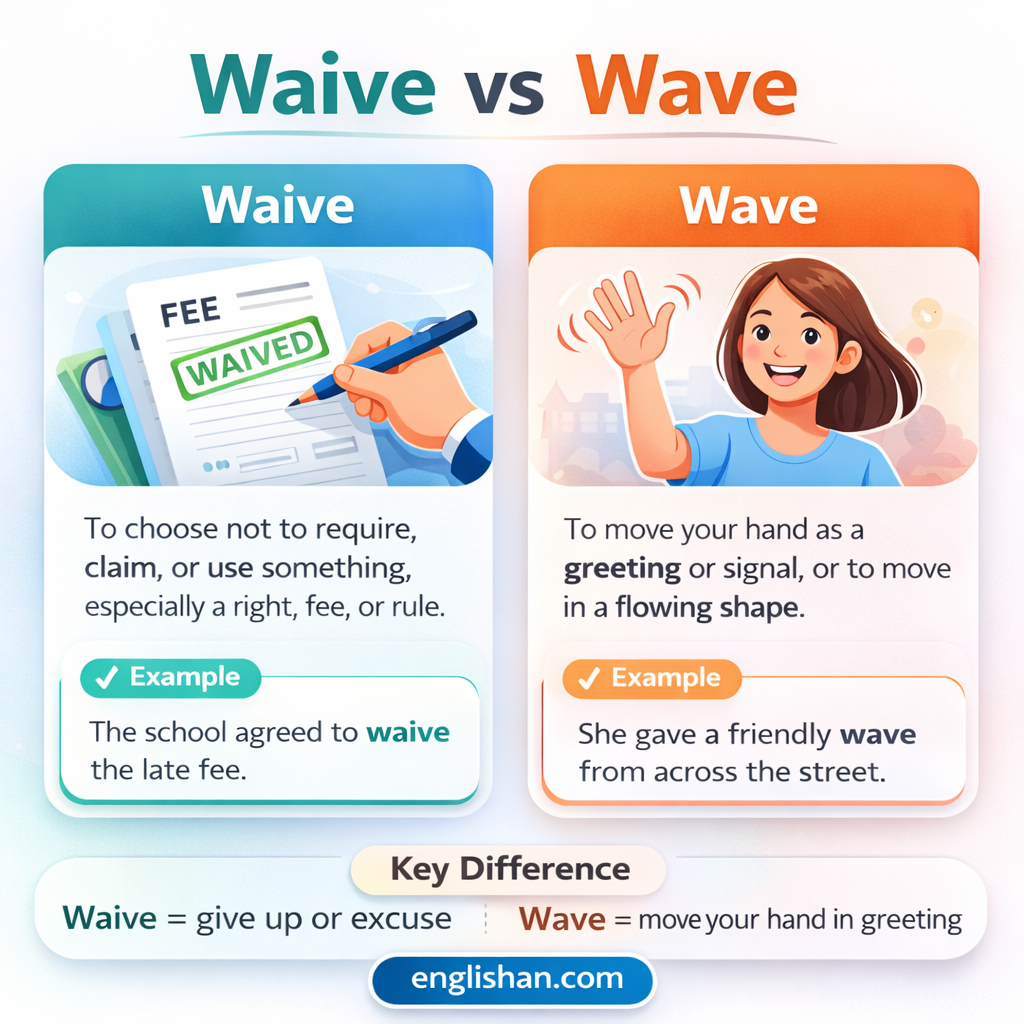
Waive and wave sound the same, but they mean very different things. Waive means to give up or excuse something such as a fee, right, or requirement, while wave usually refers to motion, greeting, or moving water.
People often confuse them in writing, especially in phrases like waive the fee and wave goodbye. This article explains what each word means, when to use it, and how to avoid the mix-up.
Waive vs Wave: Quick Answer
Here is the quickest way to tell them apart:
| Word | Main Meaning | Part of Speech | Common Context | Example |
|---|---|---|---|---|
| waive | officially give up or excuse | verb | fees, rights, rules, requirements | waive the fee |
| wave | move back and forth, or a swell or surge | noun, verb | greeting, water, motion, emotion | wave goodbye |
If the sentence is about giving something up or excusing it, use waive.
If it is about movement, greeting, water, or a surge, use wave.
What Does Waive Mean?
Waive is a verb. It means to give up a right, claim, fee, rule, or requirement, usually in an official, legal, school, business, or administrative setting.
You will often see waive in phrases like:
- waive a fee
- waive a right
- waive a penalty
- waive a requirement
- waive liability
Examples of Waive
- The university agreed to waive the application fee.
- He chose to waive his right to speak at the hearing.
- The airline refused to waive the baggage fee.
- The company may waive the late charge in special cases.
What Does Wave Mean?
Wave can be both a verb and a noun.
As a verb, it often means to move your hand or another object back and forth.
As a noun, it can refer to a moving swell of water, a gesture, or a sudden rise in something such as emotion, illness, or public interest.
Wave as a Verb
Use wave for gestures and movement.
Examples:
- She waved from the balcony as the guests arrived.
- The children waved at the parade.
- He waved a flag during the celebration.
Wave as a Noun
Use wave for water, shape, or a surge.
Examples:
- A high wave crashed against the rocks near the pier.
- She gave a quick wave from the car window.
- A new wave of interest followed the announcement.
- I felt a sudden wave of panic.
When Waive Is the Correct Word
Use waive when someone officially gives up, excuses, or removes something that could have been required.
This word is especially common in:
- legal writing
- school policies
- travel or booking rules
- banking and finance
- medical or event forms
Examples
- The bank agreed to waive the service fee.
- Parents were asked to sign a form to waive certain claims.
- The court would not waive the filing requirement.
When Wave Is the Correct Word
Use wave when you are talking about physical movement, greeting, water, or a rising pattern.
This word is common in:
- daily conversation
- beach or weather talk
- body movement
- flags, hair, and fabric
- figurative phrases like a wave of relief
Examples
- He waved to his friend across the street.
- Her hair fell in soft waves.
- A large wave rolled toward the beach.
- I felt a sudden wave of relief after the call.
Common Mistakes With Waive and Wave
This is where many writers slip.
Using Wave for Fees or Rights
Incorrect:
The school agreed to wave the fee.
Correct:
The school agreed to waive the fee.
Using Waive for Greeting
Incorrect:
She waived at me from the doorway.
Correct:
She waved at me from the doorway.
Mixing Up Official and Everyday Contexts
If the sentence sounds legal, formal, or administrative, waive is often the right word.
If the sentence is about movement, greeting, water, or rising emotion, wave is usually the correct choice.
How to Remember Waive vs Wave
A quick memory trick can help:
- waive connects with waiver
- wave connects with hand, water, and motion
You sign a waiver, so a fee can be waived.
You move your hand to wave.
That one connection helps solve most of the confusion.
Why These Words Get Confused
Waive and wave are homophones, so they sound alike in speech. That means context matters more than sound.
The confusion becomes common in writing because both words are familiar and both can appear in ordinary sentences. One letter changes the meaning completely.
Waive and Wave in Sentences
Here are direct contrast examples that make the difference easier to see:
- The gym agreed to waive the joining fee.
- The child began to wave at the performer.
- The court would not waive the requirement.
- A high wave rolled toward the beach.
- The school can sometimes waive the deadline in special cases.
- She gave a cheerful wave before leaving.
Summary
Waive and wave sound the same, but they do different jobs. Waive means to officially give up or excuse a fee, right, or requirement. Wave refers to motion, greeting, water, or a rising feeling or pattern. Once you connect waive with waiver and wave with hand movement or ocean waves, the difference becomes much easier to remember and use correctly.
FAQs
Waive means to officially give up or excuse something, such as a fee or rule. Wave means to move something back and forth or to greet someone with your hand.
The correct phrase is waive the fee, which means the charge is removed or not required.
Waive means to give up something official. For example: The office agreed to waive the late fee.
Use waive in formal or official situations involving rules, rights, or fees. For example: The bank may waive the charge after a request.
You May Also Like