A short message can calm a conversation fast. In texts and DMs, dw usually means don’t worry. People send it after an apology, a delay, a mistake, or a moment when someone starts overthinking.
You will see dw in text messages, WhatsApp chats, Instagram DMs, Snapchat, and group conversations where the tone stays casual. It often keeps the exchange light, but the feeling behind it can still shift. Sometimes it sounds warm and reassuring. Sometimes it feels quick and neutral. In the wrong moment, it can even sound a little cold.
That tone matters. The words are short, but the message depends on context, timing, and the relationship between the people talking. Once you know how dw works in different situations, it becomes much easier to read.
What Does DW Mean in Text?
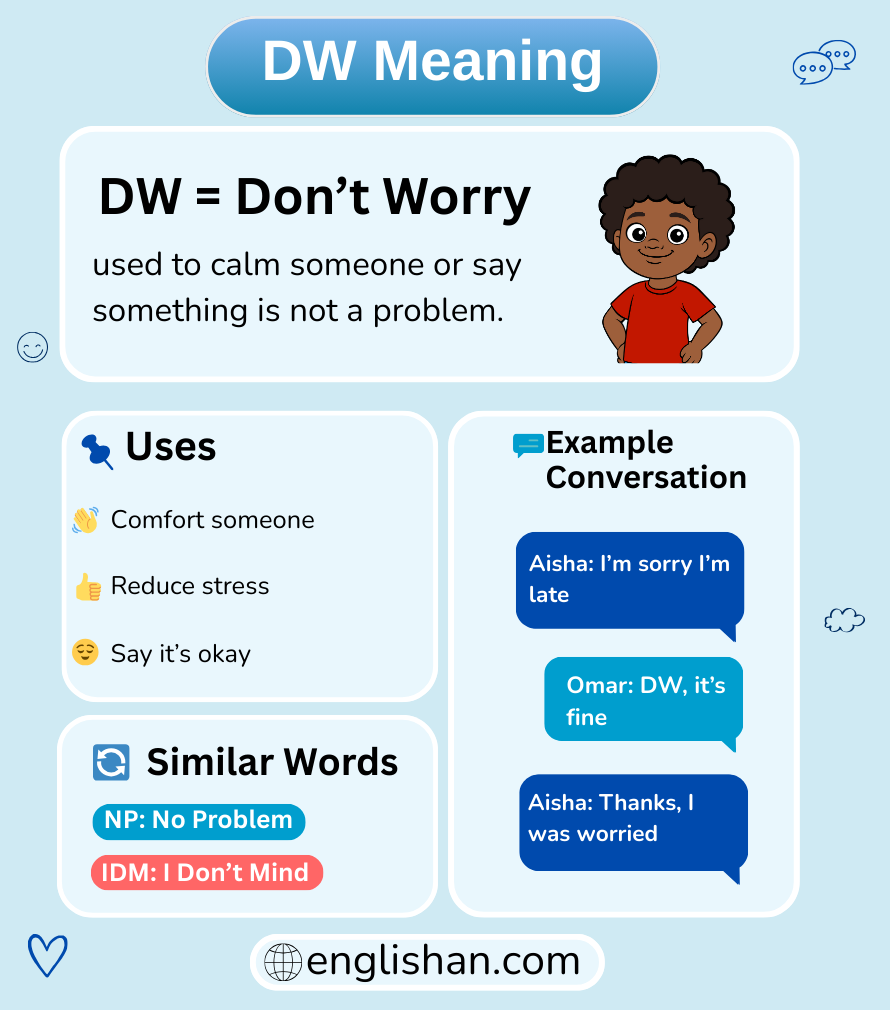
Most of the time, DW means “don’t worry.” It is a quick way to tell someone not to stress, not to feel bad, or not to make too much of a small problem.
People often send it when someone says sorry, worries they are late, or starts panicking over something minor. In that kind of exchange, dw means the sender is trying to lower the pressure.
A few common uses look like this:
- dw, it’s fine
- dw about it
- dw, you’re good
- dw, I already handled it
In each case, the message points in the same direction. The sender is telling the other person to relax.
What Does DW Stand For?
DW stands for “don’t worry.” That is the main meaning people use in texting and online chat.
It is one of those short forms that became common because it is fast to type and easy to understand in casual conversation. Instead of writing a full sentence like don’t worry about it or it’s okay, no problem, people often just send dw and move on.
Both DW and dw mean the same thing. Lowercase usually feels softer and more natural in chat, while uppercase may feel stronger or more abrupt depending on the sentence.
How DW Is Used in Messages and Chats
DW often appears after an apology. This is one of the most common uses. Someone forgets something, arrives late, or makes a mistake, and the other person replies with dw to keep the situation from getting bigger.
Example:
A: Sorry, I forgot to send that file earlier.
B: dw, send it when you can
Here, dw removes tension. It tells the other person they do not need to panic.
DW also appears when someone is stressed. If a friend is overthinking a test, a plan, or a conversation, dw works like a quick reassurance.
Example:
A: I think I messed that up
B: dw, it wasn’t that bad
In this kind of exchange, the sender is offering comfort, not just ending the topic.
DW can also brush off a small inconvenience. It often means the issue is not important enough to keep discussing.
Example:
A: I’m going to be ten minutes late
B: dw, we haven’t even ordered yet
That use feels relaxed and practical.
What “DW About It” Means
You will often see the longer version dw about it. It means the same thing as don’t worry about it, but with a lighter chat tone.
This phrase usually comes up when someone feels guilty about something small. It reassures them and closes the issue at the same time.
Example:
A: Sorry I couldn’t call back earlier
B: dw about it, I was busy too
Compared with plain dw, this version can sound a little fuller and less abrupt because it completes the thought.
DW Tone and Intent
DW usually sounds reassuring. In most conversations, it carries a calm tone and tells the other person there is no real problem.
That reassuring tone is strongest when the sender adds a little more warmth around it, such as:
- dw, it’s okay
- dw, no big deal
- dw, you did fine
- dw, we’ll figure it out
These versions feel friendly because they do more than stop the worry. They also support the person.
DW can also sound quick and neutral. Sometimes the sender is not trying to be especially warm or cold. They just want to keep the conversation moving.
Example:
A: Sorry, wrong chat
B: dw
That reply is not rude on its own. It is just brief.
In some situations, DW can sound distant. This usually happens when the other person is seriously upset and the reply feels too short for the moment.
Example:
A: I’ve been stressing about this all day
B: dw
Here, the message may feel a little flat because the emotional weight of the situation is higher than the reply. The wording still means don’t worry, but the tone may not feel very comforting.
When DW Sounds Warm, and When It Sounds Cold
DW feels warm when the context is light and the relationship is comfortable. If two friends already talk casually, dw often feels natural and kind.
Example:
A: Sorry I forgot the snacks
B: dw, I grabbed some already
That sounds easygoing and supportive.
DW feels colder when it replaces a fuller response someone probably needed. If a person is anxious, embarrassed, or upset, a bare dw can feel like a brush-off.
Example:
A: I feel terrible about what happened
B: dw
In a moment like that, the reply may sound like the sender does not want to engage.
That is why context matters so much. The phrase itself is not rude, but the amount of care around it changes how it lands.
How DW Is Used on WhatsApp, Instagram, Snapchat, and Text
On WhatsApp and in regular text messages, dw usually keeps its basic meaning of don’t worry. It often appears in one-to-one chats where people are reassuring each other or handling small everyday issues.
On Instagram and Snapchat, the meaning stays the same, but the tone can feel even shorter because those platforms often encourage fast replies. A plain dw in a DM may feel casual, playful, or a bit dry depending on the rest of the chat.
In group chats, dw often helps move things along. If someone apologizes for being late, forgetting something, or misunderstanding a message, another person may reply with dw just to stop the pile-up.
Across all of these platforms, the meaning stays steady. What changes is the tone and the amount of warmth around it.
How to Reply to DW
Most of the time, you do not need a long reply. Since dw is already easing the situation, a short response usually works best.
If someone uses dw after you apologize, you can reply with something like:
- thanks
- okay, got it
- appreciate it
- I’ll send it now
- good to know
If the person is reassuring you during stress, you can reply in a way that keeps the conversation going:
- I hope so
- thanks, I needed that
- you’re right
- I’m trying not to overthink it
If dw feels a little too short or distant, you do not need to force the conversation. Just read it as a brief reassurance unless the rest of the exchange suggests otherwise.
Example Conversations Using DW
Jason: I’m sorry, I left the charger at home.
Mike: dw, I brought mine too.
Jason: perfect, thanks.
Sarah: I think I did really badly on that test.
Emily: dw, you studied a lot for it.
Sarah: I’m trying not to panic.
David: I’m running late.
Jessica: dw about it, we’re still waiting outside.
David: okay, two minutes.
Nina: Sorry, I deleted the wrong photo.
Lina: dw, I saved a copy earlier.
Nina: that saved me.
These examples all carry the same core meaning, but the tone shifts slightly. Some feel warm, some feel practical, and some just keep the chat moving.
Other Meanings of DW
DW can also mean “dear wife” or “darling wife.” This meaning is much less common in texting slang than don’t worry, but you may still see it in forum posts, relationship talk, or older internet shorthand.
Example:
My DW loves that movie.
In that sentence, DW does not mean reassurance at all. It refers to a wife.
Doctor Who is another context-based meaning. Fans of the show often shorten it to DW, especially in entertainment discussions.
Example:
I started watching DW again last night.
That is why context matters. In normal chat, dw almost always means don’t worry, but in relationship or fandom spaces, the letters can point somewhere else.
Where DW Came From
DW became common as part of online and mobile shorthand, where people shortened familiar phrases to type faster and keep chats light. It belongs to the same general habit that produced terms like lol, np, and idk.
The exact timeline is less important than the way people use it now. Today, dw stays popular because it is fast, familiar, and easy to fit into everyday conversations.
DW and Similar Short Replies
DW sits close to a few other common chat phrases, but each one has a slightly different feel.
NP means no problem. It often sounds more like a response to thanks or an apology.
NW means no worries. It is very close to dw, but it can sound a little more conversational because it feels like a full phrase.
All good feels casual and relaxed. It often works when you want reassurance without abbreviation.
NBD means no big deal. It downplays the issue more strongly than dw does.
These phrases overlap, but dw is one of the quickest and most direct ways to calm the moment.
When Not to Use DW
DW works well in casual chats, but it is not right for every situation.
If you are replying to a formal email, a work message with someone senior, or a serious emotional issue, fuller wording is usually better. In those moments, don’t worry, it’s okay, or no problem at all may sound more thoughtful than just dw.
It is also better to avoid a bare dw when someone is deeply upset. A slightly fuller reply often lands better.
For example, instead of writing dw, you might say:
don’t worry, we’ll sort it out
or
it’s okay, I understand what happened
That small difference can make the response feel more human.
Key Takeaway
In texts, DMs, and chat apps, dw usually means don’t worry. People use it to calm someone down, accept a small mistake, or keep a conversation from turning heavier than it needs to be.
The meaning stays steady, but the tone changes with context. Sometimes dw feels warm and reassuring. Sometimes it feels quick and neutral. In a more emotional moment, it can even sound a little distant if nothing else comes with it.
That is why the best way to read dw is to look at the full exchange, not just the two letters.
FAQs
No, not by itself. It is usually friendly or neutral. It only starts to feel rude when the moment calls for a fuller response and the reply feels too short.
It can work in very casual team chats, but it is better to avoid it in formal emails or professional communication where full wording sounds more polished.
No. People write both DW and dw. Lowercase often feels softer and more natural in casual texting.
That meaning is rare in normal chat. In most text conversations, dw means don’t worry.
It means don’t worry about it. People use it to reassure someone and move past a small issue.
Yes, in some relationship or forum contexts. But in texting and DMs, dw usually means don’t worry.
You May Also Like