Someone shares an update that already happened, adding a quick note so others can catch up. It feels helpful and considerate, passing along news that mattered even if you were offline earlier. The goal is to keep everyone in the loop.
Online, ICYMI signals a recap. Short for in case you missed it, it introduces a reminder, repost, or summary. People use it to resurface links, announcements, or highlights without pressure to react. Tone stays polite and informative.
This guide explains ICYMI meaning across texts, posts, and emails, with examples and brief exchanges. By the end, you will know when to use it, what tone it carries, and how to share updates so others catch up. You will also see close alternatives and when each fits.
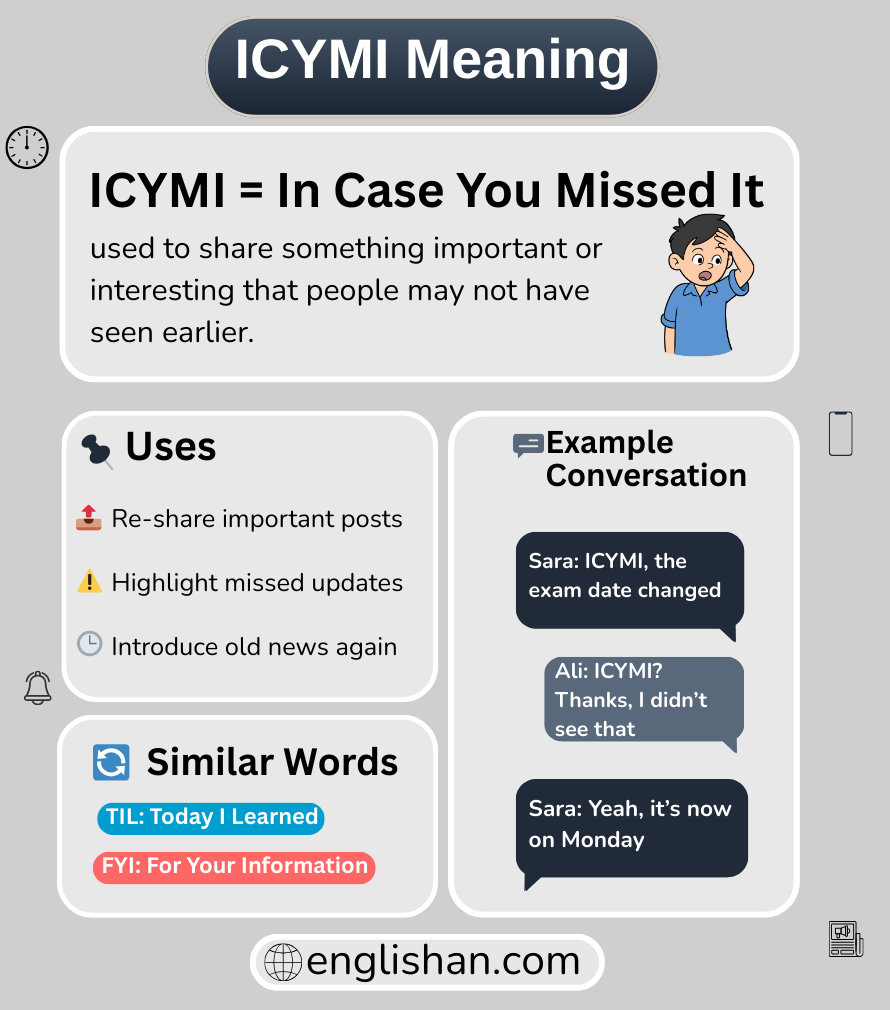
What Does ICYMI Mean?
The acronym ICYMI indicates that the content being shared is not breaking news but is worth seeing again. It serves as a polite tool to resurface updates, photos, or announcements that an audience likely overlooked in a busy feed. Senders use it to provide a helpful recap without appearing repetitive or demanding.
What Does ICYMI Stand For
This five-letter abbreviation stands strictly for the phrase In Case You Missed It. While it frequently appears as a hashtag or subject line tag, the letters always represent this specific sequence of words. It grammatically functions as an introductory clause to signal that the following information is a summary.
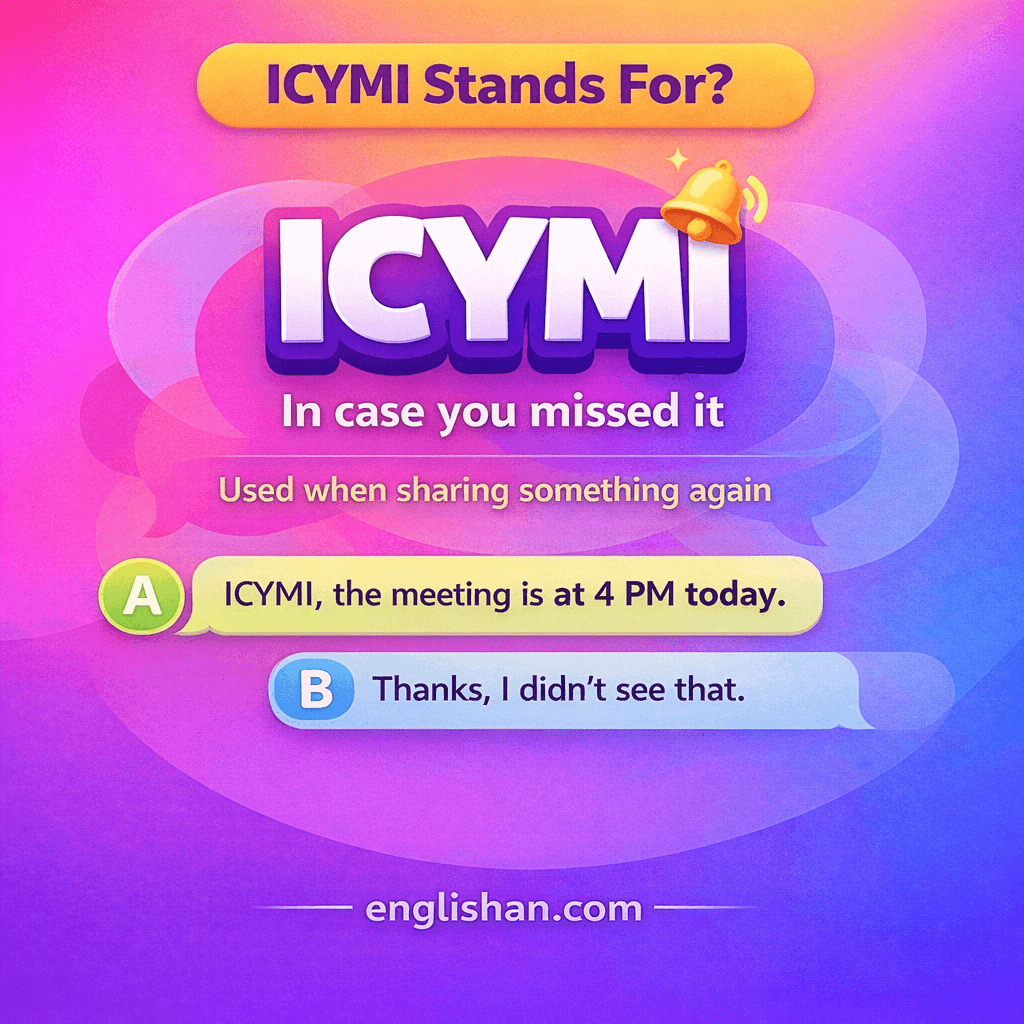
How ICYMI Is Used In Texts, Captions, And Email
People place this abbreviation at the beginning of a sentence or subject line to signal a recap or update. In casual texts, it often precedes a funny photo or a piece of gossip that the sender thinks is worth sharing again. In professional emails, it effectively highlights key announcements or summaries for team members who were absent.
When People Use ICYMI
Users typically employ this term when sharing content that is no longer breaking news but still relevant. It is common during weekends or end-of-week summaries to catch people up on events they might have skipped during a busy work week. It also appears when someone wants to humble-brag about a past achievement by resharing a photo.
ICYMI Origin
This shorthand emerged during the rise of social media feeds and microblogging in the mid-2000s. As timelines became crowded with rapid updates, users needed a quick tag to surface older posts that quickly got buried. It transitioned from a hashtag to a standard conversational term used in everyday digital communication.
ICYMI Example Conversations
These dialogues show how friends and colleagues use the term to bring attention to overlooked news.
Jason: Did you see the new schedule for next month?
Mike: No, I have been in meetings all morning.
Jason: ICYMI, the manager emailed it to everyone an hour ago.
Sarah: ICYMI, here is the link to the photos from the trip.
Emily: Oh thanks, I totally forgot to check the group chat.
Sarah: No worries, I just wanted to make sure you had them.
David: ICYMI, that band we like is coming to town in July.
Jessica: Really? We need to buy tickets right now.
David: I already sent you the link.
Other Related Slang Words
These acronyms also help direct attention to specific information.
- FYI: For Your Information. Used for general updates.
- PSA: Public Service Announcement. Used for important warnings.
- TLDR: Too Long; Didn’t Read. Used to summarize long text.
- Bump: Used to bring a post back to the top.
Common ICYMI Confusions
A frequent mistake is assuming this acronym implies the person was being lazy or ignoring messages. While it highlights missed info, it is usually a helpful gesture rather than an accusation of negligence. Readers should interpret it as a courtesy “catch-up” rather than a criticism of their attention span.
Key Takeaways
ICYMI is used to bring something back into view when it might have been missed earlier. It stands for in case you missed it and works like a gentle nudge, not a repeat for the sake of repeating. People use it when resharing updates, photos, or news that still matter after the moment passed. In feeds or group messages, ICYMI signals a recap, not brand-new information, making it a polite way to catch others up without sounding pushy.
FAQs
Yes, it is acceptable in internal newsletters or team updates.
No, you usually say the full phrase “in case you missed it.”
It can be if used to point out obvious mistakes, but usually it is helpful.
It tags posts to give them more visibility after the initial upload.
Similar, but ICYMI implies the info was already shared once before.
You May Also Like