You read a comment that repeats the same mistake again, and the reaction is instant frustration mixed with disbelief. There is no urge to argue, just a head shake and a quiet sigh.
Online, SMDH captures that response. It comes from shaking my damn head and shows disbelief, disappointment, or irritation without starting a debate. The tone ranges from joking to sharp, depending on context, and it often stands alone or follows a quote.
This guide explains smdh meaning across texts, comments, and threads, with examples, short exchanges, and close alternatives. By the end, you will know how to read the tone, choose a response, and avoid turning a reaction into an argument.
SMDH Meaning
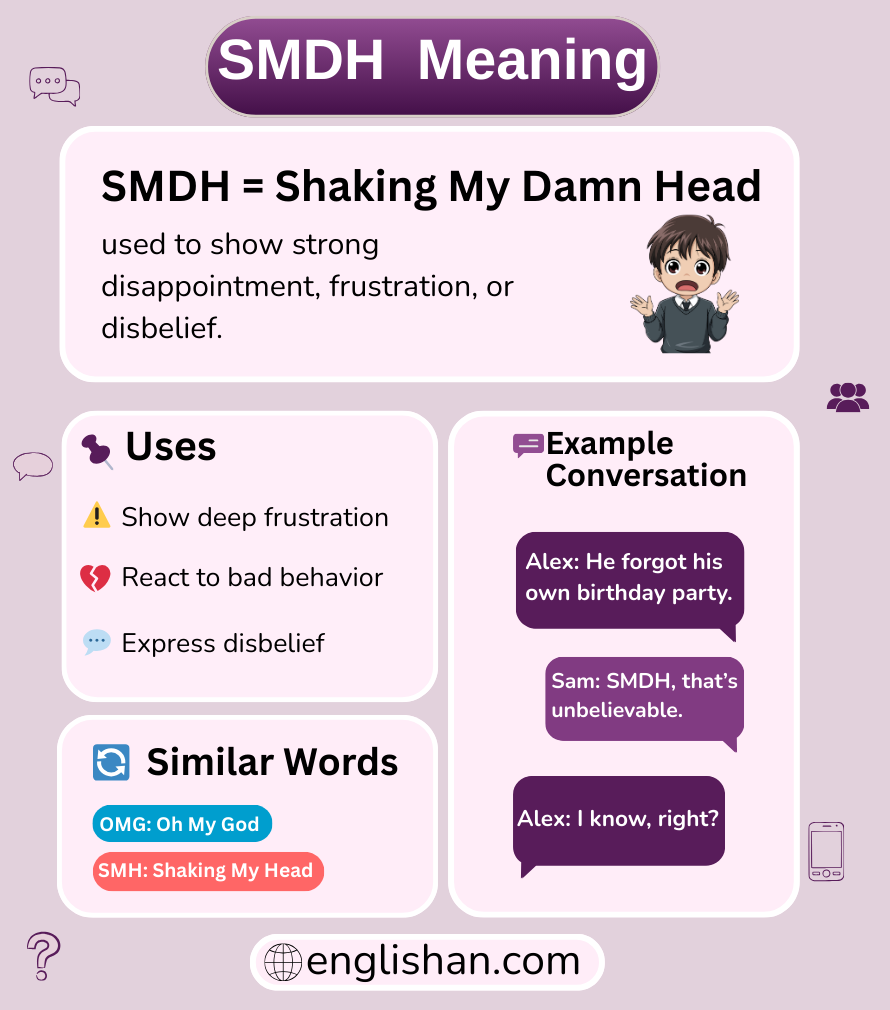
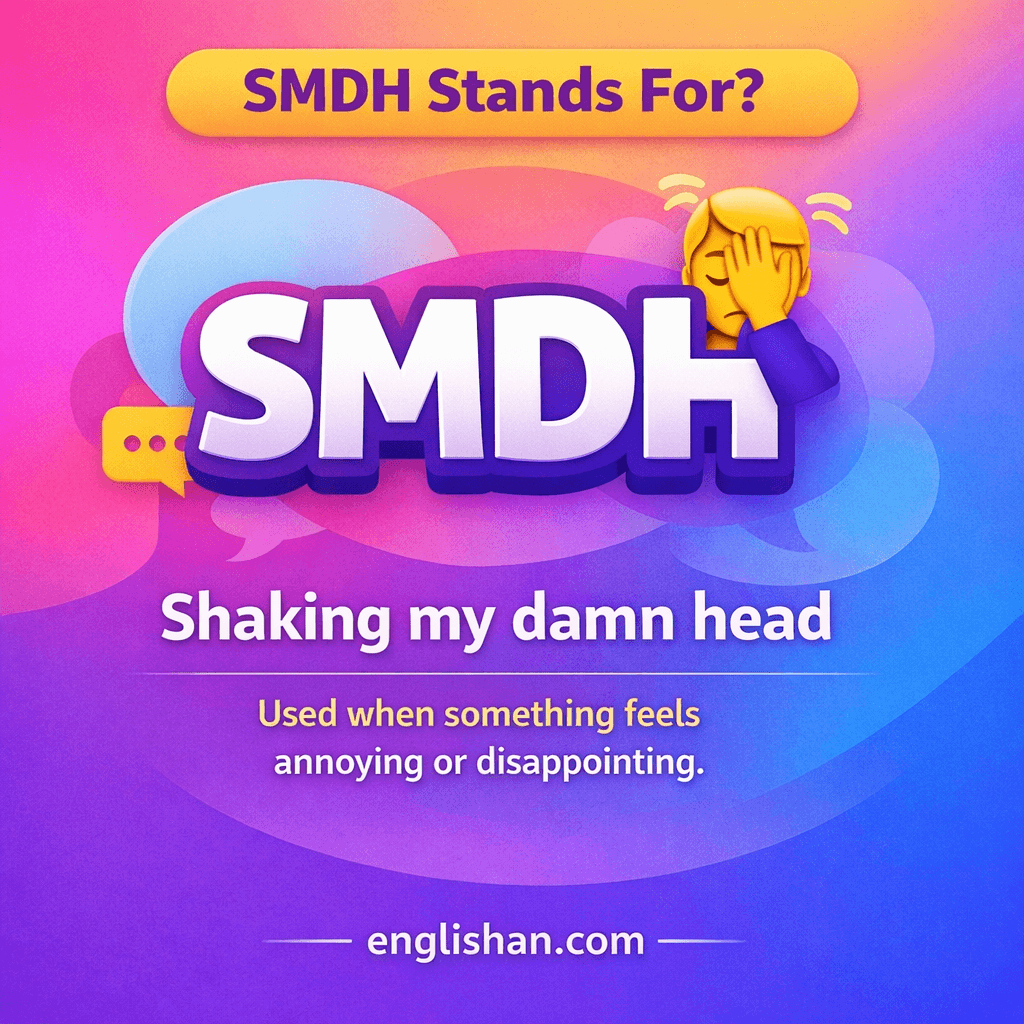
The acronym SMDH functions as a non-verbal gesture translated into text to express profound disappointment or disbelief. It signals that a situation is so foolish or frustrating that the speaker is physically moving their head side to side in rejection. Writers use it when a simple objection is not strong enough to convey their annoyance.
SMDH Stands For
This four-letter abbreviation stands directly for the phrase Shaking My Damn Head. It acts as an intensified version of the common slang SMH (Shaking My Head) by adding a mild profanity for emphasis. The added word highlights that the user is not just disappointed, but actively irritated by the stupidity they are witnessing.
How SMDH Is Used
People type this slang in text messages and comment sections to react to obvious mistakes or ridiculous behavior. It serves as a way to judge a situation without writing a long explanation of why it is wrong. You will often see it used as a standalone comment under a video of someone failing a simple task.
Where SMDH Is Used
This term appears frequently in group chats and social media threads where friends discuss current events or personal drama. It is particularly common in reaction to news stories that seem too absurd to be true. While it is standard in casual digital spaces, it is rarely spoken aloud in real-life conversations.
SMDH Examples
- Reaction to mess: “You dropped the entire cake on the floor? SMDH.”
- Reaction to news: “They cancelled the show after one episode. SMDH.”
- Reaction to lies: “He is still pretending he didn’t do it. SMDH.”
SMDH Example Conversations
These dialogues demonstrate how friends use the term to express second-hand embarrassment or frustration.
Jason: I locked my keys inside the car for the third time this week.
Mike: You have to be kidding me. SMDH.
Jason: I know, I need to stop rushing.
Sarah: Did you see that guy wearing shorts in the snow?
Emily: SMDH, he is going to get sick immediately.
Sarah: Some people just want attention.
David: The restaurant charged me extra for ice in my water.
Jessica: That is ridiculous. SMDH at these prices.
David: I am never going back there.
SMDH Origin
The term evolved as an extension of SMH (Shaking My Head) during the early 2010s to accommodate growing frustration in online discourse. Users added the “D” to create a stronger, more emphatic version of the original acronym. It became a staple of internet vocabulary as a quick way to signal superior judgment or exhaustion with others’ antics.
Other Related Slang Words
These acronyms also convey disappointment or shock.
- SMH: Shaking My Head. The polite version of the term.
- Facepalm: A physical gesture of embarrassment.
- FFS: For F***’s Sake. Used to express anger.
- WTH: What The Heck. Used to express confusion.
Common SMDH Confusions
A frequent mix-up occurs when readers interpret the “D” as “Dang” instead of “Damn,” which changes the tone from irritated to mild. Additionally, some users confuse it with Shaking My Darling Head, a sarcastic and rare variation used in specific fan communities. Context usually clarifies that the standard definition involves frustration, not affection.
Key Takeaways
SMDH takes the reaction behind SMH and pushes it further. It stands for shaking my damn head and is used when disappointment or irritation feels stronger than usual. People drop it when something is not just foolish but exhausting to deal with, like bad decisions or frustrating news that makes you pause. The added extra judgment in the phrase signals that patience is gone. It fits casual conversations where reactions are raw and unfiltered, especially when words fail and annoyance says it all.
FAQs
Yes, the “D” stands for a mild profanity, making it inappropriate for school.
Yes, it implies a higher level of disappointment and annoyance.
No, it is unprofessional and dismissive. Avoid it with colleagues.
Rarely. In almost all contexts, it means Shaking.
You May Also Like