

Someone says thanks after a small favor, and you reply without slowing the chat. The exchange feels polite and easy, a quick nod that keeps things friendly.
In messages, YW means you’re welcome. It fits casual texts and comments, signaling courtesy without extra effort. Tone stays relaxed and can feel warm or neutral depending on the moment.
This guide explains YW meaning across everyday chats, with common replies, short back and forths, and close alternatives like no problem. You will see when it sounds friendly and when silence works better. By the end, you will recognize it instantly and reply with confidence.
What Does YW Mean?
The acronym YW functions as a polite acknowledgement of gratitude, signaling that a person is happy to help. It serves as the standard digital response when someone says “thank you” or “thanks” in a message. Users type it to complete the cycle of politeness without spending time on a long sentence.
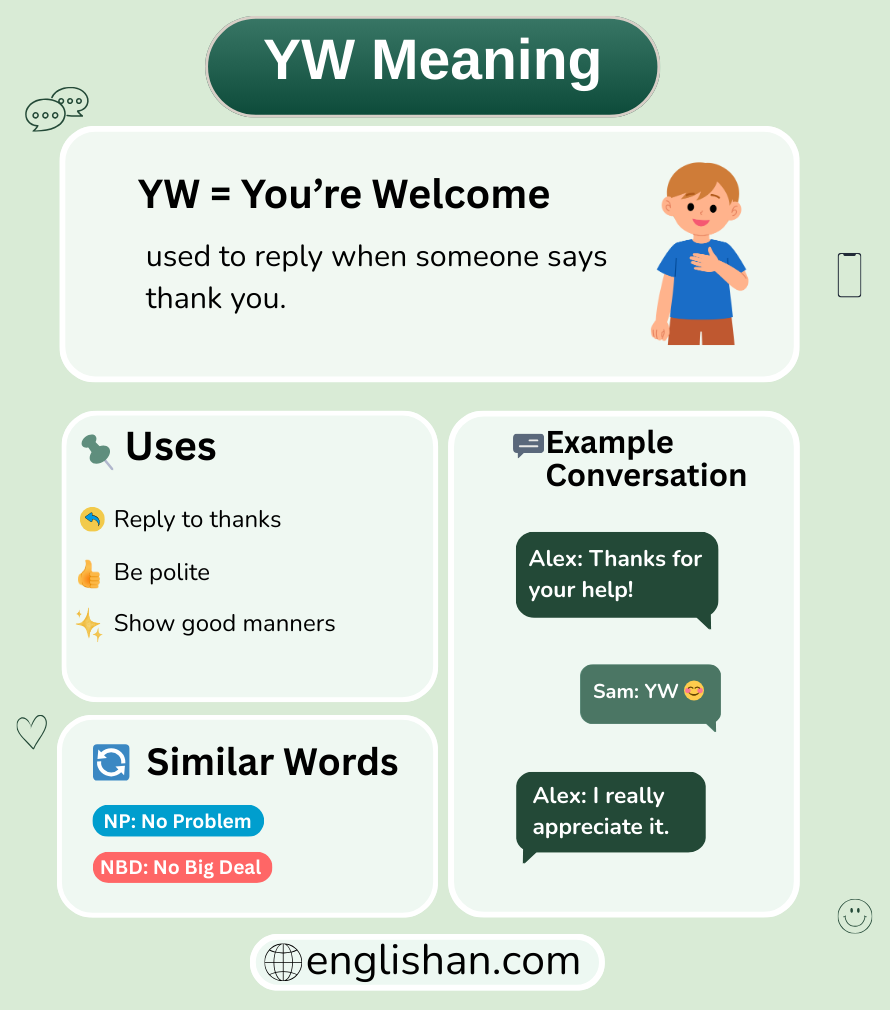
What Does YW Stand For
This two-letter abbreviation stands directly for the phrase You’re Welcome. It represents the standard polite English phrase used to accept thanks. While it effectively replaces the spoken words, it is strictly used in written communication like texts and instant messages.
How YW Is Used And How To Reply
People use this term immediately after receiving a “thank you” text to show they received the message and are polite. It acts as a conversation closer, letting the other person know there is no debt between them. You usually do not need to reply to YW; a simple reaction emoji or letting the chat end is perfectly acceptable.
When Not To Use YW
You should avoid using this shorthand in formal emails or serious professional correspondence. In these settings, typing out “You are welcome” demonstrates more respect and professionalism. Additionally, if someone writes a long, emotional thank-you note, replying with a short abbreviation can feel cold or dismissive.
YW Examples And Conversations
These dialogues demonstrate how friends and family use the term to accept thanks casually.
Jason: Thanks for giving me a ride to the airport this morning.
Mike: No problem at all, I was heading that way anyway. YW.
Jason: I owe you lunch when I get back.
Sarah: Did you manage to fix that error on my laptop?
Emily: Yes, it was just a setting that needed to be changed.
Sarah: You are a lifesaver! Thank you so much. Emily: YW, happy to help.
David: Thanks for covering my shift yesterday.
Jessica: YW, just make sure you cover mine next Tuesday.
David: Deal, consider it done.
Origin of YW
This abbreviation originated during the early days of chatrooms and SMS texting in the late 1990s and 2000s. Users adopted it to respond to “TY” (Thank You) quickly, keeping the conversation flow fast and efficient. It became a staple of internet courtesy alongside other common acronyms.
Common YW Confusions
A common mix-up occurs when readers interpret these letters as Yeah Whatever in a sarcastic context. While rare, some users might type YW to dismiss a comment rather than accept thanks. You must look at the previous message; if nobody said “thank you,” the user likely means the sarcastic definition.
Other Related Slang Words
These acronyms also function as polite responses to gratitude.
- NP: No Problem. A very common, casual way to say you are welcome.
- TY: Thank You. The trigger phrase that usually prompts a YW response.
- OFC: Of Course. Used to imply the favor was no trouble at all.
- NBD: No Big Deal. Used to minimize the effort involved in the favor.
Key Takeaways
We define this acronym as the universal text shorthand for “You’re Welcome,” serving as a polite response to gratitude. It allows users to acknowledge thanks quickly and efficiently in casual digital conversations. While it is standard in texting, using it in formal or deeply emotional contexts can appear lazy or dismissive. Remember to reserve YW for quick chats with friends and spell out the full phrase when you want to show extra sincerity.
FAQs
It is okay in casual team chats like Slack. Avoid it in formal emails to clients.
In rare playful contexts, yes. But 99% of the time, it means You’re Welcome.
The term is generally not rude when used in casual, quick exchanges. However, because it is so short, some people might perceive it as lazy or passive-aggressive if the favor was significant. Using it in response to a deep expression of gratitude can seem like you do not care.
You May Also Like