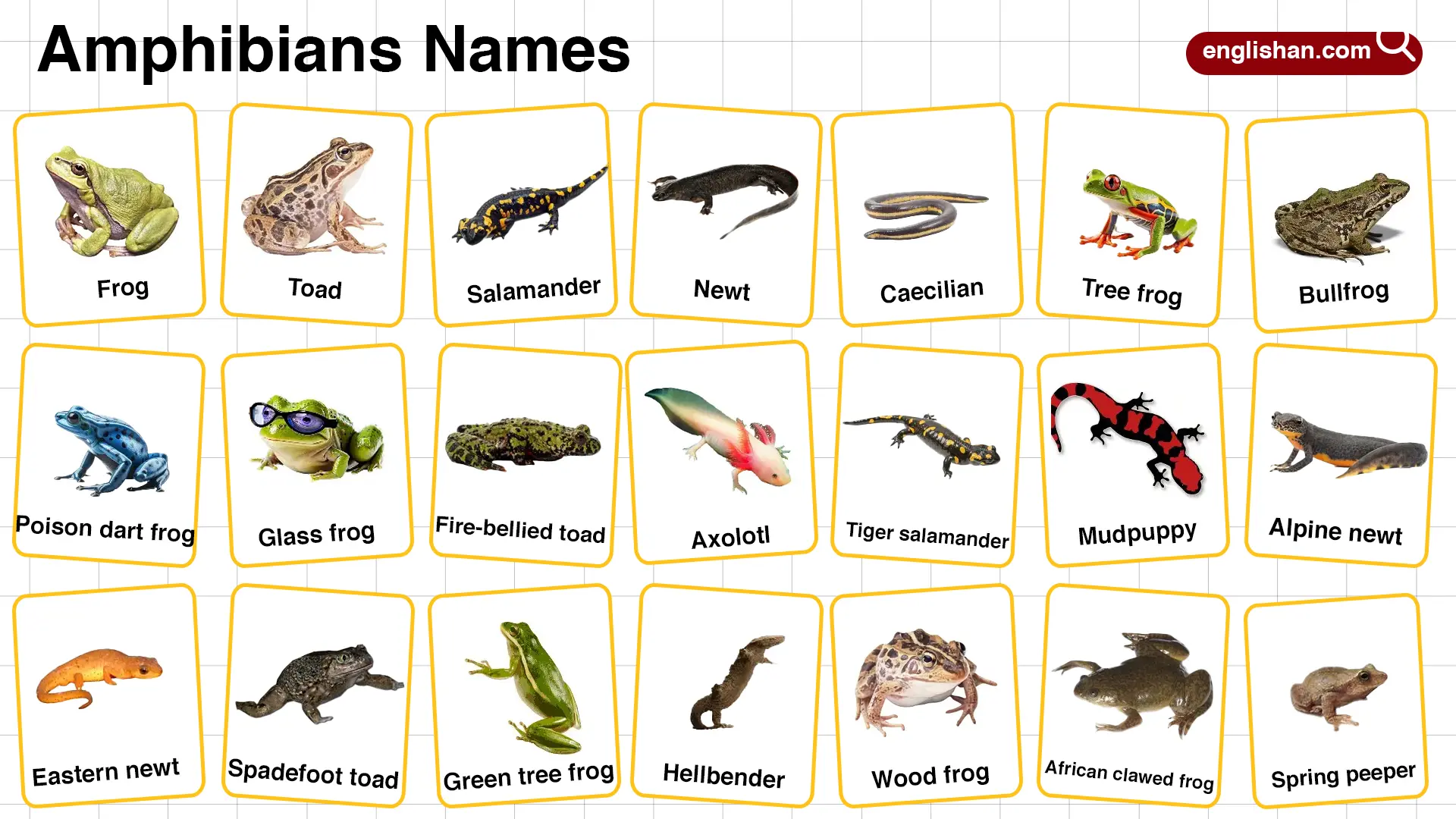
Some animals begin life in water and later move to land as they grow. These amphibians include frogs, toads, and salamanders, which are often found near ponds, rivers, or wet ground.
This post lists amphibians names in English with pictures. It groups them by type to build science-related vocabulary and help learners name soft-skinned animals in English.
Master all animals names in English and build strong vocabulary with this complete post.
List of Amphibians Names in English
Learning amphibians names builds vocabulary and helps identify common animals found in water and damp places. Below is a complete list of amphibians:
- Frog
- Toad
- Salamander
- Newt
- Caecilian
- Tree frog
- Bullfrog
- Poison dart frog
- Glass frog
- Fire-bellied toad
- Axolotl
- Tiger salamander
- Mudpuppy
- Alpine newt
- Eastern newt
- Spadefoot toad
- Green tree frog
- Hellbender
- Wood frog
- African clawed frog
- Spring peeper
- Cane toad
- Common toad
- Smooth newt
- Red-backed salamander
- Marbled salamander
- Pacific tree frog
- Surinam toad
- Golden poison frog
- Blue poison dart frog
- Olm
- Goliath frog
- Japanese giant salamander
- Coqui frog
- Eastern spadefoot
- Rough-skinned newt
- Fire salamander
- Corroboree frog
- Green and golden bell frog
Main Types of Amphibians
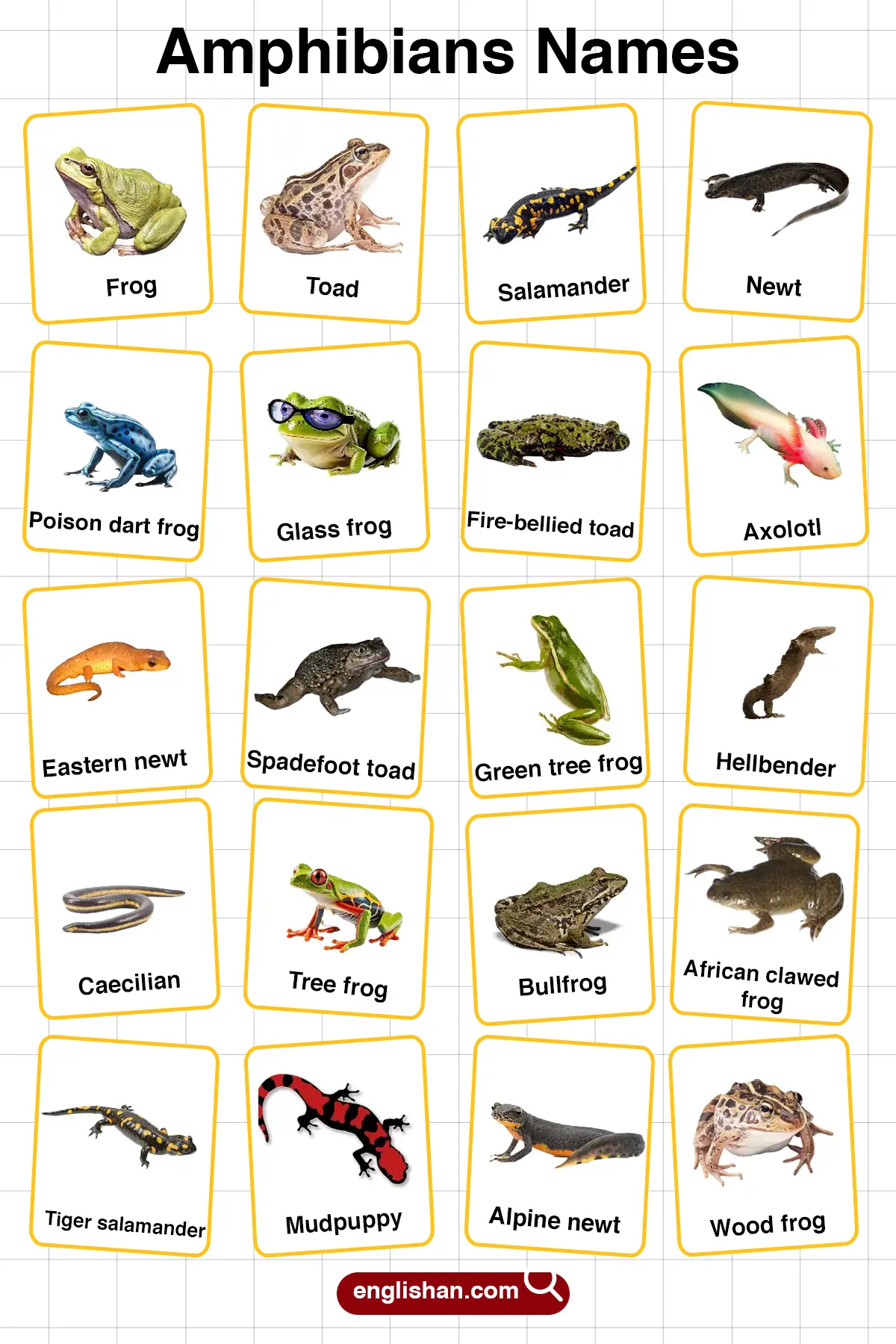
The main types of amphibians are grouped by shape, body parts, and lifestyle. Below is a breakdown of each major kind of amphibian and its examples to help with identification.
Frogs
Frogs are amphibians with smooth skin, long legs, and strong jumping ability. They often live near water.
- Tree frog
- Bullfrog
- Poison dart frog
- Glass frog
- Green tree frog
- Spring peeper
- Wood frog
- African clawed frog
- Golden poison frog
- Blue poison dart frog
Toads
Toads have dry, bumpy skin and shorter legs. They live mostly on land and walk rather than jump.
- Toad
- Fire-bellied toad
- Spadefoot toad
- Cane toad
- Surinam toad
- Common toad
Salamanders
Salamanders are slender amphibians with tails and smooth or slimy skin. They live in moist places.
- Salamander
- Tiger salamander
- Mudpuppy
- Hellbender
- Red-backed salamander
- Marbled salamander
Newts
Newts are a special group of salamanders. They often stay in water and have smooth skin.
- Newt
- Alpine newt
- Eastern newt
- Smooth newt
Caecilians
Caecilians are legless, worm-like amphibians that live underground or in water. They are the least known type.
- Caecilian
Amphibians by Natural Habitat
Amphibians live in different environments like water, land, or trees. Below is a chart of amphibians grouped by where they usually live.
Water Amphibians Names
These amphibians stay mostly in or near water for survival and breeding.
- Axolotl: This amphibian stays in water its whole life and keeps its feathery gills. People often find them interesting because they look like smiling fish.
- African clawed frog: It has strong back legs and claws on its toes. These frogs live in water and use their claws to tear up food.
- Glass frog: You can see its organs through its clear belly. It hides on leaves, and its body helps it stay safe from predators.
- Hellbender: This large salamander lives under rocks in clean streams. It has loose, wrinkly skin that helps it breathe through the water.
- Mudpuppy: This soft-bodied salamander keeps its gills and never lives on land. It lives in muddy lakes and slowly moves along the bottom.
- Eastern newt: It changes color and body shape as it grows. After living on land for a while, it goes back to water to live as an adult.
Land Amphibians Names
These types live mainly on land but stay close to damp or moist places.
- Cane toad
- Common toad
- Red-backed salamander
- Marbled salamander
- Wood frog
- Tiger salamander
Tree Amphibians
These amphibians climb trees and plants. Their feet are sticky and help them hold onto branches.
- Tree frog
- Green tree frog
- Spring peeper
- Pacific tree frog
Names of Amphibians for Kids
These are names of amphibians often taught in classrooms. They are common in books, pictures, and lessons for early learners.
- Frog
- Toad
- Tree frog
- Bullfrog
- Newt
- Axolotl
- Salamander
- Poison dart frog
- Cane toad
- Fire-bellied toad
Vocabulary List of Regional Amphibians
Many amphibians are native to specific continents or regions. Below is a list of amphibians based on where they are mostly found.
North American Amphibians
These amphibians are often seen in the United States and Canada.
- Bullfrog
- Tiger salamander
- Spring peeper
- Mudpuppy
- Wood frog
- Marbled salamander
South American Amphibians
South America is home to colorful and unique amphibians.
- Poison dart frog
- Golden poison frog
- Surinam toad
- Glass frog
- Blue poison dart frog
African Amphibians
These amphibians live in wet zones and forest areas of Africa.
- African clawed frog
- Caecilian
Asian Amphibians
Asia has tree frogs and other species found in forests and rice fields.
- Fire-bellied toad
- Tree frog
Learn Amphibians Names Through Sentences
Learning how to use amphibian names in context helps improve memory and usage. Below are sample sentences using the names in bold.
- The axolotl lives its whole life underwater.
- A glass frog has see-through skin on its belly.
- The bullfrog makes loud croaking sounds at night.
- A spring peeper can be heard in early spring evenings.
- The red-backed salamander hides under leaves and logs.
- A cane toad has poisonous skin to keep predators away.
- The green tree frog has sticky toes to climb plants.
- Poison dart frogs have bright colors to warn enemies.
- The hellbender is one of the largest salamanders in North America.
- Common toads often come out after rain.
Conclusion of Amphibians
Learning amphibians names helps students build better vocabulary and understand the animal world more deeply. From frogs to salamanders, each name teaches about how these animals live, move, and survive. Grouping them by type, habitat, or region makes learning easier and more organized. Whether you are reading in class or building word lists, knowing these names will help you grow your English and science knowledge together.
FAQs About Amphibians
The three main types of amphibians are frogs, salamanders, and caecilians. Each group has different features and habitats.
Frogs usually have smooth, wet skin and jump often. Toads have dry, bumpy skin and prefer walking.
Amphibians need moist skin to breathe. Water helps with their skin and egg-laying, while land offers food and shelter.
You May Also Like