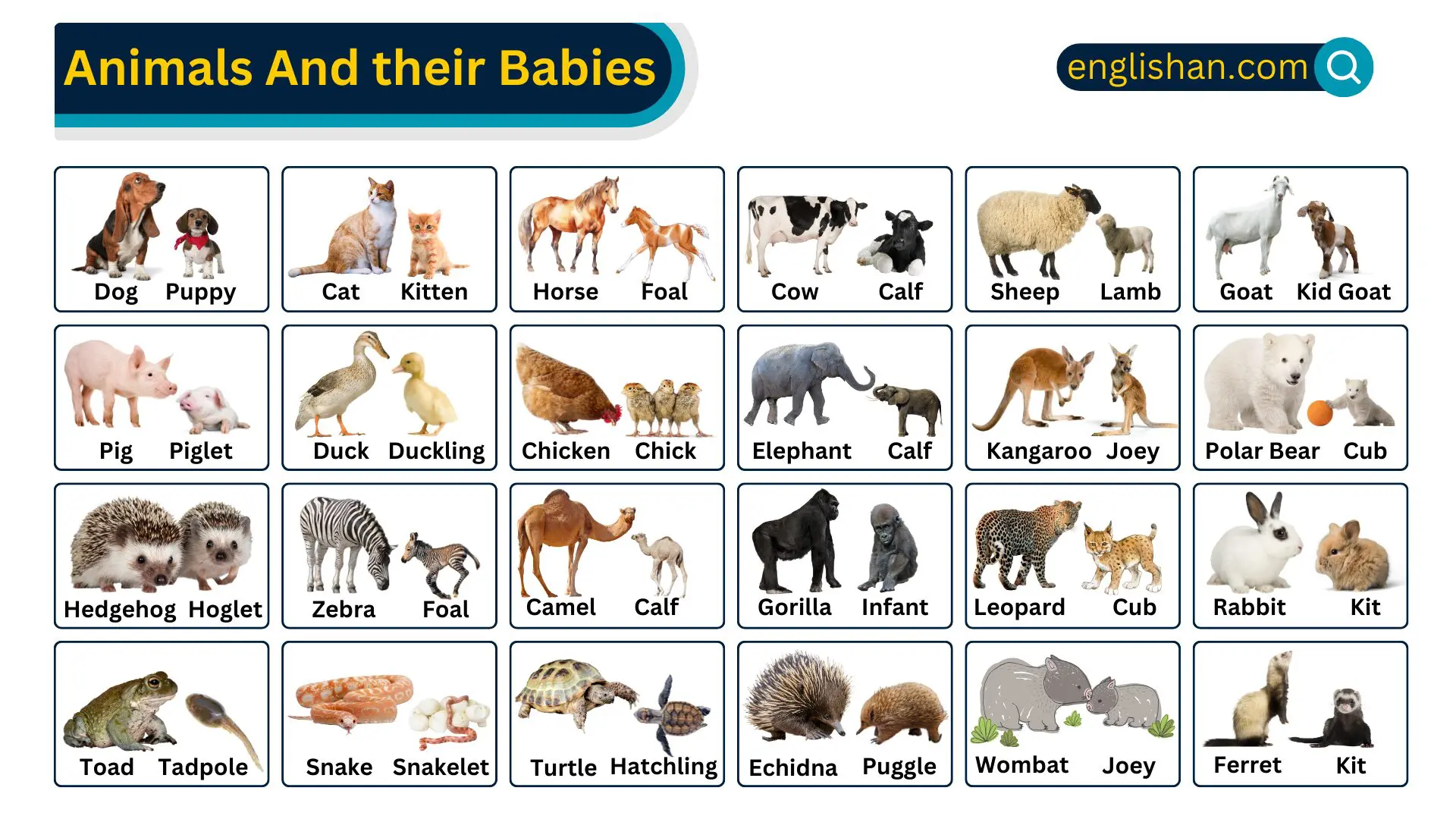
Learning the names of animals and their babies is important for building everyday English vocabulary. Each animal has a unique name for its baby. Knowing these names helps learners describe animals clearly and understand English used in books, videos, and science topics. This guide gives you a full list of animals and their babies in English, with clear examples for each group.
What Are Animal Babies Called in English?
When an animal gives birth, its young one is called by a special name. These names are different from the adult animal’s name. For example, the baby of a cat is called a kitten, and the baby of a cow is called a calf. Learning these pairs helps improve English speaking and comprehension, especially for ESL learners.
Animals and Their Babies Chart
Here is a complete chart of common animals and their babies:
| Animal | Baby |
|---|---|
| Cat | Kitten |
| Dog | Puppy |
| Cow | Calf |
| Goat | Kid |
| Horse | Foal |
| Lion | Cub |
| Tiger | Cub |
| Sheep | Lamb |
| Pig | Piglet |
| Duck | Duckling |
| Chicken | Chick |
| Elephant | Calf |
| Deer | Fawn |
| Rabbit | Bunny or Kit |
| Bear | Cub |
| Fox | Kit or Cub |
| Owl | Owlet |
| Goose | Gosling |
| Donkey | Foal |
| Camel | Calf |
| Whale | Calf |
| Dolphin | Calf |
| Frog | Tadpole |
| Fish | Fry or Fingerling |
| Turtle | Hatchling |
| Swan | Cygnet |
| Kangaroo | Joey |
| Platypus | Puggle |
| Penguin | Chick |
| Turkey | Poult |
| Buffalo | Calf |
| Hen | Chick |
| Parrot | Chick |
| Yak | Calf |
| Pigeon | Squab |
| Turkey | Poult |
| Bee | Larva |
| Ant | Larva |
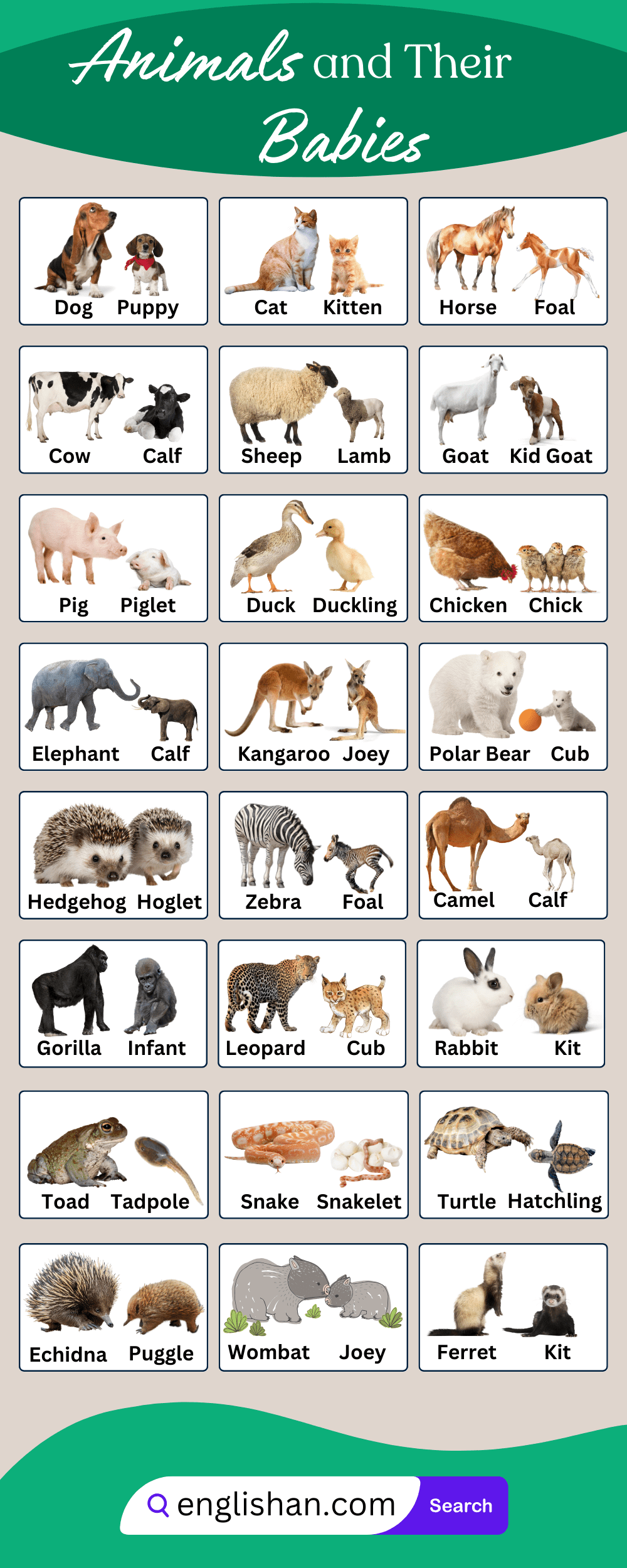
Domestic Animals and Their Babies
These are animals commonly found in homes or on farms:
- Dog — Puppy
- Cat — Kitten
- Cow — Calf
- Goat — Kid
- Sheep — Lamb
- Pig — Piglet
- Donkey — Foal
- Horse — Foal
- Chicken — Chick
- Duck — Duckling
- Buffalo — Calf
- Rabbit — Bunny or Kit
- Turkey — Poult
- Camel — Calf
- Yak — Calf
- Hen — Chick
- Pigeon — Squab
- Parrot — Chick
Wild Animals and Their Babies
These wild animals live in forests, jungles, or mountains:
- Lion — Cub
- Tiger — Cub
- Elephant — Calf
- Deer — Fawn
- Fox — Kit or Cub
- Bear — Cub
- Leopard — Cub
- Wolf — Pup
- Crocodile — Hatchling
- Zebra — Foal
- Panther — Cub
- Hyena — Cub
- Giraffe — Calf
- Hippopotamus — Calf
- Chimpanzee — Infant
- Kangaroo — Joey
- Koala — Joey
- Sloth — Baby Sloth
Birds and Their Babies
These baby names are used for birds and flying animals:
- Duck — Duckling
- Chicken — Chick
- Goose — Gosling
- Owl — Owlet
- Swan — Cygnet
- Pigeon — Squab
- Turkey — Poult
- Penguin — Chick
- Eagle — Eaglet
- Falcon — Eyass
- Hawk — Eyass
- Dove — Squab
- Crow — Chick
- Sparrow — Chick
- Peacock — Peachick
- Parrot — Chick
- Vulture — Chick
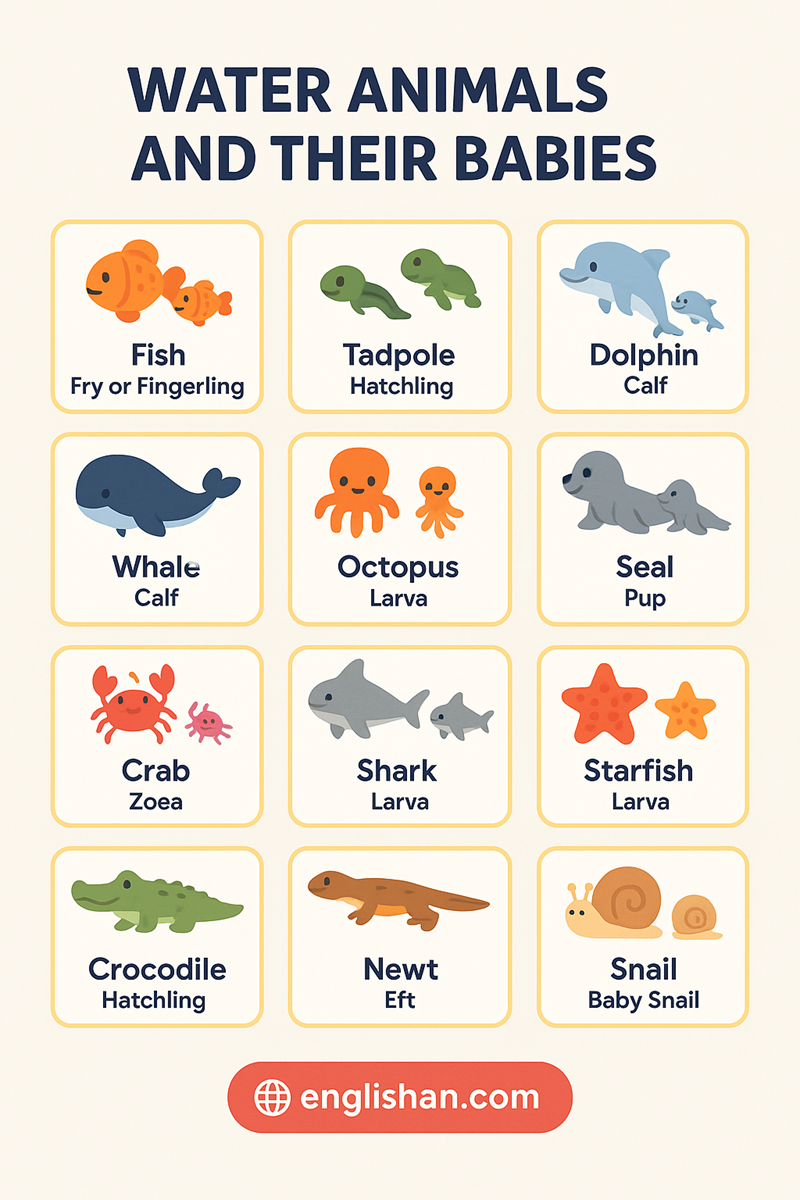
Water Animals and Their Babies
Water Animals live in oceans, rivers, or lakes:
- Fish — Fry or Fingerling
- Frog — Tadpole
- Turtle — Hatchling
- Dolphin — Calf
- Whale — Calf
- Octopus — Larva
- Seal — Pup
- Shark — Pup
- Crab — Zoea
- Lobster — Larva
- Starfish — Larva
- Jellyfish — Ephyra
- Crocodile — Hatchling
- Newt — Eft
- Snail — Baby Snail
All Animals and Their Babies Name List (A–Z)
Here is an alphabetical list of more animals and their babies:
- Alligator — Hatchling
- Ant — Larva
- Bat — Pup
- Bee — Larva
- Buffalo — Calf
- Camel — Calf
- Cat — Kitten
- Chicken — Chick
- Cow — Calf
- Crocodile — Hatchling
- Deer — Fawn
- Dog — Puppy
- Dolphin — Calf
- Donkey — Foal
- Duck — Duckling
- Eagle — Eaglet
- Elephant — Calf
- Falcon — Eyass
- Fish — Fry or Fingerling
- Fox — Kit or Cub
- Frog — Tadpole
- Giraffe — Calf
- Goat — Kid
- Goose — Gosling
- Hawk — Eyass
- Hen — Chick
- Hippopotamus — Calf
- Horse — Foal
- Jellyfish — Ephyra
- Kangaroo — Joey
- Koala — Joey
- Leopard — Cub
- Lion — Cub
- Lobster — Larva
- Monkey — Infant
- Newt — Eft
- Octopus — Larva
- Owl — Owlet
- Panther — Cub
- Parrot — Chick
- Peacock — Peachick
- Penguin — Chick
- Pig — Piglet
- Pigeon — Squab
- Platypus — Puggle
- Rabbit — Bunny or Kit
- Rat — Pup
- Seal — Pup
- Shark — Pup
- Sheep — Lamb
- Sloth — Baby Sloth
- Snail — Baby Snail
- Spider — Spiderling
- Sparrow — Chick
- Starfish — Larva
- Swan — Cygnet
- Tiger — Cub
- Toad — Tadpole
- Turkey — Poult
- Turtle — Hatchling
- Vulture — Chick
- Whale — Calf
- Wolf — Pup
- Yak — Calf
- Zebra — Foal
Animals and Their Babies with Homes
This section includes the places where animals and their babies live:
| Animal | Baby | Home |
| Dog | Puppy | Kennel |
| Cat | Kitten | House |
| Cow | Calf | Shed |
| Lion | Cub | Den |
| Bird | Chick | Nest |
| Horse | Foal | Stable |
| Duck | Duckling | Pond/Nest |
| Bear | Cub | Cave |
| Rabbit | Bunny | Burrow |
Male, Female and Their Babies Chart
| Male | Female | Baby |
|---|---|---|
| Rooster | Hen | Chick |
| Bull | Cow | Calf |
| Stallion | Mare | Foal |
| Boar | Sow | Piglet |
| Drake | Duck | Duckling |
| Ram | Ewe | Lamb |
| Lion | Lioness | Cub |
| Tiger | Tigress | Cub |
| Elephant | Cow Elephant | Calf |
| Gorilla | Female Gorilla | Baby Gorilla |
| Peacock | Peahen | Peachick |
| Fox | Vixen | Kit |
| Horse | Mare | Foal |
| Kangaroo | Female Kangaroo | Joey |
| Penguin | Female Penguin | Chick |
| Wolf | Female Wolf | Pup |
| Bear | Female Bear | Cub |
| Owl | Owl | Owlet |
| Alligator | Alligator | Hatchling |
| Seahorse | Seahorse | Fry |
| Emperor Penguin | Emperor Penguin | Chick |
| Cockerel | Hen | Chick |
| Tom | Hen | Poult |
| Duck | Duck | Duckling |
| Dog | Bitch | Puppy |
| Tomcat | Queen | Kitten |
| Buck | Doe | Fawn |
| Gander | Goose | Gosling |
| Bullfrog | Frog | Tadpole |
| Billy Goat | Nanny Goat | Kid |
| Peacock | Peahen | Peachick |
| Stag | Hind | Calf |
| Male Turkey | Female Turkey | Poults |
| Bighorn Ram | Ewe | Lamb |
| Male Cheetah | Female Cheetah | Cub |
| Male Zebra | Female Zebra | Foal |
| Male Giraffe | Female Giraffe | Calf |
| Male Panda | Female Panda | Cub |
| Male Walrus | Female Walrus | Calf |
| Male Gorilla | Female Gorilla | Baby |
| Male Swan | Female Swan | Cygnet |
| Male Koala | Female Koala | Joey |
| Male Orangutan | Female Orangutan | Infant |
One Baby Animal Name Used for Many Adults
- Calf
– Cow
– Elephant
– Giraffe
– Whale
– Dolphin
– Bison
– Camel
– Moose
– Yak
– Manatee - Chick
– Chicken
– Duck
– Turkey
– Owl
– Hawk
– Falcon
– Parrot
– Penguin
– Pigeon
– Flamingo - Cub
– Bear
– Lion
– Tiger
– Leopard
– Jaguar
– Cheetah
– Panda
– Hyena - Kit (or Kitten)
– Cat
– Fox
– Rabbit
– Skunk
– Beaver
– Ferret
– Raccoon
– Squirrel - Pup
– Dog
– Seal
– Sea lion
– Otter
– Fox
– Rat
– Guinea pig
– Coyote
– Mole
– Gerbil - Joey
– Kangaroo
– Koala
– Wallaby
– Wombat
– Tasmanian devil - Fry
– Most young fish species (e.g., goldfish, trout, salmon, guppy, etc.) - Larva
– Insects (butterflies, beetles, flies, mosquitoes, etc.)
– Amphibians (some)
– Marine invertebrates - Hatchling
– Snake
– Lizard
– Turtle
– Crocodile
– Alligator
– Bird species
– Some amphibians - Foal
– Horse
– Donkey
– Zebra
– Mule - Kid
– Goat
– Antelope - Whelp
– Dog
– Wolf
– Hyena
– Seal (sometimes)
Final Summary – Learn All Animal Baby Names
The names of animals and their babies are a key part of English vocabulary for kids, students, and ESL learners. These names help us describe the animal world better and understand science and stories more easily. Now that you know the most common pairs, you can use them in conversations, reading, and writing.
FAQs
Here are the baby names for some common animals:
1. Dog – Puppy
2. Cat – Kitten
3. Cow – Calf
4. Horse – Foal
5. Sheep – Lamb
6. Goat – Kid
7. Pig – Piglet
8. Duck – Duckling
9. Chicken – Chick
10. Elephant – Calf
These are the names we use for baby animals!
Some animals care for human babies because of their natural instincts to protect and be kind. They may feel a need to help any baby, even if it’s not their own.
The wolf is one of the most loyal animals to its mate. Wolves usually stay with the same partner for life and work together to care for their pups.
Other loyal animals include:
1. Swans: They often stay with one mate forever.
2. Penguins: Many penguins have one mate for life.
3. Beavers: They stick with their partner and build homes together.
These animals show strong loyalty to their mates!
Some animals eat their babies to:
1. Save energy if the baby is weak or sick.
2. Protect healthy babies.
3. Keep the baby safe from danger.
4. Make sure there’s enough food.
It’s a way to help the stronger babies survive.
You May Also Like