

Why is the bicycle often called the most efficient vehicle ever created? It is a marvel of physics how a simple triangle frame transforms your energy into speed. When we look at the specific parts of a bike, we see a brilliant example of geometry working in harmony with the human body.
Whether you are studying the drivetrain or just curious about how it balances, knowing the mechanics is empowering. I find that understanding the fork and crankset changes your perspective from just riding a machine to piloting an extension of yourself.
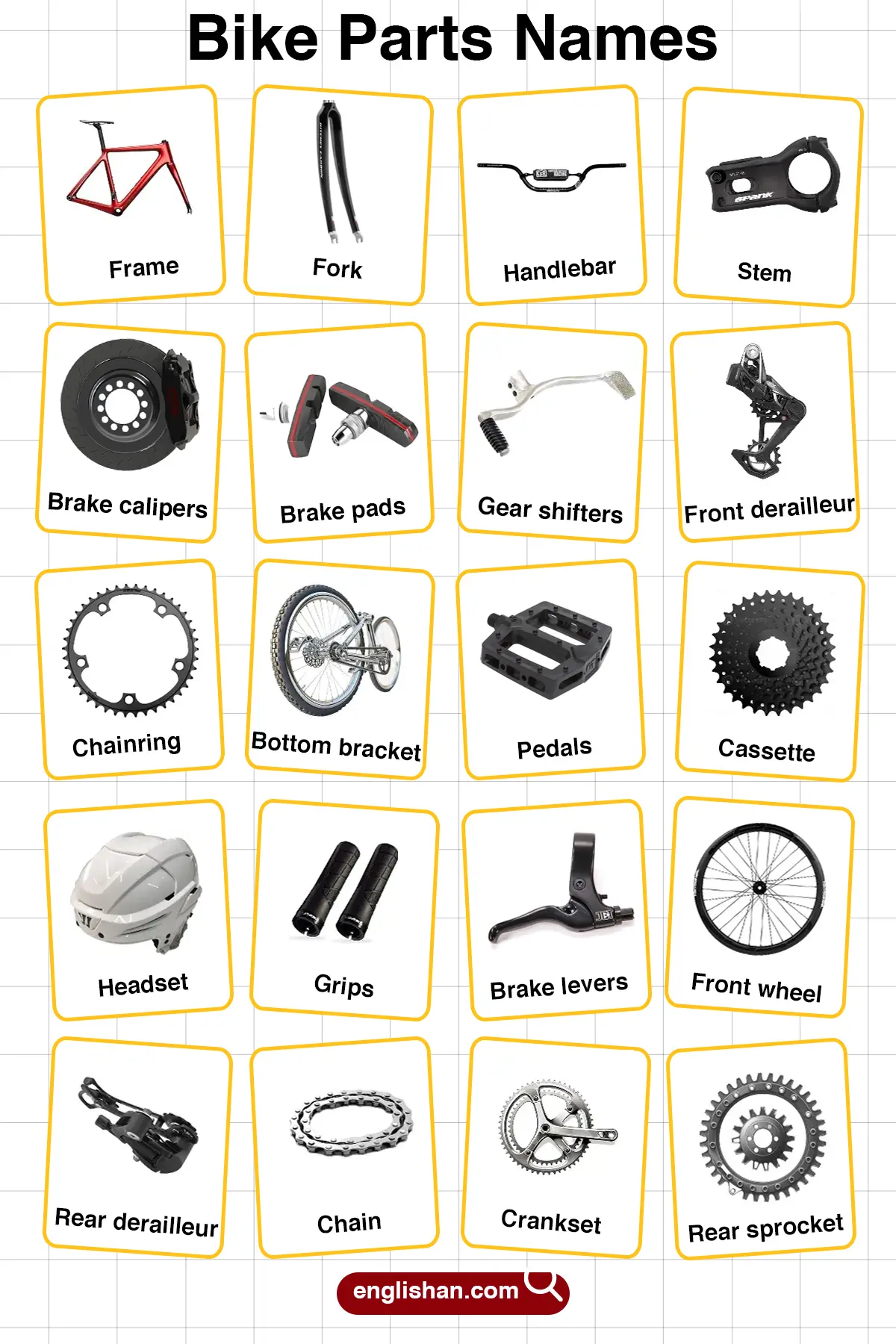
I have outlined the handlebars, cassette, and pedals below to explain their engineering roles. You will read a clear guide to bicycle anatomy that connects the theory to the road. Let’s learn the parts of bike through diagram.
List of Parts of a Bike
Learning bike parts names helps improve spelling and recognition skills. It also builds clear understanding of bicycle structure.
- Frame
- Fork
- Handlebar
- Stem
- Headset
- Grips
- Brake Levers
- Brake Calipers
- Brake Pads
- Gear Shifters
- Front Derailleur
- Rear Derailleur
- Chain
- Crankset
- Chainring
- Bottom Bracket
- Pedals
- Cassette
- Rear Sprocket
- Front Wheel
- Rear Wheel
- Rim
- Spokes
- Hub
- Tires
- Saddle
- Seat Post
- Seat Clamp
- Kickstand
- Reflectors
Parts of a Bike
A bike is made up of many parts that work together to help it move, stop, and stay balanced. Each part has its own job, like helping you steer, pedal, or sit comfortably. Learning the names and uses of bike parts can help you ride better and take care of your bicycle.
Main Frame of Bike Parts
The frame is the core of every bike. These parts help connect the bike together and support the rider.
- Frame: Supports the bike’s shape and holds the wheels, pedals, seat, and steering system together firmly.
- Top Tube: Connects the front and seat sections, giving balance to the frame and improving the bike’s structure.
- Down Tube: Strengthens the lower part of the frame by linking the front to the crank area.
- Seat Tube: Holds the seat post inside and lets the saddle move up or down for comfort.
- Chainstay: Keeps the rear wheel and crankset stable, and helps transfer the force from pedaling.
- Seatstay: Joins the top of the frame to the rear wheel hub, giving extra strength to the back.
Wheels and Tires of Bikes
Wheels make the bike move. Every part helps with rolling, balance, and handling on different surfaces.
- Front Wheel: Helps with direction control and supports the front of the bike while riding or turning.
- Rear Wheel: Transfers power from the pedals to the road and carries most of the rider’s weight.
- Rim: Holds the tire in place and keeps the wheel round for better speed and safety.
- Spokes: Spread the rider’s weight across the wheel, keeping it firm and balanced during motion.
- Hub: Connects the spokes and spins around the axle to make the wheel turn smoothly.
- Tires: Cover the rim and touch the ground, adding grip, cushioning, and control on different paths.
Handlebars and Controls
These parts allow riders to steer and manage braking and gear shifting while riding.
- Handlebar: Lets the rider steer the bike and holds the controls like brakes and gear shifters.
- Stem: Connects the handlebar to the steering fork and sets the handlebar’s height and angle.
- Headset: Allows the handlebars and front fork to turn side to side for safe turning.
- Grips: Offer comfort and keep the hands steady while riding by covering the handlebar ends.
- Brake Levers: Used to control the bike’s brakes with fingers while holding the handlebar.
- Gear Shifters: Move the chain between gears to make pedaling easier or harder based on the road.
Pedals and Crankset
This group powers the bike through leg movement and connects directly to the drivetrain.
- Pedals: Flat surfaces where the feet push to move the bike forward with pedaling motion.
- Crankset: The main part that holds the chainring and transfers motion from pedals to the chain.
- Crank Arms: Link the pedals to the crankset and turn when the rider pushes with their feet.
- Chainring: A large gear attached to the crank that turns the chain to move the bike.
- Bottom Bracket: Holds the crank arms and allows them to spin easily when the rider pedals.
Chain and Gears
These parts control speed and pedaling effort. They transfer motion from the front to the back wheel.
- Chain: Links the chainring and cassette to carry pedal power to the rear wheel.
- Cassette: A set of sprockets at the back wheel that controls how hard or easy it is to pedal.
- Rear Sprocket: One of the individual gears in the cassette that rotates with the chain.
- Front Derailleur: Moves the chain between front chainrings to shift gears when needed.
- Rear Derailleur: Pushes the chain across the cassette to change the back gears smoothly.
Bike Brakes
Brakes are essential for safety. They control stopping, reduce speed, and help in turning smoothly.
- Brake Levers: Pulled by hand to send force through cables and activate the brakes.
- Brake Calipers: Grip the wheel or disc to slow down or stop the bike when brakes are applied.
- Brake Pads: Press against the rim or disc to create friction and help stop the bike quickly.
Saddle and Seatpost
These parts support the rider and help adjust height for better posture and pedaling comfort.
- Saddle: The bike seat that holds the rider during the ride and offers support for balance.
- Seat Post: The long bar that connects the saddle to the bike frame and adjusts seat height.
- Seat Clamp: Locks the seat post in place so the saddle stays steady while riding.
Basic Bike Accessories Names
These extra parts improve usability, safety, and ease when using the bike in everyday settings.
- Kickstand: Keeps the bike upright when parked, so it doesn’t fall over.
- Reflectors: Bounce light back to make the bike visible at night or in dark places.
- Bike Bell: Makes sound alerts for others to hear when the rider needs to pass.
Conclusion
Knowing the names of bike parts helps learners improve their English vocabulary and confidence. It allows them to describe, identify, and talk about bicycles clearly. Grouping parts also supports better spelling, memory, and understanding in both study and daily use.
FAQs
The headset is the bearing assembly inside the head tube. It allows the handlebars and fork to turn smoothly when steering.
A derailleur moves the chain across gears. The front derailleur shifts between chainrings, and the rear derailleur shifts across the cassette to change pedaling effort.
The bottom bracket houses bearings that let the crankset spin smoothly around the bike frame. It acts as the bike’s pedal axle .
A cassette is a set of sprockets that mount on a freehub body, while a freewheel threads directly onto the hub. Cassettes are more secure and common on modern bikes.
A bicycle is built around five key units: the frame, wheels, drivetrain, brakes, and handlebars. Each unit includes smaller parts like the crankset, tires, or shifters and together they make the bike work.
You May Also Like