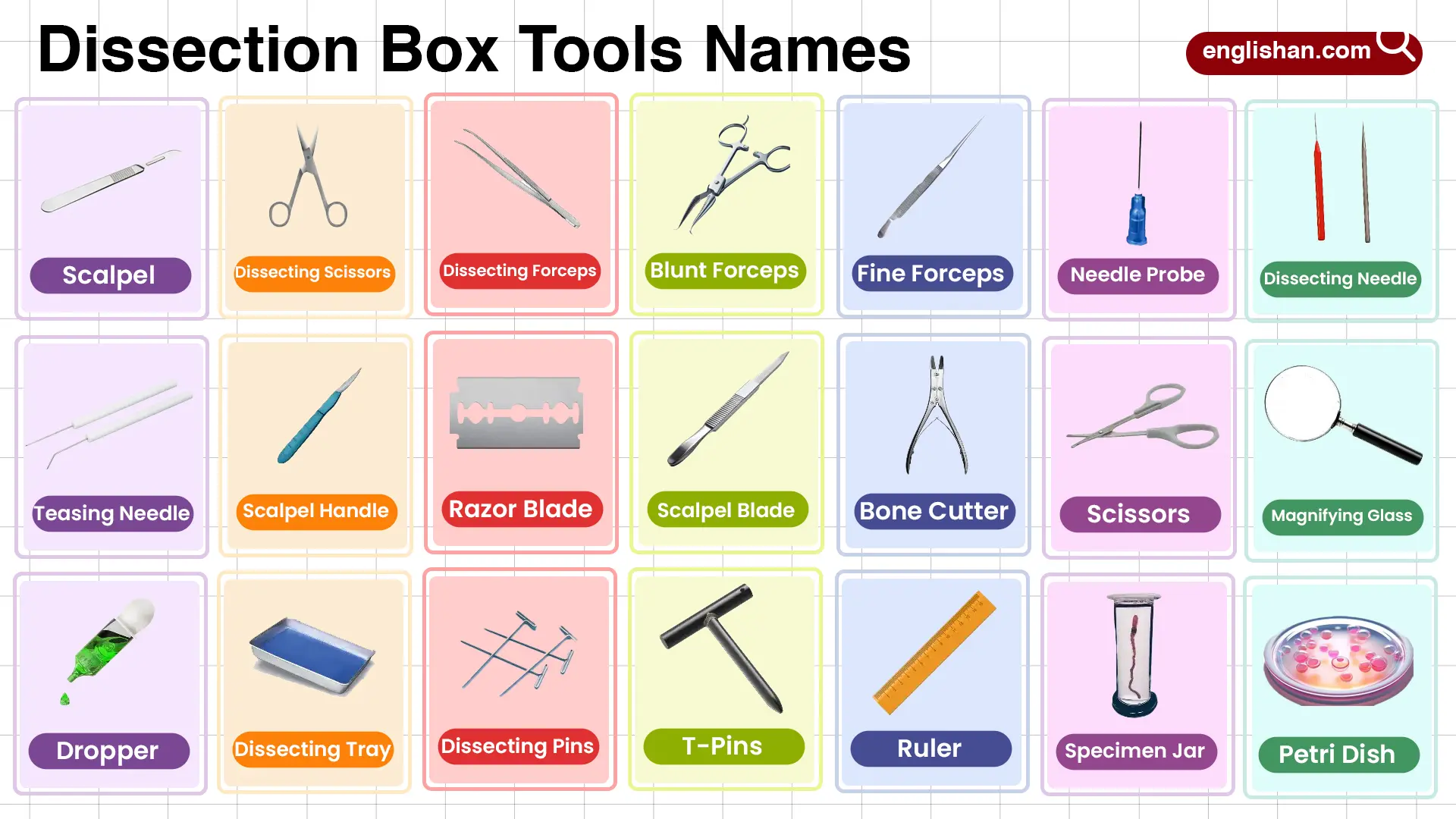
In biology labs, a dissection box holds precise tools used to examine animal and plant bodies by cutting and handling tissues. Common dissection box tools include a scalpel for slicing, forceps for gripping, scissors for snipping, and needles or probes for separating or pointing. Each tool helps students carefully explore structures during lab activities.
By learning the names of dissection box tools, you’ll be able to talk clearly about biology tools during science classes and lab sessions.
List of Dissection Box Tools
A dissection box contains a set of specialized tools used in biology labs to carefully examine and study the internal structure of organisms. These tools help students and researchers perform precise cuts, separate tissues, hold specimens, and observe fine details during dissection.
- Scalpel
- Dissecting Scissors
- Dissecting Forceps
- Blunt Forceps
- Fine Forceps
- Needle Probe
- Dissecting Needle
- Teasing Needle
- Scalpel Handle
- Razor Blade
- Scalpel Blade
- Bone Cutter
- Scissors (Sharp Pointed)
- Scissors (Blunt Ended)
- Magnifying Glass
- Glass Dropper
- Dissecting Tray
- Dissecting Pins
- T-Pins
- Ruler
- Specimen Jar
- Petri Dish
- Gloves
- Apron
- Dissection Board
- Scalpel Blade Remover
- Cotton Swab
- Brush
- Tissue Forceps
- Hemostatic Forceps
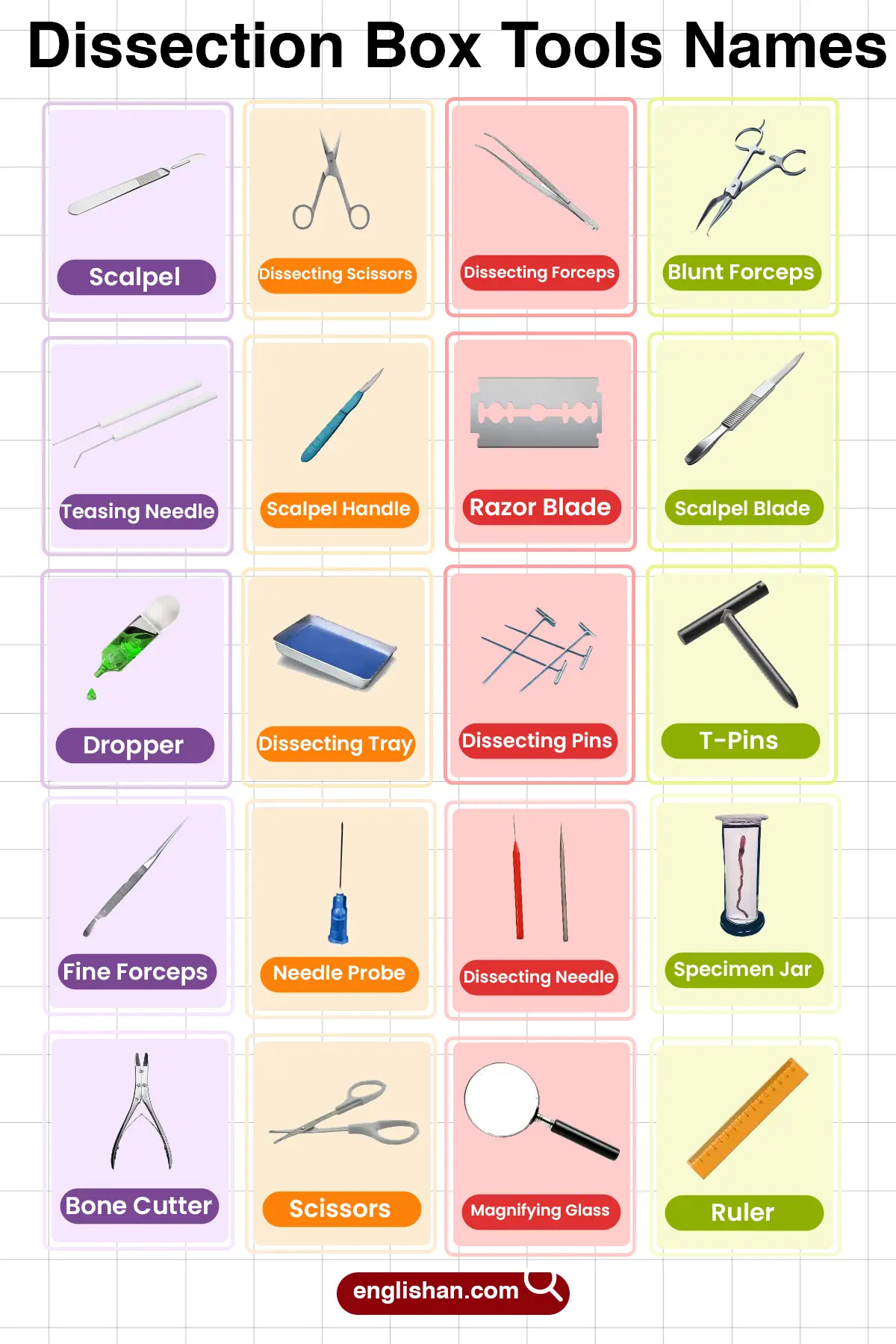
Dissection Box Tools Names in English
A dissection box contains several tools used to examine and separate animal or plant structures. Below is a list of important tools grouped by how they are used in the process.
Cutting and Separating Dissection Tools Names
These tools are used to cut tissues, skin, and other parts of a specimen during dissection.
- Scalpel: A small, sharp knife for making deep or clean cuts through tissue.
- Scalpel Blade: The replaceable metal edge that fits onto the scalpel handle.
- Scalpel Handle: The part held in the hand; the blade attaches here.
- Razor Blade: A thin and very sharp blade used for fine slicing.
- Dissecting Scissors: Come in various tips; used to cut muscles, skin, and organs.
- Scissors (Sharp Pointed): Ideal for cutting with precision in small areas.
- Scissors (Blunt Ended): Used for wider cuts and when precision is less critical.
- Bone Cutter: Strong cutting tool for breaking bones or hard structures.
List of Forceps and Grippers
These tools help to hold, lift, or separate tissue during dissection without damaging it.
- Dissecting Forceps: Help to hold skin or tissues while cutting.
- Fine Forceps: Thin-tipped forceps for delicate parts like veins or nerves.
- Blunt Forceps: Wider-tipped forceps used to grip larger parts of the specimen.
- Tissue Forceps: Grasp and pull tissues during internal examination.
- Hemostatic Forceps: Clamp blood vessels or tissues to stop bleeding or movement.
Probes and Pointed Instruments Names
Used to lift, point, or separate layers gently during examination without cutting.
- Needle Probe: A long, pointed tool for directing attention to certain structures.
- Dissecting Needle: Used to tease apart soft tissues gently.
- Teasing Needle: Fine tool for loosening or separating tissues in small sections.
Names of Pins and Fastening Tools
These tools are used to hold the specimen in place on a tray for clear viewing and safe handling.
- Dissecting Pins: Thin metal pins used to secure the specimen on the tray.
- T-Pins: T-shaped pins that are strong and easy to handle during dissection.
Types of Scalpels in Dissection
Scalpels are small knives used for cutting through skin, muscle, and other body parts. Below is a list of common types found in dissection kits.
- Standard Scalpel: General-purpose cutting tool in most kits.
- Replaceable Blade Scalpel: Handle stays the same; blade is changed after use.
- Mini Scalpel: Smaller version used for very fine and careful cutting.
- Heavy-Duty Scalpel: Used for thick tissue or dense areas.
Names of Scissors in Dissecting Kits
Scissors in a dissection box help cut both soft and tough tissues without damaging the surrounding parts. Here are common types:
- Curved Dissecting Scissors: Curved blades allow better angles when cutting around corners.
- Straight Dissecting Scissors: Offer straight, clean cuts in open areas.
- Blunt-Tip Scissors: Used when safety is important, like near delicate tissues.
- Sharp-Tip Scissors: Allow very precise cuts in narrow spaces.
Use of Forceps in Handling Specimens
Forceps help to hold or move parts of the specimen during dissection. They allow you to avoid touching the parts directly.
- Thumb Forceps: Held like tweezers to grip small parts.
- Locking Forceps: Can hold tissue in place without needing pressure from your fingers.
- Toothed Forceps: Tiny teeth help to grip slippery tissue.
- Smooth Forceps: No teeth; better for fragile samples.
Role of Dissection Tray Tools Names
Trays provide a flat, secure surface to place the specimen. Tools like pins are used to keep the specimen still during dissection.
- Dissecting Tray: Flat tray lined with soft material to pin specimens.
- Dissection Board: A reusable hardboard for larger samples.
- Wax Tray: Has a wax lining to hold pins more firmly.
Essential Safety Tools Names
Safety items in a dissection set help protect the person performing the dissection.
- Gloves: Prevent direct contact with chemicals or specimen parts.
- Apron: Keeps clothes clean and offers body protection.
- Scalpel Blade Remover: Helps safely remove used blades.
- Cotton Swab: For cleaning and soaking small parts.
- Brush: Moves tiny parts or clears dust during dry work.
- Magnifying Glass: Enlarges small features for close study.
Common Dissection Tools
Some dissection tools are especially common in school settings for biology practice.
- Specimen Jar: Holds the preserved animal or plant sample.
- Petri Dish: Used to hold small parts or samples during the process.
- Glass Dropper: Adds liquid drops to samples without waste.
- Ruler: Measures tissue parts or whole specimens during dissection.
Conclusion
Learning dissection box tools names helps students understand each tool’s role in lab work. It builds both science and English vocabulary. Practice regularly with pictures and examples to remember their names and become more confident during classroom dissections and activities.
FAQs About Dissection Box Tools Names
A typical dissection box includes a scalpel, scissors, forceps, probes, pins, and a tray. Each tool serves a specific purpose during dissection.
A scalpel is used to make precise cuts in tissues, allowing students to examine internal structures clearly.
Yes, most middle school and high school biology labs use these tools for plant or animal dissection activities.
You May Also Like