When writing about e-waste, it’s important to understand how old electronic devices affect the environment and health. This essay on e-waste explains what it is, why it matters, its harmful effects, and simple ways to manage it safely. It’s written in 250 words to help students with homework or exams. You can download this e-waste essay as a free PDF or image to study or print.
10 Lines E-Waste Essay for Class 2 to Class 5
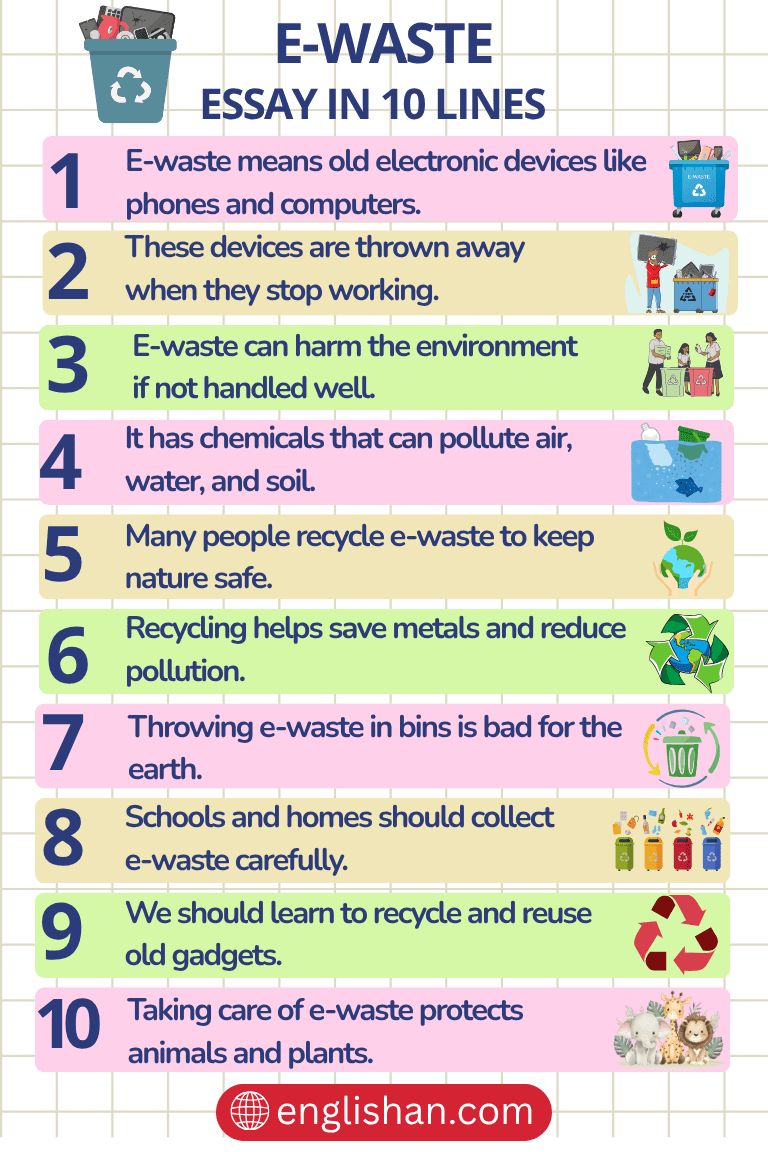
- E-waste means old electronic devices like phones and computers.
- These devices are thrown away when they stop working.
- E-waste can harm the environment if not handled well.
- It has chemicals that can pollute air, water, and soil.
- Many people recycle e-waste to keep nature safe.
- Recycling helps save metals and reduce pollution.
- Throwing e-waste in bins is bad for the earth.
- Schools and homes should collect e-waste carefully.
- We should learn to recycle and reuse old gadgets.
- Taking care of e-waste protects animals and plants.
250 Words Essay on E-Waste for Middle School
E-waste, or electronic waste, refers to old or broken electronic devices like phones, computers, and televisions. When these gadgets stop working or become outdated, people often throw them away. E-waste is a big problem because it contains harmful chemicals and metals. If it is not handled properly, these materials can pollute the air, soil, and water. This pollution can harm plants, animals, and even human health.
First, many electronics have toxic parts like lead, mercury, and cadmium. When e-waste is dumped in landfills, these toxic materials can leak and cause damage to the environment. People living near these places can get sick from the pollution.
Then, recycling e-waste is important to reduce harm. Recycling helps recover useful metals like gold, silver, and copper from old gadgets. It also saves natural resources by reducing the need to mine new metals. Recycling centers properly break down e-waste to keep toxins away from the environment.
In the end, everyone should take part in managing e-waste. Schools, families, and communities can collect and recycle old electronics safely. Learning to recycle e-waste protects the environment and supports a cleaner planet. Proper handling of e-waste is one key step to keeping the earth healthy for future generations.
500 Words E-Waste Essay for Upper Primary and Lower Secondary
Understanding E-Waste: A Growing Concern
E-waste, or electronic waste, refers to discarded electronic devices such as computers, mobile phones, televisions, and household appliances. With rapid technological advancements, electronic gadgets become obsolete quickly, leading to an unprecedented surge in electronic waste. The improper disposal of e-waste poses significant environmental and health risks, making it a pressing global issue that demands urgent attention.
Causes of E-Waste Accumulation
Several factors contribute to the growing accumulation of e-waste. The fast-paced technological advancements drive consumers to replace old devices frequently. Additionally, planned obsolescence, a strategy where manufacturers design products with a limited lifespan, forces users to upgrade their gadgets sooner than necessary. Moreover, the lack of accessible recycling facilities and insufficient awareness about responsible disposal further worsen the situation.
Environmental and Health Hazards of E-Waste
Improper handling of e-waste results in severe environmental and health consequences. Many electronic devices contain toxic materials such as lead, mercury, and cadmium, which can contaminate soil and water when disposed of improperly. When burned, these substances release hazardous gases, contributing to air pollution and climate change. Additionally, informal e-waste recycling in developing countries exposes workers to harmful chemicals, increasing the risk of respiratory issues, neurological disorders, and skin diseases.
The Economic Impact of E-Waste
E-waste is not just an environmental issue; it also has significant economic implications. Many electronic components contain valuable metals like gold, silver, and copper, which can be recovered through proper recycling. However, the lack of efficient recycling programs leads to wasted resources and financial losses. By investing in advanced recycling technologies, economies can benefit from the extraction of precious materials while reducing environmental harm.
Innovations in E-Waste Recycling
Recent technological advancements have introduced innovative methods for e-waste recycling. Automated recycling facilities now use artificial intelligence (AI) to efficiently separate valuable materials from waste. Additionally, some companies are developing biodegradable electronics, reducing the long-term impact of discarded devices. Encouraging research and investment in these technologies can significantly improve global e-waste management efforts.
Effective Strategies for E-Waste Management
To mitigate the adverse effects of e-waste, effective waste management strategies must be implemented:
- Recycling and Reuse: Encouraging the recycling and refurbishing of electronic devices significantly reduces e-waste. Many components of old devices, such as metals and plastics, can be repurposed to manufacture new products.
- Extended Producer Responsibility (EPR): Companies should take responsibility for the entire lifecycle of their products, including collection, recycling, and proper disposal.
- Consumer Awareness and Education: Educating individuals about the dangers of improper disposal and the benefits of responsible e-waste management is essential.
- Government Policies and Regulations: Governments must enforce strict laws and regulations to ensure sustainable e-waste disposal and promote environmentally friendly electronic manufacturing.
The Role of Individuals in Minimizing E-Waste
Every individual plays a crucial role in reducing e-waste through simple yet effective practices. Donating functional but unused electronic devices to charities or refurbishing centers extends their lifespan. Choosing energy-efficient and durable gadgets minimizes the frequency of replacements. Additionally, responsibly disposing of electronic waste at designated e-waste collection centers prevents hazardous materials from harming the environment.
Conclusion
E-waste management is a global challenge that requires collective action from individuals, corporations, and governments. By implementing sustainable practices such as recycling, responsible consumption, and stringent regulations, the detrimental effects of electronic waste can be mitigated. A well-structured approach to e-waste management will help conserve valuable resources, protect ecosystems, and secure a healthier future for coming generations.
Difficult Words Used in 500 E-Waste Essay
| Word | Meaning |
|---|---|
| Obsolete | No longer in use due to being outdated |
| Accumulation | Gradual increase or collection of something |
| Planned Obsolescence | Designing products with a short lifespan to encourage replacements |
| Contaminate | To make something impure or harmful |
| Respiratory Issues | Health problems related to breathing |
| Sustainable | Practices that do not harm the environment |
| Mitigate | To reduce or lessen the severity of something |
| Neurological Disorders | Diseases affecting the nervous system |
E-Waste Essay PDF
You May Also Like