When writing about addiction to gadgets, it’s important to understand how devices like phones, tablets, and computers affect daily life. This essay on gadget addiction explains what it is, common signs, negative effects, and ways to manage screen time wisely. It includes 10-line, 250-word, and 500-word formats to support students in homework and exams. You can download this essay as a free PDF or image to study or print.
10 Lines Addiction to Gadgets Essay for Class 2 to Class 5
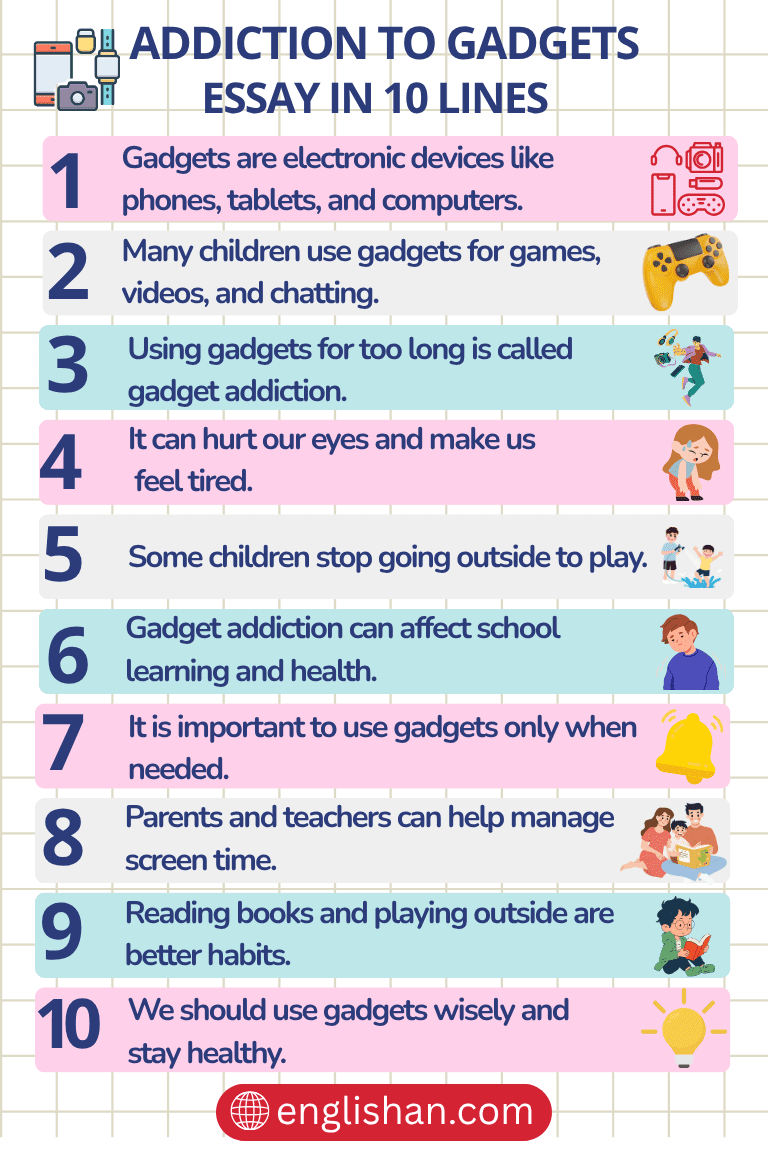
- Gadgets are electronic devices like phones, tablets, and computers.
- Many children use gadgets for games, videos, and chatting.
- Using gadgets for too long is called gadget addiction.
- It can hurt our eyes and make us feel tired.
- Some children stop going outside to play.
- Gadget addiction can affect school learning and health.
- It is important to use gadgets only when needed.
- Parents and teachers can help manage screen time.
- Reading books and playing outside are better habits.
- We should use gadgets wisely and stay healthy.
250 Words Essay on Addiction to Gadgets for Middle School
Addiction to gadgets means using phones, tablets, or computers too much every day. Many students enjoy using gadgets for games, videos, or chatting with friends. But using them too often can cause problems in school and daily life.
First, gadget addiction can affect a student’s health. Staring at screens for too long can hurt the eyes. It can also make children tired and lazy. Many students stop going outside or talking with family members. Instead, they spend hours on screens, which is not good for their body or mind.
Then, it also affects learning. Students may spend more time on games than on homework. This leads to poor marks and less interest in studies. Because they are busy with gadgets, they may sleep late and feel tired in class. Their brain becomes too used to fast videos and games, making reading or writing feel boring.
In the end, children must use gadgets wisely. Parents and teachers should help students follow healthy rules. It is good to fix a time for using screens and also enjoy other activities. Reading, drawing, or playing outside are better habits to grow strong and smart.
In conclusion, gadgets are helpful tools, but too much use can be harmful. That’s why it’s important to find balance. Good habits and limited screen time help us stay active, healthy, and focused on learning.
500 Words Addiction to Gadgets Essay for Upper Primary and Lower Secondary
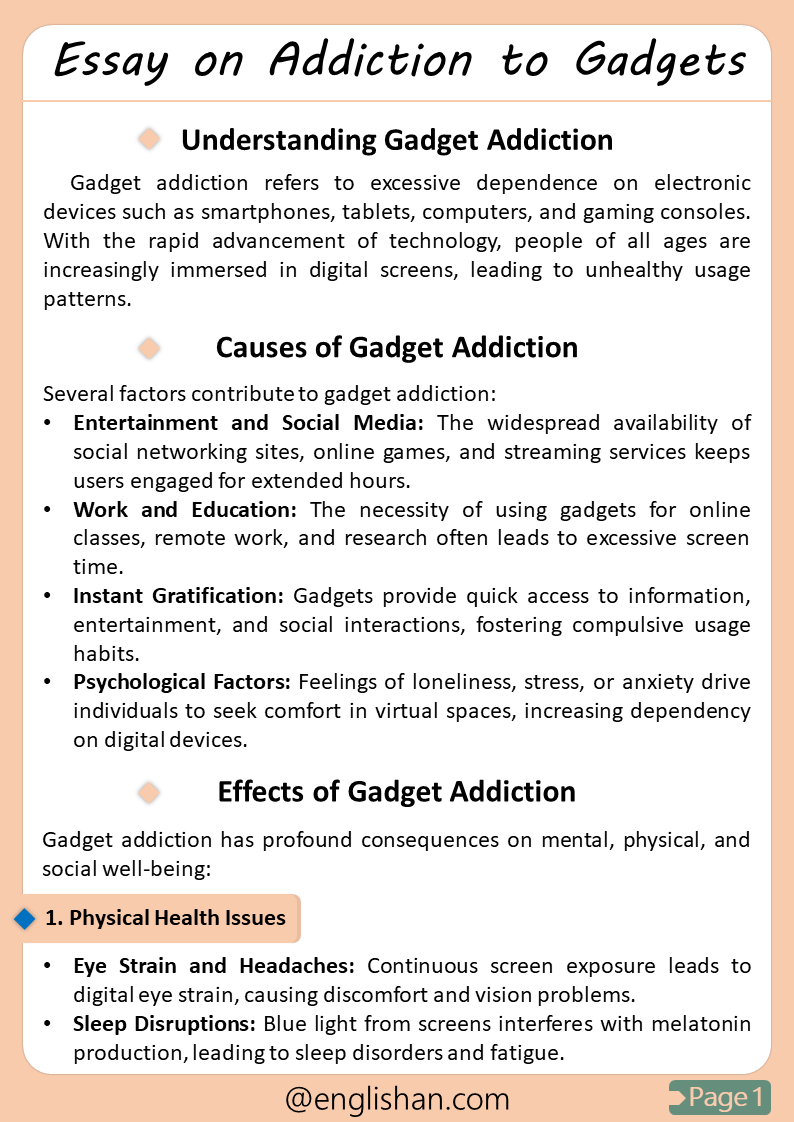
Understanding Gadget Addiction
Gadget addiction refers to excessive dependence on electronic devices such as smartphones, tablets, computers, and gaming consoles. With the rapid advancement of technology, people of all ages are increasingly immersed in digital screens, leading to unhealthy usage patterns.
Causes of Gadget Addiction
Several factors contribute to gadget addiction:
- Entertainment and Social Media: The widespread availability of social networking sites, online games, and streaming services keeps users engaged for extended hours.
- Work and Education: The necessity of using gadgets for online classes, remote work, and research often leads to excessive screen time.
- Instant Gratification: Gadgets provide quick access to information, entertainment, and social interactions, fostering compulsive usage habits.
- Psychological Factors: Feelings of loneliness, stress, or anxiety drive individuals to seek comfort in virtual spaces, increasing dependency on digital devices.
Effects of Gadget Addiction
Gadget addiction has profound consequences on mental, physical, and social well-being:
1. Physical Health Issues
- Eye Strain and Headaches: Continuous screen exposure leads to digital eye strain, causing discomfort and vision problems.
- Sleep Disruptions: Blue light from screens interferes with melatonin production, leading to sleep disorders and fatigue.
- Postural Problems: Prolonged device use contributes to poor posture, neck pain, and musculoskeletal disorders.
2. Mental and Emotional Impact
- Reduced Attention Span: Excessive gadget use diminishes concentration and cognitive abilities.
- Increased Stress and Anxiety: Overuse of social media platforms creates unrealistic expectations, leading to stress and low self-esteem.
- Addictive Behavior: Dopamine-driven rewards from notifications and messages encourage compulsive gadget usage.
3. Social Consequences
- Reduced Face-to-Face Interaction: Excessive screen time weakens real-life relationships and social communication skills.
- Academic and Work Performance Decline: Digital distractions negatively impact productivity and efficiency in studies and work.
- Detachment from Reality: Individuals addicted to gadgets often disconnect from real-world experiences, affecting their emotional intelligence.
Impact of Gadget Addiction on Children
Children are among the most vulnerable to gadget addiction. Excessive screen time can hinder cognitive development, reduce outdoor play, and impair social skills. Parents and educators must establish guidelines to ensure a balanced approach to technology use.
Ways to Overcome Gadget Addiction
Overcoming gadget addiction requires conscious efforts and disciplined usage. Some effective strategies include:
1. Setting Usage Limits
- Establish daily screen time restrictions for social media, gaming, and entertainment.
- Use time management apps to monitor and regulate digital activity.
2. Engaging in Offline Activities
- Encourage hobbies like reading, painting, or outdoor sports to reduce gadget dependency.
- Spend quality time with family and friends without digital interruptions.
3. Creating a Gadget-Free Environment
- Designate specific areas in homes or workplaces as gadget-free zones.
- Avoid using gadgets before bedtime to promote healthy sleep habits.
4. Practicing Digital Detox
- Take regular breaks from screens and engage in mindfulness activities.
- Participate in digital detox challenges to regain control over gadget usage.
5. Raising Awareness on Responsible Technology Use
- Conduct workshops and awareness programs in schools and workplaces.
- Encourage discussions on healthy digital habits and the dangers of gadget addiction.
Conclusion
Addiction to gadgets is a growing issue that affects people’s physical health, mental well-being, and social life. While technology is essential, balanced usage is crucial to maintaining a healthy lifestyle. By implementing time management strategies, engaging in offline activities, and practicing digital detox, individuals can reduce their dependence on gadgets and lead a more fulfilling life. Parents, educators, and communities must work together to create a healthier relationship with technology.
Difficult Words Used 500 in Addiction to Gadgets Essay
| Word | Meaning |
|---|---|
| Compulsive | A strong, uncontrollable urge to do something repeatedly |
| Dependency | A state of relying too much on something |
| Disruptions | Disturbances that interfere with normal activity |
| Gratification | The act of receiving pleasure or satisfaction |
| Melatonin | A hormone that regulates sleep cycles |
| Musculoskeletal | Relating to muscles and bones |
| Cognitive | Related to thinking, learning, and understanding |
| Dopamine | A neurotransmitter responsible for pleasure and motivation |
Addiction to Gadgets Essay PDF
You May Also Like