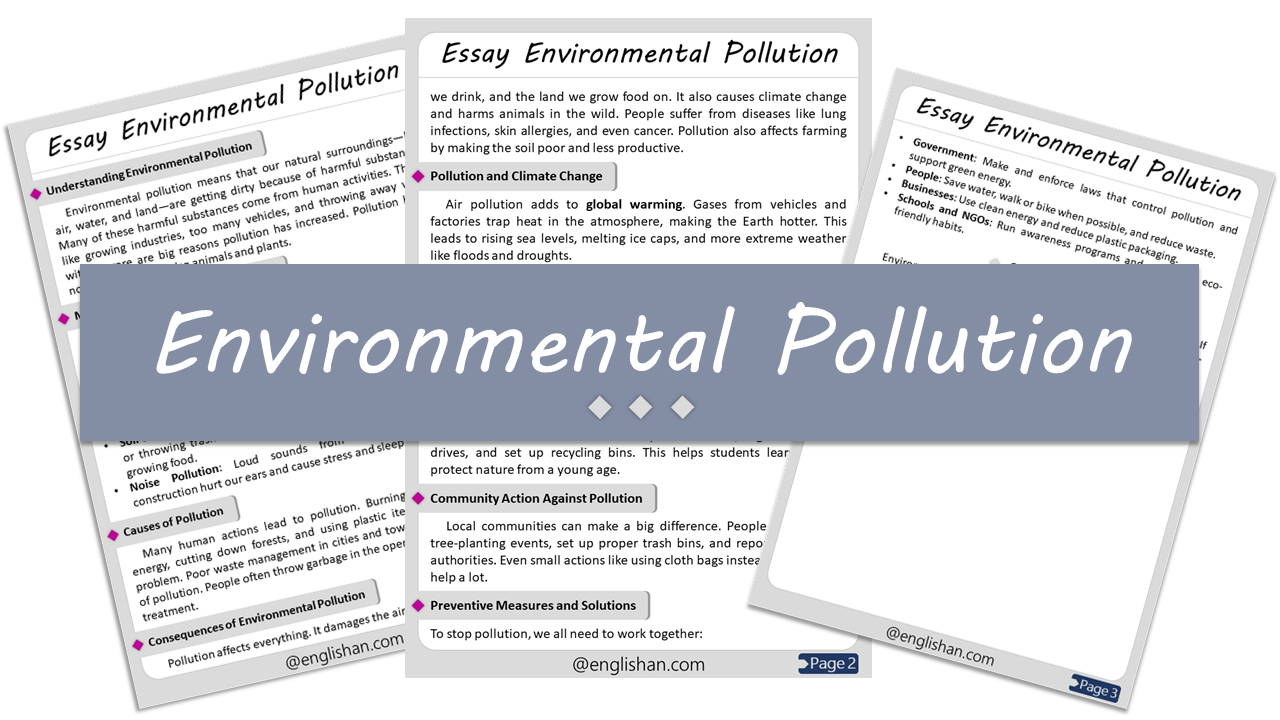
When writing about pollution, it’s important to understand how it harms air, water, and land through waste and harmful gases. This essay on pollution explains the main types, common causes, harmful effects, and simple ways to reduce it. It’s written in 500 words to help students with homework or exams. You can download this pollution essay as a free PDF or image to study or print.
10 Lines Pollution Essay for Class 2 to Class 5
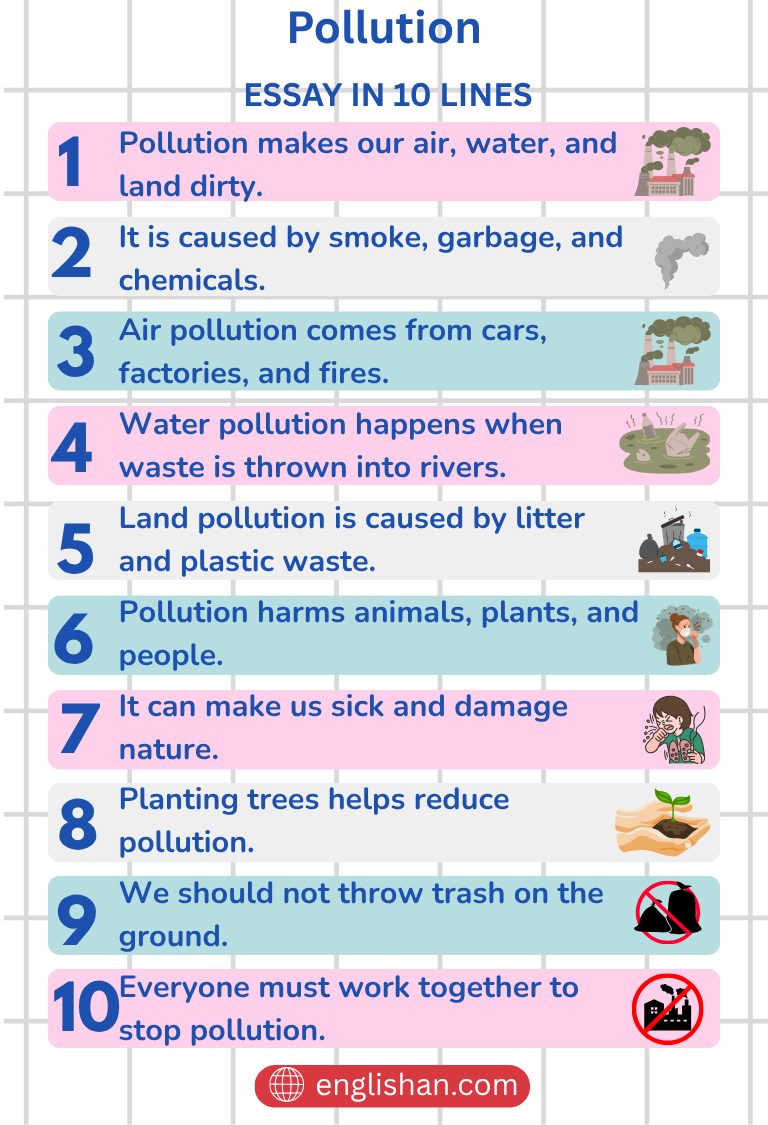
- Pollution makes our air, water, and land dirty.
- It is caused by smoke, garbage, and chemicals.
- Air pollution comes from cars, factories, and fires.
- Water pollution happens when waste is thrown into rivers.
- Land pollution is caused by litter and plastic waste.
- Pollution harms animals, plants, and people.
- It can make us sick and damage nature.
- Planting trees helps reduce pollution.
- We should not throw trash on the ground.
- Everyone must work together to stop pollution.
250 Words Essay on Pollution for Middle School
Pollution is the presence of harmful substances in our surroundings. It affects the air we breathe, the water we drink, and the land we live on. Pollution is mainly caused by human activities like burning fuel, throwing waste, and using harmful chemicals.
There are different types of pollution: air pollution, water pollution, and land pollution. Air pollution happens when smoke from factories, cars, and fires mixes with the air. Breathing polluted air can cause health problems such as asthma and lung disease. Water pollution occurs when garbage, oil, or chemicals are dumped into rivers, lakes, or oceans. It harms fish, sea animals, and people who use that water. Land pollution is caused by plastic waste, food waste, and other trash that is not thrown away properly. It makes the soil dirty and harms plants and animals.
Pollution not only affects nature but also human health and daily life. It leads to climate change and natural disasters. To reduce pollution, we should throw garbage in bins, recycle, use fewer plastic products, and plant more trees. Factories should follow rules to keep the environment clean.
In conclusion, pollution is a big problem that we must solve together. Everyone, including children, can help by keeping their surroundings clean and learning to care for nature. A clean environment is important for a healthy and happy life.
500 Words Pollution Essay for Upper Primary and Lower Secondary
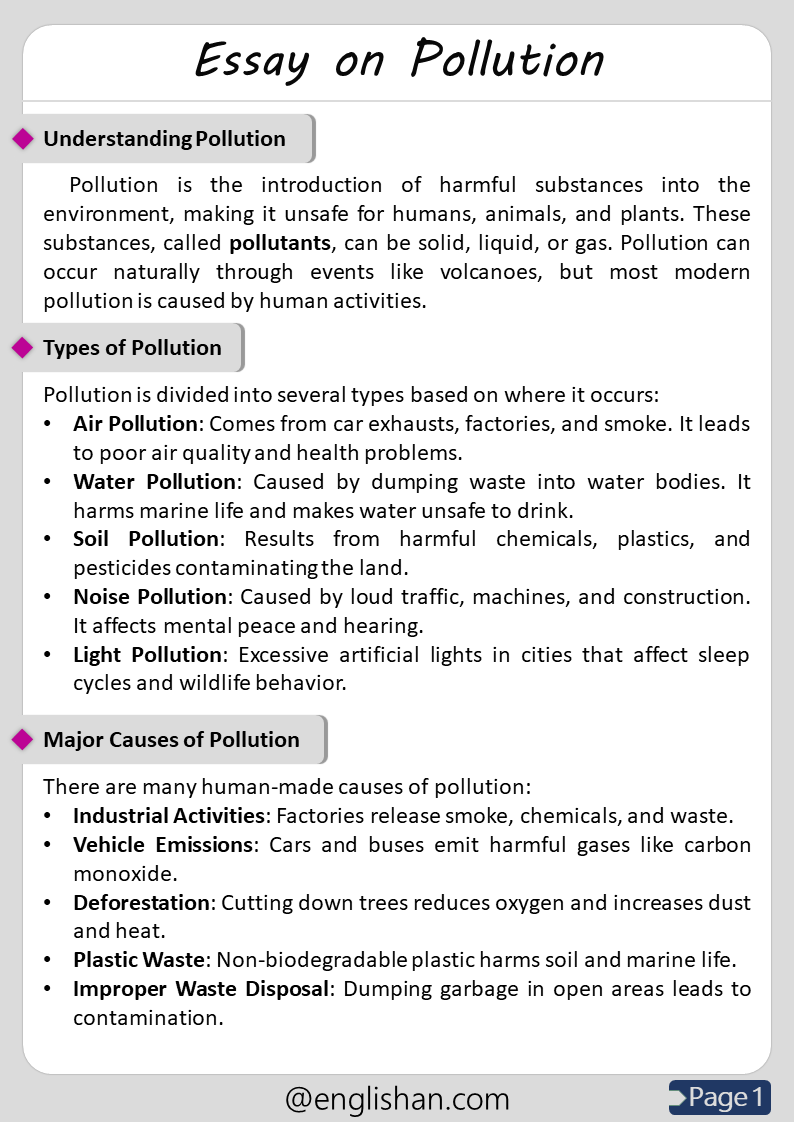
Understanding Pollution
Pollution is the introduction of harmful substances into the environment, making it unsafe for humans, animals, and plants. These substances, called pollutants, can be solid, liquid, or gas. Pollution can occur naturally through events like volcanoes, but most modern pollution is caused by human activities.
Types of Pollution
Pollution is divided into several types based on where it occurs:
- Air Pollution: Comes from car exhausts, factories, and smoke. It leads to poor air quality and health problems.
- Water Pollution: Caused by dumping waste into water bodies. It harms marine life and makes water unsafe to drink.
- Soil Pollution: Results from harmful chemicals, plastics, and pesticides contaminating the land.
- Noise Pollution: Caused by loud traffic, machines, and construction. It affects mental peace and hearing.
- Light Pollution: Excessive artificial lights in cities that affect sleep cycles and wildlife behavior.
Major Causes of Pollution
There are many human-made causes of pollution:
- Industrial Activities: Factories release smoke, chemicals, and waste.
- Vehicle Emissions: Cars and buses emit harmful gases like carbon monoxide.
- Deforestation: Cutting down trees reduces oxygen and increases dust and heat.
- Plastic Waste: Non-biodegradable plastic harms soil and marine life.
- Improper Waste Disposal: Dumping garbage in open areas leads to contamination.
Impact on Human Health
Pollution seriously affects human health. Breathing polluted air leads to asthma, allergies, and lung diseases. Drinking dirty water can cause stomach infections and diseases like cholera. Long-term pollution exposure increases the risk of cancer and heart problems. Children and older people are most affected.
Environmental Consequences
Pollution also harms nature. It reduces soil quality, poisons rivers, and kills animals. Oil spills and chemical leaks destroy aquatic ecosystems. Air pollution causes acid rain, which damages crops and forests. It also contributes to global warming by increasing greenhouse gases.
The Role of Modern Technology
Technology plays a dual role. While industries and machines cause pollution, modern innovations can also reduce it. Solar panels, electric vehicles, water filters, and air purifiers are tools that help clean the environment. Environmental monitoring tools track pollution levels in cities.
Government Actions to Control Pollution
Many governments have passed laws to limit pollution:
- Banning single-use plastic
- Encouraging public transport and clean energy
- Planting trees in urban areas
- Setting limits on industrial emissions These steps are supported by awareness campaigns and education.
How Individuals Can Help
Everyone can help reduce pollution by:
- Recycling waste and reducing plastic use
- Saving water and electricity
- Using eco-friendly products
- Using bicycles, walking, or carpooling
- Spreading awareness in schools and communities Small actions lead to big results when practiced regularly.
The Global Fight Against Pollution
Countries worldwide are joining hands to fight pollution. Global meetings like the Paris Agreement aim to lower emissions. Organizations promote clean energy and educate people. Fighting pollution is a shared duty for a cleaner and healthier future.
The Link Between Pollution and Climate Change
Pollution is a key factor in climate change. Greenhouse gases such as carbon dioxide and methane trap heat in the atmosphere, leading to rising temperatures. This results in more extreme weather events, melting ice caps, and rising sea levels. Reducing pollution is necessary to slow down climate change.
Pollution in Urban vs. Rural Areas
Urban areas face more intense pollution due to traffic, construction, and industrial activities. In contrast, rural areas may face less pollution but still suffer from pesticide use and improper waste disposal. Both areas need targeted strategies to manage pollution effectively.
Conclusion of Pollution Essay
Pollution is a growing problem that requires urgent attention. Its harmful effects on health and the planet can be reduced by awareness, technology, and responsible behavior. Governments, industries, and individuals must work together to control and prevent pollution for future generations.
Difficult Words Used in 500 Pollution Essay
| Word | Meaning |
|---|---|
| Pollutants | Harmful substances that cause pollution |
| Emissions | Gases or substances released into the air |
| Contaminate | To make something impure or dirty by adding harmful substances |
| Greenhouse | Related to gases that trap heat in the atmosphere |
| Renewable | A resource that is naturally replaced and not exhausted when used |
| Reusable | Able to be used again instead of being thrown away |
| Exposure | Contact with something harmful over time |
| Deforestation | The action of clearing forests |
| Non-biodegradable | Materials that do not break down naturally in the environment |
| Global warming | A rise in Earth’s average temperature due to pollution |
Pollution Essay PDF
You May Also Like