When writing about urbanization, it’s important to understand how people move from villages to cities and how this changes the way we live. This essay on urbanization explains the main causes, effects, challenges, and benefits of this process. It’s written in 500 words to help students with homework or exams. You can download this urbanization essay as a free PDF or image to study or print.
10 Lines Urbanization Essay for Class 2 to Class 5
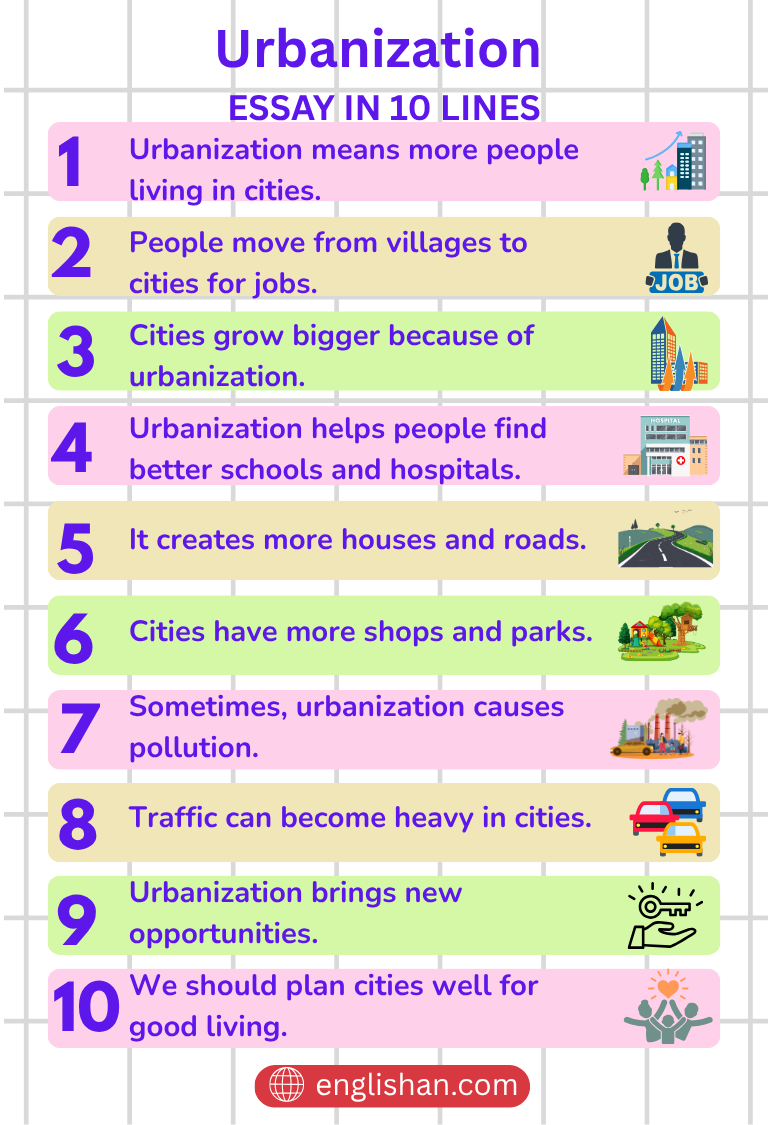
- Urbanization means more people living in cities.
- People move from villages to cities for jobs.
- Cities grow bigger because of urbanization.
- Urbanization helps people find better schools and hospitals.
- It creates more houses and roads.
- Cities have more shops and parks.
- Sometimes, urbanization causes pollution.
- Traffic can become heavy in cities.
- Urbanization brings new opportunities.
- We should plan cities well for good living.
250 Words Essay on Urbanization for Middle School
Urbanization is the process where more people move from villages and rural areas to cities and towns. This movement happens because cities offer better jobs, education, healthcare, and a chance for a better life. As more people settle in cities, urban areas grow bigger and more crowded.
One of the main reasons for urbanization is that cities have many opportunities for work. Factories, offices, and businesses are usually found in cities, so people move there to earn money and support their families. Cities also have better schools and hospitals, which attract families who want good education and healthcare.
However, urbanization also brings challenges. As cities become crowded, traffic congestion becomes a common problem. Pollution increases from vehicles and industries, which can harm the environment and people’s health. Sometimes, there is not enough housing for everyone, leading to slums or poorly built homes.
Despite these problems, urbanization has many benefits. It helps grow the economy by creating more jobs and businesses. Cities also provide better transportation, communication, and cultural activities. Governments can manage urban growth by planning cities well, building infrastructure, and protecting the environment.
In conclusion, urbanization is an important part of a country’s progress. While it brings some difficulties, careful planning and management can make cities better places to live, work, and study. Urbanization will continue to shape the future, so it is important to balance development with the needs of people and nature.
500 Words Urbanization Essay for Upper Primary and Lower Secondary
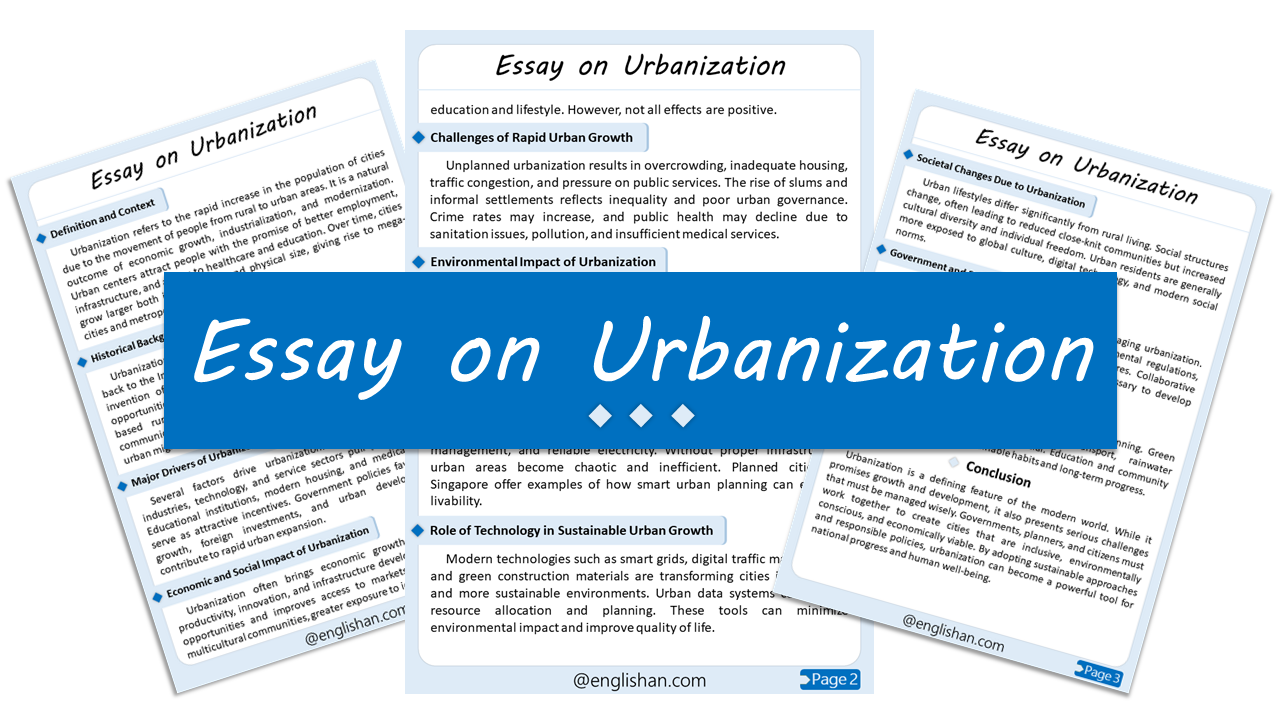
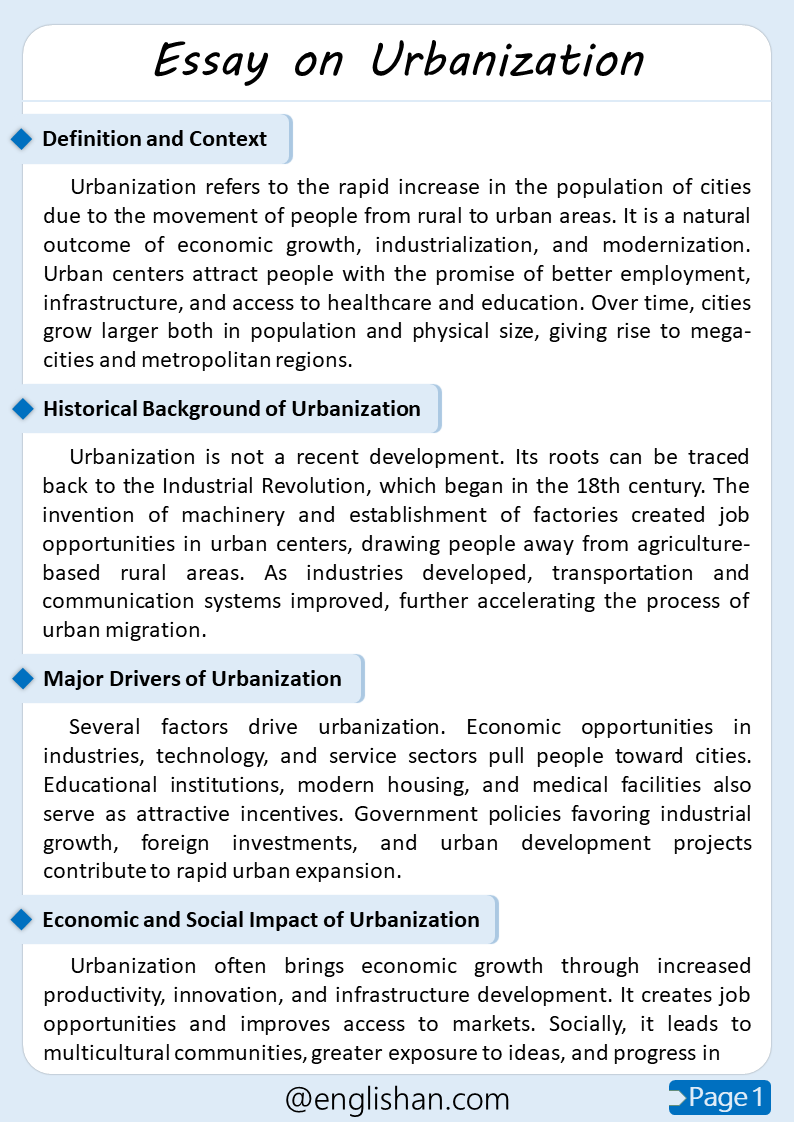
Definition and Context
Urbanization refers to the rapid increase in the population of cities due to the movement of people from rural to urban areas. It is a natural outcome of economic growth, industrialization, and modernization. Urban centers attract people with the promise of better employment, infrastructure, and access to healthcare and education. Over time, cities grow larger both in population and physical size, giving rise to mega-cities and metropolitan regions.
Historical Background of Urbanization
Urbanization is not a recent development. Its roots can be traced back to the Industrial Revolution, which began in the 18th century. The invention of machinery and establishment of factories created job opportunities in urban centers, drawing people away from agriculture-based rural areas. As industries developed, transportation and communication systems improved, further accelerating the process of urban migration.
Major Drivers of Urbanization
Several factors drive urbanization. Economic opportunities in industries, technology, and service sectors pull people toward cities. Educational institutions, modern housing, and medical facilities also serve as attractive incentives. Government policies favoring industrial growth, foreign investments, and urban development projects contribute to rapid urban expansion.
Economic and Social Impact of Urbanization
Urbanization often brings economic growth through increased productivity, innovation, and infrastructure development. It creates job opportunities and improves access to markets. Socially, it leads to multicultural communities, greater exposure to ideas, and progress in education and lifestyle. However, not all effects are positive.
Challenges of Rapid Urban Growth
Unplanned urbanization results in overcrowding, inadequate housing, traffic congestion, and pressure on public services. The rise of slums and informal settlements reflects inequality and poor urban governance. Crime rates may increase, and public health may decline due to sanitation issues, pollution, and insufficient medical services.
Environmental Impact of Urbanization
Urbanization has a direct effect on the environment. It leads to deforestation, loss of agricultural land, water shortages, and increased carbon emissions. Cities often face air and water pollution, waste disposal problems, and a growing ecological footprint. These issues demand urgent attention and sustainable action.
Infrastructure Needs and Urban Planning
Effective urban planning is essential to handle growing populations. Cities require robust transportation systems, clean water supply, waste management, and reliable electricity. Without proper infrastructure, urban areas become chaotic and inefficient. Planned cities like Singapore offer examples of how smart urban planning can enhance livability.
Role of Technology in Sustainable Urban Growth
Modern technologies such as smart grids, digital traffic management, and green construction materials are transforming cities into smarter and more sustainable environments. Urban data systems can help in resource allocation and planning. These tools can minimize environmental impact and improve quality of life.
Societal Changes Due to Urbanization
Urban lifestyles differ significantly from rural living. Social structures change, often leading to reduced close-knit communities but increased cultural diversity and individual freedom. Urban residents are generally more exposed to global culture, digital technology, and modern social norms.
Government and Policy Interventions
Governments must play a proactive role in managing urbanization. This includes setting up housing policies, environmental regulations, public transport networks, and urban safety measures. Collaborative efforts between public and private sectors are necessary to develop sustainable urban ecosystems.
Solutions for Sustainable Urban Development
Sustainability should be the core focus of urban planning. Green spaces, energy-efficient buildings, public transport, rainwater harvesting, and waste recycling are crucial. Education and community involvement also support sustainable habits and long-term progress.
Conclusion of Urbanization Essay
Urbanization is a defining feature of the modern world. While it promises growth and development, it also presents serious challenges that must be managed wisely. Governments, planners, and citizens must work together to create cities that are inclusive, environmentally conscious, and economically viable. By adopting sustainable approaches and responsible policies, urbanization can become a powerful tool for national progress and human well-being.
Difficult Words Used in 500 Urbanization Essay
| Word | Meaning |
|---|---|
| Urbanization | The process of population shift from rural to urban areas |
| Infrastructure | Basic systems and services such as transport, water, and electricity |
| Congestion | Overcrowding or blockage, especially in city traffic |
| Degradation | The process of something becoming worse in quality |
| Biodiversity | The variety of life in a particular habitat or ecosystem |
| Sustainability | Avoiding depletion of natural resources to maintain ecological balance |
| Footprint | The environmental impact of human activities |
| Empower | To give authority or power to someone |
| Resilient | Able to recover quickly from difficulties |
| Demographic | Relating to the structure of populations |
Urbanization Essay PDF
You May Also Like