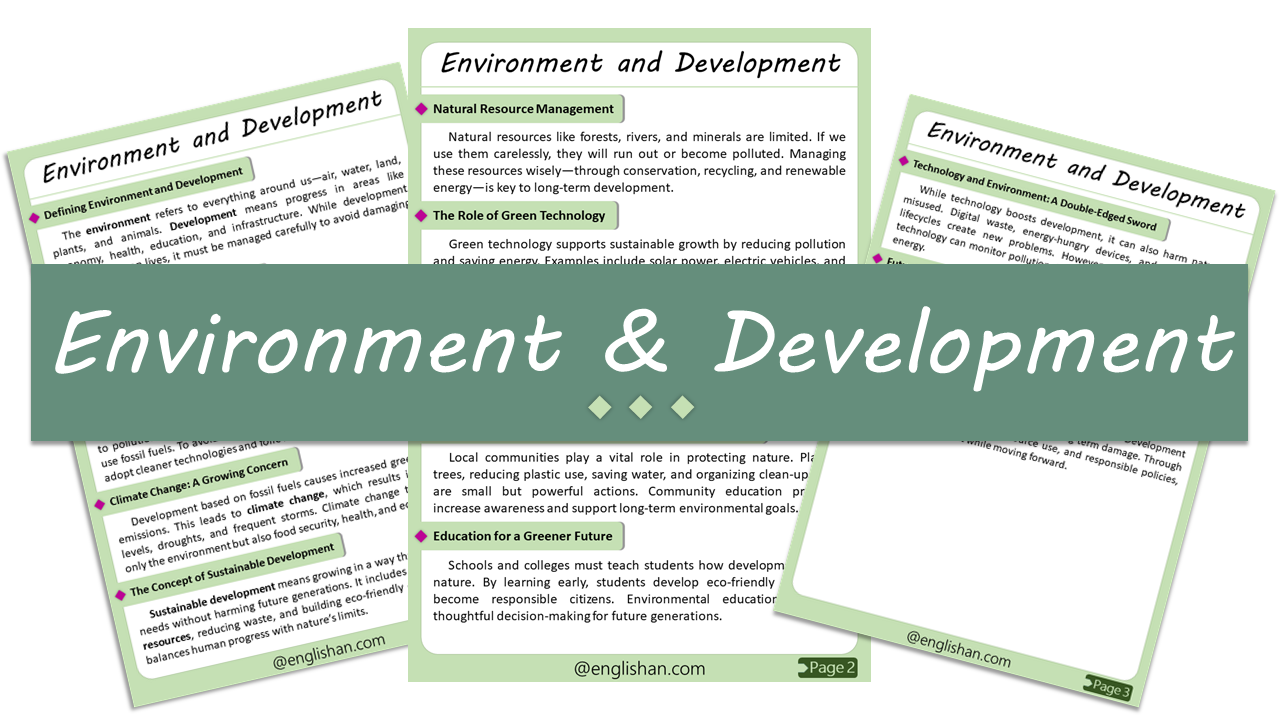
When writing about environment and development, it’s important to understand how progress can happen while protecting nature. This essay on environment and development explains the meaning of both, the need for balance, good and bad effects, and ways to grow responsibly. It’s written in 10 line, 250 word, and 500 word formats to help students with homework or exams. You can download this environment and development essay as a free PDF or image to study or print.
10 Lines Environment and Development Essay for Class 2 to Class 5
- The environment includes air, water, plants, and animals.
- Development means building better homes and roads.
- We need both environment and development to live well.
- Trees and clean air are important for health.
- Development should not harm nature.
- We must save water and plant more trees.
- Factories should keep the air and water clean.
- People should not throw trash in rivers or streets.
- We all should protect animals and birds.
- A healthy environment helps people live happily.

250 Words Essay on Environment and Development for Middle School
The environment and development are two important parts of our life. The environment includes everything around us like air, water, plants, and animals. Development means progress in building homes, schools, roads, and industries to improve our living standards. Both are necessary, but they must go hand in hand.
A healthy environment is very important for good health. Clean air, pure water, and green plants make our life comfortable. Development helps in providing us with better facilities like hospitals, schools, and jobs. However, sometimes development causes harm to the environment. Cutting down trees, pollution from factories, and dumping waste in water bodies can damage nature.
Therefore, it is important to develop in a way that protects the environment. We should plant more trees, save water, and reduce pollution. Governments and people must work together to balance development and environmental protection. Using clean energy like solar power and recycling waste are good steps toward this goal.
When development respects the environment, we can enjoy a better quality of life. Protecting nature means saving our future. It is our duty to keep the environment clean while progressing in our lives. Together, we can create a world where both development and nature grow side by side.
500 Words Environment and Development Essay for Upper Primary and Lower Secondary
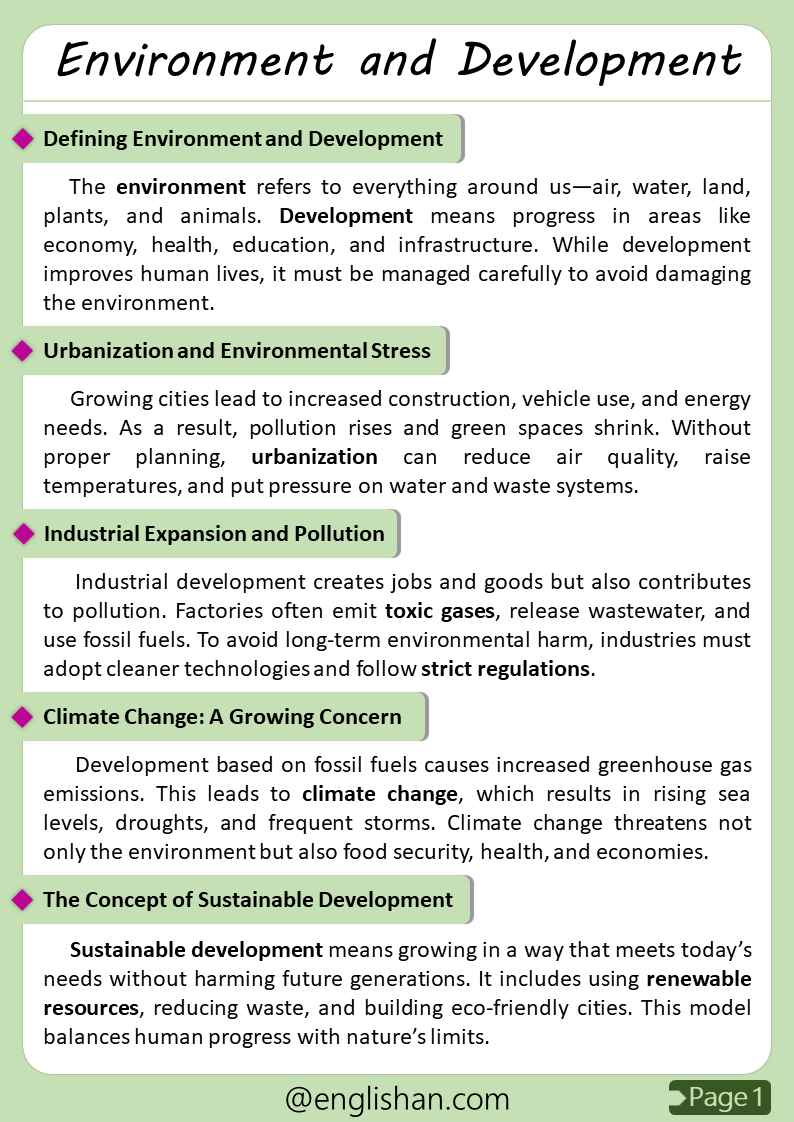
Defining Environment and Development
The environment refers to everything around us—air, water, land, plants, and animals. Development means progress in areas like economy, health, education, and infrastructure. While development improves human lives, it must be managed carefully to avoid damaging the environment.
Urbanization and Environmental Stress
Growing cities lead to increased construction, vehicle use, and energy needs. As a result, pollution rises and green spaces shrink. Without proper planning, urbanization can reduce air quality, raise temperatures, and put pressure on water and waste systems.
Industrial Expansion and Pollution
Industrial development creates jobs and goods but also contributes to pollution. Factories often emit toxic gases, release wastewater, and use fossil fuels. To avoid long-term environmental harm, industries must adopt cleaner technologies and follow strict regulations.
Climate Change: A Growing Concern
Development based on fossil fuels causes increased greenhouse gas emissions. This leads to climate change, which results in rising sea levels, droughts, and frequent storms. Climate change threatens not only the environment but also food security, health, and economies.
The Concept of Sustainable Development
Sustainable development means growing in a way that meets today’s needs without harming future generations. It includes using renewable resources, reducing waste, and building eco-friendly cities. This model balances human progress with nature’s limits.
Natural Resource Management
Natural resources like forests, rivers, and minerals are limited. If we use them carelessly, they will run out or become polluted. Managing these resources wisely—through conservation, recycling, and renewable energy—is key to long-term development.
The Role of Green Technology
Green technology supports sustainable growth by reducing pollution and saving energy. Examples include solar power, electric vehicles, and water-saving systems. Encouraging such innovations helps protect the environment while supporting economic progress.
Environmental Policies and Global Agreements
Laws and global agreements help reduce environmental damage. Policies such as the Clean Air Act or Paris Climate Accord push countries to reduce emissions, protect wildlife, and promote clean energy. Government action is necessary to guide development responsibly.
Community Involvement and Environmental Awareness
Local communities play a vital role in protecting nature. Planting trees, reducing plastic use, saving water, and organizing clean-up drives are small but powerful actions. Community education programs increase awareness and support long-term environmental goals.
Education for a Greener Future
Schools and colleges must teach students how development affects nature. By learning early, students develop eco-friendly habits and become responsible citizens. Environmental education promotes thoughtful decision-making for future generations.
Technology and Environment: A Double-Edged Sword
While technology boosts development, it can also harm nature if misused. Digital waste, energy-hungry devices, and short product lifecycles create new problems. However, when used responsibly, technology can monitor pollution, improve farming, and support green energy.
Future Goals: Balancing Progress and Protection
Moving forward, development must respect the limits of our planet. Governments, businesses, and individuals must work together to make choices that support both growth and nature. Clean energy, green cities, and strong environmental policies are key to a safer future.
Conclusion
Environment and development are deeply connected. Development improves life, but if it harms nature, it risks long-term damage. Through sustainable development, wise resource use, and responsible policies, we can protect the planet while moving forward.
Difficult Words Used in 500 Environment and Development Essay
| Word | Meaning |
|---|---|
| Urbanization | The process of making areas more like cities |
| Toxic | Poisonous or harmful to health or nature |
| Sustainable | Using resources in a way that protects them for future use |
| Emissions | Polluted gases or substances released into the air |
| Renewable | A resource that can naturally replace itself |
| Fossil fuels | Fuels like coal and oil formed from ancient organisms |
| Degradation | The condition of becoming worse or damaged |
| Conservation | The act of protecting natural resources |
| Greenhouse gases | Gases that trap heat in the atmosphere, like carbon dioxide |
| Accord | A formal agreement between countries |
Environment and Development Essay PDF
You May Also Like