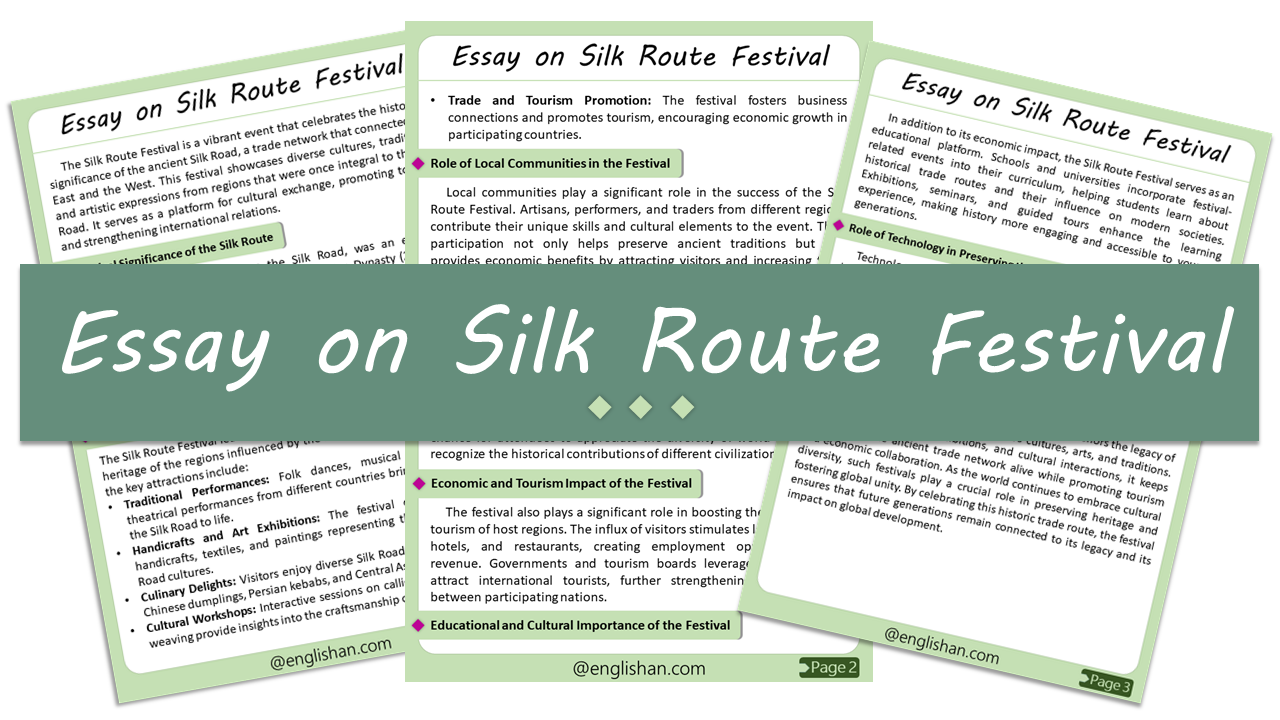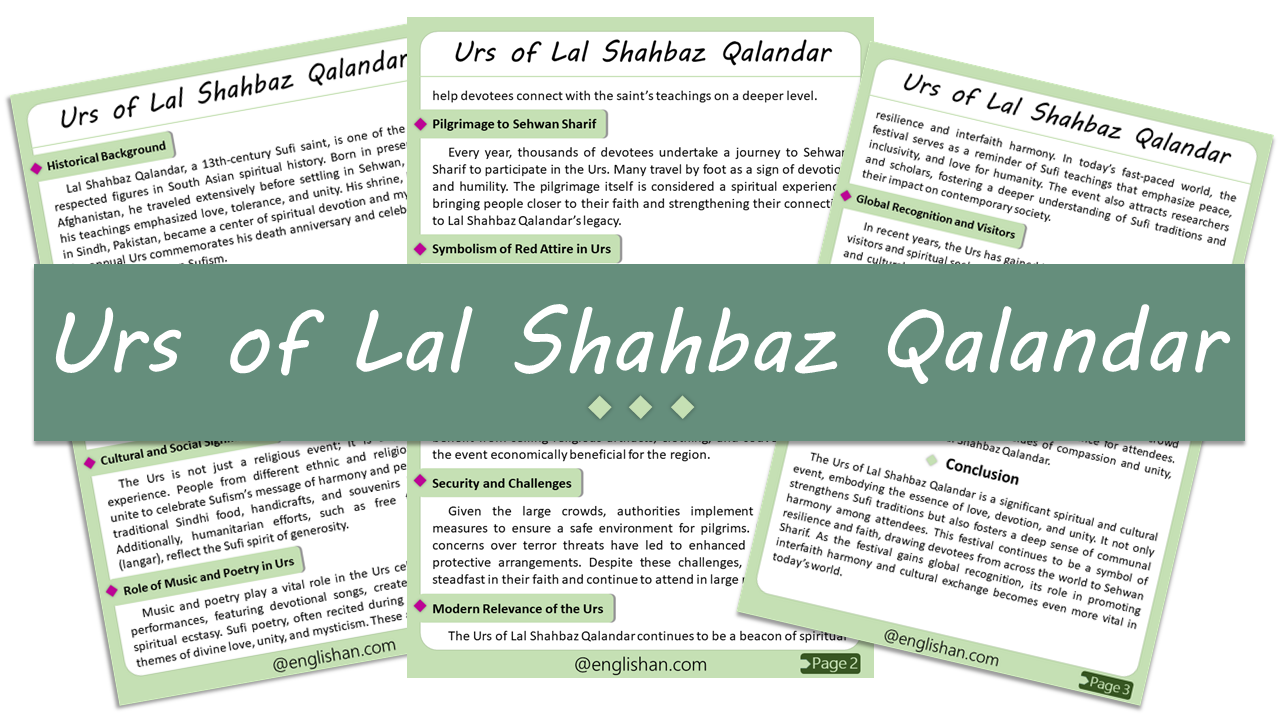
When writing about the Urs of Lal Shahbaz Qalandar, it’s important to understand how this event honors a famous Sufi saint and promotes peace, unity, and devotion. This essay on the Urs explains the history, key traditions, and cultural meaning of the three-day celebration in Sehwan Sharif. It’s written in 500 words to help students with school homework or exams. You can download this Urs of Lal Shahbaz Qalandar essay as a free PDF or image to read, study, or print.
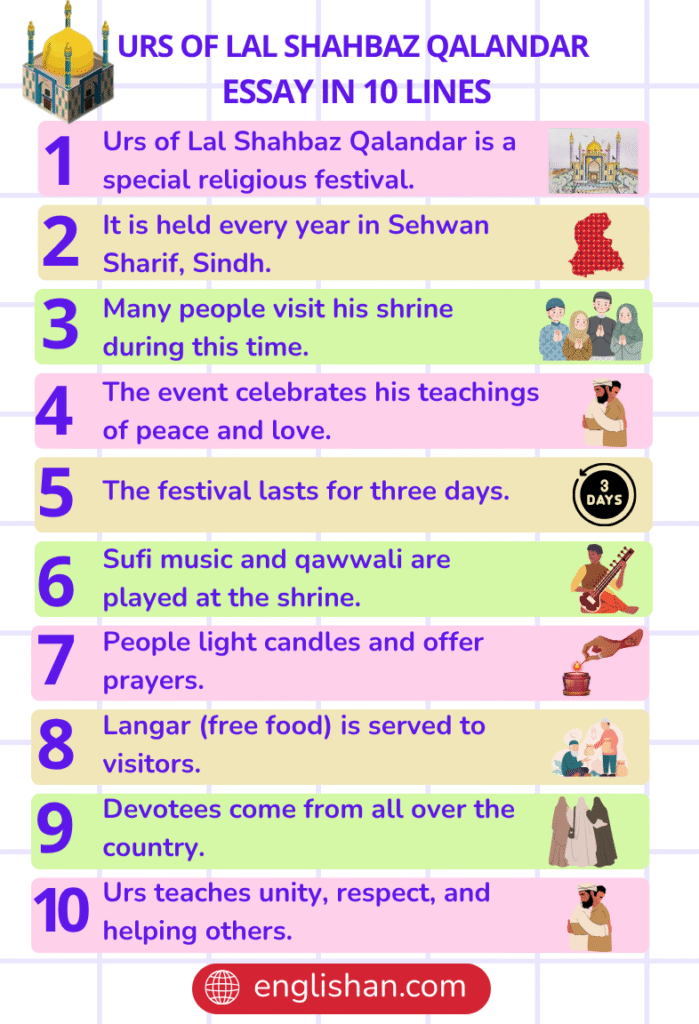
10 Lines Urs of lal shahbaz qalandar Essay for Class 2 to Class 5
- Urs of Lal Shahbaz Qalandar is a special religious festival.
- It is held every year in Sehwan Sharif, Sindh.
- Many people visit his shrine during this time.
- The event celebrates his teachings of peace and love.
- The festival lasts for three days.
- Sufi music and qawwali are played at the shrine.
- People light candles and offer prayers.
- Langar (free food) is served to visitors.
- Devotees come from all over the country.
- Urs teaches unity, respect, and helping others.
250 Words Essay on Urs of lal shahbaz qalandar for Middle School
The Urs of Lal Shahbaz Qalandar is a spiritual and cultural event celebrated in Sehwan Sharif, Sindh, where the famous Sufi saint is buried. Every year, thousands of people from different regions gather to remember his life, teachings, and contributions. The Urs is held on the anniversary of his death and continues for three days.
Lal Shahbaz Qalandar is respected for spreading the message of peace, love, and equality. His shrine becomes a place of great devotion during Urs. The festival includes Sufi rituals like qawwali (spiritual music), dhamaal (Sufi dance), prayers, and the lighting of oil lamps.
During Urs, the entire town becomes active and welcoming. Special stalls, langar (free meals), and cultural performances are organized to honor his message. The event brings people from different backgrounds together, which shows the spirit of unity and tolerance in Sufism.
Many visitors attend the shrine to seek blessings, offer flowers, or simply find peace. The sound of dhol (drums) and chants fills the air with a strong spiritual atmosphere. Security arrangements are made to protect visitors during this large gathering.
Urs of Lal Shahbaz Qalandar is not just a religious event but also a cultural celebration that promotes kindness, patience, and harmony. It helps the younger generation understand the value of Sufi teachings in a peaceful society.
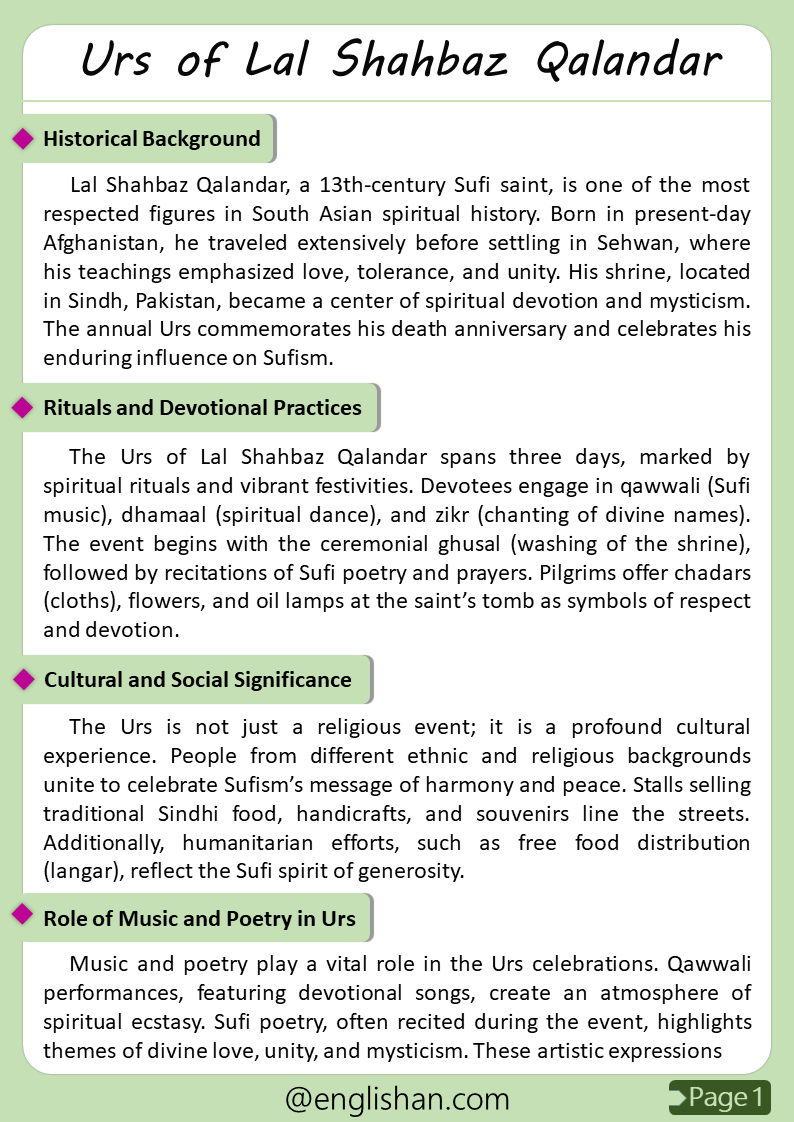
500 Words Urs of lal shahbaz qalandar Essay for Upper Primary and Lower Secondary
Historical Background
Lal Shahbaz Qalandar, a 13th-century Sufi saint, is one of the most respected figures in South Asian spiritual history. Born in present-day Afghanistan, he traveled extensively before settling in Sehwan, where his teachings emphasized love, tolerance, and unity. His shrine, located in Sindh, Pakistan, became a center of spiritual devotion and mysticism. The annual Urs commemorates his death anniversary and celebrates his enduring influence on Sufism.
Rituals and Devotional Practices
The Urs of Lal Shahbaz Qalandar spans three days, marked by spiritual rituals and vibrant festivities. Devotees engage in qawwali (Sufi music), dhamaal (spiritual dance), and zikr (chanting of divine names). The event begins with the ceremonial ghusal (washing of the shrine), followed by recitations of Sufi poetry and prayers. Pilgrims offer chadars (cloths), flowers, and oil lamps at the saint’s tomb as symbols of respect and devotion.
Cultural and Social Significance
The Urs is not just a religious event; it is a profound cultural experience. People from different ethnic and religious backgrounds unite to celebrate Sufism’s message of harmony and peace. Stalls selling traditional Sindhi food, handicrafts, and souvenirs line the streets. Additionally, humanitarian efforts, such as free food distribution (langar), reflect the Sufi spirit of generosity.
Role of Music and Poetry in Urs
Music and poetry play a vital role in the Urs celebrations. Qawwali performances, featuring devotional songs, create an atmosphere of spiritual ecstasy. Sufi poetry, often recited during the event, highlights themes of divine love, unity, and mysticism. These artistic expressions help devotees connect with the saint’s teachings on a deeper level.
Pilgrimage to Sehwan Sharif
Every year, thousands of devotees undertake a journey to Sehwan Sharif to participate in the Urs. Many travel by foot as a sign of devotion and humility. The pilgrimage itself is considered a spiritual experience, bringing people closer to their faith and strengthening their connection to Lal Shahbaz Qalandar’s legacy.
Symbolism of Red Attire in Urs
Many devotees wear red attire during the Urs, a color deeply associated with Lal Shahbaz Qalandar. The red garments symbolize passion, spiritual fervor, and divine love. This tradition reflects the devotees’ deep admiration and commitment to the saint’s teachings.
Impact of Urs on Local Economy
The Urs festival significantly impacts the local economy of Sehwan Sharif. The influx of pilgrims boosts businesses, including hotels, restaurants, transport services, and local vendors. Small-scale traders benefit from selling religious artifacts, clothing, and souvenirs, making the event economically beneficial for the region.
Security and Challenges
Given the large crowds, authorities implement strict security measures to ensure a safe environment for pilgrims. In recent years, concerns over terror threats have led to enhanced surveillance and protective arrangements. Despite these challenges, devotees remain steadfast in their faith and continue to attend in large numbers.
Modern Relevance of the Urs
The Urs of Lal Shahbaz Qalandar continues to be a beacon of spiritual resilience and interfaith harmony. In today’s fast-paced world, the festival serves as a reminder of Sufi teachings that emphasize peace, inclusivity, and love for humanity. The event also attracts researchers and scholars, fostering a deeper understanding of Sufi traditions and their impact on contemporary society.
Global Recognition and Visitors
In recent years, the Urs has gained international recognition, drawing visitors and spiritual seekers from around the world. Scholars, historians, and cultural enthusiasts participate in the event, enriching the festival with global perspectives on Sufism. The presence of international visitors further highlights the universal appeal of Lal Shahbaz Qalandar’s message.
Community Bonding and Volunteerism
A remarkable aspect of the Urs is the spirit of community bonding and volunteerism. Local volunteers actively engage in crowd management, food distribution, and medical assistance for attendees. This selfless service reflects the core values of compassion and unity, central to the teachings of Lal Shahbaz Qalandar.
Conclusion for Urs of lal shahbaz qalandar essay
The Urs of Lal Shahbaz Qalandar is a significant spiritual and cultural event, embodying the essence of love, devotion, and unity. It not only strengthens Sufi traditions but also fosters a deep sense of communal harmony among attendees. This festival continues to be a symbol of resilience and faith, drawing devotees from across the world to Sehwan Sharif. As the festival gains global recognition, its role in promoting interfaith harmony and cultural exchange becomes even more vital in today’s world.
Difficult Words Used in 500 Urs of Lal Shahbaz Qalandar Essay
| Word | Meaning |
|---|---|
| Devotees | People who are dedicated to religious worship |
| Mysticism | A spiritual belief focusing on personal connection with the divine |
| Dhamaal | A rhythmic Sufi dance performed in spiritual gatherings |
| Zikr | Repetitive chanting of religious phrases in Sufi tradition |
| Pilgrims | People traveling to a sacred place for religious purposes |
| Chadars | Large cloth sheets offered at Sufi shrines as a mark of respect |
| Langar | Free community meals provided at religious places |
| Surveillance | Close observation, especially for security purposes |
Urs of Lal Shahbaz Qalandar Essay PFD
You May Also Like