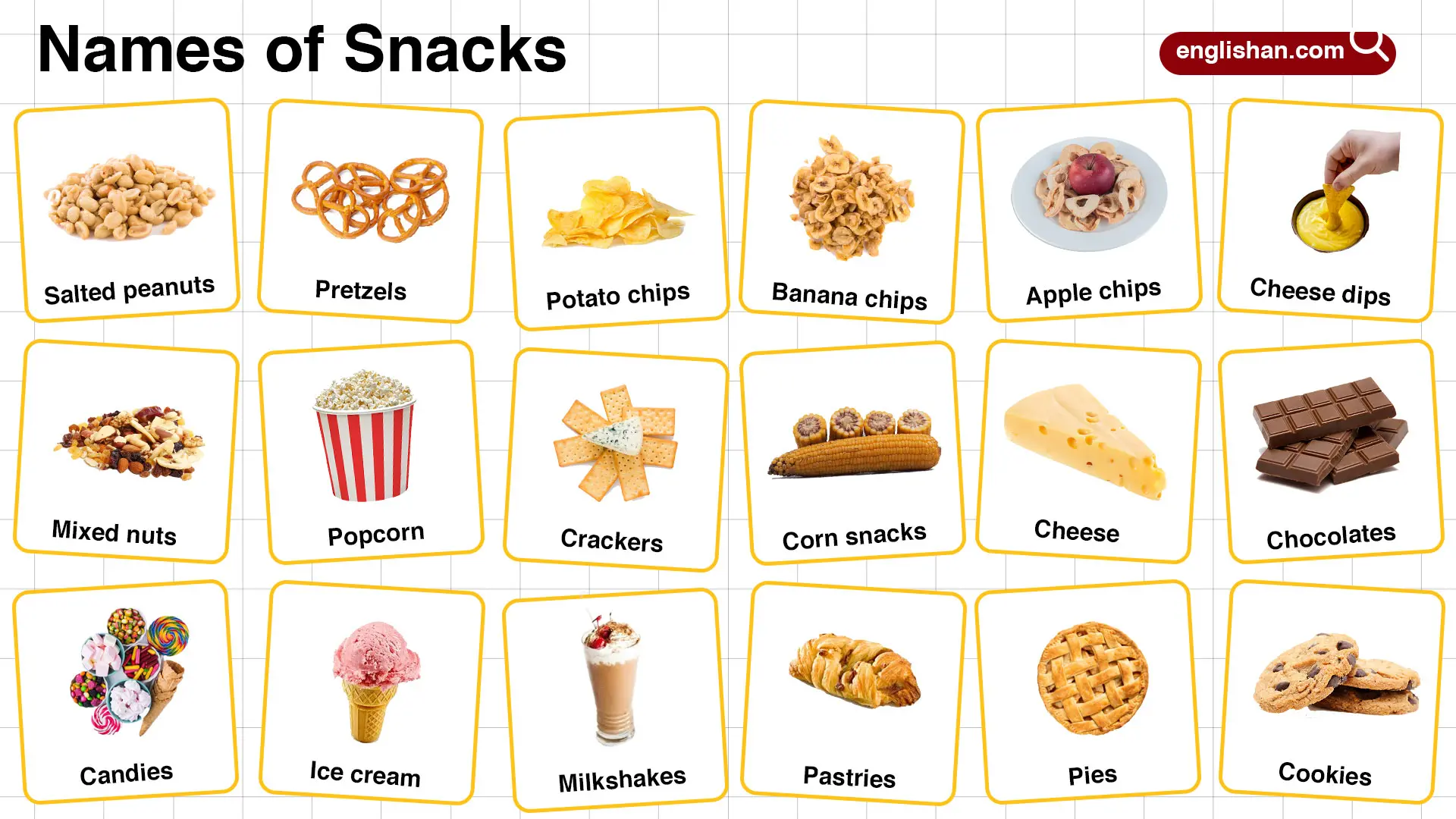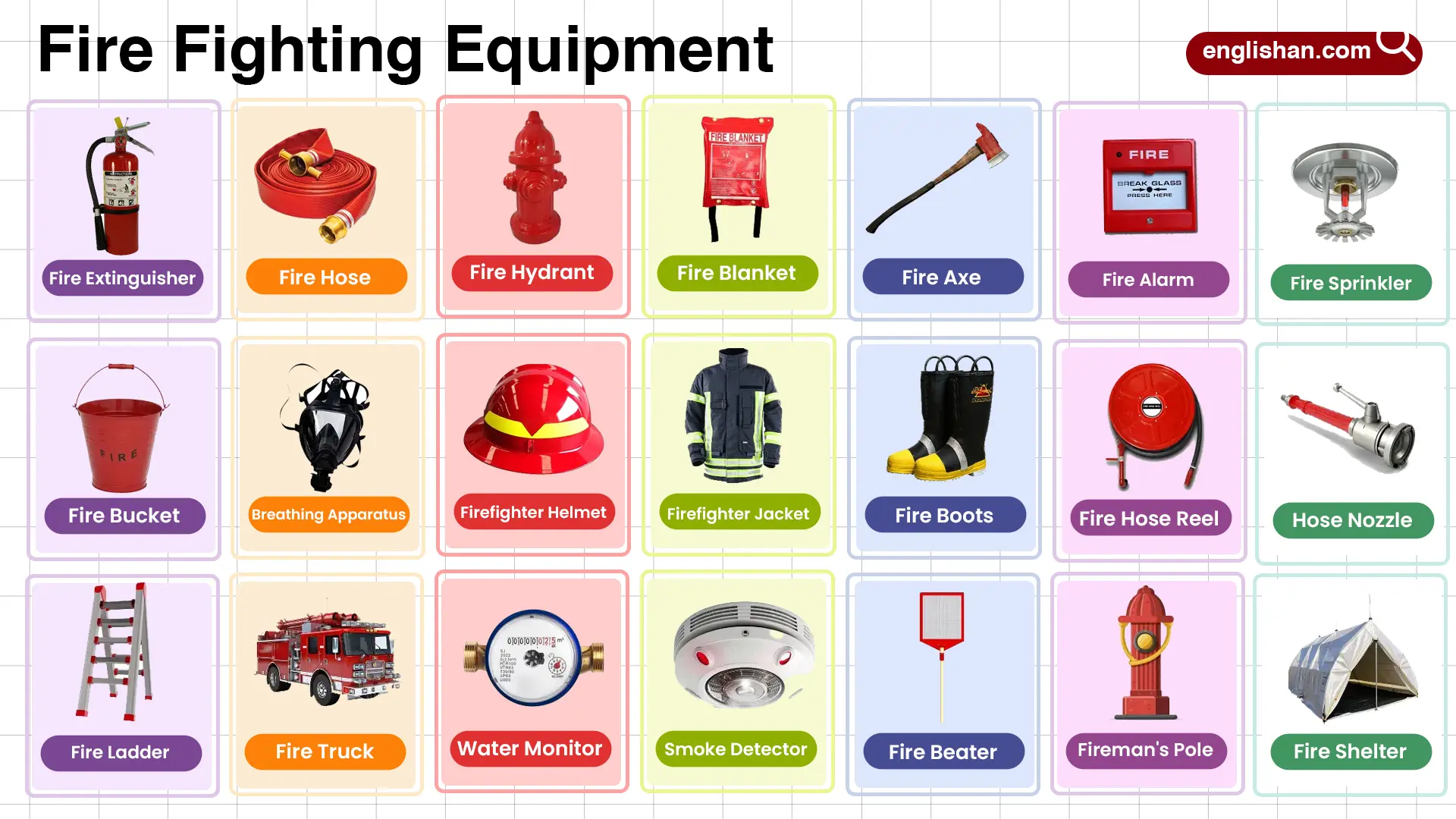
Fire fighting equipment includes tools, gear, and systems used to detect, control, or put out fires. These items are found in homes, buildings, and fire stations. Each tool or device has a specific job in fire prevention or rescue operations.
In this post, you’ll learn names of common fire fighting equipment with pictures. Knowing these helps describe safety tools used in buildings, schools, kitchens, and emergencies.
List of Fire Fighting Equipment
This list includes key tools used to detect, control, and extinguish fires, helping both firefighters and civilians stay safe during emergencies.
- Fire Extinguisher
- Fire Hose
- Fire Hydrant
- Fire Blanket
- Fire Axe
- Fire Alarm
- Fire Sprinkler
- Fire Bucket
- Breathing Apparatus
- Firefighter Helmet
- Firefighter Jacket
- Fire Boots
- Thermal Imaging Camera
- Fire Hose Reel
- Hose Nozzle
- Fire Ladder
- Fire Truck
- Fire Suppression System
- Water Monitor
- Smoke Detector
- Fire Beater
- Foam Extinguisher
- Dry Powder Extinguisher
- Carbon Dioxide Extinguisher
- Fire Hose Coupling
- Fireproof Gloves
- Fireproof Hood
- Fire Shelter
- Fire Hose Cabinet
- Fireman’s Pole
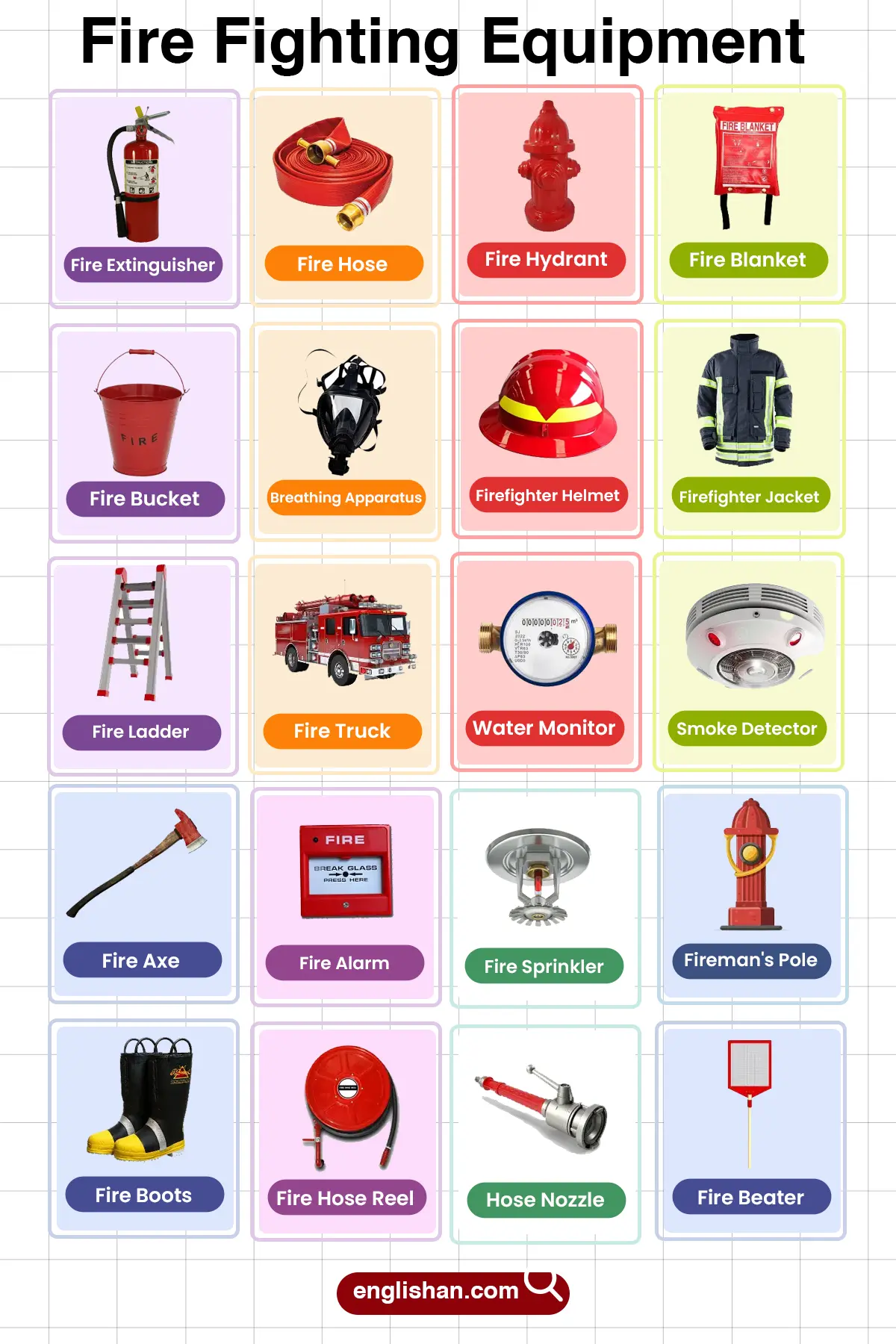
Types of Fire Fighting Equipment
Fire extinguishers are used to stop fires in their early stages. Below is a list of the most common types, each designed for specific kinds of fires.
Names of Fire Extinguishing Devices
These tools are used to put out fires by smothering flames or cutting off the fire’s oxygen source. They are suitable for various fire classes depending on the type of extinguisher.
- Fire Extinguisher: Sprays chemicals to stop small fires quickly.
- Foam Extinguisher: Covers fires with foam to block oxygen.
- Dry Powder Extinguisher: Blows powder to stop gas, oil, or electrical fires.
- Carbon Dioxide Extinguisher: Releases CO₂ gas to remove oxygen and stop flames.
- Fire Blanket: Covers small fires to smother them safely.
- Fire Beater: Used to beat down grass and forest fires.
- Fire Bucket: Holds water or sand to throw on small fires.
- Fire Suppression System: Sprays water or foam when fire is detected.
- Water Monitor: Shoots water with force to control large fires.
List of Fire Hose Equipment
This equipment delivers large volumes of water or foam directly to the fire. It helps firefighters reach flames effectively, even from a distance.
- Fire Hose: A strong pipe that carries water to fight fires.
- Fire Hose Reel: A wheel that stores and quickly releases the fire hose.
- Hose Nozzle: Controls the direction and flow of water from the hose.
- Fire Hose Coupling: Connects hose sections or attaches them to water sources.
- Fire Hose Cabinet: A box that safely holds the hose and related tools.
Fire Detection and Alert Systems
These systems detect early signs of fire such as smoke, heat, or flames and alert people through alarms for quick evacuation or response.
- Fire Alarm: Alerts people when fire or smoke is detected in a building.
- Smoke Detector: Senses smoke in the air and triggers an alarm.
- Thermal Imaging Camera: Shows heat through smoke to help find fire or people.
Fire Hydrant and Water Supply
Fire hydrants connect to the water supply and provide a ready source of water for firefighting operations, especially in public spaces.
- Fire Hydrant: Provides water for firefighters during a fire.
Firefighter Personal Protective Equipment (PPE)
PPE safeguards firefighters from heat, flames, smoke, and other hazards during fire emergencies.
- Firefighter Helmet: Protects the firefighter’s head from heat and falling objects.
- Firefighter Jacket: A heat-resistant coat that shields the upper body from fire.
- Fire Boots: Strong boots that protect feet from heat, water, and sharp debris.
- Breathing Apparatus: Helps firefighters breathe clean air in smoke-filled places.
- Fireproof Gloves: Protect hands from heat, flames, and rough surfaces.
- Fireproof Hood: Covers the neck and head to block out heat and smoke.
- Fire Shelter: A foldable cover used for last-resort protection in wildfires.
Fire Fighting Equipment Tools
These are manual tools used by firefighters to break through barriers, access trapped individuals, or control fire spread.
- Fire Axe: Used to break doors or walls during rescue.
- Fire Ladder: Helps firefighters reach high places in a fire.
- Fireman’s Pole: Allows firefighters to slide down quickly during an emergency.
Fire Fighting Equipment Vehicles
Vehicles designed for carrying equipment, water, and firefighters to the scene quickly. Some are equipped with ladders and pumps.
- Fire Truck: Carries firefighters, water, and tools to the fire scene.
Standard Safety Gear for Firefighters
This gear keeps firefighters safe from heat, smoke, and falling objects. Below is a list of the most important protective items worn during emergencies.
- Helmet
- Suit
- Gloves
- Boots
- Breathing Device
Fire Alert and Sensor Devices
These devices warn people about a fire before it gets dangerous. Below is a list of tools used for early detection and quick alerts.
- Smoke Detector
- Heat Alarm
- Alarm Panel
Basic Fire Fighting Equipment Tools
Firefighters need tools for rescue, entry, and controlling fires. Below is a list of the most common tools used by fire teams.
- Axe
- Pry Tool
Conclusion
Knowing the names of fire fighting equipment builds a clear understanding of how fires are managed. From alarms to extinguishers and safety tools, each item plays a role. These words help in safety lessons, drills, and everyday discussions.
FAQs on Fire Fighting Equipment
A fire hose is a long, flexible tube usually connected to a fire truck or hydrant. A fire hose reel is fixed to a wall and used inside buildings for easier and faster access.
Firefighters wear helmets, fire-resistant suits, boots, gloves, and breathing devices to protect against flames, smoke, heat, and falling debris.
You May Also Like