Generation names such as Baby Boomers, Millennials, and Generation Z are widely used in American society. These labels help describe groups of people born during similar time periods who share common historical and social experiences. They are practical tools for understanding population trends, social change, and age-based patterns rather than casual labels or trends.
Each generation is defined mainly by its birth years. Major events such as wars, economic shifts, technological change, and cultural movements influence how each group grows up. Over time, these shared experiences shape attitudes toward work, communication, education, and daily life.
This article explains generation names used in the United States, their birth-year ranges, why they exist, and how they are commonly applied.
What Are Generation Names
Generation names are labels used to group people born within a specific range of years. These groupings help researchers, educators, and the public discuss how historical events affect people at similar stages of life.
In the United States, generation names are commonly used in schools, media, workplaces, surveys, and demographic studies. While individuals within a generation can differ widely, the labels provide a useful way to discuss broad social patterns.
Generation Names And Birth Years
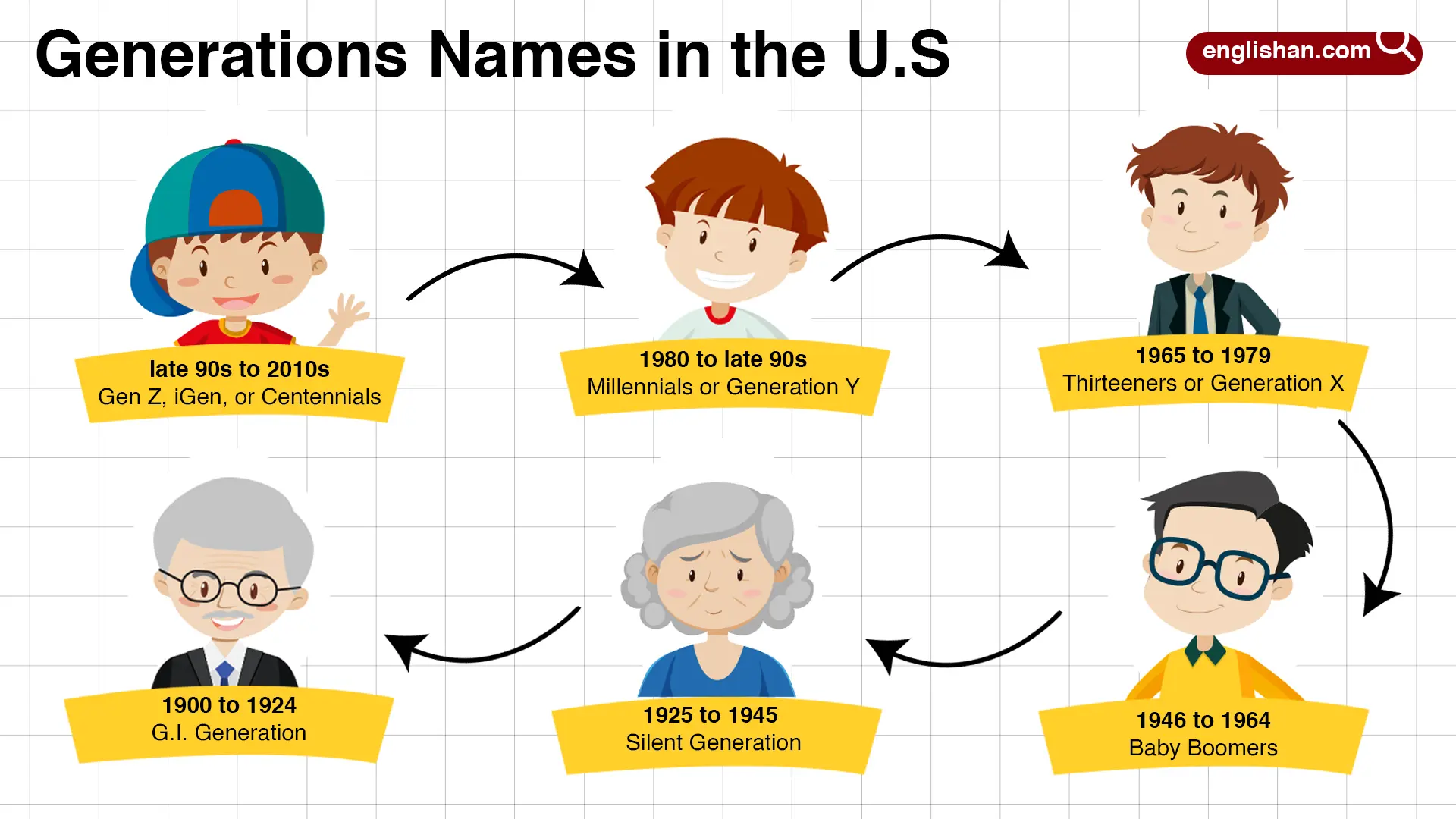
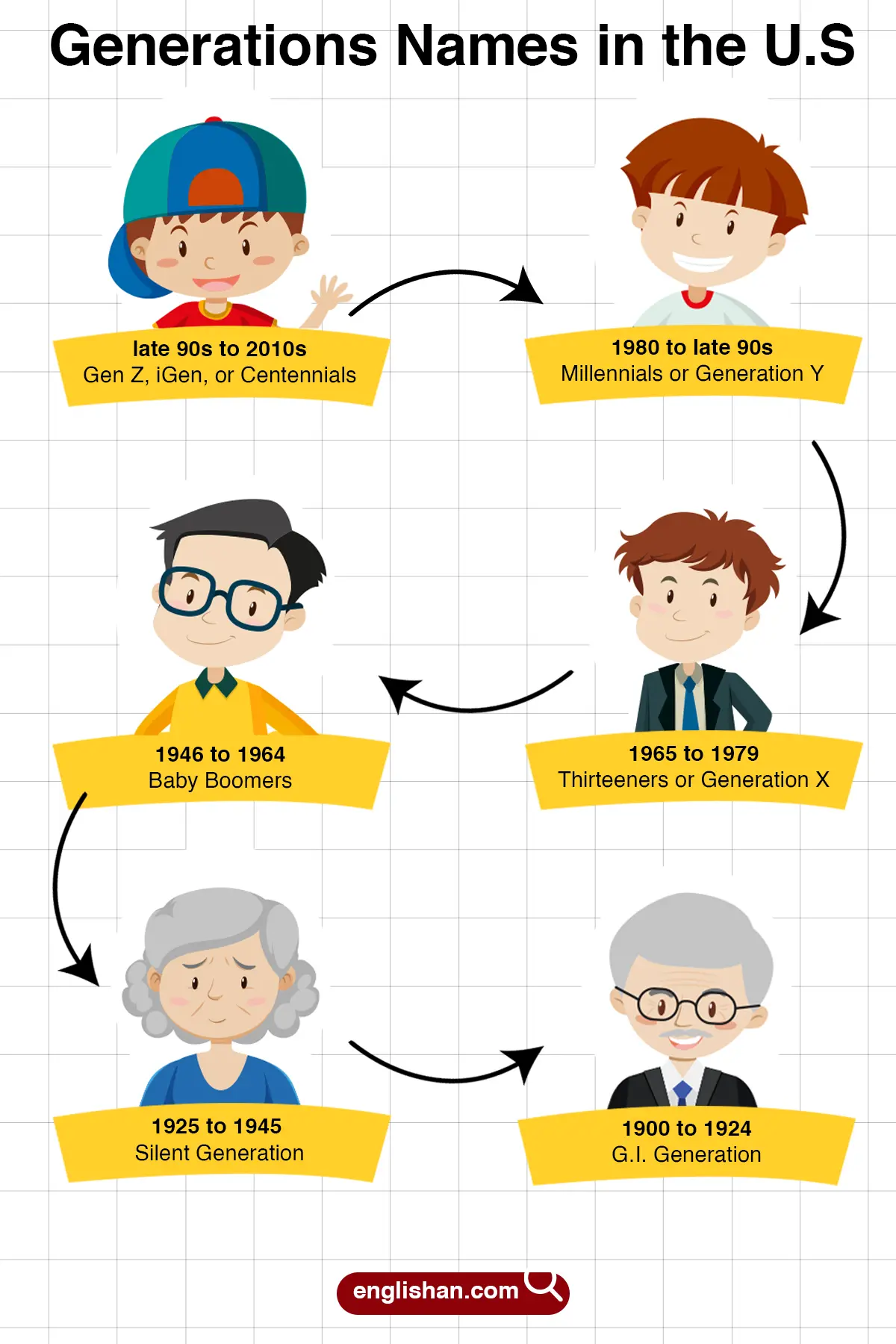
The following generation names and birth ranges are commonly used in the U.S. These ranges are approximate and may vary slightly by source.
- Greatest Generation: Born 1901–1927
- Silent Generation: Born 1928–1945
- Baby Boomers: Born 1946–1964
- Generation X: Born 1965–1980
- Millennials (Generation Y): Born 1981–1996
- Generation Z: Born 1997–2012
- Generation Alpha: Born 2010–2024
- Generation Beta: Born 2025–2039 (proposed)
Generation Names In Order
Listed from oldest to youngest, U.S. generation names follow this sequence:
Greatest Generation
Silent Generation
Baby Boomers
Generation X
Millennials
Generation Z
Generation Alpha
Generation Beta
This order is commonly used in educational material and demographic research.
Generation Names Chart With Years And Ages
| Generation Name | Birth Years | Age Range In 2026 |
|---|---|---|
| Greatest Generation | 1901–1927 | 99–125 |
| Silent Generation | 1928–1945 | 81–98 |
| Baby Boomers | 1946–1964 | 62–80 |
| Generation X | 1965–1980 | 46–61 |
| Millennials | 1981–1996 | 30–45 |
| Generation Z | 1997–2012 | 14–29 |
| Generation Alpha | 2010–2024 | 2–16 |
| Generation Beta | 2025–2039 | 0–1 |
How Generation Names Are Defined
Generation names are created by historians, writers, researchers, and demographic organizations. The names usually reflect a defining feature of the time period.
For example, Baby Boomers were named after the sharp increase in births following World War II. Generation X gained its name from cultural writing that described uncertainty and change during the late twentieth century. Later generations often use alphabet-based naming for simplicity and continuity.
Why Generation Year Ranges Differ
There is no single global authority that defines exact generation cutoffs. Some organizations focus on shared historical experiences, while others prefer fixed time blocks.
As a result, a person born near the beginning or end of a generation may be classified differently depending on the source. These variations are normal and do not change the general meaning of the generation label.
Individual Generation Overviews
Greatest Generation
This generation lived through the Great Depression and World War II. Many experienced economic hardship early in life and contributed to post-war rebuilding.
Silent Generation
Born during economic recovery and wartime uncertainty, this group is often associated with stability, discipline, and gradual social change.
Baby Boomers
This generation grew up during economic expansion, civil rights movements, and major cultural shifts. Television and mass media became widespread during their youth.
Generation X
Generation X experienced the rise of personal computers, changes in family structures, and a shift toward independent lifestyles.
Millennials
Millennials grew up alongside the internet, digital communication, and expanded access to higher education. They entered adulthood during periods of economic change.
Generation Z
This generation has known digital technology from early childhood, including smartphones and social media. Online communication plays a major role in daily life.
Generation Alpha
Generation Alpha is growing up in an environment shaped by advanced technology, smart devices, and artificial intelligence.
Generation Beta
Generation Beta is a proposed future generation expected to grow up in a highly automated and connected world.
Microgenerations And Cusp Years
Some people are born near the boundary between two generations. These individuals may share traits from both groups.
Common examples include:
- Generation Jones: Late Baby Boomers near Generation X
- Xennials: Between Generation X and Millennials
- Zillennials: Between Millennials and Generation Z
These labels are informal and used mainly in cultural discussion.
How Generation Names Are Used
Generation names are widely used in:
- Education and research
- Workplace studies
- Marketing and consumer analysis
- Media and journalism
- Social and cultural discussion
They help describe age-based trends without focusing on individuals.
FAQ on Generation Names
It’s Generation Alpha, made up of kids born since around 2013.
Yes. Both terms refer to Americans born from the early 1980s to the mid-1990s.
Yes. People born near the cutoffs are often called cuspers and may show traits of both groups.
Writers, historians, and researchers like Neil Howe and William Strauss named several U.S. generations.
These names mainly describe U.S. generations, but some are used in other English-speaking countries.
Your generation is usually determined by your birth year, using commonly accepted U.S. ranges.
You May Also Like