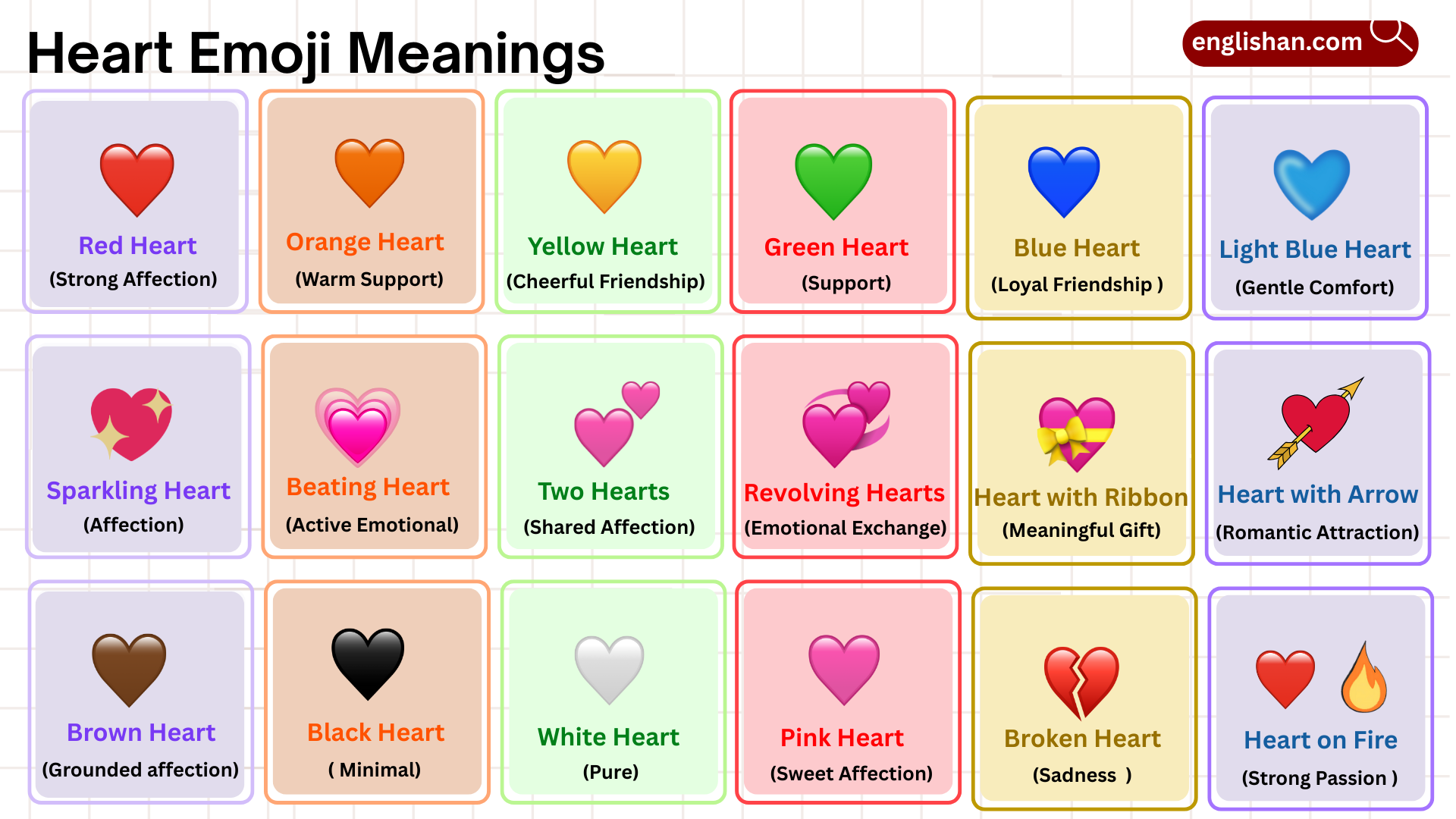
Sometimes while messaging, choosing a heart feels uncertain because each color carries a slightly different feeling and the wrong one can shift tone. This is where emotion becomes central, and heart emojis meanings help explain how colors communicate warmth, gratitude, comfort, or gentle care. For example, ❤️ can express closeness, 💙 may suggest steady trust, and 💜 can signal soft appreciation. Understanding these shades supports more thoughtful expression, especially in friendships, family chats, and supportive conversation.
This blog post explores heart emojis meanings to strengthen clarity and confidence in everyday English messaging. It has been carefully prepared to help emotional communication feel natural and accurate across different situations. Continue with an open and observant mindset as each meaning develops in context.
Heart Emoji Meanings
This is a complete learning list of heart emojis with clear meanings. Open any one to read how people use it, when it fits well, and how misunderstandings happen.
Strong affection, emotional closeness, trust.
Read More
Used with family members, partners, or very close friends. It shows steady care and emotional warmth. People use it when they feel comfortable and secure in the relationship. In new or formal conversations, it may feel too personal or intimate, so it is sent best where familiarity already exists.
Warm support without romantic implication.
Read More
Often used in friendly, supportive messages. It shows kindness and care but does not suggest deep romantic feeling. Useful when you want to be warm but not overly emotional. In close romantic relationships, it may feel less expressive than the red heart.
Cheerful friendship and positive connection.
Read More
This heart appears in friendly, uplifting conversations. It suits thank-you messages, encouragement, and casual appreciation. It keeps tone bright and friendly rather than emotional or romantic. Not often used during difficult or serious discussions.
Support, care, and gentle reassurance.
Read More
Used when someone wants to show steady and calm support. It can appear in health updates, recovery messages, or environmental themes. In some regions it can hint at jealousy if used alone, so the surrounding message helps clarify tone.
Loyal friendship and calm trust.
Read More
Often appears in friendships where people feel steady and balanced with each other. It signals care without romantic pressure. Also used when blue is a group or team color. Suitable for supportive, dependable messages.
Gentle comfort and kind reassurance.
Read More
Soft and calming. Suitable for comforting someone who is stressed or emotional. It does not show intensity, but instead a quiet presence and care.
Respectful care and admiration.
Read More
Used to show appreciation and mutual respect. Often appears in supportive communities or messages where care feels thoughtful and understanding.
Sweet affection and pleasant tone.
Read More
Fits warm, friendly, and soft feelings. Shows sweetness rather than strong romance. Common in gentle everyday conversations.
Feelings developing or increasing.
Read More
Suggests that positive feelings are becoming stronger. Often used when someone feels understood or supported.
Affection with appreciation.
Read More
Used in compliments, congratulations, or kind praise. Shows a bit of admiration along with care.
Active emotional response.
Read More
Fits moments of excitement, joy, or encouragement. It feels lively and kind.
Shared affection or mutual care.
Read More
Used when two people feel connected. Works in friendships and early romantic conversations.
Ongoing emotional exchange.
Read More
Shows feelings that flow back and forth. It suits supportive or thankful messages.
Affection as a meaningful gift.
Read More
Used in celebrations, birthdays, and thoughtful messages. It expresses care that feels special and intentional.
Romantic attraction or interest.
Read More
Appears in messages that openly recognize attraction. Often playful.
Aesthetic or theme-based affection.
Read More
Used mainly for design, captions, or visual mood. Soft tone.
Emphasized care or reminder.
Read More
Good for supportive statements where warmth is highlighted.
Sadness or emotional hurt.
Read More
Used during loss, disappointment, or regret. Shows emotional pain clearly.
Healing and emotional recovery.
Read More
Shows care and progress after hurt. It conveys support and hope.
Strong passion or intense excitement.
Read More
Used in emotional or romantic intensity. Works when feelings feel energized.
Pure, steady, sincere care.
Read More
Common in messages about respect, memory, or quiet closeness.
Neutral support and calm presence.
Read More
Used where you want to show care without strong emotional tone.
Warm, grounded affection.
Read More
Fits cozy, homely, cultural, or earthy themes.
Calm, minimal, or dry humor tone.
Read More
Can feel subtle, stylish, or understated. Works in close contexts where tone is already understood.
Thoughtful message with care.
Read More
Used when sending warm words that feel personal and meaningful.
You May Also Like